Hatch-Waxman Act: How Generic Drugs Got Their Footing in the U.S. Market
When you pick up a generic pill at the pharmacy, you’re benefiting from a law passed in 1984 called the Hatch-Waxman Act, a U.S. law that created a pathway for generic drugs to enter the market without repeating expensive clinical trials. Also known as the Drug Price Competition and Patent Term Restoration Act, it was designed to fix a broken system where brand-name drugs held monopolies long after their patents expired. Before this law, companies spent years and millions to prove a drug worked—again—even if it was chemically identical to one already approved. The Hatch-Waxman Act changed that by letting generic makers prove bioequivalence instead, cutting approval time from years to months.
This law didn’t just help generics—it also protected innovators. The Act gave brand-name drugmakers up to five extra years of market exclusivity to make up for time lost during FDA review. That’s why you sometimes see a drug with no generic version even after its patent ends: the exclusivity clock is still running. It’s a balance: reward innovation, but make sure competition kicks in fast enough to lower prices. And it worked. Today, nearly 9 in 10 prescriptions in the U.S. are filled with generics, saving patients and insurers over $300 billion a year. But it’s not perfect. Some companies abuse patent extensions, delay generic entry with legal tactics, or make minor changes to keep their brand alive—what’s called "evergreening." The generic drugs, lower-cost versions of brand-name medications that meet the same safety and effectiveness standards are still the backbone of affordable care, but their access depends on how strictly the Act is enforced.
The brand-name drugs, originally developed and marketed by pharmaceutical companies under patent protection often cost 10 to 50 times more than their generic counterparts, as shown in posts about combo generics and drug cost comparisons. That price gap isn’t about quality—it’s about timing, patents, and market control. The Hatch-Waxman Act was meant to shorten that gap, and it did. But the system still favors big pharma in subtle ways. That’s why posts on this site dive into things like biosimilars, specialty prescribing, and why some doctors still reach for expensive brands even when generics exist. You’ll also find real-world examples: how the Act affects diabetes meds like metformin, blood pressure drugs, and even antibiotics like cefuroxime. It’s the invisible force behind why your prescription costs $4 instead of $400.
What you’ll find here aren’t just dry legal summaries. These are stories from real patients, pharmacists, and doctors who’ve seen how the Hatch-Waxman Act plays out on the ground—whether it’s saving money on insulin, avoiding risky antibiotics because of a mislabeled allergy, or understanding why a new generic took years to appear. This collection connects the dots between policy and your medicine cabinet. If you’ve ever wondered why some drugs are cheap and others aren’t, or why your doctor switched your pill without asking, this is where the answer starts.
December 1, 2025
Patent Litigation: How Authorized Generics Undermine Generic Drug Competition
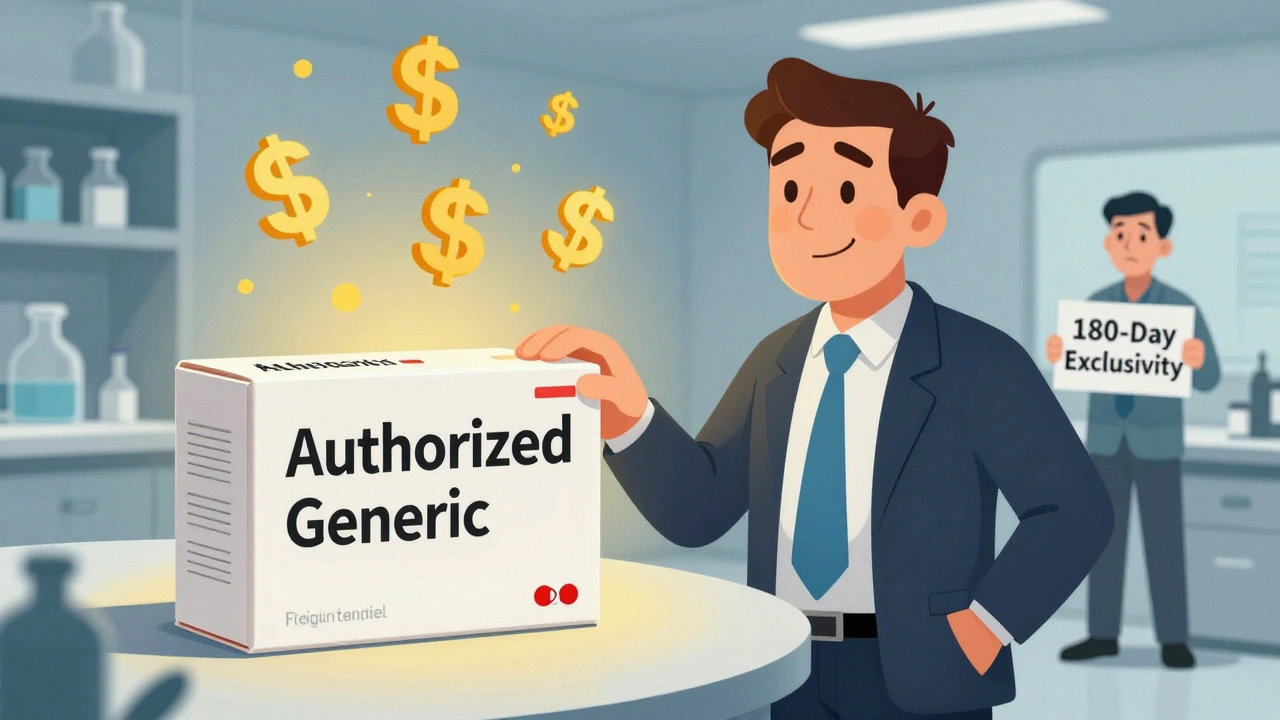
Authorized generics, launched by brand-name drugmakers during the 180-day exclusivity window for first-filing generics, undermine competition by capturing market share and depressing revenues. This practice, allowed under Hatch-Waxman, reduces generic innovation and delays true price competition.