

Every night, while you sleep, millions of microscopic dust mites are feasting on your skin flakes. They live in your mattress, pillows, and blankets - and if you’re allergic, they’re making you sneeze, wheeze, and struggle to breathe. Dust mites don’t bite. They don’t crawl on you. But their poop and dead bodies? Those are the real problem. For 20 million Americans, these tiny creatures are the #1 cause of year-round allergies. The good news? You don’t need expensive treatments or miracle sprays. You just need to change a few things in your bedroom - and do them consistently.
Why Dust Mites Are So Hard to Beat
Dust mites thrive in warm, damp places. Your bed is their dream home: body heat keeps it at 75-80°F, sweat and dead skin give them food, and humidity above 55% lets them drink moisture from the air. They multiply fast - one mattress can hold up to 2 million mites. The allergen they produce, called Der p 1, is so potent that just 2 micrograms per gram of dust can trigger asthma or severe sneezing. And unlike pollen, dust mites are indoors all year. No seasonal break. No relief.Bedding Is Ground Zero - Here’s How to Fix It
Your sheets, pillowcases, and comforter are where you spend the most time with mites. Washing them weekly isn’t optional - it’s the single most effective thing you can do. But not just any wash will work.You need hot water at exactly 130°F (54.4°C). Cold or warm water (90-100°F) only kills about 75% of mites. Hot water kills 100%. And it washes away the allergens too. Use regular detergent - no special formulas needed. Just make sure you’re not overloading the machine. Fill it no more than half full so clothes can move freely. A 20-minute cycle is enough.
After washing, dry everything on high heat for at least 15 minutes. Heat kills any mites that survived the wash. This is critical for items you can’t wash - like down pillows or wool blankets. Freeze them for 24 hours instead. That kills mites, but doesn’t remove allergens. You still need to wash or vacuum afterward.
Next, invest in mattress and pillow encasements. These aren’t regular zippered covers. They need to be labeled as “allergen-impermeable” with pores smaller than 10 micrometers. Cheaper ones tear after a few months. Look for ones tested to withstand 10,000 abrasion cycles. Brands like AllerEase, SafeRest, and Protect-A-Bed meet this standard. They cost $40-$80 each, but they block mites from getting in - and trap allergens already inside. Don’t skip this step. Without encasements, washing bedding alone only cuts allergens by 30-40%.
Humidity Control Is the Secret Weapon
This is what most people miss. You can wash your sheets every day, but if your bedroom stays at 65% humidity, mites will bounce back in days. The key number is 50%. Below that, mites can’t survive. Below 45%, they start dying off fast - 90% gone in two weeks.Buy a digital hygrometer - the kind that shows exact humidity levels. Put it next to your bed, not on the other side of the room. Humidity varies by location. A $25 model from Amazon is fine. If your reading is above 50%, you need a dehumidifier. A small 30-pint unit for your bedroom costs $150-$250. Run it nightly. You’ll notice less stickiness, less musty smell, and better sleep within days.
Some people think air conditioners solve this. They help, but not enough. AC units lower temperature, but not always humidity. In humid climates, you still need a dehumidifier. If you have central HVAC, ask an HVAC pro to install a whole-house dehumidifier. It’s pricier, but it’s the only way to keep humidity low all year - especially in spring and summer.
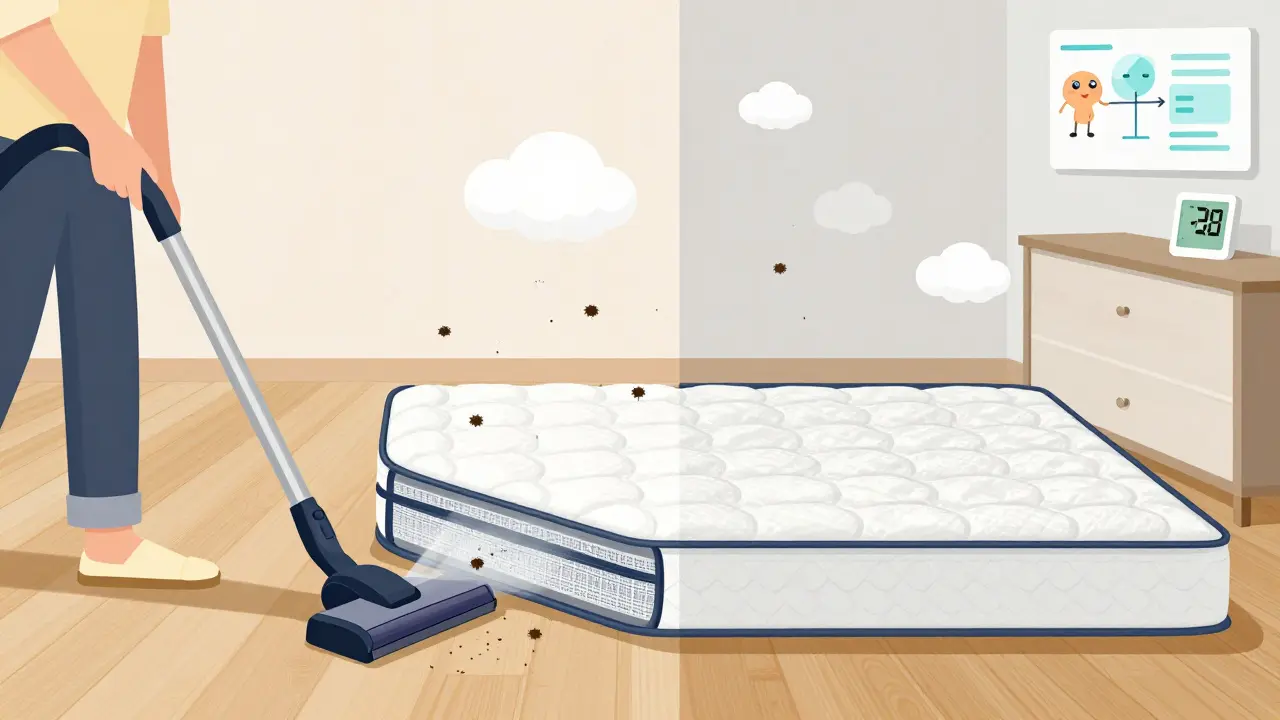
Cleaning That Actually Works
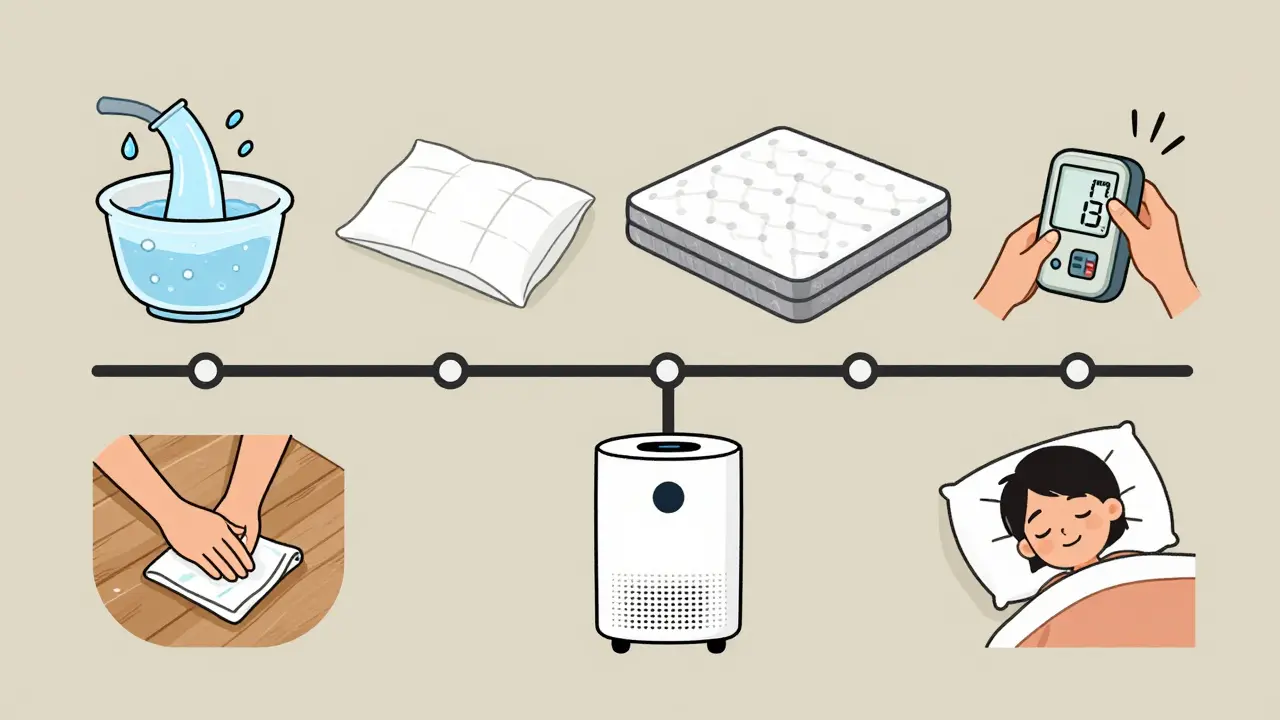
You don’t need to deep-clean your whole house. Focus on the bedroom. Here’s a simple weekly routine that works:- Wash all bedding at 130°F (sheets, pillowcases, duvet covers).
- Use a HEPA vacuum on your mattress - slowly. Move it at 1 foot per second. Pay attention to seams and edges where mites hide. Do the same for upholstered chairs or headboards.
- Damp mop hard floors with a microfiber cloth. Dry mopping just kicks dust back into the air.
- Check your hygrometer. If humidity’s above 50%, turn on the dehumidifier.
This takes about 90 minutes a week. That’s it. No need for special sprays, essential oils, or powders. Most of those don’t work long-term. Tannic acid sprays? They reduce allergens by 50-60%, but you have to reapply every week. Plant-based powders? They last longer, but you still need to vacuum them up with a HEPA filter. They’re not a replacement - they’re a band-aid.
Get rid of carpets in the bedroom. Hardwood, tile, or vinyl floors are ideal. If you can’t replace carpet, vacuum it weekly with a HEPA vacuum. But even then, mites live deep in the fibers. Hard floors win every time.
What Doesn’t Work (And Why)
There’s a lot of junk out there. Here’s what to ignore:- Essential oil sprays - They smell nice, but they don’t kill mites or neutralize allergens.
- UV light wands - They don’t penetrate fabric enough to reach mites hiding inside.
- Regular vacuums - Without a HEPA filter, they blow allergens back into the air.
- Weekly dusting - If you’re not vacuuming and controlling humidity, you’re just moving dust around.
And don’t fall for “hypoallergenic” labels on pillows or comforters. That term means nothing unless the product is sealed with a certified barrier. Most are just marketing.
Real People, Real Results
One user on Reddit said they spent $300 on a dehumidifier and mattress encasements. Within two weeks, their morning sneezing stopped. Another person on an asthma forum said they tried HEPA vacuuming for months - no change. Then they bought a hygrometer. Their humidity was 68%. After lowering it to 45%, symptoms dropped 80%.On Amazon, 78% of people who bought certified encasements gave them 5 stars. The ones who bought cheap ones? Half complained they ripped after six months. The difference? Quality materials and proper pore size.
Costs and Commitment
Initial setup isn’t cheap, but it’s a one-time cost:- Two mattress encasements: $80-$160
- Pillow encasements (2): $40-$80
- HEPA vacuum: $180-$300
- Digital hygrometer: $20-$50
- Dehumidifier (30-pint): $150-$250
Total: $470-$840. That sounds like a lot - until you realize how much you’re spending on allergy meds, doctor visits, and missed workdays. Many users report cutting their allergy medication use in half within a month.
The biggest hurdle? Consistency. You have to wash bedding every week, not every other week. You have to check humidity daily. You have to vacuum slowly. It’s not hard - it’s just different. Most people give up after two weeks because they don’t see instant results. But mites don’t vanish overnight. They die slowly, like a slow leak in a boat. Keep fixing the holes, and eventually, the water stops rising.
What’s Next? The Science Is Evolving
New research is coming fast. In 2023, a study showed a new tannic acid derivative reduced mites by 98% in lab tests. It’s not on shelves yet. The American Academy of Allergy, Asthma & Immunology updated its 2024 guidelines to put humidity control first - not cleaning, not sprays. That’s because the data is clear: keeping humidity below 45% is the most powerful tool we have.Long-term, climate change is making this harder. Warmer, wetter summers mean more mites in more places. By 2040, we could see 20% more dust mite allergies in temperate regions. That makes your actions today even more important. You’re not just fixing your bedroom - you’re fighting a trend.
There’s no magic bullet. No pill. No wand. Just science-backed steps: wash hot, seal your bed, drop the humidity, vacuum with HEPA, and stick with it. Do that, and your allergies will get better - not because you bought something expensive, but because you changed your environment.
Can I just use a regular vacuum instead of a HEPA one?
No. Regular vacuums blow fine dust and allergens back into the air through their exhaust. HEPA filters trap 99.97% of particles 0.3 microns or larger - including dust mite feces and body parts. If you’re not using a HEPA vacuum, you’re not reducing allergens - you’re just spreading them around.
Do I need to wash my pillows every week too?
Yes - if they’re washable. Most synthetic pillows can go in the washer at 130°F. Down or memory foam pillows? Check the label. If they’re not washable, put them in the dryer on high heat for 15 minutes weekly to kill mites. Or freeze them for 24 hours every few weeks. But always pair freezing with vacuuming to remove allergens.
Can I use a humidifier to help with dry air in winter?
Only if your humidity drops below 30%. But if you’re trying to control dust mites, don’t use a humidifier at all. Even at 50% humidity, mites survive. If your winter air is dry enough to crack your lips, you’re already below the danger zone for mites. Focus on keeping it under 50%, not adding moisture.
Are dust mites more common in certain climates?
Yes. They thrive in warm, humid areas - like the Southeast U.S., coastal regions, and tropical zones. But they’re everywhere. Even in dry places like Arizona, indoor humidity from showers, cooking, and breathing can create perfect mite conditions. That’s why controlling humidity indoors matters more than location.
Will getting rid of carpets help if I have pets?
Yes - even more so. Pet dander combines with dust mite allergens to make symptoms worse. Hard floors are easier to clean and don’t trap both allergens like carpet does. Vacuum pet hair weekly with a HEPA vacuum, and wash pet bedding in hot water every two weeks. Keep pets out of the bedroom if possible.
How long until I feel better after starting these steps?
Most people notice less sneezing and congestion within 2-4 weeks. Full improvement takes 6-8 weeks because allergens linger in dust and fabrics. If you’re still having symptoms after two months, check your humidity levels again. Many people think they’re below 50% - but their hygrometer says otherwise. Re-test, and adjust your dehumidifier.

Comments
Wow, finally someone who gets it. I used to think all those fancy sprays were magic. Nope. Just hot water, a $25 hygrometer, and a dehumidifier that sounds like a jet engine at night. My sinuses haven’t been this clear since college. Also, stop buying ‘hypoallergenic’ pillows-they’re just marketing with a zip tie.
Too much effort. I just take Zyrtec and call it a day.
So if I wash my sheets every week at 130°F and use a HEPA vacuum, but my humidity is still at 60%, am I just wasting my time? Like… is the humidity the real boss here?
Man, this post hit me like a monsoon in Kerala. You know how we say ‘the house breathes’? Well, dust mites are the ones laughing while you sleep. They don’t need to bite-they just wait for your skin flakes to fall like autumn leaves. And you? You’re the buffet. But hey, you’re not powerless. Fix the air, seal the bed, and let your body breathe again. It’s not about cleaning. It’s about surrendering to science.
so i got the encasements and the dehumidifier but my wife still uses her fluffy down pillow and says ‘it’s fine’ 😅 i vacuum every week but i think she just hides the dust under the bed. also why does my hygrometer say 48% but my skin still feels sticky??
this is so helpful 💯 i just bought the AllerEase encasements last week and my sneezing is already down. also i use a little fan to circulate air-helps the dehumidifier work better 🌬️
HEPA vacuum? Cool. So you’re telling me I should spend $250 on a vacuum so I can vacuum slower than a sloth? And I thought my job was boring.
I tried the hot wash. My sheets shrunk. Now I just sleep on the couch.
Wait… so you’re telling me the government and big pharma don’t want us to know about this? That’s why they sell sprays and pills? This is a cover-up. My neighbor’s cat sneezes too. Coincidence? I think not.
Hey, you’re not alone. I was skeptical too. But after I did the whole thing-encasements, dehumidifier, HEPA vacuum-I haven’t needed my inhaler in 3 months. It’s not glamorous. But it works. Start with the hygrometer. It’s $20. If your number’s over 50, you already know what to do next.
my husband laughed when i bought the mattress cover but now he sleeps like a baby and says i’m a genius i just wish i knew this 10 years ago
i got the protect-a-bed encasments and they ripped after 3 months 😭 i think i bought the wrong ones. anyone know if the safe rest ones are better? i dont wanna spend more money if its gonna fall apart
Dear Friend, Your exposition on the microscopic tyrants of the bed is nothing short of a scientific manifesto. The data presented is not merely informative-it is a clarion call to reclaim the sanctity of sleep from the invisible hordes of Der p 1. To wash at precisely 130°F, to measure humidity with the diligence of an astrophysicist, to vacuum with the patience of a monk-these are not chores. They are rites. And in performing them, we do not merely alleviate symptoms-we restore dignity to the human form, which, in its vulnerability, deserves more than antihistamines and denial. May your dehumidifier hum forever in righteous triumph.