
FDA Serious Adverse Event Checker
Is This a Serious Adverse Event?
The FDA defines serious adverse events by five specific criteria. Enter your symptom details to check if it qualifies.
When you sign up for a clinical trial or start a new medication, you might see the term serious adverse event in the paperwork. It sounds scary. And if you’ve ever been told you had a "severe" side effect, you might assume that’s the same thing. But they’re not. Understanding the difference could change how you respond to side effects - and even save your life.
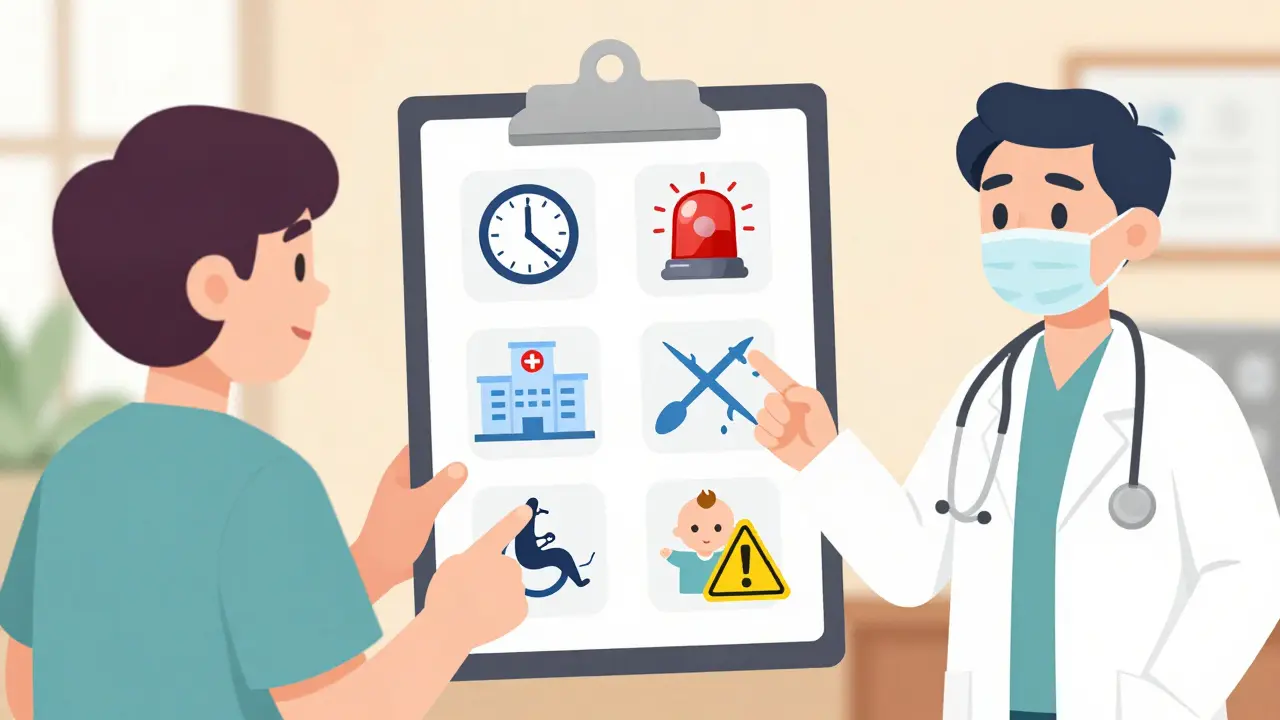
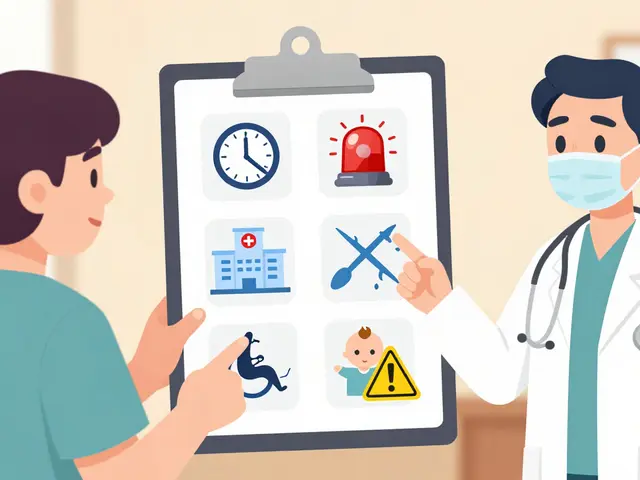
The U.S. Food and Drug Administration (FDA) doesn’t just track every little discomfort. They focus on events that seriously impact your health. A serious adverse event (SAE) is defined by one of five clear outcomes: death, life-threatening condition, hospitalization, permanent disability, or a birth defect. That’s it. No gray area. If an event doesn’t meet one of these, it’s not classified as serious - even if it feels awful.
What Makes an Adverse Event "Serious"?
Let’s break down the five criteria the FDA uses. First, death. This includes any death where the drug or device is suspected to have played a role, even if it’s not certain. Second, life-threatening. This doesn’t mean you were close to dying. It means you were at real risk of dying at the time the event happened. For example, a sudden drop in blood pressure that required emergency treatment counts. Third, hospitalization. This means you had to go to the hospital - or stayed longer than planned. A 24-hour extension counts. Fourth, disability or permanent damage. Think loss of vision, nerve damage that doesn’t reverse, or organ failure. Fifth, congenital anomaly. If a pregnant person takes a medication and the baby is born with a birth defect linked to the drug, that’s a serious event.
There’s also something called an Important Medical Event (IME). These aren’t on the official list, but if a doctor believes the event could become serious without treatment - like severe allergic reactions that haven’t yet caused hospitalization - it still gets reported as serious. In 2022 alone, IMEs added over 18,000 previously missed safety signals to the FDA’s database.
Serious vs. Severe: Why the Confusion?
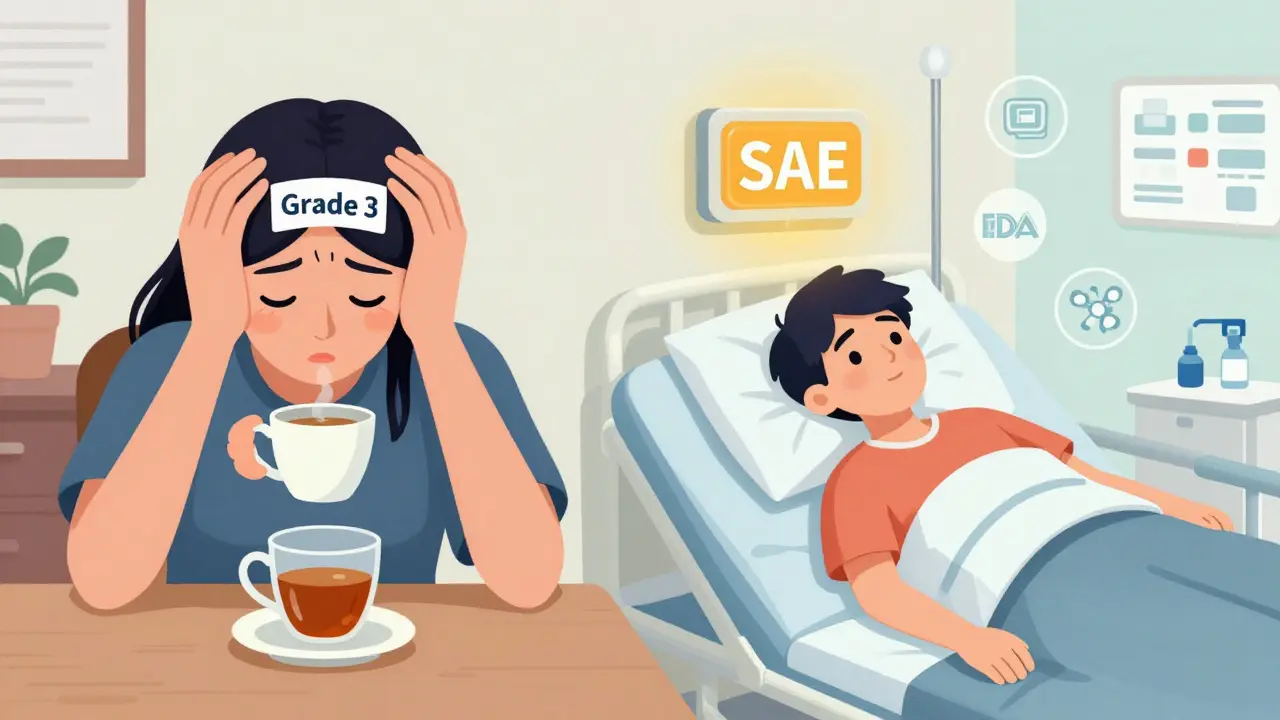
This is where most patients get tripped up. "Severe" is about how bad the symptom feels. "Serious" is about what happens to your body long-term. The FDA uses a separate scale for severity: Grade 1 (mild), Grade 2 (moderate), Grade 3 (severe), Grade 4 (life-threatening), and Grade 5 (fatal). But here’s the catch: a Grade 3 event - say, intense nausea that makes you vomit all day - isn’t automatically serious. If you don’t go to the hospital, don’t need IV fluids, and recover at home, it doesn’t meet the FDA’s serious criteria.
On the flip side, a Grade 1 headache that leads to a stroke? That’s serious. A Grade 2 rash that triggers anaphylaxis? Serious. The system is designed to catch what could kill you or permanently change your life - not just what makes you feel awful.
One 2022 survey of 1,543 trial participants found that 78% confused "serious" with "severe." Many panicked when they saw "Grade 3 neutropenia" listed in their trial data - until their nurse explained it was common, expected, and didn’t require hospitalization. That misunderstanding caused unnecessary stress. The American Society of Clinical Oncology even created patient guides in 2023 to clear this up, especially for cancer patients.
How the FDA Uses This Information
The goal isn’t just to count bad reactions. It’s to find patterns. If 50 people taking a new diabetes drug all end up in the hospital with the same kidney issue, that’s a red flag. In 2022, the FDA used SAE data to issue 128 safety alerts and update 47 drug labels. That means warnings got stronger, dosing changed, or in some cases, the drug was pulled from the market.
The FDA’s Adverse Event Reporting System (FAERS) collects reports from doctors, hospitals, and patients. In 2022, over 38,000 reports came directly from patients using Form 3500B. That’s up 12% from the year before. You don’t need to be a doctor to report. If you took a medication and ended up in the ER, you can file a report. It’s anonymous. And it matters.
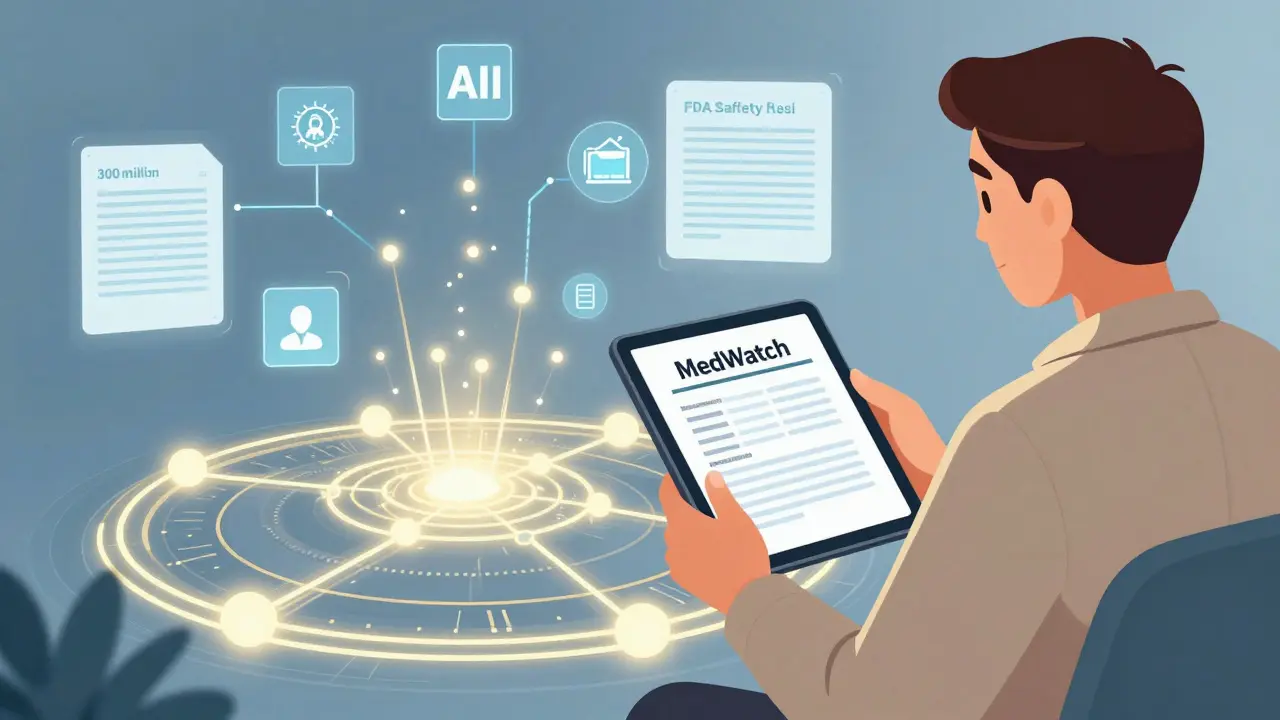
The Sentinel Initiative, which tracks data from 300 million patient records, helps spot signals faster than ever. AI tools now prioritize the most urgent reports - cutting review time from 30 days to just 7 for life-threatening events. This isn’t science fiction. It’s happening now.
What You Should Do as a Patient
If you’re in a clinical trial, ask for a plain-language explanation of SAEs during your consent meeting. Most sponsors now offer a 15- to 20-minute session just for this. Look for phrases like: "This event led to hospitalization," or "This reaction required emergency treatment." If you see "Grade 3" or "severe," ask: "Does this count as a serious event?"
When you get a new prescription, read the Medication Guide. It’s required by law. It will list "Serious Adverse Reactions" with percentages - like "Serious infections occurred in 2.3% of patients." That’s not a warning to panic. It’s a heads-up: know the signs, and act fast if they happen.
Here’s what to watch for:
- Any new symptom that forces you to go to the ER
- Unexplained fever lasting more than 48 hours
- Sudden confusion, trouble breathing, or chest pain
- Swelling, rash, or hives that spread quickly
- Dark urine, yellow skin, or extreme fatigue (signs of liver damage)
If you experience any of these, contact your provider - and consider reporting it to the FDA through MedWatch. You can do it online at fda.gov/medwatch. No medical degree needed.
Why This Matters Beyond the Lab
The system isn’t perfect. Experts estimate only 1% to 10% of actual adverse events are reported. Many people don’t know they can report. Others assume their doctor already did. But every report adds to the puzzle. A single patient’s report helped uncover a deadly interaction between two common heart drugs in 2021. That led to updated prescribing rules.
And it’s getting better. The FDA’s 2023 draft guidance says all future drug labels must use plain language to explain serious events. By 2025, clinical trial websites will be required to include simple summaries of SAEs - no jargon. A new patient education portal launches in late 2024. It’ll show real examples: "This is what a serious event looks like. This is what it doesn’t look like."
For patients, this isn’t about bureaucracy. It’s about control. When you understand what counts as serious, you stop worrying about every ache and fever. And you know exactly when to act - before it’s too late.
Comments
I had no idea a Grade 3 side effect wasn't automatically serious. My cousin panicked for weeks after her trial report said 'Grade 3 fatigue'-turned out she just needed more sleep. This post should be mandatory reading for anyone in a trial.
i just read this after my mom got a new prescription and honestly? i cried a little. she’s been terrified of every headache since her last med. this makes so much sense now. thank you for explaining it like a real human.
in india we rarely get clear info on adverse events. this is the first time i’ve seen a breakdown that actually helps. thank you for writing this. i’m sharing it with my sister who’s in a diabetes trial
THEY LET YOU REPORT TO THE FDA? WHAT IF THEY IGNORE IT? WHAT IF THEY’RE COVERING UP? I SAW A VIDEO ON TIKTOK WHERE A WOMAN DIED AFTER A VACCINE AND THEY SAID IT WASN’T SERIOUS BECAUSE SHE DIDN’T GO TO THE HOSPITAL. THAT’S A LIE. THEY KNOW. THEY ALL KNOW.
so like… if i get a headache and don’t go to the er, it’s not serious? cool.
as someone from indonesia, i’m amazed how transparent this system is. back home, side effects are buried in fine print. this level of clarity? rare. i wish more countries did this.
The regulatory framework delineated herein exhibits a commendable degree of precision. However, one must question the epistemological validity of patient-reported data as a primary source for pharmacovigilance, given the absence of standardized diagnostic criteria among laypersons.
this literally changed my life 😭 i used to think every weird symptom meant i was dying. now i know to look for the red flags-hospital, breathing trouble, swelling. i even reported my weird rash last month. felt so empowered 💪❤️
i read this whole thing and i’m still confused but like… i think i get it? if it makes you go to the er or your body breaks permanently then yeah its serious. but if you just feel like garbage for a week? not so much. also i misspelled something i think but whatever
this is why i love healthcare in the west. i’ve been in trials in 3 countries and this is the first time i felt like my voice mattered. reporting to the FDA? i did it after my ankle swelled up. turned out 12 others had the same thing. now the label says ‘watch for ankle edema’. that’s real change. 🙌
i wish more people knew you could report directly to the FDA its not just for doctors and hospitals and it could save lives
The fact that 78% of trial participants confuse 'severe' with 'serious' is alarming. This highlights a systemic failure in patient education. Clearer language in consent forms isn't optional-it's ethical.
so the FDA uses AI to prioritize reports… who trained it? what if it’s biased? what if it ignores reports from people of color? this feels like a black box. i’m not trusting this system anymore.