
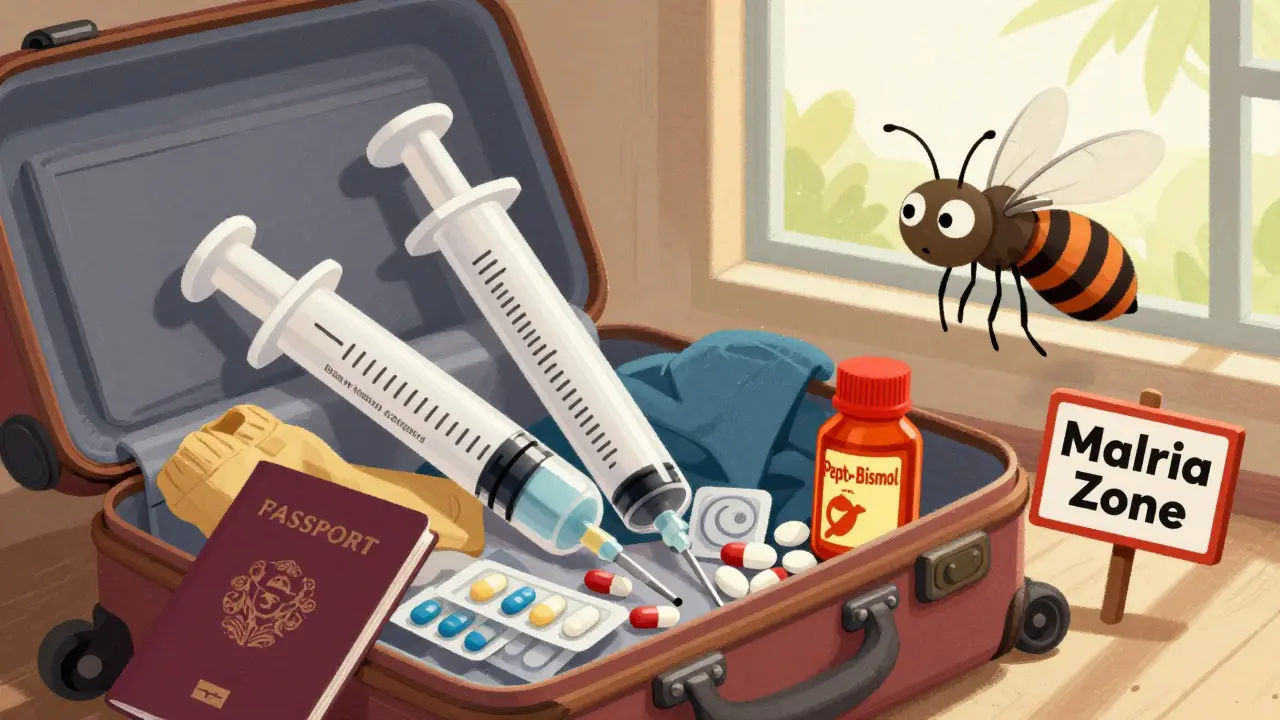
When you’re packing for a trip, you think about clothes, chargers, and maybe that one book you’ve been meaning to read. But what about your health? Every year, millions of people get sick while traveling - not because of bad luck, but because they skipped the basics. Travel medicine isn’t about fear. It’s about smart prep. And it’s not just for remote jungles or far-off countries. Even a weekend in Mexico City or a beach trip to Thailand can put you at risk if you don’t know what to do.
Why Vaccines Matter More Than You Think
The most common vaccine-preventable illness among travelers? Hepatitis A. It’s not rare. The CDC estimates 1.4 million cases happen globally each year, and about half of those are linked to food or water in places you’d think are safe. You don’t need to be hiking in rural India to catch it. Contaminated ice in a cocktail, undercooked shellfish, or even a salad washed in tap water can do it. The Hepatitis A vaccine works. One shot gives you 95% protection. Two doses, six to twelve months apart, give you protection for life. That’s not a suggestion - it’s a rule for anyone traveling outside North America, Western Europe, Australia, or New Zealand. And it’s not just Hep A. Make sure your routine shots are up to date: MMR, Tdap, and varicella. If you’re going somewhere with polio still around, you might need a booster. Some countries require proof of yellow fever vaccination to enter. Without that certificate, you’ll be turned away or quarantined for six days. Typhoid is another big one. The old oral vaccine? It’s fading out. The new typhoid conjugate vaccine (TCV) is better - 87% effective for three years, with just one shot. Older versions only gave 50-80% protection and needed boosters every few years. If you’re staying in a guesthouse, eating street food, or visiting rural areas, this isn’t optional. Get it at least 10 days before you leave. Vaccines take time to work. And yet, 73% of travelers wait until less than two weeks before departure. That’s like showing up for a marathon without training.Malaria Prophylaxis: It’s Not One-Size-Fits-All
Malaria isn’t just a tropical disease anymore. Climate change is pushing mosquito zones higher and farther. Since 2020, the areas where malaria can spread have grown by 15%. That means even places like highland regions in Ethiopia or parts of northern Argentina are now on the map. If you’re going anywhere with malaria risk - and the CDC lists over 90 countries - you need to take preventive medicine. There are four main options, each with trade-offs:- Atovaquone-proguanil (Malarone): 95% effective. Take one pill daily, starting 1-2 days before travel. Side effects? Mild - maybe nausea or headaches. But it costs about $220 for a 21-day trip.
- Doxycycline: 90% effective. Only $45 for the same period. But 30% of users get sunburns more easily. If you’re planning to hike, swim, or lie on the beach, this might not be your best pick.
- Mefloquine (Lariam): Weekly dose. Started 2-3 weeks before travel. But it’s been linked to anxiety, depression, and hallucinations in some people. One Reddit user reported severe neuropsychiatric symptoms in Thailand that landed them in the ER. Avoid if you have a history of mental health issues.
- Tafenoquine (Krintafel): Newer, weekly dose, started 3 days before travel. Approved for kids over 16 in 2025. But you must be tested for G6PD deficiency first - a genetic condition common in malaria areas that affects 10% of the population. If you’re deficient, this drug can destroy your red blood cells.
Safe Food Practices: The Rule That Saves Lives
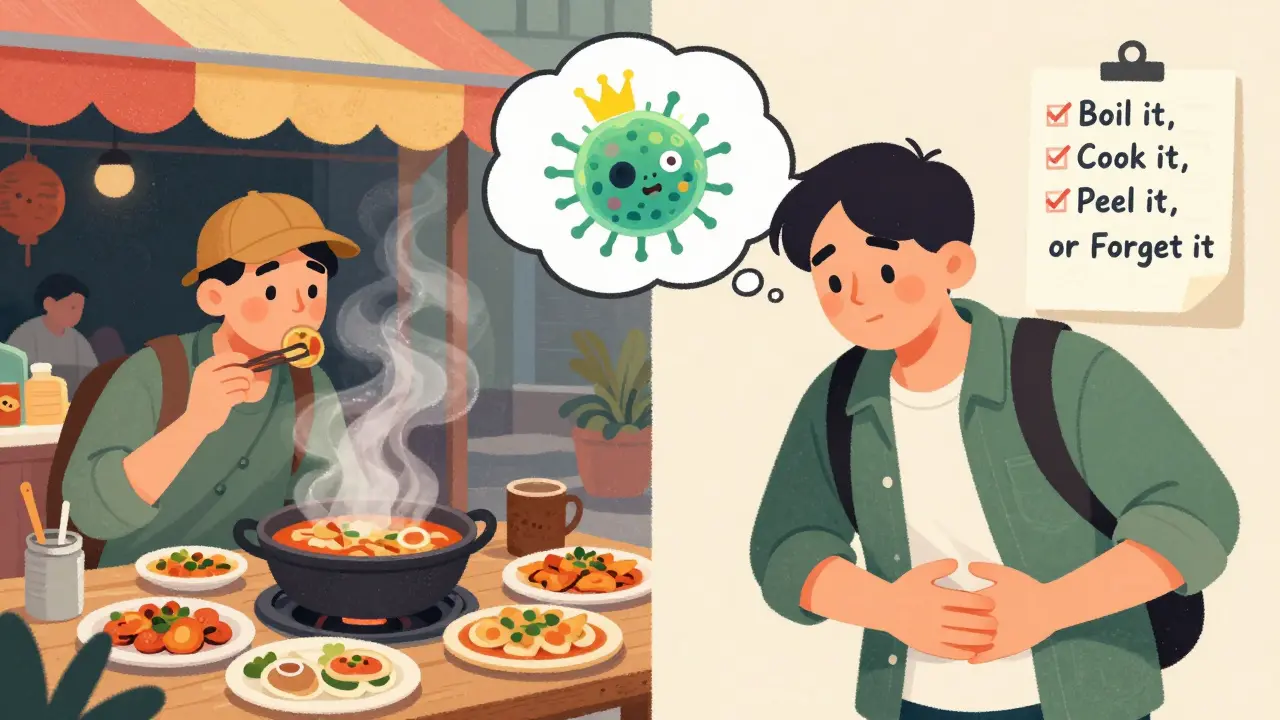
You’ve probably heard it: “Boil it, cook it, peel it, or forget it.” But how many people actually follow it? The CDC says travelers’ diarrhea affects 30-70% of people depending on where they go. Bacteria - mostly E. coli - cause 80% of those cases. It’s not always about street food. A hotel buffet, a fruit smoothie, or even ice cubes can be the source. Here’s what actually works:- Water: Only drink bottled, sealed water. Or boil it for at least one minute. Carbonated drinks are usually safe. Avoid ice unless you’re sure it’s made from purified water.
- Food: Eat things served piping hot - at least 165°F (74°C) for poultry, 160°F (71°C) for ground meat, and 145°F (63°C) for fish. If it’s lukewarm, skip it.
- Fruits and veggies: Peel them yourself. No exceptions. A banana from a vendor? Fine. A pre-peeled mango? No.
- Raw stuff: Avoid salads, uncooked herbs, salsas, and unpasteurized dairy. Even in fancy restaurants.
The Hidden Risks You Can’t See
It’s not just what you eat or what shots you get. There are other traps:- Antibiotic resistance: Azithromycin used to be the go-to for treating travelers’ diarrhea. Now, over 30% of E. coli strains in Southeast Asia are resistant. That means your usual pill might not work. Always carry a backup - and know your local options before you go.
- Medication rules: Some countries ban common U.S. drugs. ADHD meds, painkillers with opioids, even certain antihistamines can get you arrested. Carry prescriptions in the original bottles with a doctor’s note listing generic names. Ninety-eight percent of travel clinics recommend this.
- Climate change: Warmer temperatures mean mosquitoes are active longer and in new places. Malaria-endemic zones could expand by 25% by 2030. That’s not a future problem - it’s happening now.
What to Do Before You Go
Here’s your checklist:- Visit a travel clinic at least 4-6 weeks before departure. Vaccines need time.
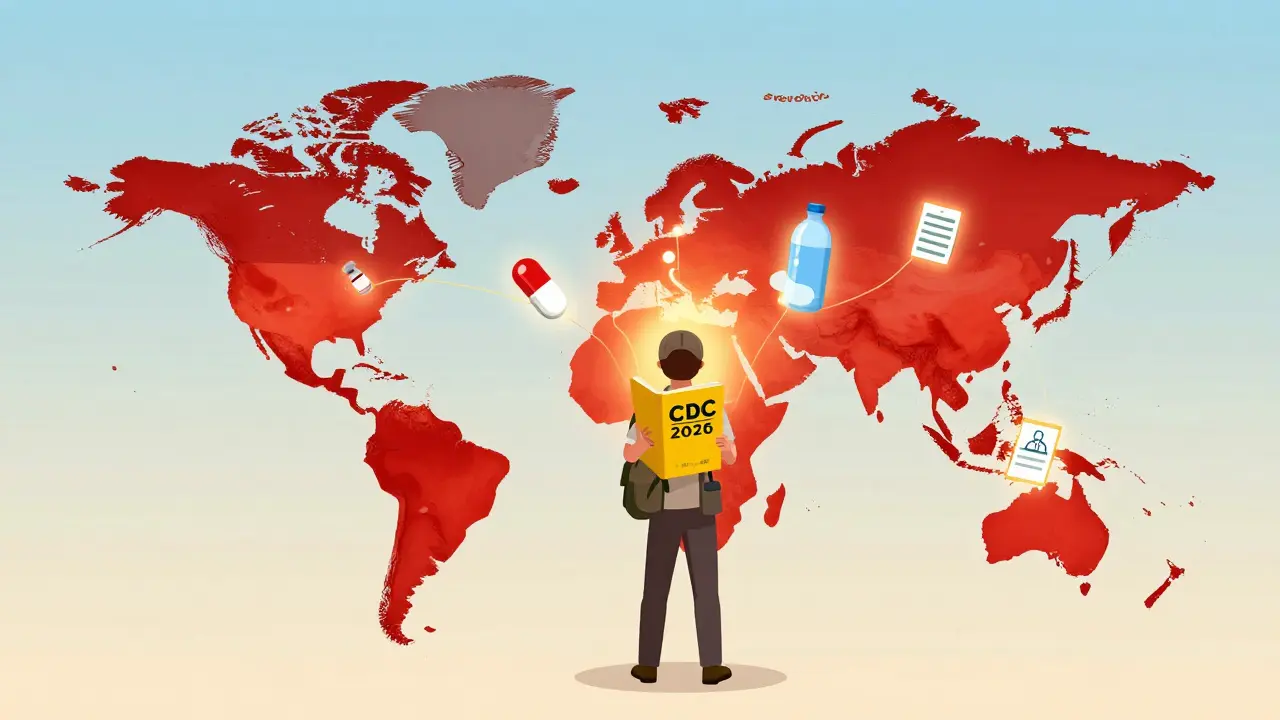
- Ask for the CDC Yellow Book 2026 - it’s the gold standard. 92% of U.S. travel clinics use it.
- Get tested for G6PD deficiency if you’re considering tafenoquine.
- Write down your medication schedule. Set phone reminders.
- Pack Pepto-Bismol and a backup antibiotic (like azithromycin or ciprofloxacin) - but check if they’re legal in your destination.
- Carry all meds in original containers with doctor’s notes.
What If You Get Sick?
If you develop diarrhea:- Stay hydrated. Use oral rehydration salts - they’re cheap and work better than sports drinks.
- Use bismuth subsalicylate to reduce symptoms.
- If it lasts more than 48 hours, has blood, or you’re feverish, take your antibiotic. Don’t wait.
- If you feel weak, dizzy, or can’t keep fluids down, get medical help. Dehydration kills faster than infection.
Final Thoughts
Travel medicine isn’t about paranoia. It’s about control. You can’t control the water, the food, or the mosquitoes. But you can control your vaccines, your meds, and your choices. Most travelers get sick because they assume they’ll be fine - or because they think it won’t happen to them. But the data doesn’t lie. With proper prep, you can cut your risk of illness by more than half. That’s not a guarantee. But it’s the best shot you’ve got.Do I need a vaccine if I’m only traveling to Europe?
For most of Western Europe, routine vaccines (like MMR and Tdap) are enough. But if you’re visiting rural areas, staying in hostels, or eating street food in Eastern Europe, Hepatitis A and typhoid vaccines are still recommended. Always check the CDC’s destination-specific advice - even Europe has outbreaks.
Can I take malaria pills if I’m pregnant?
Atovaquone-proguanil and chloroquine (in certain areas) are considered safe during pregnancy. Mefloquine is sometimes used with caution. Doxycycline and tafenoquine are not recommended. Always consult a travel medicine specialist - the risks of malaria during pregnancy are far greater than the risks of approved medications.
Is it safe to use tap water to brush my teeth abroad?
In most developing countries, no. Even if the water looks clean, it can carry bacteria that cause travelers’ diarrhea. In high-risk areas, use bottled or boiled water for brushing. In places like Japan or Canada, it’s usually fine. When in doubt, stick to bottled.
Why is the CDC Yellow Book the go-to resource?
It’s updated every two years with the latest data from global health agencies, field studies, and outbreak reports. It’s the only source that combines U.S. government guidelines with real-time data from over 100 countries. While other tools exist, 92% of U.S. travel clinics rely on it because it’s the most comprehensive and evidence-based.
What if I can’t find my prescribed malaria medication?
Many pharmacies in the U.S. have shortages, especially for atovaquone-proguanil. Talk to your doctor early. They can prescribe alternatives like doxycycline or adjust your schedule. Some travel clinics can help source medications. Never skip prophylaxis - the risk of malaria is far greater than the inconvenience.
Comments
Okay but let’s be real - most people think travel medicine is just about getting a shot and calling it a day. I’ve seen friends skip Hep A because ‘it’s just one cocktail’ and then spend three days in a bathroom in Oaxaca. The vaccine is cheap, it’s easy, and it’s one of the few things in life that gives you 95% protection with zero effort. I got mine at a CVS walk-in clinic for $120 with insurance. No appointment, no drama. Why are we still treating this like a luxury? It’s basic hygiene, not a spa day.
And don’t even get me started on the ice. I once saw a guy in Vietnam order a gin and tonic with ice cubes that looked like they’d been sitting in a puddle since 2019. He laughed. He died. Okay, not literally, but he was bedridden for a week. Boil it, cook it, peel it - or forget it. That rule exists for a reason. And yes, I’ve used Pepto-Bismol on every trip since 2018. It’s not magic, but it’s my bodyguard.
Ugh. Another CDC fearmongering pamphlet. I’ve been to 17 countries and never once got sick. You think I’m some fragile tourist who needs a vaccine passport just to eat a taco? Newsflash: humans evolved eating questionable food. We don’t need your overpriced clinics and your ‘yellow book’ to survive. I’ve had street food in Bangkok, raw fish in Peru, and tap water in Morocco. I’m still here. Maybe the real problem is people who panic over everything. Chill. Your body’s got a 100,000-year head start on your doctor’s checklist.
Just wanted to say I love how this post doesn’t just say ‘get vaccinated’ - it explains WHY. Like, I didn’t know typhoid conjugate vaccine was even a thing until now. I used to think the old oral one was fine. Now I’m going back to my doctor to redo my whole regimen. Also, the part about malaria expanding because of climate change? That hit me. I’m planning a trip to the Andes next year. I had no idea northern Argentina was on the map now. This isn’t fear. It’s awareness. And awareness saves lives. Thank you for writing this. I’m sharing it with my whole family.
Let me ask you something… Who REALLY benefits from all these vaccines? Who profits? Big Pharma. Who controls the CDC? Who funds the Yellow Book? The same corporations that sell you the pills, the vaccines, the ‘safe’ bottled water. And don’t even get me started on G6PD testing - that’s a trap. It’s designed to make you feel like you need to be ‘cleared’ by the system before you can even breathe air in a foreign country. They want you dependent. They want you afraid. They want you buying their solutions. The real risk? Not malaria. Not typhoid. It’s losing your autonomy. Trust your body. Eat the food. Drink the water. Your ancestors did. You can too.
It is of paramount importance to emphasize that the efficacy of prophylactic measures against vector-borne diseases is not merely a matter of personal choice, but a bioethical imperative. The statistical probability of contracting a preventable illness increases exponentially with non-adherence to evidence-based protocols. For instance, the 62% non-compliance rate with antimalarial regimens constitutes a public health liability, not a personal inconvenience. Furthermore, the assertion that ‘boil it, cook it, peel it’ is a sufficient heuristic is scientifically untenable without context - temperature thresholds must be precisely calibrated to pathogen thermal inactivation curves. One must not rely on colloquialisms when lives are at stake. I urge all travelers to consult peer-reviewed literature, not blog posts.
Have you ever considered that the CDC’s ‘malaria zones’ are inflated to justify pharmaceutical spending? I’ve traveled to over 20 countries in Southeast Asia. Never once taken malaria pills. Never once got sick. Meanwhile, I’ve seen people in Bangkok on Doxycycline, sunburned and moody, while I’m sipping fresh coconut water on the beach. Who’s really being protected here? And why is tafenoquine only approved for 16+? Why not 12? Why not 10? There’s a pattern. They don’t want you to travel. They want you to pay. And they want you to be afraid. Check the funding sources. Who owns the research? Who profits when you take the pill? I’ll leave that for you to Google.
I used to think this was all overkill. Then I got sick in Bali. Not just ‘stomach bug’ sick. Fever, chills, dehydration, couldn’t walk. Turned out it was E. coli from a ‘fresh’ fruit smoothie. The place looked clean. The vendor smiled. I didn’t peel it myself. I thought ‘it’s fine.’ It wasn’t. I spent three days in a hospital bed with a stranger’s phone charging next to me. I didn’t cry. I didn’t scream. I just stared at the ceiling and thought: I should’ve read the damn post. Now I carry Pepto. I check ice. I peel everything. And I don’t judge people who do. I just feel bad for anyone who didn’t.
It’s heartbreaking how many of us treat travel medicine like a chore. I’ve been to India three times. Each time, I met someone who didn’t get vaccinated and ended up in a clinic. Once, I sat with a woman from Ohio who had Hepatitis A. She cried because she couldn’t hold her baby. She thought, ‘I’m just going to Goa for a week.’ That’s all. A week. And it cost her months of recovery. I didn’t say anything. I just held her hand. I wish more people understood - it’s not about being paranoid. It’s about being responsible. You’re not just protecting yourself. You’re protecting the people you love. The vendor who served you the salad. The child who shared your taxi. The nurse who had to clean your vomit. You owe them that much.
So… you’re telling me I need to get a vaccine to eat a taco in Mexico City? And also not drink the water? And also peel my mango? And also carry Pepto-Bismol like it’s my emotional support pill? And also get a doctor’s note for my ADHD meds? And also test for G6PD before taking a malaria pill that might be banned in 17 countries? I’m starting to think the real goal here isn’t health - it’s making me feel like I’m about to enter a sci-fi border checkpoint. Next thing you know, I’ll need a passport, a visa, a vaccine certificate, a hydration waiver, and a signed consent form for breathing humid air. I’m just here for the tacos. Can’t I just… eat them? 😅
Get the vaccines. Take the meds. Peel the fruit. That’s it. No drama. No guilt. No lectures. Just do it. You don’t need a PhD to understand that contaminated water makes you sick. You don’t need a conspiracy theory to know that mosquitoes carry disease. Simple rules. Simple actions. Done. No need to overthink. Just follow the checklist. You’ll thank yourself later.
Bro. I went to Thailand. Ate street food. Drank the water. Didn’t get sick. Didn’t need a vaccine. Didn’t take pills. Just chilled. If you’re scared of food, maybe you shouldn’t travel. I’ve been to 12 countries. Still alive. Still eating. Still smiling. Your ‘rules’ are just fear in a lab coat. Trust your gut. Literally.
There’s a deeper layer here - one that isn’t about disease, but about trust. We live in a world where we’re told to fear the foreign, the unfamiliar, the unregulated. We’re told to distrust the water, the food, the soil, the air. But what if the real illness isn’t Hepatitis A? What if it’s the erosion of our ability to be present in a place - to sit with its rhythms, to taste its truth, to accept its imperfections? Vaccines are tools. But they shouldn’t become armor. The moment we turn travel into a checklist of defenses, we stop traveling. We start surviving. And that’s not what adventure is for.