
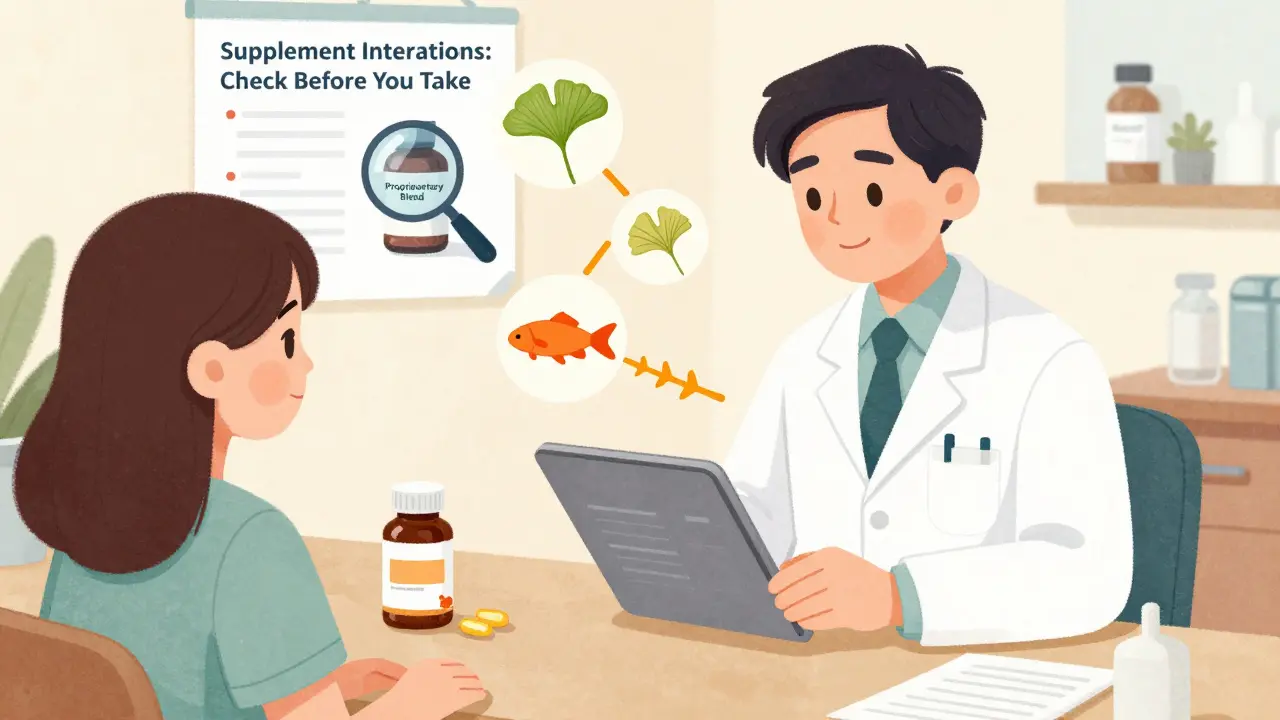
Every year, millions of people take supplements alongside their prescription drugs-vitamins, herbal teas, fish oil, magnesium, turmeric, melatonin. Many assume these are harmless because they’re "natural." But here’s the truth: supplement interactions land over 23,000 people in U.S. emergency rooms annually. And most of those cases are preventable.
If you’re a patient, caregiver, or healthcare provider, knowing how to check for these hidden dangers isn’t optional. It’s essential. This guide walks you through exactly how to use drug interaction databases to spot risks before they become emergencies.
Why Supplement Interactions Matter More Than You Think
Over half of U.S. adults take at least one dietary supplement. Among those over 57, nearly half are also on prescription medications. That’s a recipe for trouble if you don’t check for clashes.
Take ginkgo biloba. Many take it for memory or circulation. But if you’re on warfarin, apixaban, or any blood thinner, ginkgo can thin your blood too much-leading to uncontrolled bleeding. Or St. John’s wort: it’s popular for mild depression, but it can make birth control pills fail, reduce the effectiveness of antidepressants, or lower levels of HIV meds.
These aren’t rare cases. A 2023 study at Johns Hopkins found a 78-year-old patient on apixaban nearly had a stroke because their ginkgo supplement wasn’t flagged. Only after checking a specialized database did the pharmacist catch it.
The problem? Most people don’t tell their doctors about supplements. Studies show only 37% of patients disclose them. And even when they do, many providers don’t know how to look them up.
Which Databases Actually Work for Supplements?
Not all drug interaction tools are created equal. General databases like DDInter or basic versions of Lexicomp focus on prescription drugs. They often miss supplements entirely-or give vague answers like "possible interaction."
For supplements, you need tools built for ingredient-level detail. Here are the top three used by professionals:
- NatMed (formerly Natural Medicines): The gold standard. It maps over 1,900 supplements to their exact active ingredients, including 51,000+ commercial product formulations. It tells you not just if there’s an interaction, but how it happens-like whether it affects liver enzymes (CYP450) or platelet function. Clinical pharmacists rate its accuracy at 94.3%.
- FDB’s MedKnowledge: Used in 92% of U.S. hospitals. It integrates directly with EHR systems like Epic and Cerner. Good for quick alerts during prescribing, but only covers about 2,400 supplements-less than NatMed.
- DrugBank: Has the broadest drug database (over 13,000 drugs), but supplement coverage is weaker. Only 42% of its supplement interactions include mechanism details.
Bottom line: If you’re checking supplements, use NatMed. It’s the only one that reliably identifies what’s actually in the bottle-not just the label name.
Step-by-Step: How to Check a Supplement in a Database
Here’s how to do it right-no guesswork, no skipped steps.
- Ask the patient (or yourself) for every supplement. Don’t just ask, "Do you take vitamins?" Say: "What pills, powders, teas, or tinctures do you take daily? Include herbal products, protein shakes, and even CBD oil." Write down the brand name, dosage, and frequency.
- Find the exact ingredient list. Look at the Supplement Facts panel. Many products hide ingredients under "proprietary blends." If you see "Blend of herbs: 500mg," you can’t trust it. Search the brand online or use a barcode scanner app (like Supplement Facts or ConsumerLab) to find the full breakdown.
- Enter the active ingredient, not the brand name. Type "milk thistle" into the database, not "TheraFlora Milk Thistle 200mg." Databases recognize compounds, not marketing names. If you’re unsure what the active ingredient is, search the product name on the NatMed or DrugBank website.
- Match it with every medication. Enter each prescription or OTC drug the person takes. Don’t skip aspirin, ibuprofen, or antacids-they all interact too.
- Read the severity rating. NatMed uses four levels: Contraindicated (avoid completely), Major (monitor closely), Moderate (possible risk), Minor (unlikely to matter). If you see "Major" with a blood thinner, anticoagulant, or chemotherapy drug, stop and consult a pharmacist.
- Check the mechanism. Is it a CYP3A4 inhibition? That means the drug builds up in your system. Is it additive sedation? That could cause dizziness or falls. Understanding how it works helps you decide what to do.
- Use the management advice. Good databases don’t just warn-they suggest alternatives. Example: "If taking ginkgo with apixaban, switch to omega-3 fish oil (no interaction)." Follow that guidance.
Common Mistakes That Lead to Dangerous Overlooks
Even experienced providers mess this up. Here are the top three errors:
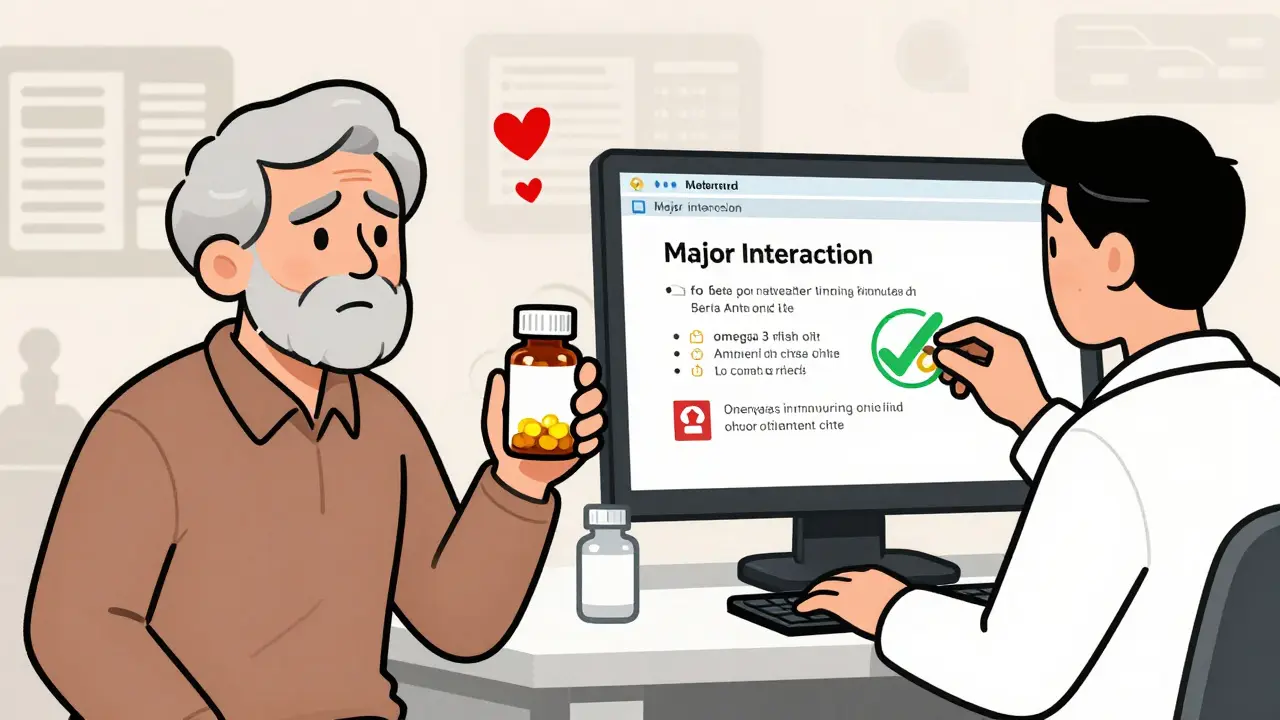
- Assuming "natural" means safe. Just because something is herbal doesn’t mean it’s gentle. Kava, for example, can cause liver failure. Licorice root can raise blood pressure and lower potassium.
- Using a general drug database. If you’re using Epocrates or Micromedex and it says "no interaction found," you’re not looking hard enough. Those tools weren’t built for supplements.
- Ignoring brand differences. Two "magnesium glycinate" products can have different absorption rates or additives that change interactions. Always verify the full ingredient list.
One pharmacist in Boston told me she caught a life-threatening interaction because she noticed a patient’s "multivitamin" contained 200mcg of vitamin K-enough to counteract warfarin. The label didn’t list it clearly. Only by cross-checking the barcode did she find it.
What to Do When the Database Doesn’t Recognize a Supplement
Emerging products-especially CBD, adaptogens like ashwagandha, or new herbal blends-are often missing. Here’s what to do:
- Search for the active compound: "CBD," "berberine," "rhodiola rosea."
- Check PubMed or the NIH’s LiverTox database for case reports.
- Use a trusted third-party source like ConsumerLab or Labdoor to verify ingredients.
- If you’re still unsure, consult a clinical pharmacist. Most hospitals have one on call.
As of 2024, only 37% of CBD-drug interactions are documented in commercial databases. That means if someone’s taking CBD with antidepressants or seizure meds, you’re flying blind unless you dig deeper.
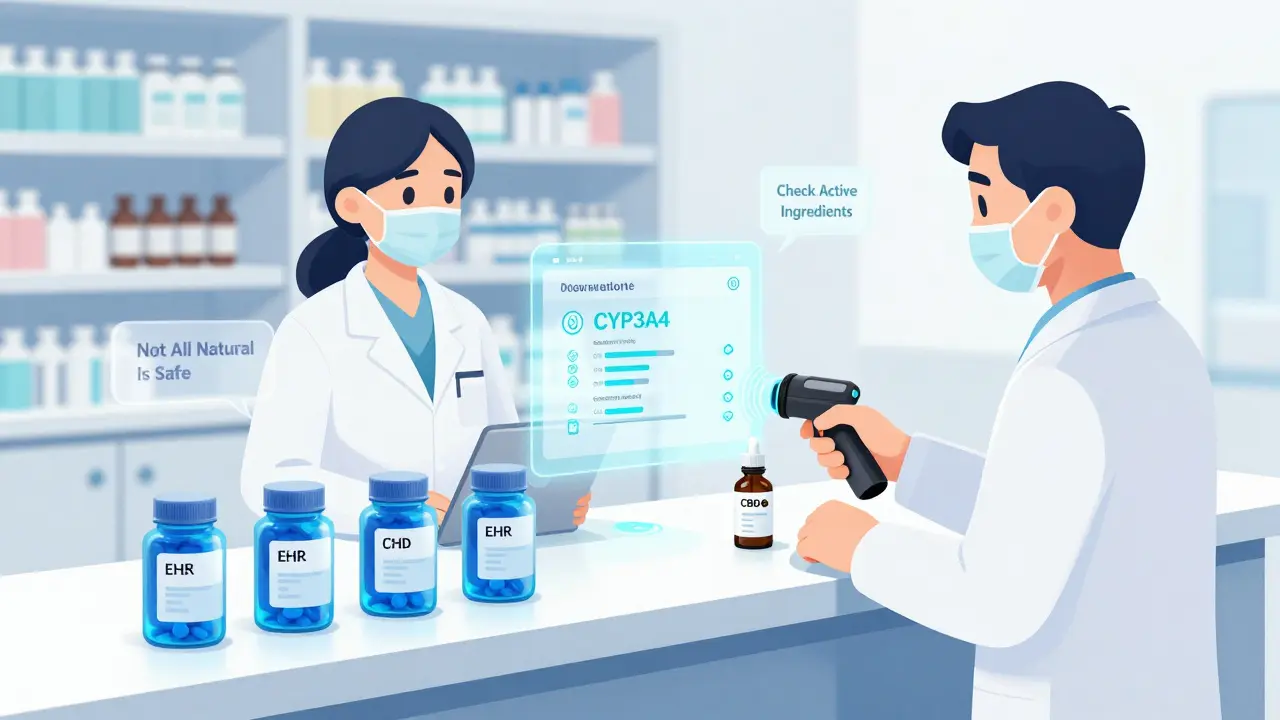
How Clinicians Are Making This Routine
Hospitals and pharmacies are starting to treat supplement checks like vital signs. In 2024, 89% of U.S. hospitals require supplement screening for patients on anticoagulants, chemotherapy, or immunosuppressants.
Some clinics now use standardized questionnaires like the 10-item Supplement History Interview. It’s simple: "Do you take anything besides your prescriptions? Even once a week?"
Pharmacy schools now teach this in their core curriculum. The American Society of Health-System Pharmacists ranked NatMed as the #1 tool for supplement interaction accuracy.
And it’s working. One hospital in Minnesota cut preventable adverse drug events by 31% in two years after implementing mandatory supplement screening with NatMed.
What’s Coming Next
The field is evolving fast. In 2024, NatMed added AI-powered name recognition so typing "milk thistle extract" or "Silybum marianum" pulls up the same result. FDB is rolling out automatic alerts in Epic EHR systems-so if you prescribe a blood thinner, the system will flag if the patient’s supplement list includes ginkgo or garlic.
The FDA is testing blockchain verification for supplement ingredients, so manufacturers must prove what’s in the bottle. That’s huge. Right now, 68% of supplement products contain unlisted ingredients, according to the FDA.
By 2027, we may see real-time interaction alerts through smart pill bottles that sync with EHRs. But for now, the best tool is still the one you use today: a reliable database, careful questioning, and attention to detail.
Final Tip: Make It a Habit
Don’t wait for someone to get sick. Make checking supplements part of every medication review-whether you’re a patient, nurse, pharmacist, or doctor.
Here’s your quick checklist:
- Always ask about supplements-every visit.
- Get the full ingredient list, not just the brand name.
- Use NatMed or another supplement-specific database.
- Check every drug, even OTC and herbal ones.
- When in doubt, consult a pharmacist.
Supplements aren’t harmless. They’re powerful. And like any medicine, they need to be checked.
Can I use free online tools to check supplement interactions?
Some free tools like WebMD or MedlinePlus offer basic interaction checks, but they’re not reliable for supplements. They often miss key ingredients, don’t distinguish between brand formulations, and lack severity ratings. For anything serious-especially if you’re on blood thinners, antidepressants, or chemotherapy-use a clinical-grade database like NatMed. Free tools might give you false reassurance.
What if my supplement isn’t listed in the database?
If the supplement isn’t in the database, search for its active ingredient (e.g., "berberine," "ashwagandha") instead of the brand name. Check peer-reviewed studies on PubMed or the NIH’s LiverTox database for case reports. If you’re still unsure, contact a clinical pharmacist. Never assume safety just because it’s not listed.
Are herbal teas safe with medications?
No, not necessarily. Green tea can interfere with blood thinners and beta-blockers. St. John’s wort tea can reduce the effectiveness of birth control, antidepressants, and HIV meds. Even chamomile can increase sedation when mixed with benzodiazepines. Treat herbal teas like any other supplement-check them in a reliable database.
Do over-the-counter (OTC) drugs interact with supplements too?
Yes, absolutely. Common OTCs like ibuprofen, acetaminophen, antacids, and sleep aids can interact. For example, calcium supplements can reduce absorption of thyroid meds and antibiotics. Antacids can lower levels of vitamin B12 and iron. Always check interactions between supplements and all medications, not just prescriptions.
How often should I check for interactions?
Check every time you start, stop, or change a supplement or medication. Even small changes matter. A new multivitamin, a different brand of fish oil, or switching from aspirin to naproxen can trigger a new interaction. Make it part of every medication review-ideally every 3-6 months if you’re on chronic meds.
Comments
It’s fascinating how we treat supplements like harmless tea when they’re essentially unregulated pharmaceuticals. The CYP450 enzyme system doesn’t care if something is ‘natural’-it only responds to chemical structure. I’ve seen patients on clopidogrel take turmeric for ‘inflammation’ and end up with GI bleeds. The real issue isn’t the supplement-it’s the cultural myth that ‘natural’ equals ‘safe.’ We need to reframe this in medical education.
Let me be brutally honest-most people are just one bad supplement away from a stroke or liver failure. NatMed is the only tool that matters. FDB? Too slow. DrugBank? Half-baked. And don’t even get me started on WebMD-those algorithms are trained on ads, not pharmacokinetics. If you’re not using NatMed, you’re not practicing medicine-you’re gambling. And if you think your ‘organic multivitamin’ is safe? That’s not ignorance, that’s negligence.
Anyone who relies on free databases for supplement interactions is endangering lives. The data is incomplete, the ratings are vague, and the interface is designed for consumers, not clinicians. This isn’t a suggestion-it’s a professional obligation. If your EHR doesn’t integrate NatMed, demand it. Your malpractice insurer will thank you.
Oh so now we’re treating herbal tea like a controlled substance? Next they’ll make us sign a waiver before sipping chamomile. I mean, sure, ginkgo and warfarin? Fine. But let’s not turn every bedtime drink into a pharmacology exam. People just want to sleep, not become biochemists. The FDA should regulate the supplements, not make patients play detective.
There’s a deeper issue here. Why do we assume patients will volunteer supplement use? We don’t ask about alcohol or tobacco with the same urgency. The problem isn’t the database-it’s the medical culture that treats supplements as peripheral. Until we embed supplement history into the standard intake form like allergies or vital signs, we’re just patching a leaky dam with duct tape. And yes, I’ve checked every active ingredient in my magnesium glycinate. Twice.
I’m a nurse and I’ve started asking every patient, ‘What’s in your medicine cabinet besides prescriptions?’-no jargon, just friendly. Most people light up and say, ‘Oh I take this weird mushroom powder for stress’ or ‘My mom swears by this blueberry tea.’ It’s not about scaring them-it’s about listening. And yeah, I use NatMed. I’ve saved at least three people from bleeding out because I asked. It’s not rocket science. Just care.
Here’s the truth no one will admit-big pharma hates NatMed because it exposes how many supplements are just placebo with hidden active ingredients. The FDA knows 68% of products have unlisted stuff. That’s why they’re dragging their feet on blockchain. They don’t want you to know that your ‘organic turmeric’ is laced with synthetic NSAIDs. You think this is about safety? It’s about control. Don’t trust the system. Check everything. Always.
This is exactly the kind of guide we need. Simple. Clear. No fluff. I’ve shared this with my dad who’s on five meds and takes fish oil and melatonin. He didn’t even know they could interact. Now he checks every new supplement with me. We don’t need fancy tech-just a habit. Ask. Check. Confirm. Repeat. It’s not hard. It’s just something we’ve forgotten to do. Thank you for reminding us.
YES YES YES!! I just started using NatMed after my aunt had a near-miss with St. John’s wort and her SSRIs!! I’m now obsessed with checking every single thing-even the ‘herbal tea’ my grandma drinks. I print out the interaction reports and bring them to her appointments. My pharmacist called me ‘the supplement detective’ and I wear it as a badge of honor!!
While the procedural framework outlined herein is methodologically sound, it remains critically insufficient in the absence of standardized nomenclature across supplement manufacturing entities. The reliance upon active ingredient identification presupposes uniformity in labeling-a condition demonstrably unmet in 68% of cases per FDA interim reports. Furthermore, the absence of mandatory pharmacovigilance reporting for dietary supplements renders the entire protocol vulnerable to systemic epistemic failure. Until regulatory bodies enforce ingredient traceability via ISO 13485-compliant serialization, this guide constitutes an epiphenomenon of clinical aspiration divorced from structural reality.