
Workplace Medication Safety Risk Calculator
Assess Your Medication Safety Risk
Based on CDC and NIOSH data, certain prescription medications significantly increase workplace injury risk. This tool estimates your risk based on what you're taking.
Your Safety Risk Assessment
What You Can Do
- Work with your healthcare provider: Discuss non-opioid pain management alternatives like physical therapy or cognitive behavioral therapy.
- Ask your workplace: Request closed-system transfer devices, proper ventilation, and regular surface wipe tests.
- Report exposure: If you notice contamination or unsafe practices, report it to your manager or union.
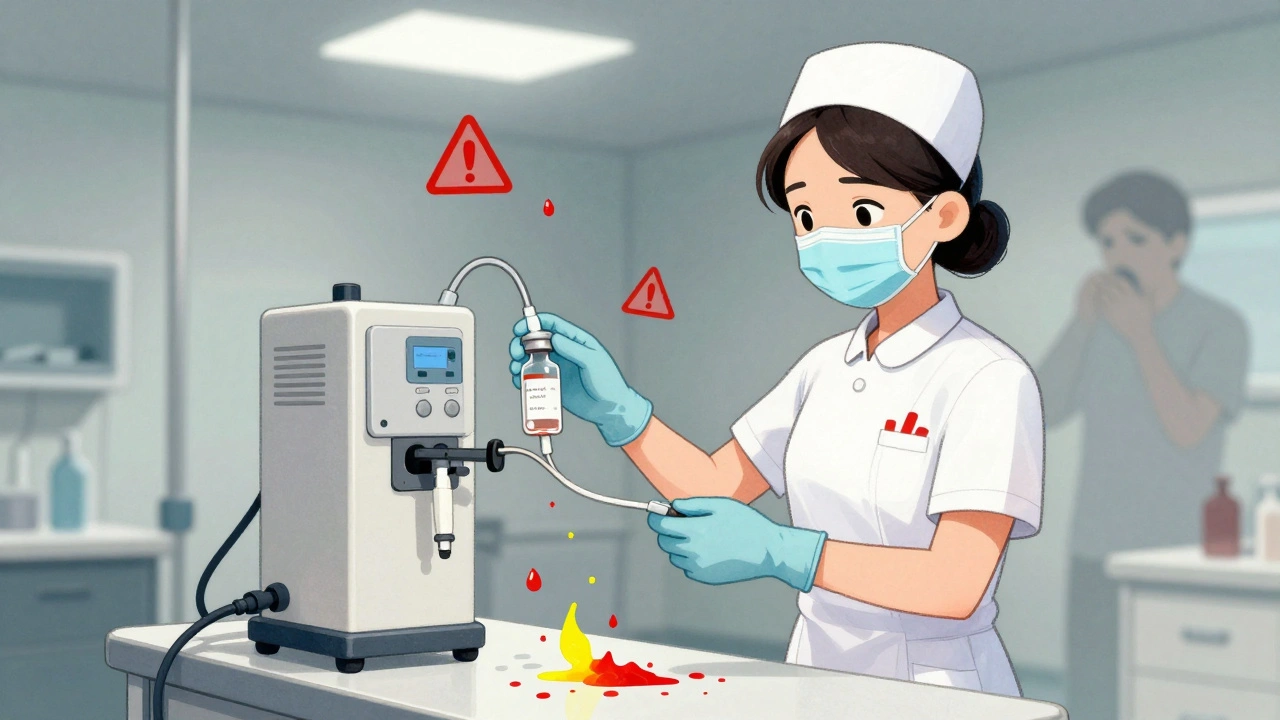
More than 8 million U.S. healthcare workers handle dangerous drugs every day-drugs that can cause cancer, birth defects, or organ damage just from skin contact or breathing in tiny particles. At the same time, nearly one in five workers with chronic pain are taking opioids, and one in 14 are on benzodiazepines for stress or anxiety. These aren’t just medical issues-they’re workplace safety emergencies.
Two Sides of the Same Problem
There are two very different, but equally dangerous, ways medications affect work safety. One side is about workers taking prescription drugs that slow their reaction time, blur their vision, or make them dizzy. The other side is about workers exposed to hazardous drugs as part of their job-like nurses mixing chemotherapy, pharmacists preparing injections, or lab techs handling toxic substances.Both scenarios lead to injuries, long-term illness, and even death. And neither gets enough attention.
Prescription Drugs That Turn Jobs Into Hazards
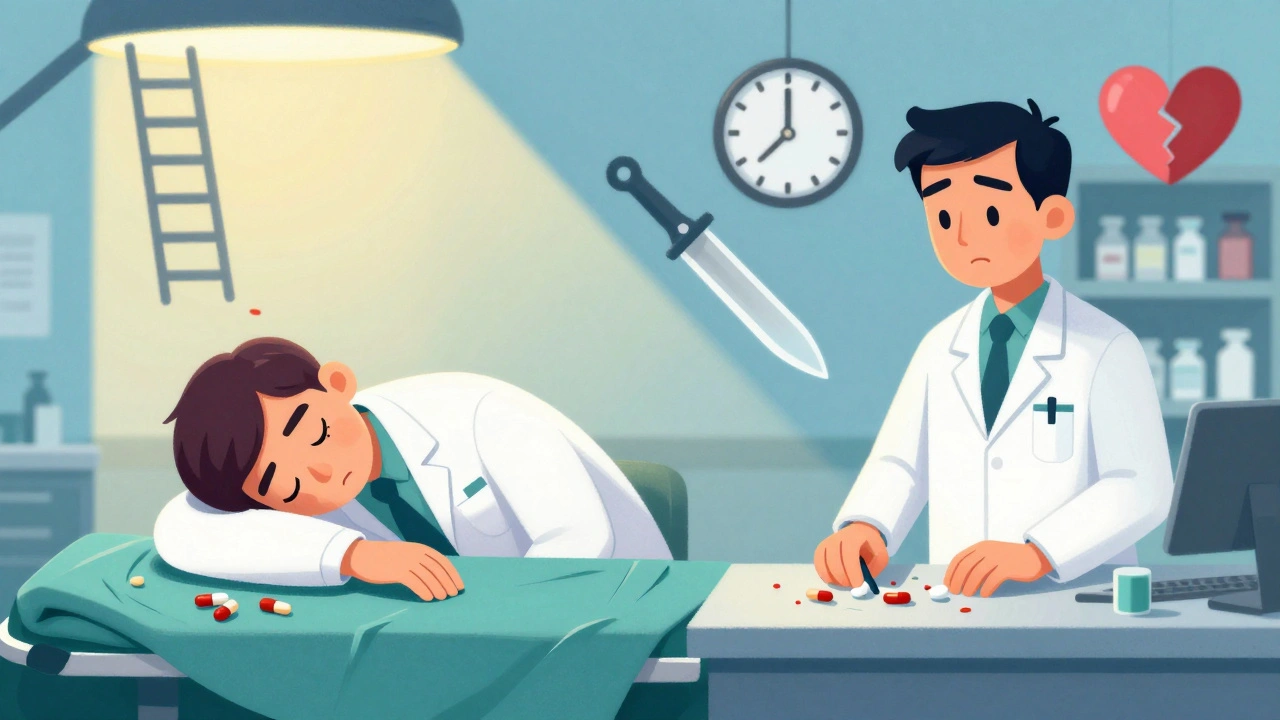
Opioids and benzodiazepines are among the most commonly prescribed medications in the U.S. workforce. NIOSH found that 18.7% of workers with back or joint pain are on opioids. That’s more than one in five. Another 7.2% are taking benzodiazepines like Xanax or Valium for anxiety or sleep issues.Individually, these drugs can make you drowsy. Together, they’re deadly. A 2017 study in the Journal of Occupational and Environmental Medicine showed workers taking both opioids and benzodiazepines had an 84% higher risk of falling on the job. That’s not just a slip-it’s a fall from a ladder, a missed step on a hospital floor, a delayed reaction during surgery.
And it’s not just accidents. Workers on these drugs are 2.1 times more likely to get injured on the job, according to CDC data from 2018. That means more broken bones, more lost workdays, more workers’ compensation claims. One anesthesiologist on Medscape described feeling dizzy and nauseous after taking prescribed painkillers for a back injury-nearly causing a surgical error. That wasn’t an outlier. It’s a pattern.
Drug-free workplace policies try to fix this. SureHire’s 2023 analysis of 1,287 workplaces found those policies cut medication-related incidents by 42%. But they also push workers to hide their prescriptions. Dr. Robert Gotlin pointed out in the Journal of Occupational Rehabilitation that 32% of workers who needed these drugs for legitimate medical reasons lost their jobs-not because they were unsafe, but because they were honest about their treatment.
Handling Hazardous Drugs: The Silent Exposure
Now flip the script. Imagine you’re not the one taking the drug-you’re the one preparing it, packing it, or cleaning up after it. That’s the reality for nurses in oncology units, pharmacy techs, and lab staff. The 2024 NIOSH list of hazardous drugs includes 370 medications, most of them cancer treatments.These aren’t just dangerous to patients. They’re dangerous to the people who handle them. Exposure happens in four main ways: breathing in vapors (38% of cases), skin contact with spills (29%), touching contaminated surfaces (22%), or accidental needle sticks (4%).
The results? In 17 documented cases reviewed by OSHA, workers developed nausea, vomiting, skin rashes, and even hair loss after short-term exposure. Long-term? Workers exposed to antineoplastic drugs have 3.4 times higher risk of developing certain cancers, according to OSHA’s 2022 review of 12 studies. Women exposed to these drugs face 2.3 times higher risk of miscarriage or birth defects, based on a CDC meta-analysis of 47 studies.
One chemotherapy nurse on Reddit shared her story: after three years of handling these drugs-even while following all protocols-she developed chronic skin rashes. Surface tests in her unit showed detectable contamination in 68% of work areas. That’s not negligence. That’s systemic failure.
What’s Being Done-and What’s Missing
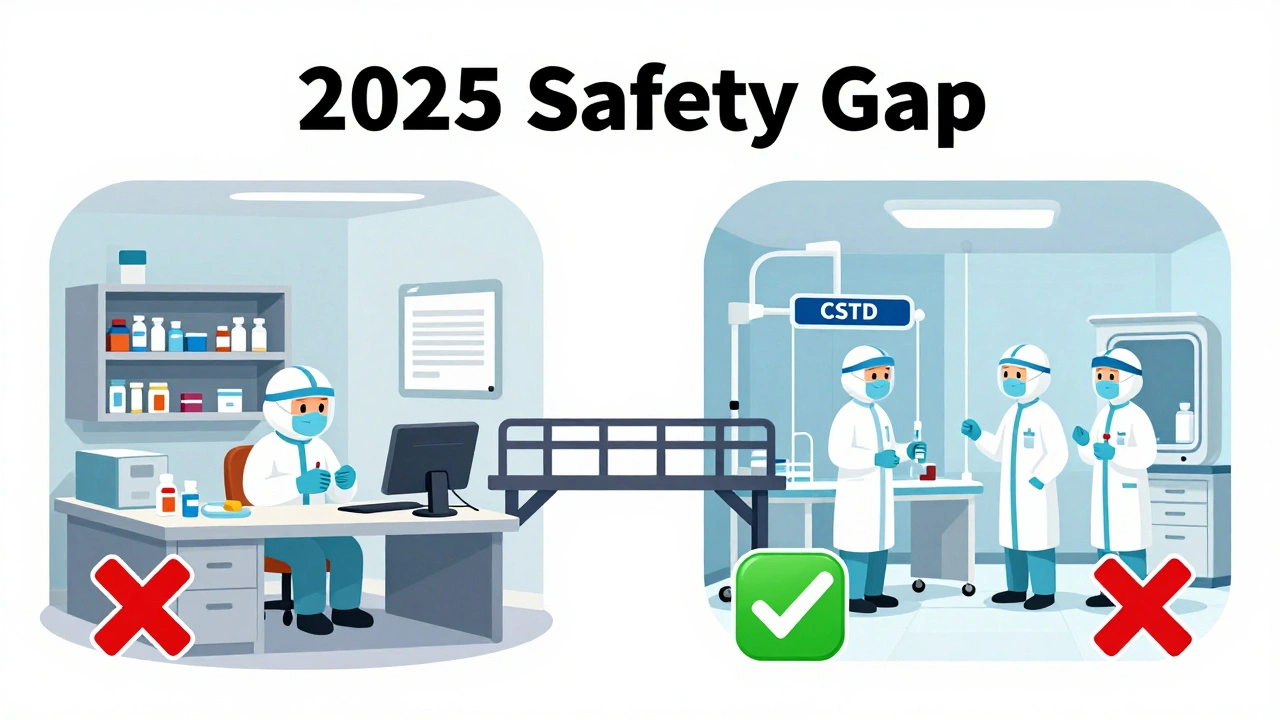
There are rules. OSHA’s Hazard Communication Standard (29 CFR 1910.1200) requires labeling and training for hazardous chemicals. But here’s the catch: it doesn’t cover all workplaces. About 1.8 million healthcare workers in small clinics, private practices, and home care settings fall outside OSHA’s reach.Then there’s USP Chapter 800, the gold standard for handling hazardous drugs. It mandates closed-system transfer devices, special ventilation, and strict PPE protocols. But it only applies to compounding pharmacies-about 58,000 workers. Most hospitals, nursing homes, and outpatient centers aren’t legally required to follow it.
Still, places that do follow it see dramatic results. Mayo Clinic cut hazardous drug exposures by 89% between 2018 and 2020 using engineering controls and better training. A pharmacy tech on WorkCompWire reported contamination dropped from 42% to just 4.7% in six months after adopting NIOSH’s 2024 guidelines.
Unionized facilities have 22% fewer medication-related incidents than non-union ones, according to AFL-CIO’s 2023 analysis. Why? Better enforcement, stronger safety culture, and workers who feel safe speaking up.
The Tools That Actually Work
You can’t rely on willpower alone. You need tools.- Closed-system transfer devices (CSTDs): These are special connectors that prevent drugs from escaping during mixing or transfer. WorkSafeBC’s 2021 tests showed they reduce surface contamination by 94.7%.
- Proper ventilation: Negative-pressure rooms and high-efficiency air filters pull airborne particles away from workers. Facilities without them are at high risk.
- Training: NIOSH says it takes 16-24 hours of initial training, plus 4-8 hours every year. Workers who skip this are 43% more likely to mishandle PPE, according to CDC field studies.
- PPE that fits: Gloves, gowns, and masks must be worn correctly. NIOSH found that after 8 hours of hands-on training, 92% of workers could don and doff PPE properly.
But here’s the problem: 31% of facilities have safety cabinets that don’t work with their drug systems. 27% have outdated ventilation. And 43% of observed staff skip PPE steps because they’re rushed, uncomfortable, or told it’s “not necessary.”
The Cost of Doing Nothing
This isn’t just about health. It’s about money. The National Safety Council estimates occupational medication incidents cost $4.7 billion a year in the U.S.-$2.1 billion in medical bills, $1.8 billion in lost productivity, and $800 million in workers’ compensation.At the same time, the market for safety equipment is booming. It was worth $2.3 billion in 2023 and is expected to hit $3.8 billion by 2028. Hospitals with 200+ beds are 78% likely to have full hazardous drug programs. Facilities under 50 beds? Only 34% do.
That gap isn’t just unfair-it’s deadly. Small clinics are where many nurses, aides, and technicians work. They’re the ones most likely to be exposed and least likely to have protection.
What’s Changing in 2025
The landscape is shifting. NIOSH removed liraglutide and pertuzumab from its hazardous list in February 2024 after new data showed lower risk. The FDA now requires boxed warnings on 27 antineoplastic drugs about occupational exposure risks.AI is stepping in. Johns Hopkins is testing a system that predicts high-exposure scenarios with 92% accuracy-alerting staff before contamination happens. OSHA is expected to propose a surface contamination limit of 0.1 ng/cm² by late 2024, a standard that could force every facility to upgrade.
And employers are starting to connect medication safety to overall wellness. SHRM’s 2024 survey found 63% of large employers plan to expand their programs in 2024-2025. That means better access to non-opioid pain treatments, mental health support for stress-related benzodiazepine use, and safer handling protocols for everyone.
What You Can Do Right Now
If you’re a worker: Know your rights. Ask if your facility follows NIOSH’s 2024 guidelines. Demand access to closed-system devices. Report contamination. You’re not being difficult-you’re preventing cancer.If you’re a manager: Don’t wait for a citation. Run surface wipe tests. Train your staff properly. Replace old cabinets. Partner with your union. The cost of prevention is a fraction of the cost of a lawsuit or a lost worker.
If you’re on medication: Talk to your doctor about alternatives. Can you switch from opioids to physical therapy? Can you replace benzodiazepines with cognitive behavioral therapy? Your job isn’t worth your health-but your health shouldn’t cost you your job.
The truth is simple: No one should get sick because they showed up to work. Whether you’re taking a pill or mixing a drug, safety isn’t optional. It’s the baseline.
Can taking prescription painkillers at work really cause accidents?
Yes. Workers taking opioids or benzodiazepines are 2.1 times more likely to suffer workplace injuries, according to CDC NIOSH data from 2018. The risk jumps 84% when both drug types are used together. These medications slow reaction time, impair coordination, and cause dizziness-making falls, equipment errors, and surgical mistakes far more likely.
Which healthcare workers are most at risk from hazardous drugs?
Workers in oncology units (28%), pharmacies (32%), and ambulatory surgery centers (19%) face the highest exposure rates, according to CDC 2023 data. Nurses, pharmacy technicians, and lab staff who handle chemotherapy, antivirals, or hormone therapies are most at risk, especially if they lack proper ventilation or closed-system transfer devices.
What’s the difference between OSHA and USP Chapter 800 rules?
OSHA’s Hazard Communication Standard applies to most workplaces but doesn’t specifically regulate hazardous drugs. USP Chapter 800 is the gold standard for handling these drugs-it requires special equipment, training, and procedures-but it only legally applies to compounding pharmacies. Most hospitals and clinics follow it voluntarily, not because they’re required to.
Are there safe alternatives to opioids for chronic pain at work?
Absolutely. Physical therapy, cognitive behavioral therapy, non-opioid pain relievers like acetaminophen or NSAIDs, and nerve blocks are proven alternatives. A 2023 study showed workers who switched from opioids to these methods had 41% fewer missed workdays and no increase in pain levels.
How can I tell if my workplace is safe from hazardous drug exposure?
Ask if they use closed-system transfer devices, have negative-pressure rooms, conduct regular surface wipe tests, and provide annual training. If they can’t show you documentation from NIOSH’s 2024 guidelines or if contamination levels exceed 5%, your workplace is not meeting safety standards.
Comments
So let me get this straight-we’re gonna ban opioids for workers but let hospitals keep dumping chemo fumes into the air like it’s a damn perfume sample? Classic. Pick your poison: drowsy or dying. Meanwhile, the CEO’s on his third vacation this year.
There is a profound moral failure here, one that transcends mere policy or regulation. We have commodified human life to the point where a nurse’s cancer risk is weighed against a hospital’s balance sheet. This is not negligence-it is systemic violence dressed in PPE. The fact that we still debate whether to install CSTDs is proof that we have lost our humanity. We are not protecting workers-we are managing liability.
Let’s be real-this whole thing is a scam. Big Pharma pushes the pills, hospitals push the chemo, and then they blame the worker for being ‘non-compliant’ when they get sick. They’ll never admit that profit comes before protection. I’ve seen it. My cousin worked in a clinic that reused gloves because ‘it was fine.’ She got leukemia at 32.
so like… if i take xanax for anxiety and my boss finds out, i lose my job? but if i’m mixing chemo all day and get cancer? that’s just ‘part of the job’?? lol. capitalism is a glitch.
It is imperative to acknowledge that the absence of enforceable federal standards for hazardous drug handling constitutes a dereliction of duty by regulatory agencies. The current patchwork of voluntary compliance mechanisms is statistically inadequate and ethically indefensible. Employers must be held to a uniform, legally binding standard that mirrors the rigor of USP Chapter 800 across all healthcare settings, irrespective of facility size or funding model.
While I appreciate the data presented, I must emphasize that personal responsibility remains paramount. If an individual chooses to take opioids for chronic pain, they must accept the consequences-including potential workplace restrictions. Safety protocols are meaningless if the worker undermines them through self-medication. Discipline, not regulation, is the true safeguard.
Y’all act like this is some new crisis. In my dad’s day, you worked through the pain, you didn’t whine about chemo vapors. Now we’ve got nurses wearing hazmat suits to draw blood. Next thing you know, they’ll be requiring air filters for coffee breaks. This country’s gone soft.
Every single person reading this has a role to play-whether you’re a nurse, a manager, or just someone who knows someone who works in healthcare. Ask questions. Push for training. Support your coworkers who speak up. Safety isn’t a checklist-it’s a culture. And cultures are built one honest conversation at a time. You don’t need a law to do the right thing. You just need to care enough to try.
Did you know the FDA’s new boxed warnings are just a distraction? They’re working with the same companies that made the drugs in the first place. And the AI system at Johns Hopkins? It’s probably owned by a defense contractor that also makes PPE. This isn’t safety-it’s a PR stunt. They want you to think they’re fixing it, while quietly moving the goalposts. Wake up.