
Supplement-Drug Interaction Checker
Check Your Potential Interactions
Enter your current medications and supplements to see if there are dangerous interactions. This tool uses a database of known interactions from medical research.
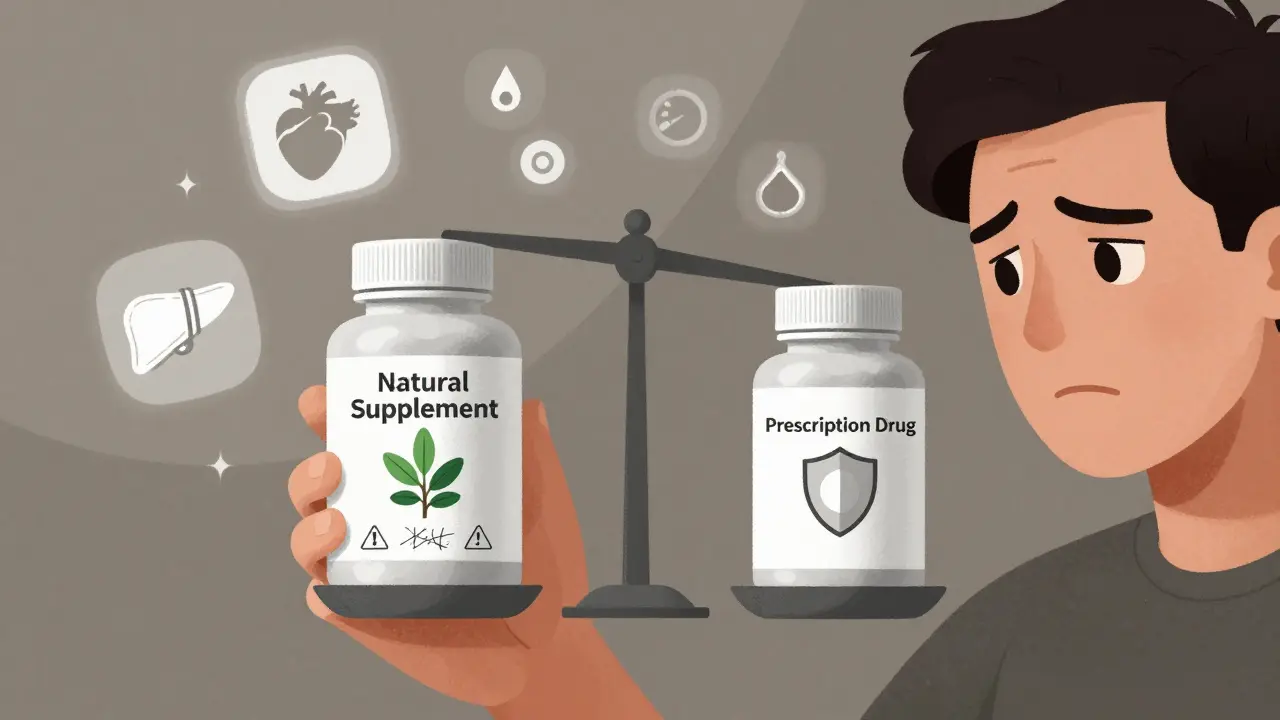
Many people believe that if something is labeled "natural," it must be safer than a pill from the pharmacy. You see it on labels: "100% natural," "plant-based," "no chemicals." It sounds comforting. But here’s the truth: natural doesn’t mean safe. And when you mix herbal supplements with prescription drugs, you’re playing Russian roulette with your health.
Why "Natural" Doesn’t Mean Safe
The idea that nature is pure and pharmaceuticals are dangerous is a myth. Plants have been used for medicine for thousands of years-but that doesn’t mean they’re harmless. Foxglove, for example, contains digitalis, a chemical used in heart medication. Eat the plant raw? You could die. St. John’s wort, often taken for mild depression, can make birth control pills useless or cause dangerous spikes in blood pressure when mixed with antidepressants. Kava, once popular for anxiety, was linked to severe liver damage and banned in several countries. The FDA doesn’t test herbal supplements for safety before they hit store shelves. Under the Dietary Supplement Health and Education Act (DSHEA) of 1994, these products are classified as food, not medicine. That means manufacturers don’t have to prove they work or are safe before selling them. They only need to avoid making false claims about curing diseases. The burden of proof? It falls on the FDA after harm is done-not before.How Pharmaceuticals Are Actually Regulated
Prescription drugs go through years of testing. Before approval, they must pass multiple phases of clinical trials involving thousands of people. Researchers track side effects, interactions, dosing, and long-term risks. Manufacturing is tightly controlled: every batch is tested for purity, potency, and consistency. Facilities are inspected regularly. If a drug causes serious harm after release, the FDA can issue warnings, require label changes, or pull it off the market. Compare that to herbal supplements. A company can sell a turmeric capsule with no proof it contains actual turmeric, no testing for heavy metals, and no warning about interactions with blood thinners. One 2022 Consumer Reports survey found that 68% of supplement users thought the FDA checks these products for safety before sale. That’s not true. The FDA only steps in after someone gets sick.The Interaction Problem Nobody Talks About
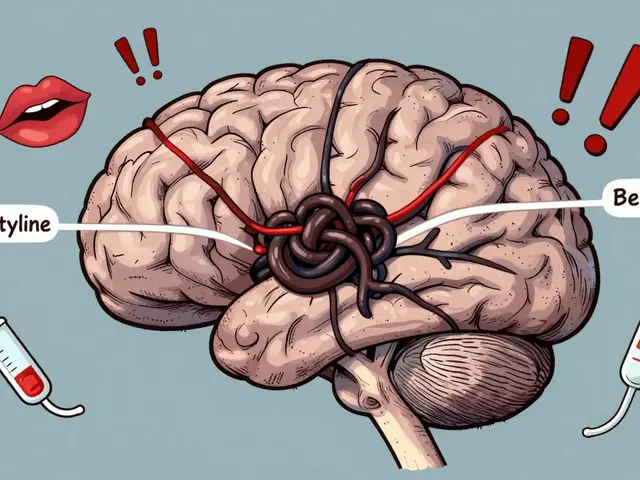
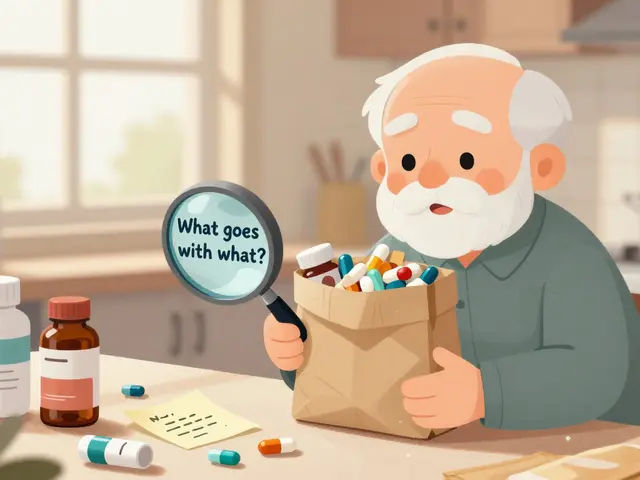
Most people don’t tell their doctors they’re taking supplements. A 2022 study in JAMA Internal Medicine found that 70% of patients never mention their herbal products during appointments. That’s dangerous. St. John’s wort can reduce the effectiveness of antidepressants, birth control, and even some cancer drugs. Garlic supplements can thin your blood-so if you’re on warfarin or about to have surgery, you could bleed uncontrollably. Ginkgo biloba has been linked to increased bleeding risk too. And don’t assume "mild" means harmless. Even vitamins like K or E can interfere with medications if taken in high doses. Pharmaceutical side effects are well-documented because they’re tracked. The Mayo Clinic estimates about 8% of hospital admissions in the U.S. are due to adverse drug reactions. But that number includes only reported cases. For supplements, underreporting is the norm. In 2022, the FDA received just 1,200 adverse event reports for dietary supplements-compared to over 120,000 for prescription drugs. That doesn’t mean supplements are safer. It means most people don’t connect their symptoms to what they took. They blame a cold, stress, or aging.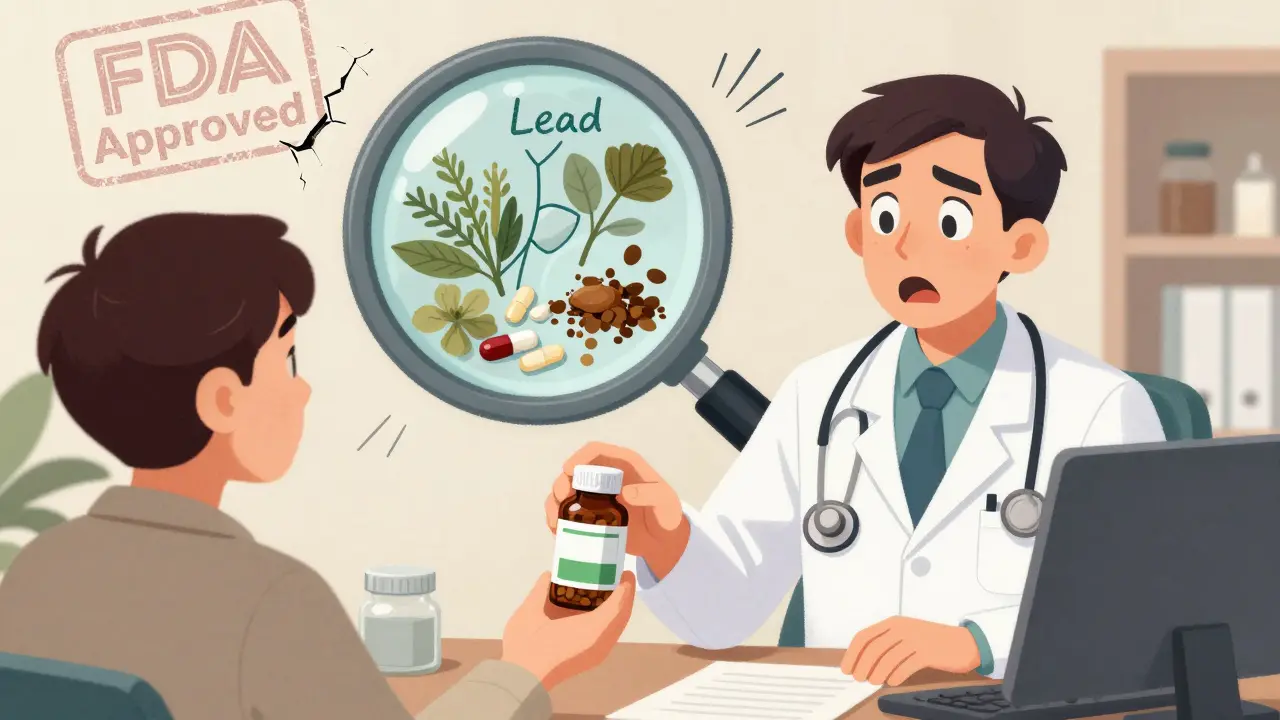
What the Numbers Really Show
Some argue that herbal supplements cause far fewer deaths than pharmaceuticals. And technically, that’s true. The CDC estimates around 100,000 deaths per year in the U.S. from properly prescribed medications. But here’s the catch: those drugs are prescribed by doctors who know the risks. They monitor patients. They adjust doses. They check for interactions. Supplements? You buy them off a shelf, take them because a friend said they work, and never think twice. The real issue isn’t death rates-it’s preventable harm. A 2017 NIH review found that serious reactions to herbs are rare-but they’re also underreported. Most cases of poisoning from herbal products come from misidentification (thinking you’re taking chamomile but it’s a toxic lookalike), contaminated batches, or taking too much. One study found that 1 in 5 herbal products didn’t contain the herb listed on the label. Another found lead, arsenic, or pesticides in supplements sold online.Who’s at Risk?
Older adults are the most vulnerable. They’re more likely to take multiple medications and supplements. A 2020 study found that 40% of Americans over 65 use at least one herbal product. Many are taking blood pressure meds, diabetes drugs, or anticoagulants-all of which can interact dangerously with common supplements like coenzyme Q10, ginseng, or fish oil. People with chronic illnesses are also at higher risk. Someone with liver disease should avoid kava or green tea extract. Someone with an autoimmune condition should be cautious with echinacea, which can overstimulate the immune system. And if you’re pregnant, many herbs are off-limits-even ones labeled "safe" because they’ve been used in traditional medicine.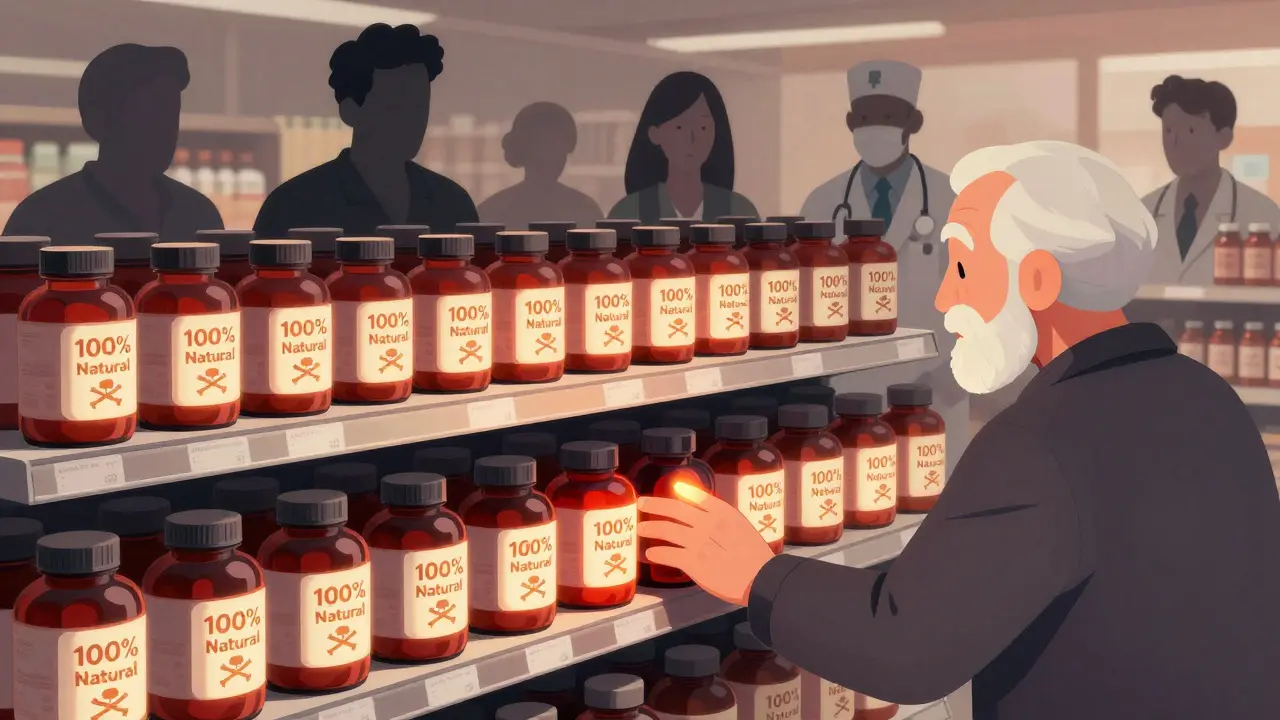
What You Can Do to Stay Safe
If you take supplements, here’s how to reduce your risk:- Tell your doctor-every single supplement you take, even if you think it’s "just a vitamin." Write it down and bring the bottle.
- Look for third-party verification. Choose products with the USP Verified Mark, NSF Certified, or ConsumerLab Approved. These mean the product was tested for ingredients, contaminants, and potency.
- Don’t assume "natural" means safe. Just because it comes from a plant doesn’t mean your body can handle it in pill form.
- Check interaction databases. The NIH Office of Dietary Supplements and MedlinePlus have free, science-backed tools to check for interactions.
- Stop taking supplements before surgery. Most surgeons ask you to stop two weeks before. Don’t skip this step.
The Bigger Picture
The supplement industry is worth $50 billion in the U.S. alone. Companies spend millions marketing "natural" as better, cleaner, more spiritual. But science doesn’t care about marketing. It cares about evidence. And the evidence shows: both pharmaceuticals and natural products can be harmful. The difference? One is regulated. The other isn’t. New legislation like the Dietary Supplement Listing Act of 2023 might change that. It would require supplement makers to register products and submit safety data before selling them. But until then, the responsibility falls on you.Final Reality Check
Natural products aren’t evil. Many life-saving drugs, like aspirin and morphine, were originally derived from plants. But turning a plant into a medicine means isolating the active ingredient, testing it, and controlling the dose. That’s not what most supplements do. They sell the whole plant-unprocessed, untested, and unpredictable. If you want to use herbs, fine. But treat them like medicine. Not as harmless candy. Because when it comes to your health, the label doesn’t matter. What matters is what’s inside-and how it interacts with everything else you’re taking.Are herbal supplements regulated like prescription drugs?
No. Herbal supplements are classified as dietary supplements under DSHEA, not drugs. That means they don’t need FDA approval before being sold. Manufacturers aren’t required to prove safety or effectiveness. Prescription drugs, on the other hand, must pass multiple clinical trials and meet strict manufacturing standards before approval.
Can natural supplements interact with my prescription medications?
Yes, and often dangerously. St. John’s wort can reduce the effectiveness of birth control, antidepressants, and HIV meds. Garlic and ginkgo can increase bleeding risk when taken with blood thinners. Even common supplements like vitamin K or magnesium can interfere with heart or kidney medications. Always check for interactions before combining supplements with prescriptions.
Why do so many people think natural products are safer?
It’s a psychological bias. People associate "natural" with purity, safety, and tradition. Marketing plays into this, using words like "organic," "plant-based," and "chemical-free"-even when the product is heavily processed. The FDA doesn’t define or regulate the word "natural," so companies can use it freely. This creates a false sense of security.
What should I look for on a supplement label?
Look for third-party verification seals like USP Verified, NSF Certified, or ConsumerLab Approved. These mean the product was independently tested for ingredients, contaminants, and potency. Avoid products that make bold claims like "cures cancer" or "100% effective." Also check the ingredient list for fillers, additives, or unlisted pharmaceuticals-some supplements have been found to contain hidden drugs like sildenafil (Viagra).
Is it safe to take supplements during pregnancy?
Many are not. While prenatal vitamins are generally safe, other supplements like black cohosh, dong quai, or high-dose vitamin A can harm fetal development. Even echinacea and ginger, often considered safe, lack enough research to confirm their safety during pregnancy. Always consult your OB-GYN before taking any supplement while pregnant.
How do I know if a supplement is contaminated?
You can’t tell by looking. Contamination with heavy metals (lead, mercury), pesticides, or even prescription drugs happens often. The only way to know is to choose products tested by independent labs like USP or NSF. A 2020 study found that 1 in 5 herbal supplements didn’t contain the herb listed on the label. Buying from reputable retailers and avoiding ultra-cheap products reduces risk.
Should I stop taking supplements before surgery?
Yes. Many supplements increase bleeding risk or interfere with anesthesia. Garlic, ginkgo, ginseng, fish oil, and vitamin E are common culprits. Most surgeons recommend stopping all supplements at least two weeks before surgery. Don’t assume your doctor knows you’re taking them-always tell them.
Comments
Look, I get it-people want to believe in the myth of the pure, earth-born remedy, like some kind of spiritual detox fantasy… but let’s be real: nature doesn’t care if you live or die. Foxglove? Beautiful flower. Deadly poison. Digitalis? Life-saving drug. Same molecule. One’s in a lab, the other’s in your garden-and somehow, the lab version gets demonized? That’s not logic-that’s romanticized ignorance. And don’t even get me started on the supplement industry’s marketing departments-they’ve turned "natural" into a cult slogan, like chanting "om" while swallowing lead-laced turmeric capsules…
It’s not about fear-it’s about responsibility. You wouldn’t drink raw hemlock because it’s "plant-based," so why swallow a pill with the same active compound, unregulated, untested, and labeled "for wellness"? The FDA doesn’t regulate supplements because Congress let the industry lobby them into a loophole in 1994-and now we’re all paying for it with ER visits, liver failure, and silent strokes nobody connects to that "natural energy boost" they took last week.
And yet… people still think they’re being "holistic" or "anti-corporate" by choosing a bottle from a Whole Foods shelf over a prescription. Please. The only thing holistic about it is the hypocrisy. You’re not rejecting Big Pharma-you’re embracing Big Profit, just with a different logo. And the worst part? You don’t even know what’s in the damn thing. One study found 20% of supplements didn’t contain the herb on the label. Twenty percent. That’s not a risk-that’s a lottery ticket where the prize is organ failure.
And don’t tell me "I’ve been taking it for years!"-that’s not evidence, it’s anecdote. Your body might be lucky. But luck isn’t a safety protocol. Science is. Regulation is. Transparency is. And if you’re not demanding that from your supplements, you’re not being natural-you’re being naive.
It’s time we stop glorifying ignorance as wisdom. Natural doesn’t mean safe. It just means unregulated. And unregulated means someone else-your doctor, your pharmacist, your family-is going to clean up the mess when your liver gives out. And no, you won’t even know why. Because you never told anyone you were taking it. Because you thought it was "just a herb."
Interesting framework… but the underlying epistemological flaw here is the false binary between "natural" and "pharmaceutical." Both are chemical entities-just sourced differently. The real issue isn’t origin-it’s dosage, bioavailability, and pharmacokinetic profiling. Most supplements lack standardized dosing, which makes risk stratification impossible. Meanwhile, pharma has pharmacovigilance systems, but they’re reactive, not proactive. So we’re stuck in this paradox: regulated products have known risks, unregulated ones have unknown ones… and we’re all just guessing.
Also, the FDA’s 1,200 adverse event reports for supplements? That’s not proof of safety-it’s proof of underreporting. People don’t link "feeling weird" to that ashwagandha they took. So the data is garbage. We need mandatory reporting and blockchain traceability. Until then, it’s all just narrative-driven risk assessment… which is basically astrology with better packaging. 😅
Oh please. You’re telling me that because something comes from a tree, it’s somehow less dangerous than a pill made in a lab? That’s not science. That’s New Age nonsense dressed up as wisdom. I’ve seen people take 10 different herbal supplements at once, mix them with blood thinners, and then blame their stroke on "stress." No. You blamed it on stress because you didn’t want to admit you were playing Russian roulette with your own body. The supplement industry is a scam. They know it. You know it. But you keep buying it because it makes you feel like you’re "living authentically."
Meanwhile, your doctor is sitting there, wondering why your INR is sky-high after you started taking ginkgo. But you never told them. Because you think they don’t "understand natural healing." Newsflash: they’ve seen this a thousand times. And they’re tired of cleaning up your mess.
OMG YES!! I literally just told my mom this last week-she’s been taking kava for "anxiety" and also takes her blood pressure med… and I was like MOM NOOOO. She said "but it’s natural!" and I almost cried. Like… the plant that got banned in 3 countries because people’s livers exploded?? That’s not wellness, that’s a time bomb!! I made her stop and get a USP label one. She’s still mad at me but I don’t care-she’s alive. 🙌 Also, my cousin took ginkgo before surgery and bled out for 4 hours-thank god they caught it. Please, people. Just TELL YOUR DOCTOR. Even if it’s "just a vitamin."
Good post. I’m a nurse and I see this every day. Patients come in with 12 supplements, don’t mention them, then get admitted for something that could’ve been avoided. I keep a list on my phone of common interactions-St. John’s wort + SSRIs, garlic + warfarin, green tea extract + thyroid meds. It’s insane how many don’t know. I always say: if you wouldn’t inject it into your vein, don’t swallow it without asking. Simple.
Let’s be honest-the real problem isn’t supplements. It’s that people think they can self-diagnose and self-treat like they’re on a wellness podcast. You wouldn’t prescribe yourself antibiotics, but you’ll take 500mg of ashwagandha because TikTok said it "balances your chakras." The supplement industry thrives on ignorance. And the FDA? They’re underfunded and overworked. Until we treat supplements like drugs-meaning, require proof of safety before sale-we’re just delaying the inevitable. And the victims? Always the elderly. Always the vulnerable. Always the ones who trust the label.
And don’t get me started on "organic" supplements. That just means the plant was grown without pesticides. It doesn’t mean the capsule doesn’t contain heavy metals from the soil. Or that it’s not laced with sildenafil. I’ve seen it. Multiple times. It’s not paranoia. It’s documented.
I used to take melatonin for sleep… then I found out it interacts with my antidepressant. I didn’t know. No one told me. I just thought it was "harmless." I felt like an idiot. Now I bring every bottle to every appointment-even the gummy vitamins. My doctor says it’s the most responsible thing patients can do. So I do it. Not because I’m scared-but because I care about my health enough to ask. And I wish more people would.
It’s fascinating how the language of wellness has been weaponized to bypass scientific literacy. "Chemical-free"-as if water isn’t a chemical. "Pure"-as if purity implies safety. "Traditional use"-as if centuries of anecdotal use equate to clinical validation. The irony is thick: people who pride themselves on rejecting "dogma" are blindly accepting the dogma of the supplement industry, which is, in fact, the most profit-driven, unregulated, and scientifically bankrupt sector in modern healthcare. And yet, they call themselves "informed consumers."
The truth? The supplement industry doesn’t sell health. It sells hope. And hope, when unmoored from evidence, is the most dangerous drug of all.
There’s a middle ground here, and it’s not as hard as people think. Natural doesn’t mean unsafe-but unregulated definitely means risky. The goal isn’t to ban supplements-it’s to demand transparency. Third-party testing? Yes. Clear labeling? Yes. Mandatory interaction warnings? Absolutely. And if you’re taking something, tell your doctor. Even if it’s just a multivitamin. Even if you think it’s "nothing."
My grandma took fish oil with her blood thinner. She didn’t know it could cause bleeding. I showed her the NIH interaction checker. She stopped. She’s fine. No drama. Just a simple conversation. That’s all it takes. We don’t need fear. We need facts. And we need to stop pretending that "natural" is a magic word that overrides biology.