

When someone is managing a mental health condition like depression, bipolar disorder, or schizophrenia, the right medication can be life-changing. But the wrong dose, a missed check-up, or a poorly coordinated transition between providers can turn treatment into a danger. Medication safety in mental health isn’t just about giving the right pill-it’s about making sure every step of the process, from prescription to daily use, is designed to prevent harm.
Why Mental Health Medications Are Different
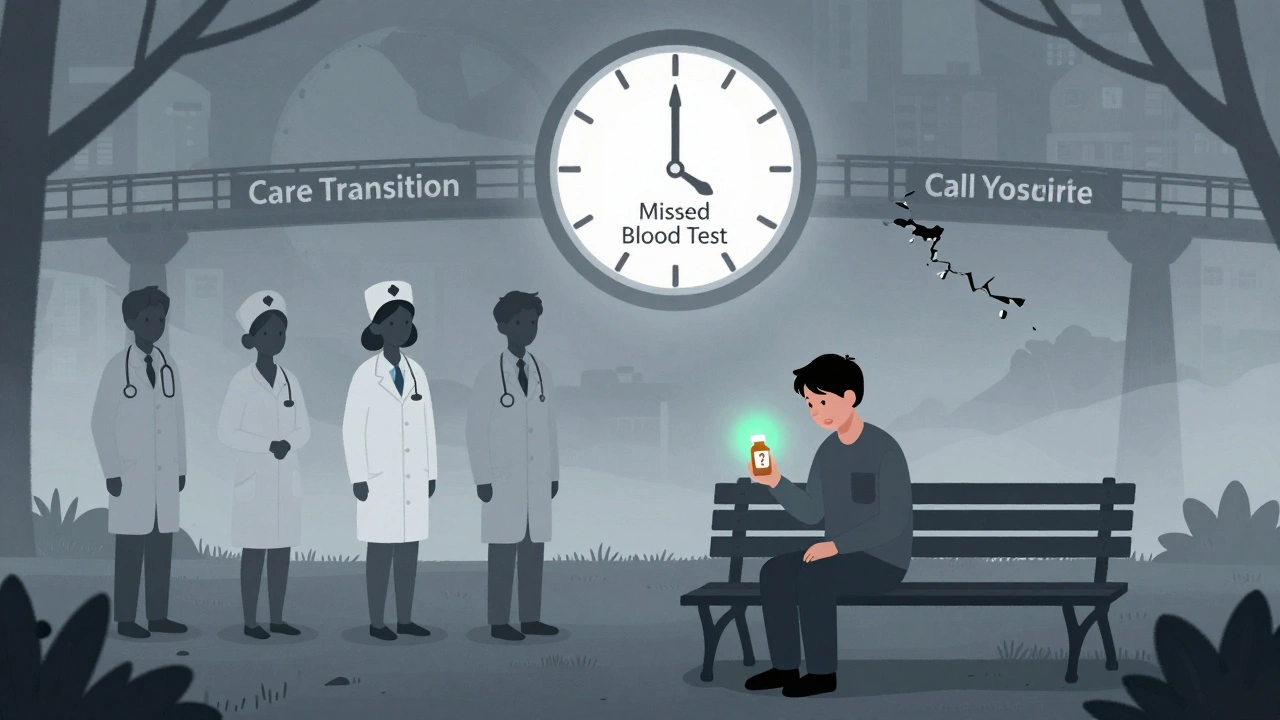
Psychotropic drugs-medications that affect the brain-are not like antibiotics or blood pressure pills. They work slowly, their effects are subtle, and stopping them suddenly can trigger severe withdrawal or even relapse. Lithium, clozapine, and certain antipsychotics carry serious risks if not monitored closely. For example, lithium requires regular blood tests every three months to stay within a safe range. But in England, only 40% of patients on lithium get those tests done, according to NHS England data from 2017. These drugs also interact with other medications people may be taking for physical health issues-diabetes, heart disease, or chronic pain. When you combine mood stabilizers, antidepressants, and painkillers without checking for interactions, the risk of side effects like confusion, heart rhythm problems, or kidney damage goes up fast. And then there’s the human factor. People with serious mental illness may struggle with memory, motivation, or trust. They might forget to take their meds, hide them to avoid side effects, or sell them to get money. In prisons and other secure settings, medication diversion is a documented problem. One nurse in Saskatchewan reported having to watch patients swallow their pills to make sure they weren’t hiding them.The Three Big Risks: Medication, People, and Systems
The World Health Organization breaks down the biggest dangers into three areas:- Medication: High-alert drugs like clozapine and lithium need special handling. They’re powerful, have narrow safety windows, and can cause organ damage if levels get too high.
- People: Impaired thinking, communication gaps, or trauma can make it hard for patients to understand instructions. Doctors may not know the full history, especially if care is split between a primary care provider and a psychiatrist.
- Systems: Paper records, rushed appointments, and poor handoffs between hospitals, clinics, and jails create blind spots. A patient discharged from a psychiatric unit might get sent home with a new prescription-but no one tells their family doctor.
What Works: Proven Strategies for Safer Care
There are clear, evidence-backed ways to reduce harm. They’re not fancy. They’re simple-but they require discipline.1. Medicines Reconciliation at Every Transition
Every time a patient moves from one care setting to another-hospital to home, jail to clinic, emergency room to outpatient care-a full list of all their medications must be reviewed and verified. This isn’t just checking what’s written on a slip of paper. It means asking: Why is this drug here? Is it still needed? Has the dose changed? New Zealand’s health commission found that formal reconciliation cuts medication errors by up to 60%. In practice, that means a pharmacist or nurse sits down with the patient and their records-community prescriptions, hospital discharge summaries, even notes from the jail infirmary-and builds one accurate list. No assumptions. No guesses.2. Electronic Prescribing
Handwritten prescriptions are a relic-and a danger. Illegible writing, wrong doses, forgotten refills-all common with paper. Electronic systems reduce these errors by 55%, according to New Zealand’s 2021 review. They flag drug interactions, remind doctors about required blood tests, and send alerts when a patient hasn’t picked up a prescription. But technology alone isn’t enough. If the system doesn’t connect mental health records with primary care, you still have gaps. The goal is one shared record that follows the patient-no matter where they go.3. Clinical Pharmacists in the Team
Pharmacists aren’t just the people who hand out pills. They’re medication experts. When they’re part of the mental health team, error rates drop by 25%. They review all meds for interactions, check if doses are appropriate for age or kidney function, and educate patients in plain language. In New Zealand, some clinics now have a dedicated medicines coordinator-a pharmacist or nurse who tracks who’s on what, when tests are due, and who needs a follow-up. That person becomes the glue holding the system together.4. The Ten Rights and Three Checks
In Saskatchewan, psychiatric nurses use a strict framework called the “Ten Rights and Three Checks.” Before giving any medication, they verify:- Right patient
- Right medication
- Right dose
- Right route
- Right time
- Right documentation
- Right reason
- Right response
- Right to refuse
- Right education
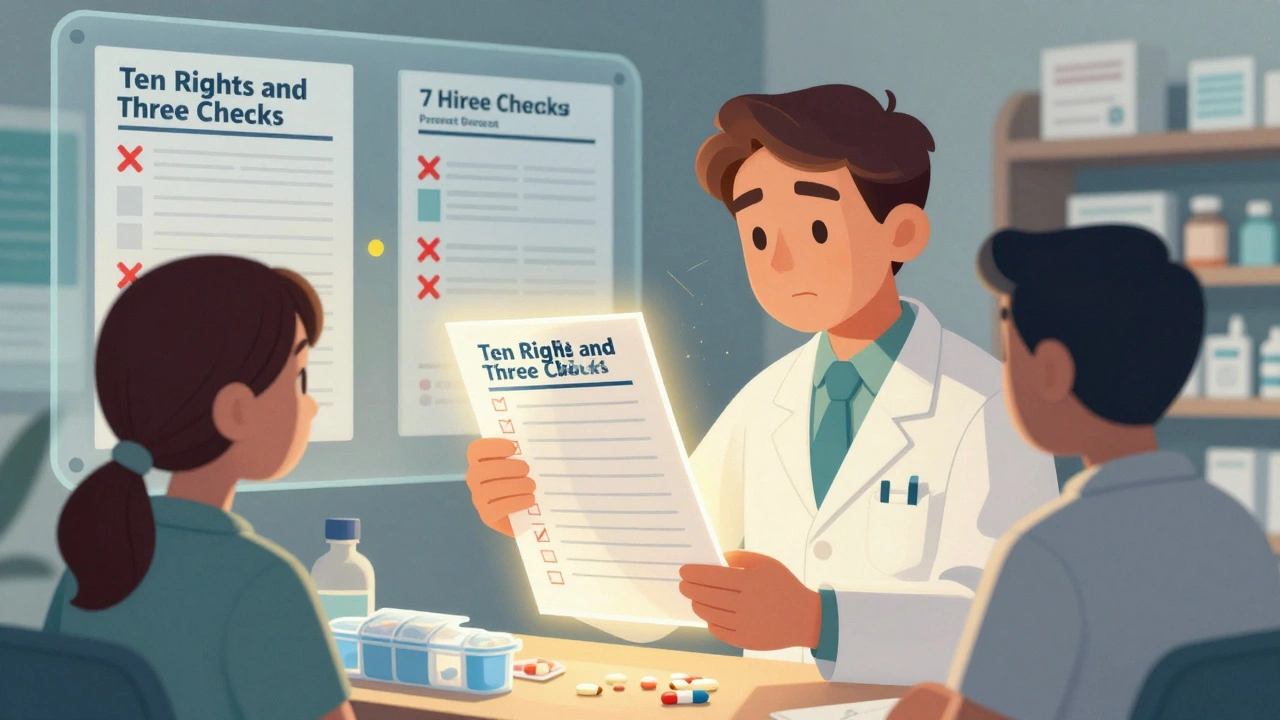
Red Flags: When Medication Safety Is at Risk
Watch for these warning signs:- More than five psychiatric medications prescribed at once-polypharmacy increases side effects and confusion.
- Antidepressants like mirtazapine prescribed for sleep or anxiety without a clear diagnosis. This is off-label use and increases risk of misuse.
- No documented reason for each medication. If a doctor can’t say why a drug was started, it shouldn’t still be going.
- Missing blood tests for lithium, clozapine, or valproate. These aren’t optional-they’re life-saving.
- Patients stopping meds suddenly because they feel fine. Many don’t realize stopping can cause seizures, psychosis, or suicidal thoughts.
Who’s Responsible? It Takes a Team
Medication safety isn’t the job of one person. It’s a team sport.- Patients and families: They need to know what each drug is for, what side effects to watch for, and when to call for help.
- Psychiatrists: Must document the reason for every prescription and coordinate with primary care.
- Primary care doctors: Often the first to see patients in crisis. They need training on mental health meds-not just physical health.
- Pharmacists: Must review all meds, flag interactions, and educate patients.
- Nurses: Implement safety checks, observe medication use, and report concerns.
What You Can Do-Whether You’re a Patient or a Caregiver
You don’t need to be a doctor to help keep someone safe.- Keep a written list of every medication-name, dose, reason, and when it was started. Update it every time something changes.
- Ask: “Why am I taking this? What happens if I stop?” Don’t accept vague answers.
- Ask for a copy of your discharge summary when leaving a hospital or clinic. Bring it to your next doctor’s visit.
- Use a pill organizer with alarms. If you’re worried about forgetting, ask if a family member or nurse can supervise doses.
- Report if you’re being asked to take a med you don’t recognize-or if you’re being pressured to stop one suddenly.
Where We’re Falling Short
Despite all the guidelines, gaps remain. General practitioners often lack training in mental health meds. One study from King’s College London found many GPs don’t know how to manage lithium or recognize early signs of toxicity. In rural areas, there’s no pharmacist on-site. In jails, records are paper-based and disconnected. We’re also missing follow-up. Patients leave the hospital with a prescription and a pamphlet. No one calls to see if they picked it up. No one checks if they’re having side effects. That’s not care-that’s neglect.The Bottom Line
Medication safety in mental health isn’t about perfection. It’s about consistency. It’s about making sure no one slips through the cracks because of a broken system. The tools exist. The guidelines are clear. What’s missing is the will to use them everywhere, every time. It’s not enough to prescribe the right drug. You have to make sure it’s taken the right way, monitored the right way, and stopped the right way. Because for someone with a mental illness, the difference between safety and harm can come down to one missed blood test-or one unanswered question.Why are psychotropic medications more dangerous than other types of drugs?
Psychotropic drugs affect brain chemistry, so their effects are complex and slow to appear. Stopping them suddenly can cause seizures, psychosis, or severe depression. Many require regular blood tests to stay within a safe range-like lithium, which can damage the kidneys or thyroid if levels are too high. They also interact dangerously with other medications, and patients may struggle to take them consistently due to symptoms like memory problems, paranoia, or lack of insight.
What is medicines reconciliation, and why does it matter?
Medicines reconciliation is the process of creating the most accurate list possible of all medications a patient is taking-prescription, over-the-counter, supplements-and comparing it to what’s being ordered at each transition of care. This prevents errors like duplications, omissions, or wrong doses. Studies show it cuts medication errors by up to 60%, especially when moving from hospital to home or between mental health and primary care settings.
Can electronic prescribing really reduce medication errors in mental health?
Yes. Electronic systems reduce errors by 55% by eliminating illegible handwriting, flagging dangerous drug interactions, reminding providers about required monitoring (like blood tests for lithium), and ensuring prescriptions are sent directly to the pharmacy. But they only work if the system connects mental health records with primary care. If records are siloed, the risk remains.
What should I do if I think someone is being given the wrong meds?
Keep a written list of all medications, including doses and reasons. Ask the prescriber: “Why is this drug being used?” and “What side effects should I watch for?” If something doesn’t add up, request a medication review with a pharmacist. Don’t hesitate to speak up-even if you’re not the patient. Family members and caregivers are often the first to notice changes in behavior or side effects.
Is it safe to stop psychiatric medication if I feel better?
No. Stopping psychiatric meds suddenly can cause serious withdrawal symptoms-including rebound anxiety, insomnia, nausea, tremors, or even psychosis. Some medications, like antidepressants or antipsychotics, need to be tapered slowly over weeks or months under medical supervision. Always talk to your prescriber before making any changes, even if you feel fine.

Comments
OMG this is SO needed 😭 I had a cousin who went from 3 meds to 7 in 2 weeks and no one checked if they interacted. He ended up in the ER with heart palpitations. Why do we treat mental health like it’s optional? 🙏
LMAO you think this is bad? I worked in a psych unit where the nurse forgot to give someone their lithium for 3 days. He started screaming at the walls saying the TV was talking to him. Then the doctor just upped his dose. Classic. Nobody checks blood levels anymore. It’s all about speed, not safety. 🤡
As an Aussie who’s seen both our system and the US one, I can tell you-New Zealand’s model is the gold standard. We’ve got pharmacists embedded in mental health teams here too, and it’s made a world of difference. No more ‘prescribe and pray’. We track, we check, we follow up. It’s not magic, it’s just basic accountability. If the US can’t adopt this, they’re choosing chaos over care.
It is imperative to underscore that the systemic failures outlined in this post are not anomalies-they are endemic. The absence of standardized medication reconciliation protocols across care transitions constitutes a fundamental breach of the duty of care. The integration of clinical pharmacists into multidisciplinary teams is not merely beneficial-it is ethically obligatory. Without institutionalized accountability, we are not providing treatment; we are administering risk.
Life is a paradox, man. We give people pills to fix their minds… but forget to fix the system that gives them the pills. 🤔 Maybe the real medicine isn’t in the bottle-it’s in the silence between the questions nobody asks. 🌿
Man, I’ve seen this so many times. My sister was on six meds after her breakdown and nobody told her why she was on any of them. She’d just take them because the doctor said so. Then she’d get dizzy and think she was crazy again. We started keeping a little notebook-name, dose, reason, side effects-and it changed everything. Seriously, if you’re on psych meds, get a notebook. Write it down. Even if you forget to take the pill, at least you know what you’re supposed to be taking. And don’t be shy-ask your pharmacist. They’re the real MVPs. 🙌
Let’s be real-this isn’t about ‘safety.’ It’s about control. The system doesn’t want you to understand your meds. It wants you to be compliant. Why? Because if you knew how dangerous some of these drugs are-if you knew how often they’re prescribed for ‘off-label’ uses like sleep or irritability-you’d question everything. And then you’d stop taking them. And then the profits drop. This whole ‘medication safety’ talk is just PR. The real solution? Stop prescribing so damn much. Let people heal without chemical crutches. The system doesn’t want healing-it wants customers.
I just want to say thank you for writing this. My mom’s been on lithium for 15 years and we’ve had to beg for blood tests. It’s so exhausting. I’m glad someone’s finally talking about how hard it is to be the one who remembers everything when everyone else forgets. 💙
You’re all missing the point. This isn’t about better systems or pharmacists or electronic records. It’s about the fact that we treat mental illness like a malfunctioning machine instead of a human experience. We drug people into compliance and call it ‘care.’ We monitor lithium levels but ignore the trauma that led to the breakdown. We fix the prescription, not the person. Until we stop pathologizing suffering and start listening to it, none of this matters. You can have the perfect checklist-but if you don’t see the soul behind the symptoms, you’re just managing corpses.