
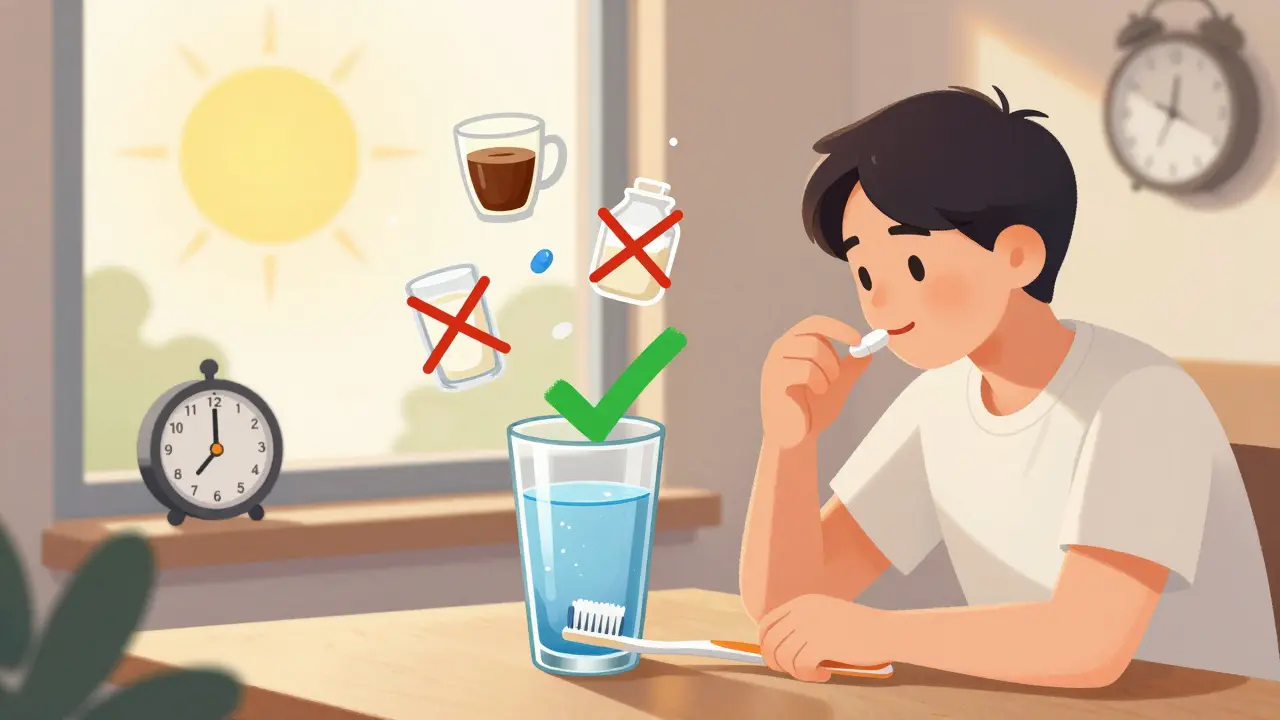
Getting your levothyroxine timing right isn’t just a suggestion-it’s the difference between feeling like yourself and dragging through the day. Millions of people take this medication for hypothyroidism, but many are still doing it wrong. And it’s not because they’re careless. It’s because the rules are confusing, the advice changes, and the side effects-like bloating, fatigue, or brain fog-don’t always make sense until your TSH blood test comes back wild.
Why Timing Matters More Than You Think
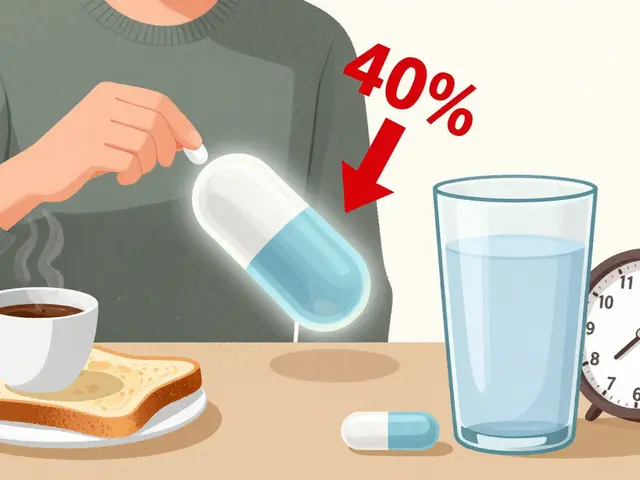
Levothyroxine is a synthetic version of your body’s natural thyroid hormone. It doesn’t work like a painkiller you can take with coffee and toast. This medication needs a quiet stomach to be absorbed properly. If you take it with food, coffee, or supplements, your body might only absorb 60% of the dose. That’s like taking a $100 pill and only getting $60 worth of effect.
That small drop in absorption might not sound like much, but over time, it throws your TSH levels off. TSH, or thyroid-stimulating hormone, is your body’s way of saying, “Hey, are you making enough thyroid hormone?” If your TSH climbs above 4.0 mIU/L, you’re likely undermedicated. If it drops below 0.4, you might be overmedicated. Both cause symptoms-weight gain, cold intolerance, brain fog, or heart palpitations.
Studies show that 15-30% of people on levothyroxine need dose adjustments every year-not because their thyroid got worse, but because their timing got messy.
The Gold Standard: Morning Fasting
The most trusted method, backed by the American Thyroid Association, the FDA, and most endocrinologists, is taking levothyroxine on an empty stomach, 30 to 60 minutes before breakfast.
Here’s why it works: your stomach needs to be acidic (pH below 3.5) for levothyroxine to dissolve and absorb. Food, even something light like a banana, raises the pH and blocks absorption. Coffee? It reduces uptake by 9-14%. Calcium from dairy or supplements? That can knock out 27-36%. Iron? Up to 59%.
So the ideal morning routine looks like this:
- Take your pill with a full glass of water as soon as you wake up.
- Wait at least 30 minutes-preferably 60-before eating or drinking anything else.
- Hold off on coffee, orange juice, or your morning smoothie.
- Don’t take calcium, iron, or antacids within 4 hours.
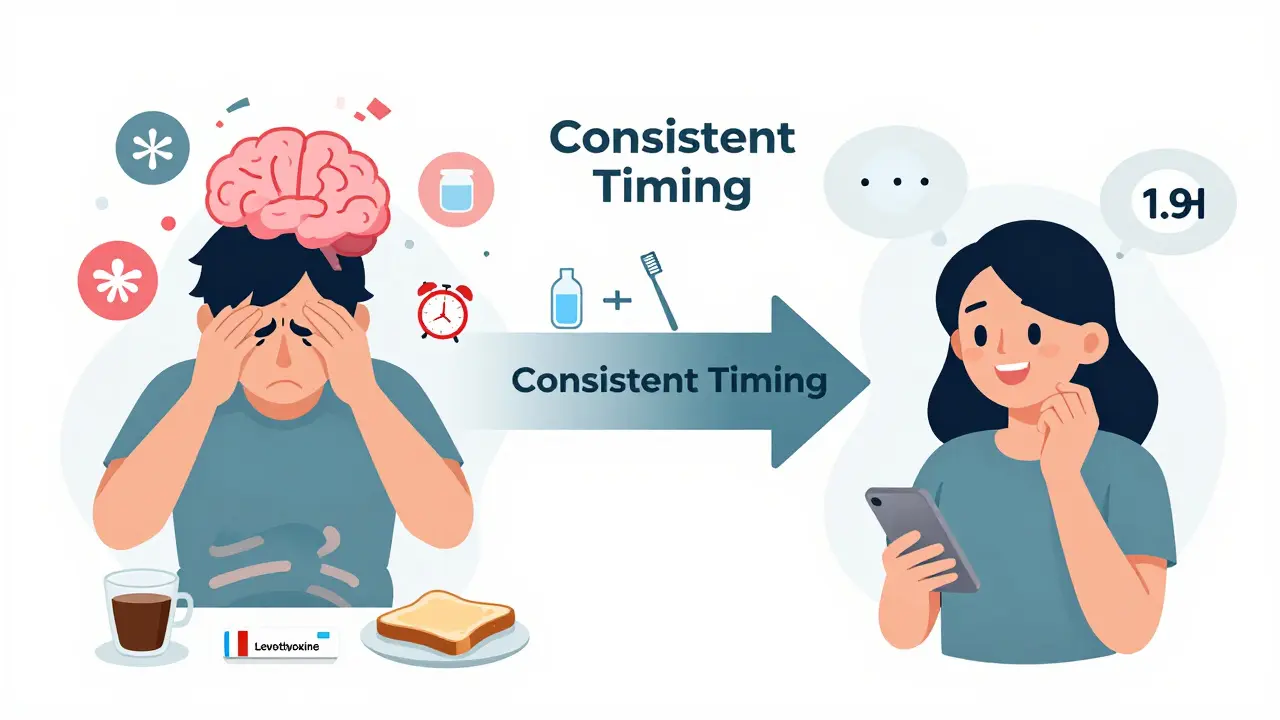
This method gives you the most consistent TSH levels. A 2021 study in Thyroid journal found patients who followed this routine had average TSH levels of 1.9 mIU/L-right in the sweet spot. Those who took it with breakfast? Their TSH jumped to 2.9.
Bedtime Dosing: A Viable Alternative?
What if you hate waking up early to wait an hour before breakfast? Or you’re a night owl who can’t stomach an empty stomach first thing? You’re not alone. Nearly half of patients struggle with the morning routine.
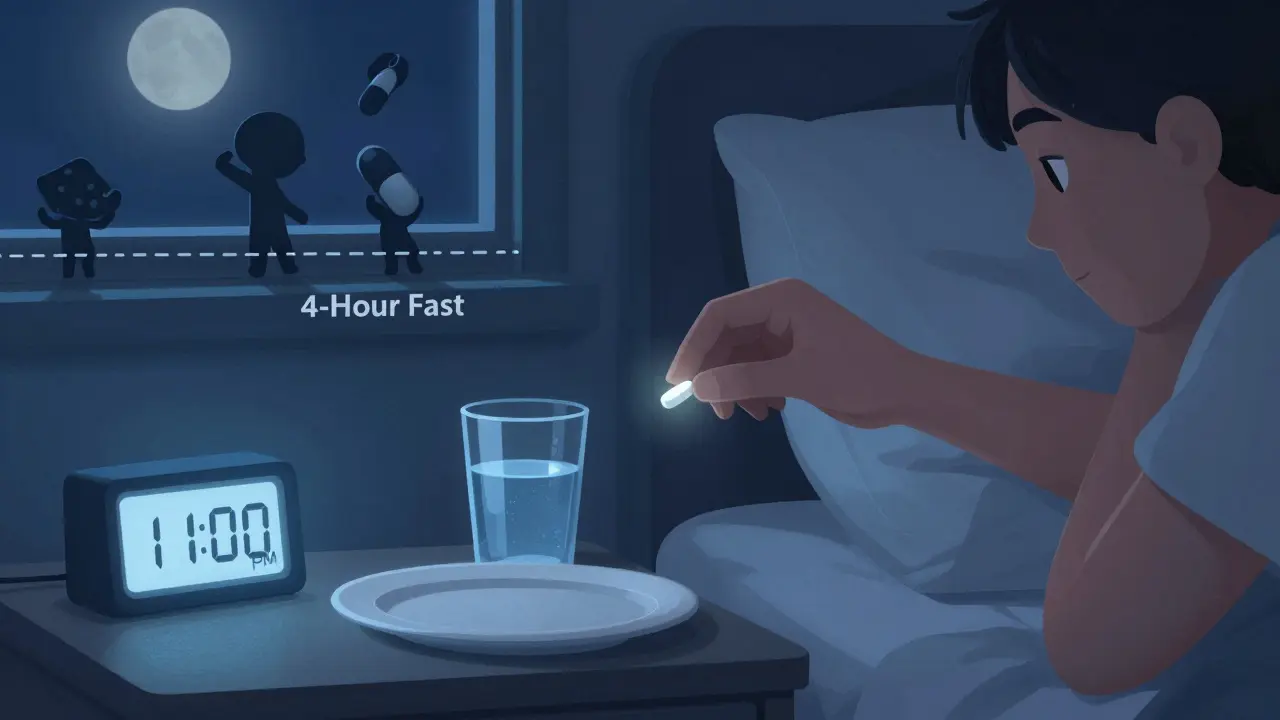
Here’s the surprising part: taking levothyroxine at bedtime, at least 3-4 hours after your last meal, can work just as well.
Dr. Leonardo Bartalena’s 2010 study found bedtime dosing improved absorption by 27% and lowered TSH levels compared to morning dosing. More recent research, including a 2022 trial with 150 patients, showed no difference in TSH control between morning and evening dosing-so long as you’re fasting.
But here’s the catch: it only works if you don’t snack after dinner. If you eat at 8 p.m. and take your pill at 10 p.m., you’re not fasting. You need that 3-4 hour gap. And you can’t take it with magnesium, iron, or antacids before bed either.
European guidelines are more open to bedtime dosing than U.S. ones. In fact, 58% of European endocrinologists now consider it a valid option. In the U.S., 87% still recommend morning fasting. But if your morning routine is a disaster, bedtime might be your best shot.
What You Absolutely Must Avoid
Some things interfere with levothyroxine so badly, they’re like a chemical sponge soaking up your dose.
- Calcium supplements (including antacids like Tums): Reduce absorption by up to 36%. Take them at least 4 hours apart.
- Iron supplements (for anemia): Can block nearly 60% of absorption. Space them out by 4+ hours.
- Coffee: Even one cup reduces absorption by 9-14%. Wait at least 60 minutes after taking your pill.
- Soy products (tofu, soy milk, edamame): Can cut absorption by 20-30%. Avoid within 3-4 hours.
- High-fiber meals (oatmeal, bran cereal, beans): Reduce absorption by 15-25%. Save them for lunch or dinner.
- Proton pump inhibitors (PPIs like omeprazole): These reduce stomach acid, which levothyroxine needs. If you’re on PPIs, your dose might need to be higher. Talk to your doctor.
One Reddit user, ‘HypoMama,’ took her pill with her morning coffee and saw her TSH jump from 1.8 to 5.2. She spent three months feeling awful and had to increase her dose. That’s preventable.
What About Different Formulations?
Not all levothyroxine is the same. The most common form is the tablet-cheap, widely available, and sensitive to food. But there are alternatives.
Tirosint is a soft gel capsule filled with liquid levothyroxine. It’s not affected by food as much. Studies show only 8-12% absorption loss with food, compared to 20-30% for tablets. That’s a big deal if you can’t stick to strict fasting.
But here’s the downside: Tirosint costs 3-5 times more than generic levothyroxine. A month’s supply runs $30-50 instead of $10. Insurance doesn’t always cover it unless you’ve tried generics and had absorption issues.
There’s also an oral solution (like Tirosint-SOL), which some patients find easier to absorb. But it’s even pricier and requires refrigeration.
If you’re struggling with absorption despite perfect timing, ask your doctor about switching formulations. It might be the missing piece.
Real-Life Strategies That Work
Knowing the rules is one thing. Living them is another.
Here’s what patients who’ve nailed their routine actually do:
- Keep it by your toothbrush. A 2023 Endocrine Society poll found 78% of doctors recommend this. If you brush your teeth first thing, you’re more likely to take your pill right after.
- Use a pill organizer with clear labels. Write “NO FOOD FOR 60 MIN” on the compartment. One thyroid support group moderator says this cut missed doses in half.
- Set two alarms. One for taking the pill, one for breakfast. It sounds silly, but it works.
- Track your doses. The MyThyroidMedication app helped users improve adherence by 34% in a 2022 study.
- Don’t skip doses. Levothyroxine has a 7-day half-life. Missing one dose won’t wreck you, but missing several in a row? That’s when TSH starts to climb.
And if you’re the type who forgets pills? Try taking it at bedtime. One user on Drugs.com, ‘ThyroidWarrior42,’ said: “I switched to bedtime dosing after 3 years of TSH swings. My endocrinologist was skeptical. My labs proved it worked.”
Special Cases: Cancer, Pregnancy, and Older Adults
If you’ve had thyroid cancer, your TSH target is tighter-usually between 0.1 and 0.5 mIU/L. That means timing has to be perfect. No exceptions. No coffee. No snacks. No excuses. Your doctor will likely insist on morning fasting.
Pregnant women need more levothyroxine as pregnancy progresses. Timing still matters, but your dose will change. Make sure your doctor checks your TSH every 4-6 weeks.
Older adults may have slower digestion or take more medications. That increases interference risk. If you’re over 65 and on multiple pills, work with your pharmacist to space out levothyroxine from calcium, iron, or heart meds.
What’s Changing in 2026?
The American Thyroid Association updated its guidelines in 2023 to say: “Bedtime dosing may be considered for patients unable to consistently fast before breakfast.” That’s a big shift. It’s no longer “only morning.” It’s “morning or bedtime-whichever you can stick to.”
Also, the FDA is tightening standards for generic levothyroxine. New bioequivalence rules mean generics will be more consistent. That could reduce timing sensitivity by 15-20% in the next few years.
But here’s the bottom line: even with better pills, your stomach still needs to be empty. The science hasn’t changed. The timing rules still matter.
Final Checklist: Are You Doing It Right?
Before you go, run through this quick checklist:
- ✅ Did you take your pill with water on an empty stomach?
- ✅ Did you wait 30-60 minutes before eating or drinking anything besides water?
- ✅ Did you avoid coffee, soy, calcium, or iron within 4 hours?
- ✅ Did you take it at the same time every day?
- ✅ Did you check your TSH levels in the last 6-8 weeks?
If you answered yes to all five, you’re doing better than 53% of patients. If you missed one, don’t panic. Just adjust. The goal isn’t perfection. It’s consistency.
Can I take levothyroxine with water?
Yes-water is the best choice. In fact, you should always take levothyroxine with a full glass of water. Avoid juice, coffee, or milk. Water helps the pill dissolve properly and moves it through your stomach without interference.
What if I forget to take my pill in the morning?
If you remember within a few hours and haven’t eaten, take it then. If it’s already lunchtime or you’ve eaten, skip the dose and wait until tomorrow. Don’t double up. Missing one dose won’t hurt, but taking two at once can cause side effects like a racing heart or anxiety.
Can I take levothyroxine at night instead of morning?
Yes-if you haven’t eaten for at least 3-4 hours before bed. Many patients find nighttime dosing easier to stick to. Studies show it works just as well as morning dosing, as long as you’re consistent and avoid food or interfering substances.
Why does my TSH keep going up even though I take my pill?
The most common reason is inconsistent timing or food interference. Other causes include switching generic brands, starting new supplements (like calcium or iron), or taking PPIs. If your TSH keeps rising, review your routine with your doctor. You might need a dose change-or a switch to Tirosint.
Is generic levothyroxine as good as brand-name?
For most people, yes. But some patients report differences when switching between generics or from generic to brand. That’s because even small variations in fillers can affect absorption. If you notice symptoms changing after a switch, tell your doctor. Stick with the same brand or generic unless advised otherwise.
How long until I feel better after starting levothyroxine?
You might notice small improvements in energy within 1-2 weeks. But full symptom relief usually takes 4-6 weeks. That’s because your body needs time to build up stable hormone levels. Don’t rush to increase your dose-give it time, and trust your blood tests.
Comments
Just switched to bedtime dosing after 2 years of constant fatigue. My TSH dropped from 4.7 to 2.1 in 6 weeks. No more brain fog. No more 3 p.m. crashes. I used to take it with coffee like everyone told me to - turns out, I was just poisoning my own hormones. Don’t be like me.
Interesting how European guidelines are more flexible. I wonder if it’s cultural - like, maybe people in the U.S. are more rigid about morning routines because of work culture? In other countries, meals aren’t as regimented. Maybe that plays a role in why bedtime dosing works better there.
OMG I JUST REALIZED I’VE BEEN TAKING MY PILLS WITH MY MORNING SMOOTHIE FOR 5 YEARS 😭 I thought I was being healthy with my kale and chia! No wonder I felt like a zombie. I’m switching to water + 60 min wait tonight. If I don’t feel like a new person by Monday, I’m blaming you all.
You’re all missing the point. The real issue isn’t timing - it’s that the FDA allows generic levothyroxine with wildly inconsistent bioavailability. If you’re still on generic, you’re gambling with your health. Switch to Tirosint or stop complaining. It’s not about your coffee - it’s about corporate greed disguised as medicine.
Actually, I take mine with breakfast and my TSH is perfect. So your ‘rules’ are just dogma. Maybe your body doesn’t need all that precision?
…i think… maybe… the body… knows… what it needs…? like… if you’re… stressed… or… eating… late… maybe… your… thyroid… is… just… trying… to… tell… you… something…? 🤔
Pharmacokinetic studies demonstrate that gastric pH modulation significantly impacts levothyroxine bioavailability. Food-induced alkalization reduces dissolution kinetics, thereby diminishing Cmax and AUC. Fasting administration maintains optimal gastric acidity, preserving therapeutic efficacy. This is not anecdotal - it’s physiologically deterministic.
Pro tip: If you take calcium or iron supplements, put them in your nightstand drawer and set a 10 p.m. alarm to take them. Then take levothyroxine at 7 a.m. - no overlap. I used to forget until I started labeling my pill organizer with red tape for ‘THYROID ONLY.’ Game changer.
I’ve been on levothyroxine for 12 years. I take it at 6 a.m. with water, wait 60 minutes, then eat. I’ve never missed a dose. My TSH has been 1.7 for the last 5 years. I’m not special - I just followed the science. If you’re struggling, it’s not the medication. It’s the routine.
My dog wakes me up at 5:45 a.m. every day. I take my pill right then, then sit on the porch with my coffee 45 minutes later. It’s my quiet time. I don’t stress about it anymore. Sometimes, consistency is just about fitting it into your life - not forcing your life to fit the rules.
MY ENDOCRINOLOGIST SAID I COULD TAKE IT WITH BREAKFAST BECAUSE ‘I’M A STRONG WOMAN.’ I DID. I FELT LIKE I WAS BEING POISONED. I LEFT HIS OFFICE. I SWITCHED DOCTORS. NOW I TAKE IT ON AN EMPTY STOMACH AND I’M HUMAN AGAIN. DON’T LET A DOCTOR TELL YOU YOUR BODY ISN’T IMPORTANT.
I live in Nigeria. Here, people eat breakfast at 9 a.m. or later. I take my pill at 8 p.m. after dinner. My TSH is normal. My doctor said it’s fine. Maybe the rules are for rich countries with 7 a.m. meetings.
Take your pill at the same time every day. Use water. Wait 30 minutes. Avoid calcium, iron, and coffee. Track your labs. That’s it. No magic. Just discipline. Your thyroid doesn’t care about your schedule. It just needs consistency.
I took my pill with my coffee for 8 months. I cried in the shower every morning because I was so tired. Then I switched to bedtime. I slept better. I cried less. I started running again. This isn’t just medicine - it’s your life. Don’t ignore it.