
Feverfew-Blood Thinner Risk Checker
This tool helps assess your bleeding risk when taking Feverfew with blood thinners. Based on the latest medical evidence, it considers:
- Blood thinner type
- Feverfew usage patterns
- Evidence-based risk assessment
Your Bleeding Risk Assessment
Critical Recommendations
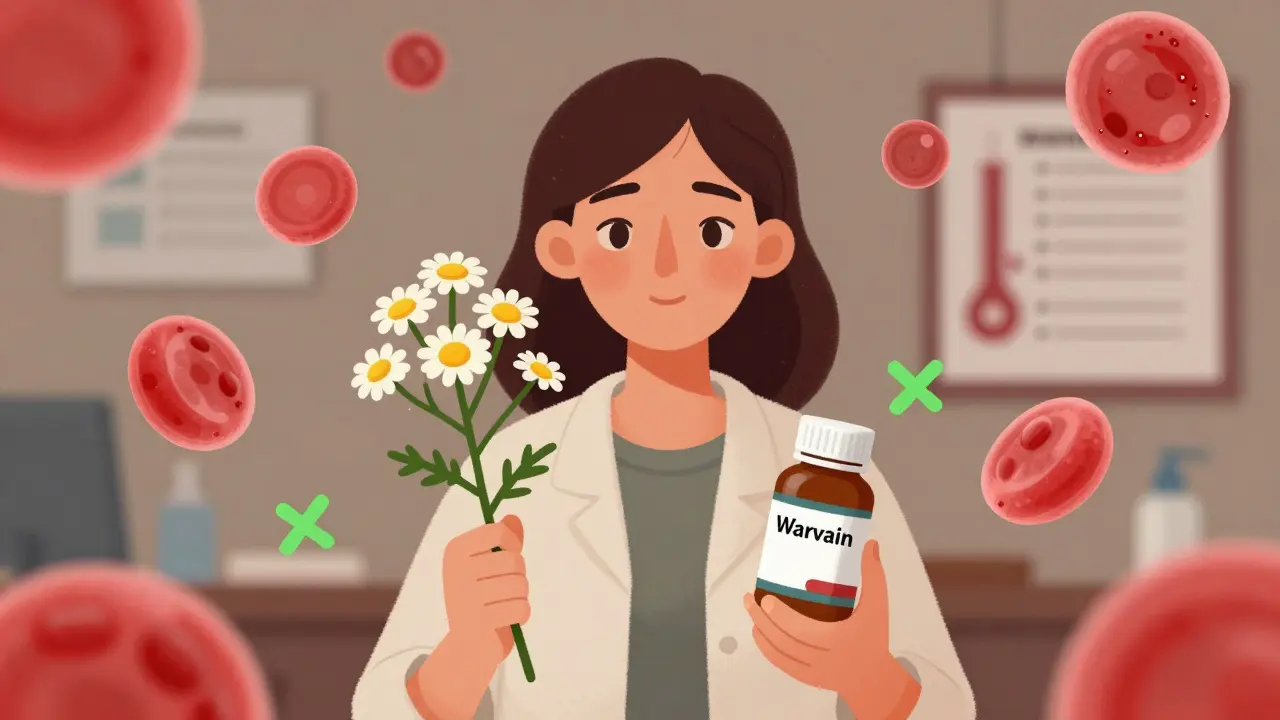
When you’re taking a blood thinner like warfarin, apixaban, or rivaroxaban, even small changes in your routine can affect how well it works. One thing many people don’t realize is that feverfew, a popular herbal remedy for migraines, might be quietly increasing your risk of bleeding. It’s not just about prescription drugs-what you take naturally can have real, measurable effects on your blood’s ability to clot.
What is feverfew, and why are people taking it?
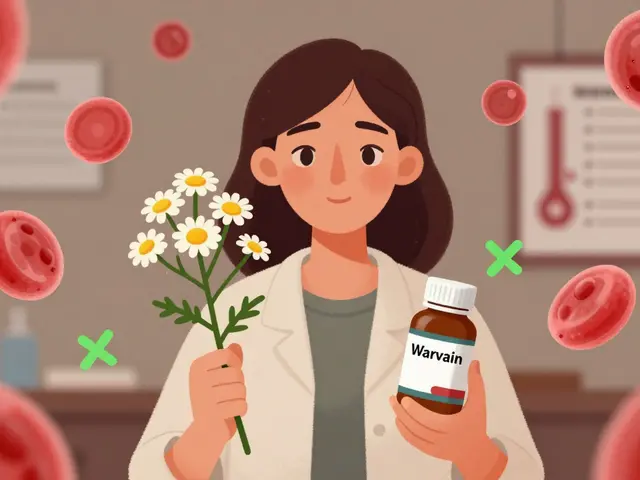
Feverfew (Tanacetum parthenium) is a small, daisy-like plant that’s been used for over 2,000 years. Ancient Greeks used it for fever and inflammation. Today, it’s mainly taken as a supplement to prevent migraines. Studies show it can reduce the frequency and severity of attacks in some people. The active ingredient, parthenolide, works by calming down inflammation and blocking serotonin’s effect on platelets-the tiny blood cells that help clots form.
Most people take it in capsule form, standardized to contain 0.2-0.7% parthenolide. A typical daily dose is 50-300 mg. Some still chew the fresh leaves, but that’s not a good idea: about 1 in 9 people get painful mouth sores from doing it. Capsules avoid that problem entirely.
How feverfew interferes with blood thinners
Feverfew doesn’t work the same way as warfarin or other anticoagulants. Instead of thinning blood by slowing clotting factor production, it makes platelets less sticky. That’s helpful for preventing clots, but when you’re already on a blood thinner, it’s like adding another layer of thinning-on top of what your medicine is already doing.
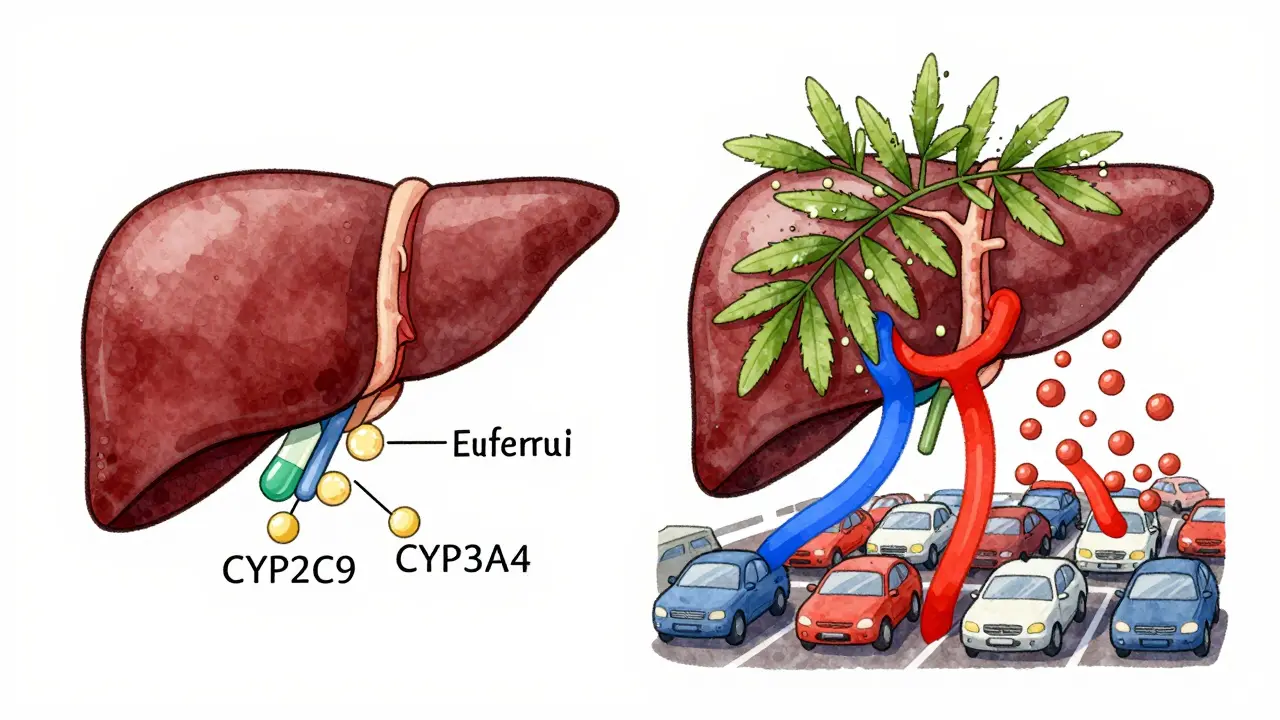
The real concern is the combination. Feverfew inhibits platelet aggregation triggered by serotonin, which is one pathway among many. While your blood can still clot normally through other signals (like ADP or thrombin), that one extra brake on platelet function adds up. And here’s the kicker: feverfew also interferes with liver enzymes (CYP2C9 and CYP3A4) that break down warfarin. In lab studies, this can raise warfarin levels in the blood by 18-22%. That’s not just theoretical-it’s enough to push INR levels into dangerous territory.
One documented case from 2021 involved a 36-year-old woman taking feverfew who ended up with a prothrombin time (PT) of 27.3 seconds-way above the normal range of 11-16. Her partial thromboplastin time (PTT) was also elevated. After stopping feverfew for four months, her numbers returned to normal. That’s not a fluke. It’s a clear signal that this herb can disrupt coagulation in real people.
How big is the actual risk?
It’s not as dramatic as ginkgo biloba, which has over a dozen documented cases of dangerous bleeding with warfarin. Feverfew’s risk is quieter. There’s only one published case of serious coagulopathy linked directly to feverfew. But that doesn’t mean it’s safe. Many cases go unreported because people don’t connect their nosebleeds or bruising to a supplement they’ve been taking for months.
Online forums tell a different story. On Reddit’s r/herbalremedies, 27 users reported easy bruising or nosebleeds lasting 15-45 minutes after combining feverfew with low-dose aspirin. That’s way longer than their usual 5-10 minutes. A 2023 review of Healthline user feedback found 41% of people on anticoagulants reported increased bruising while taking feverfew-compared to just 12% of those not on blood thinners.
The FDA hasn’t issued a specific warning about feverfew yet, but it has warned about 11 other herbs for similar interactions. The European Medicines Agency calls feverfew’s risk “theoretical,” while ginkgo and dong quai are labeled as “documented.” But doctors don’t wait for perfect evidence. They see patients with unexplained bleeding and ask: “What are you taking?”
Who’s most at risk?
Women on anticoagulants are especially vulnerable. The 2021 NIH case report showed feverfew was linked to abnormal vaginal bleeding-a symptom that’s often overlooked as “just a period.” But when it’s heavier, longer, or happens outside the menstrual cycle, it could be a sign of internal bleeding.
Older adults, people with liver disease, and those on multiple medications are also at higher risk. Feverfew’s effect on liver enzymes means it can interfere with more than just warfarin-it can mess with statins, antidepressants, and even some antibiotics. If you’re taking more than one supplement or drug, the chances of an interaction go up.
And then there’s the withdrawal problem. If you’ve been taking feverfew for over a year, stopping suddenly can cause “post-feverfew syndrome.” Symptoms include headaches (41%), insomnia (32%), joint pain (27%), and anxiety (73%). These aren’t minor inconveniences-they can be debilitating. That’s why tapering off over 2-3 weeks is critical, especially before surgery.
What should you do if you’re on blood thinners?
If you’re taking an anticoagulant and using feverfew, don’t quit cold turkey. Talk to your doctor or pharmacist. Here’s what you need to know:
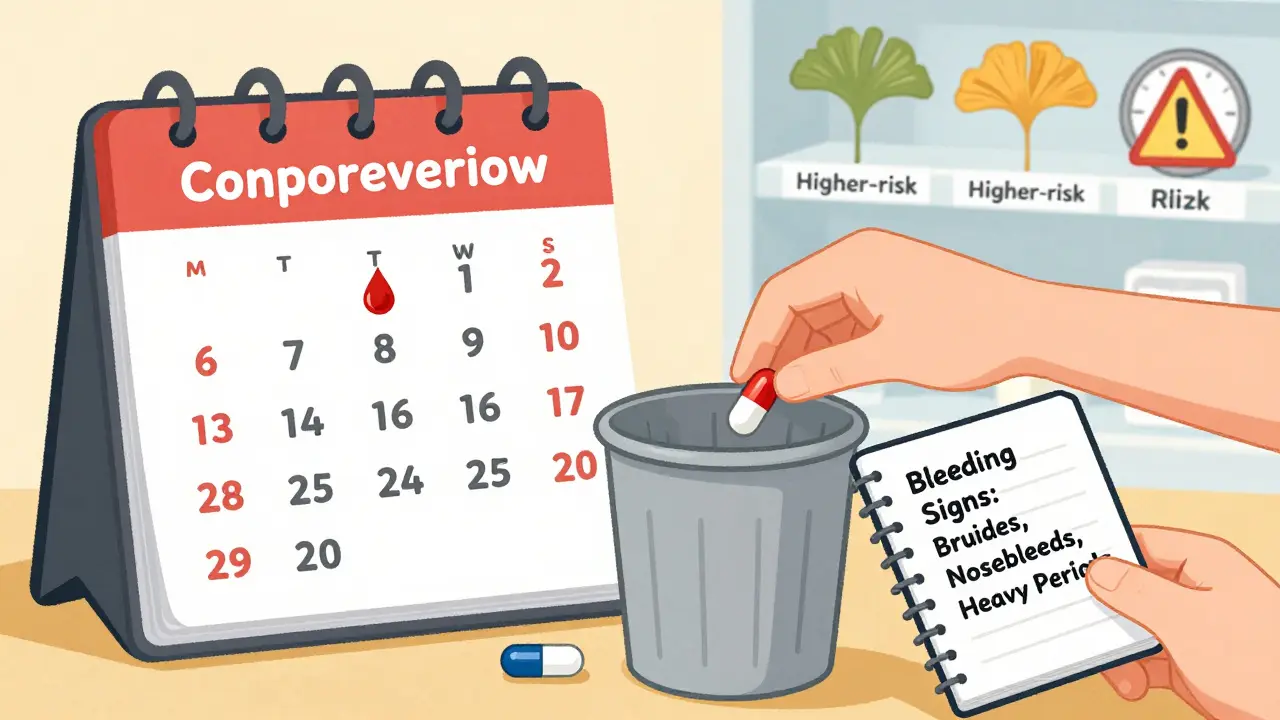
- Stop feverfew at least 14 days before any surgery-including dental work. For high-risk procedures like spinal taps or joint replacements, 21 days is recommended.
- Get baseline blood tests before starting feverfew: PT, INR, and PTT. Repeat them every two weeks for the first month if you’re already on a blood thinner.
- Choose capsules over fresh leaves. You avoid mouth ulcers and get consistent dosing.
- Don’t combine it with other herbs that thin the blood-like garlic, ginger, ginkgo, or turmeric. Together, they multiply the risk.
- Watch for signs of bleeding: easy bruising, nosebleeds lasting more than 15 minutes, blood in urine or stool, or unusually heavy periods.
Some integrative medicine clinics now screen all patients on anticoagulants for feverfew use. The American College of Physicians updated its guidelines in January 2024 to include this check. It’s becoming standard practice.
What’s next for feverfew research?
A new clinical trial (NCT05567891) is currently studying how feverfew interacts with apixaban, one of the newer blood thinners. Results are expected in mid-2024. The NIH has tripled its funding for feverfew research since 2020, pouring $1.2 million into understanding this interaction.
Experts predict that within five years, feverfew supplements may be reformulated to contain less than 0.2% parthenolide for people on anticoagulants. There’s also talk of a simple blood test to measure parthenolide levels-so doctors can tell exactly how much is in your system before surgery.
For now, the safest approach is simple: if you’re on a blood thinner, don’t take feverfew unless your doctor says it’s okay. And if you’re already taking it, don’t stop without a plan. The risks are real, the evidence is growing, and your safety shouldn’t depend on guesswork.
What about other herbal remedies?
Feverfew is part of a group called the “Few Gs”-feverfew, ginger, ginkgo, garlic, and ginseng. These are the top five herbs linked to bleeding risk. But their profiles differ:
- Ginkgo biloba: Highest risk. Stronger platelet inhibition. Documented cases of brain bleeds with warfarin.
- Garlic: Clears from the body in 72 hours. Safe to stop 3 days before surgery.
- Ginger: Mild antiplatelet effect. Low risk unless taken in very high doses.
- Ginseng: Can affect INR, but risk is lower than feverfew. Stop 7 days before surgery.
- Dong quai: Contains natural coumarin-like warfarin. Highest risk of all. Avoid completely if on anticoagulants.
Feverfew sits in the middle: not as dangerous as ginkgo, but harder to manage than garlic or ginger because of its long withdrawal period. That’s why timing matters so much.
Comments
Feverfew’s platelet inhibition via parthenolide is legit concerning when stacked with DOACs. The CYP2C9/3A4 interference isn’t just theoretical-pharmacokinetic studies show measurable spikes in warfarin AUC. I’ve seen INR creep from 2.4 to 4.8 in a patient on 250mg feverfew daily. Stop it 3 weeks pre-op, period. Also, chewed leaves? That’s a one-way ticket to stomatitis city. Capsules only.
Man, I’ve been taking feverfew for years. Never had a nosebleed. You Brits overthink everything. It’s just a plant. If it worked for the Greeks, it’s fine for me.
It’s fascinating how the medical establishment pathologizes herbal tradition while simultaneously ignoring the pharmacological reality of parthenolide’s mechanism. The fact that the EMA calls this ‘theoretical’ while ignoring the 2023 Healthline data is textbook epistemic arrogance. You can’t have it both ways-either the herb has bioactive compounds or it doesn’t. It does. So stop pretending.
The human body is not a pharmacokinetic spreadsheet. We’ve co-evolved with plants like feverfew for millennia-modern medicine’s obsession with isolating molecules and reducing biology to enzyme inhibition is a dangerous reductionism. The real risk isn’t feverfew-it’s the systemic abandonment of holistic wisdom in favor of corporate-sanctioned pharmacology. That woman’s INR spike? Maybe her body was screaming for balance, and warfarin was just the latest bandage on a wound of modern disconnection.
Let’s not mistake pharmacological interference for moral failure. This isn’t about ‘risk’-it’s about humility. What if the answer isn’t more drugs, but more listening? To the plant. To the patient. To the quiet wisdom of nature that predates the FDA by 2,000 years.
Yeah right. And the FDA’s ‘not warning’ about feverfew is just because Big Pharma doesn’t own the patent. Meanwhile, ginkgo’s on the list because it’s cheap and natural. Wake up. This is all about control. They don’t want you healing yourself. They want you buying pills. That ‘27 users on Reddit’ stat? Probably bots. And ‘post-feverfew syndrome’? Sounds like withdrawal from a placebo.
i’ve been taking feverfew with rivaroxaban for 2 years. no issues. just don’t chew the leaves. and maybe get your INR checked once a year. chill.
Hey everyone, just wanted to say this is such an important conversation. I’ve seen so many folks in my community in India take feverfew for migraines without knowing about interactions-especially older folks who trust herbs more than doctors. I’ve started handing out printed one-pagers at the local clinic: ‘If you’re on blood thinners, talk to your pharmacist before adding feverfew.’ It’s not about fear-it’s about care. And yeah, the withdrawal thing? Real. My aunt tried quitting cold turkey and ended up bedridden for a week with headaches. Took her 3 weeks to taper off slowly with chamomile tea and rest. So yeah, don’t just stop. Ease out. And if you’re on other meds? Double-check. We’re all in this together.
Let’s be real: the NIH funding increase? Coincidence? Or is this just another way to push clinical trials so they can patent a synthetic parthenolide analog? Feverfew’s been used safely for centuries. Now suddenly it’s a ‘risk’? The real story isn’t the herb-it’s the pharmaceutical industry’s need to monetize everything natural. They’ll never admit it, but they’re terrified of a $0.50 supplement that works better than their $300/month pill.