
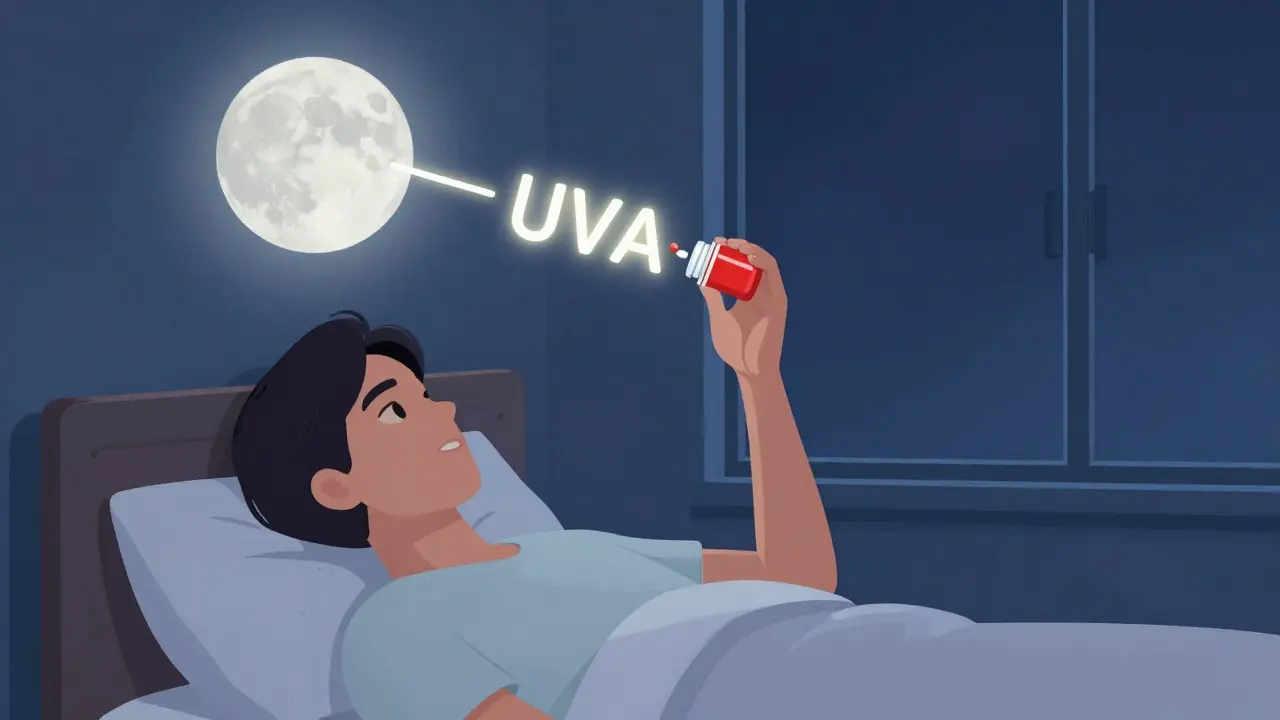
When you’re prescribed an antibiotic like doxycycline or ciprofloxacin, you’re probably focused on beating the infection. But there’s another risk you might not know about - your skin can turn red, burn, or blister just from being outside on a sunny day. This isn’t an allergic reaction. It’s phototoxicity, a chemical reaction between the antibiotic and sunlight that damages your skin. It happens fast - sometimes within minutes. And if you don’t take steps to prevent it, you could end up with painful burns, long-lasting dark spots, or even increase your risk of skin cancer over time.
Which Antibiotics Cause Phototoxicity?
Not all antibiotics do this. But some of the most commonly prescribed ones do. Tetracyclines like doxycycline and minocycline are the biggest culprits. Doxycycline, in particular, has a high risk - especially at doses over 100 mg per day. Fluoroquinolones like ciprofloxacin and levofloxacin also carry risk, though moxifloxacin and gatifloxacin are much safer because of their chemical structure. Even some older antibiotics like sulfonamides can cause it, though rarely.Here’s what the data shows: About 5.7 out of every 1,000 people taking doxycycline will develop phototoxicity. For ciprofloxacin, it’s about 2.1 per 1,000. But with moxifloxacin, it drops to just 0.3 per 1,000. That’s a huge difference. If you’re on long-term antibiotics - like for acne or Lyme disease - this isn’t just a minor annoyance. It’s a real threat to your skin health.
Why Sunlight Turns Antibiotics Into Skin Damagers
Your skin doesn’t react to sunlight alone. It reacts to the combination of UV light and the antibiotic in your bloodstream. The worst part? It’s mostly UVA rays - the kind that penetrate deep into your skin, even through clouds and windows. These rays aren’t the ones that cause sunburn (that’s UVB). They’re the ones that age your skin and trigger chemical reactions in drugs like doxycycline. When the drug absorbs UVA, it releases energy that damages skin cells. That’s what causes the redness, swelling, and blistering.Unlike allergic reactions, which take days to appear and involve your immune system, phototoxicity hits fast - within hours of sun exposure. And it’s dose-dependent. The more of the drug in your blood, the worse the reaction. That’s why timing your dose matters.
Step 1: Take Your Antibiotic in the Evening
One of the simplest, most effective tricks is to take your antibiotic at night. Studies show that taking fluoroquinolones like ciprofloxacin or levofloxacin 2 to 3 hours before bedtime reduces phototoxic reactions by 37%. Why? Because your blood levels of the drug peak 1 to 2 hours after taking it. If you take it at night, your peak concentration happens while you’re sleeping - not while you’re outside walking the dog, gardening, or driving to work.This doesn’t work for all antibiotics, but it’s proven for fluoroquinolones and recommended by dermatologists. For doxycycline, evening dosing still helps - even though it’s absorbed differently. If your doctor hasn’t mentioned this, ask. It’s an easy change with a big payoff.
Step 2: Use SPF 50+ Sunscreen - and Reapply Correctly
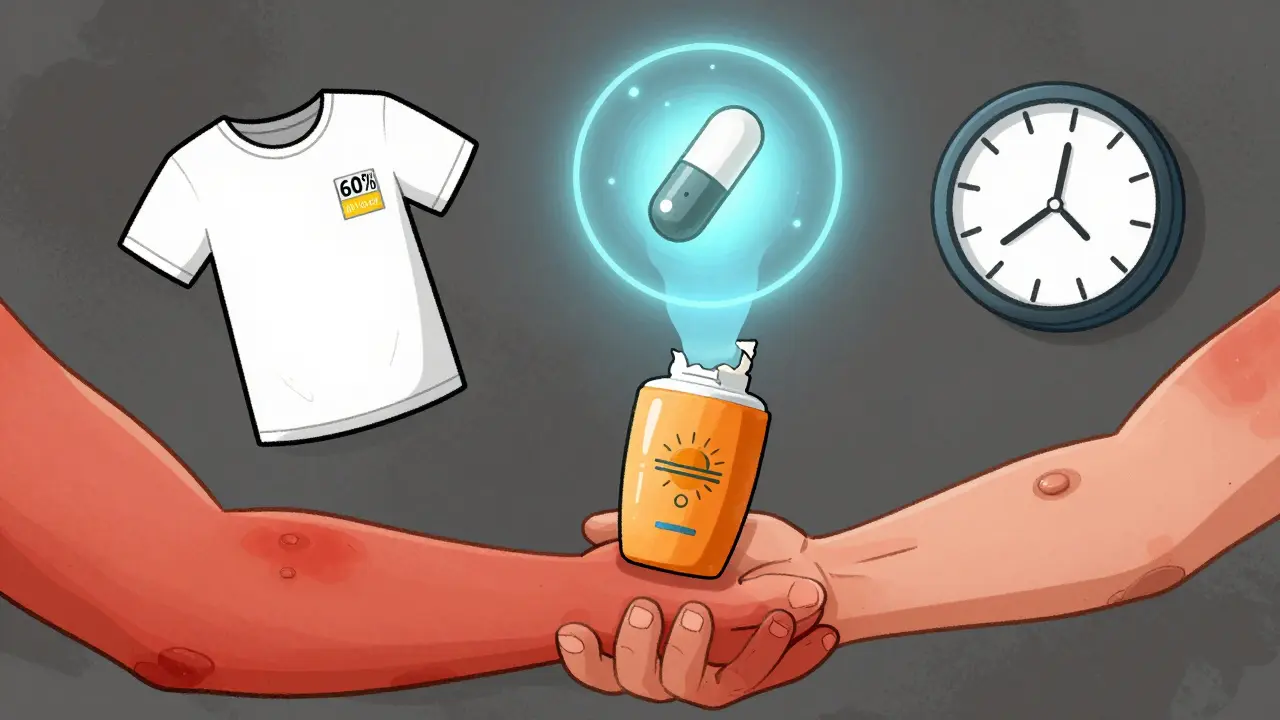
SPF 30 isn’t enough. If you’re on a phototoxic antibiotic, you need SPF 50 or higher. Why? Because clinical trials show SPF 30 blocks only 55% of the UVA rays that trigger phototoxicity. SPF 50+ blocks 92%. That’s not a small difference - it’s the difference between a mild redness and a painful blister.But here’s the catch: Most people apply sunscreen wrong. They use too little. And they forget to reapply. The American Academy of Dermatology says you need to reapply within one hour of going outside - not every two hours, like you might think. Why? Antibiotics make your sunscreen break down faster. In fact, regular SPF 30 sunscreens lose 65% of their protection under antibiotic-induced photosensitivity conditions.
Use a broad-spectrum sunscreen that protects against both UVA and UVB. Look for ingredients like zinc oxide or avobenzone. Apply it 15 to 30 minutes before going outside. And don’t skip your ears, neck, lips, and the backs of your hands. These are common spots for reactions.

Step 3: Wear UPF 40+ Clothing - Not Just Any Shirt
A white cotton T-shirt might feel cool, but it only blocks about 60% of UV rays. That’s UPF 5 to 10 - barely better than nothing. For real protection, you need clothing with UPF 40 or higher. UPF 50+ blocks 98% of UV radiation.Look for dark, tightly woven fabrics. Polyester and nylon blends often offer better protection than cotton. Some brands make sun-protective clothing labeled UPF 50+. You can also buy sun-protective laundry additives that boost the UPF of your regular clothes. And don’t forget a wide-brimmed hat. A baseball cap only protects your face from 45% of UV rays. A wide-brimmed hat (3 inches or more) blocks 95%.
Step 4: Avoid Direct Sunlight During Peak Hours
Even with sunscreen and clothing, you’re not 100% protected. The strongest UV rays hit between 10 a.m. and 4 p.m. If you can, plan your outdoor activities for early morning or late afternoon. Walk the dog before work. Do yard work after dinner. Stay in the shade when you can. Cloudy days aren’t safe - up to 80% of UV rays still get through.If you’re outside for long periods - like if you work construction, landscaping, or teach outside - talk to your doctor. About 28% of dermatologists have changed antibiotics for patients in these jobs because the risk was too high. There might be a safer alternative.
Step 5: Use Apps and Tools to Stay on Track
People forget. Even when they know better. A University of Michigan study found that 68% of patients didn’t know when to reapply sunscreen. Another study showed only 38.7% of people followed photoprotection advice consistently.That’s where apps help. Apps like UV Lens give real-time UV index alerts and send reminders based on your medication. One trial with 200 people showed that using this kind of app improved adherence by 52%. It’s not magic - it’s just a nudge when you need it.
What About New Treatments?
There’s new hope. In 2023, the FDA approved a new oral supplement containing β-carotene and soybean trypsin inhibitor. In clinical trials, it reduced phototoxic reactions by 63% when taken with high-risk antibiotics. It’s not a replacement for sun protection - it’s an extra layer. It works by neutralizing the free radicals that damage your skin during the phototoxic reaction.Also, new antibiotics are being developed that don’t cause phototoxicity at all. Gepotidacin, for example, showed no phototoxic risk in trials. As these drugs become more common, the problem will shrink. But for now, millions of people still take doxycycline and ciprofloxacin every year. Prevention is still the only reliable defense.
What If You Already Got a Reaction?
If your skin turns red, burns, or blisters after being in the sun while on antibiotics:- Get out of the sun immediately.
- Cool the area with damp cloths - no ice.
- Use aloe vera or hydrocortisone cream (1%) to reduce inflammation.
- Take ibuprofen if it’s painful.
- Don’t pop blisters - that increases infection risk.
- Call your doctor. You may need to switch antibiotics.
Don’t wait until it gets worse. Phototoxic reactions can leave dark marks that last for months - or even years.
Why Most People Fail at Prevention
The biggest reason phototoxicity keeps happening? People think it won’t happen to them. Or they assume sunscreen alone is enough. Or they forget to reapply. Or they wear a white T-shirt and think they’re protected.Even doctors sometimes don’t mention it. A 2022 survey found that only 78% of dermatologists routinely warn patients. That means one in five patients gets no advice at all.
And if you’re on long-term antibiotics - like for acne - the risk doesn’t go away. In fact, 62% of people still get reactions after 6 months, even if they’re careful. That’s why ongoing education matters.
Final Thought: Your Skin Matters as Much as Your Infection
Antibiotics save lives. But they can also hurt your skin if you’re not careful. You don’t have to avoid the sun completely. You just need to be smart. Take your pill at night. Wear real sun protection. Use SPF 50+. Reapply. Cover up. Use an app if you need to.It’s not complicated. It’s just not common knowledge. But now you know. And that means you can protect yourself - and maybe someone you care about - from a painful, preventable reaction.

Comments
I took doxycycline for Lyme last year and got a nasty burn on my neck just from walking to my car. No idea why until my dermatologist mentioned phototoxicity. I started taking it at night and wearing a wide-brimmed hat - total game changer. No more angry red patches.
Also, UPF clothing is not a luxury. I bought a $25 sun shirt from Columbia and it’s been my best investment.
they dont want you to know this but big pharma makes more money off your burnt skin than your cure. why do you think they dont warn you? why is moxifloxacin so rare? because it’s cheaper and safer. they want you to keep buying sunscreen and creams. its all a scam. i stopped taking antibiotics altogether. my body healed itself with garlic and prayer.
Really well-structured post. The data on phototoxicity rates is eye-opening. I’m a pharmacist and I’ve seen patients show up with second-degree burns from doxycycline and think it’s ‘just a sunburn.’ The evening dosing tip is gold - simple, evidence-based, and underutilized. I now routinely mention it when prescribing fluoroquinolones.
Also, the sunscreen reapplication point is critical. Most people think SPF 50 means all-day protection. It doesn’t. Especially with drugs in your system.
AMERICA IS THE ONLY COUNTRY THAT TEACHES THIS IN MED SCHOOL
EVERY OTHER NATION LETS PEOPLE GET BURNED
THEY DONT CARE ABOUT YOUR SKIN
WE DO
SPF 50 IS A MUST
NO EXCUSES
This is so important!! 🙌 I had no idea about the evening dosing trick - just started doing it last week and already feel better. Also, UPF clothing is legit. I bought a sun hoodie and now I actually enjoy walking my dog again. Thank you for sharing this!! 🌞💪
I’ve been on doxycycline for six months for acne and never once thought about phototoxicity until I got a weird rash after a picnic. I thought it was a heat rash or maybe my detergent. Turns out, it was the antibiotic + 20 minutes of sunlight. I cried in the dermatologist’s office because the dark spots on my shoulders are still there, and I’m 32. I didn’t even know this was a thing. I wish someone had told me before I got burned. Now I wear long sleeves indoors near windows. I’m not even kidding. I have a UV meter app now. I’ve become a walking sun protection evangelist. If you’re on antibiotics, please, please, please - don’t wait until it happens to you.
Evening dose + SPF 50 + UPF clothing = zero reactions. Done. No drama. Just do it.
THIS IS WHY WE CAN’T HAVE NICE THINGS. I’M ON CIPRO AND I GOT BURNED AND NOW I’M A SCARED LITTLE PUPPY WHO CAN’T EVEN GO OUTSIDE. MY FRIENDS LAUGH AT ME. MY GIRLFRIEND SAID I LOOK LIKE A ‘COOKED SHRIMP.’ I’M 28 AND I FEEL LIKE A VICTIM. WHY DOESN’T THE FDA JUST BAN THESE DRUGS IF THEY’RE THIS DANGEROUS? I’M SICK OF BEING A LAB RAT FOR BIG PHARMA.
Hey, just wanted to say thank you for this. I’ve been on doxycycline for 4 months and didn’t know any of this. I used to sunbathe on weekends. Now I’m the guy who wears a hat indoors and checks the UV index like it’s the weather forecast. I’m not mad - I’m just glad I found this before I got worse. You saved me from looking like a lobster.
Also, the β-carotene supplement thing? I’m trying it. Will report back.
My mom got phototoxicity from sulfamethoxazole when she was in her 60s. It took months for the hyperpigmentation to fade. She still avoids the sun like it’s radioactive. I read this whole thing and thought - I need to save this for her. She doesn’t use smartphones, so I printed it out. She cried when she read it. Not because she was mad - because she finally understood why it happened. Thank you for writing this. It’s not just medical info. It’s emotional relief for people who’ve been confused for years.
Most Americans are lazy. They want a pill and a sunscreen and think that’s enough. They don’t understand risk. They don’t read labels. They don’t listen to doctors. This is why we have a health crisis. Phototoxicity is preventable. But only if you are disciplined. The fact that 68% of patients don’t reapply sunscreen proves we are a nation of children. Shame.
As someone from Nigeria where sunlight is constant, this is vital. Many here assume dark skin is immune. It’s not. I’ve seen patients with severe burns from doxycycline. The advice here is universal. I’ve shared this with my clinic team. We now have a printed handout for every patient on antibiotics. Simple. Effective. Lifesaving.
Wait so you're saying I can't drink beer on the balcony anymore? I'm on cipro and I thought the burn was from the limes. I'm confused now. Also, is it true that sunscreen can cause cancer? My cousin says so. I need to know before I change my life.
I used to think sunscreen was for beach days. Now I put it on before I walk the dog. I wear a hat even when it's cloudy. I take my pills at night. I didn't know I was doing something dangerous. I feel smarter now. Also I bought a UPF shirt. It's ugly but worth it
Just got prescribed doxycycline today. Read this before my appointment. Went back and asked my doc about evening dosing. He said ‘good catch’ and changed my script. Felt good to be informed. Thanks for the clarity.