
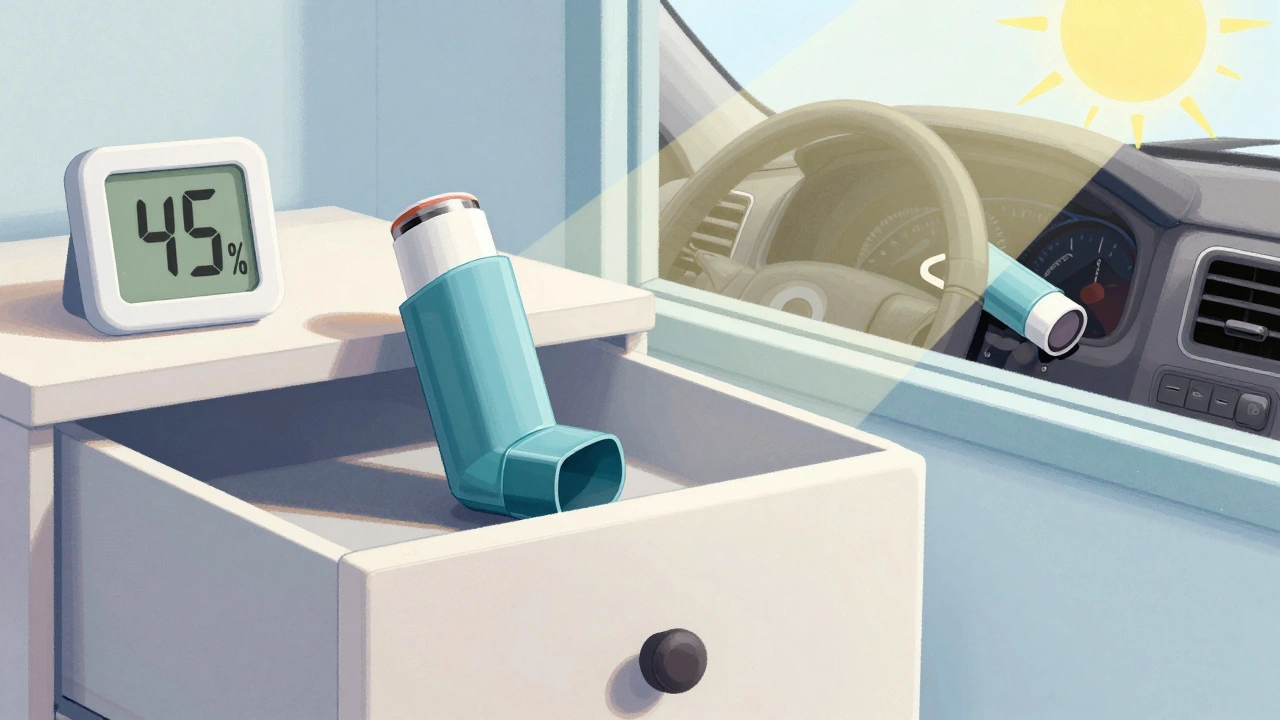
Keeping your inhaler or nebulizer medication working when you need it most isn’t just about following instructions-it’s about saving your life. A 2022 study by the American Lung Association found that improperly stored inhalers contribute to about 12% of asthma attack treatment failures. That means if your inhaler doesn’t work during an emergency, it might not be because your asthma got worse-it’s because your medication got damaged.
What Temperature Is Safe for Inhalers?
Most inhalers need to stay between 59°F and 77°F (15°C to 25°C). That’s room temperature-nothing too hot, nothing too cold. The FDA and pharmaceutical companies base this on stability testing done under international standards (ICH Q1A(R2)). But here’s the catch: not all inhalers are the same.Pressurized metered-dose inhalers (pMDIs) like ProAir HFA or Ventolin HFA can handle a bit more heat-up to 86°F (30°C)-but anything above that risks the propellant expanding and the valve failing. Dry powder inhalers (DPIs) like Spiriva HandiHaler or Advair Diskus are even more sensitive. They don’t use propellant, but they do use dry powder inside capsules. If the air gets too humid, that powder clumps and won’t flow properly. Humidity above 60% can make DPI capsules brittle and break open before you inhale.
Nebulizer solutions like albuterol ampules and Pulmicort Respules have tighter rules. Albuterol should be kept between 68°F and 77°F (20°C-25°C). If it gets hotter than 104°F (40°C), the medication starts breaking down in as little as 30 minutes. Pulmicort Respules are different-they need refrigeration (36°F-46°F / 2°C-8°C) until you open them. After that, they’re good for only 7 days at room temperature. If you leave them on the counter past that, they lose potency fast.
Where NOT to Store Your Inhaler
The bathroom is the worst place. It’s humid, it’s hot from showers, and it’s full of steam. A 2023 study at St. Jude Children’s Research Hospital found that storing albuterol in the bathroom for just 14 days reduced its concentration by 35%. That’s not a small drop-it’s enough to make your rescue inhaler useless during an attack.Your car is another danger zone. On a 75°F day, the inside of a parked car can hit 110°F in 30 minutes. The NIH tested this in 2022 and confirmed that inhalers left in cars can reach 158°F-hot enough to denature the medication completely. That means the drug molecules break apart and stop working. You won’t know until you need it-and by then, it’s too late.
Don’t leave it in your gym bag, purse, or glove compartment. Even if it’s winter, a car in direct sunlight can still get dangerously hot. A 2023 University of North Carolina study showed that after 24 hours in a 95°F car, inhaler dose consistency dropped from 95% to 62%. That’s nearly 40% less medication delivered per puff.
How to Store Inhalers and Nebulizer Medications at Home
The best place is a cool, dry cabinet-not the bathroom, not the kitchen near the stove, not the windowsill. A bedroom drawer or a closet shelf works well. Keep it in its original packaging. That box isn’t just for labels-it blocks light, which can also degrade some medications.For nebulizer solutions, if you’re not using them right away, keep them in the fridge until you open them. Once opened, write the date on the bottle or ampule with a marker. Throw out anything older than 7 days. Don’t guess-when in doubt, toss it.
Use a digital hygrometer to check your storage area’s humidity. You want it between 40% and 50%. Too dry? The powder in DPIs can get too fine and fly out of the device. Too wet? The powder clumps. A $10 hygrometer from Amazon can save you from a hospital visit.
Traveling with Inhalers and Nebulizer Medications
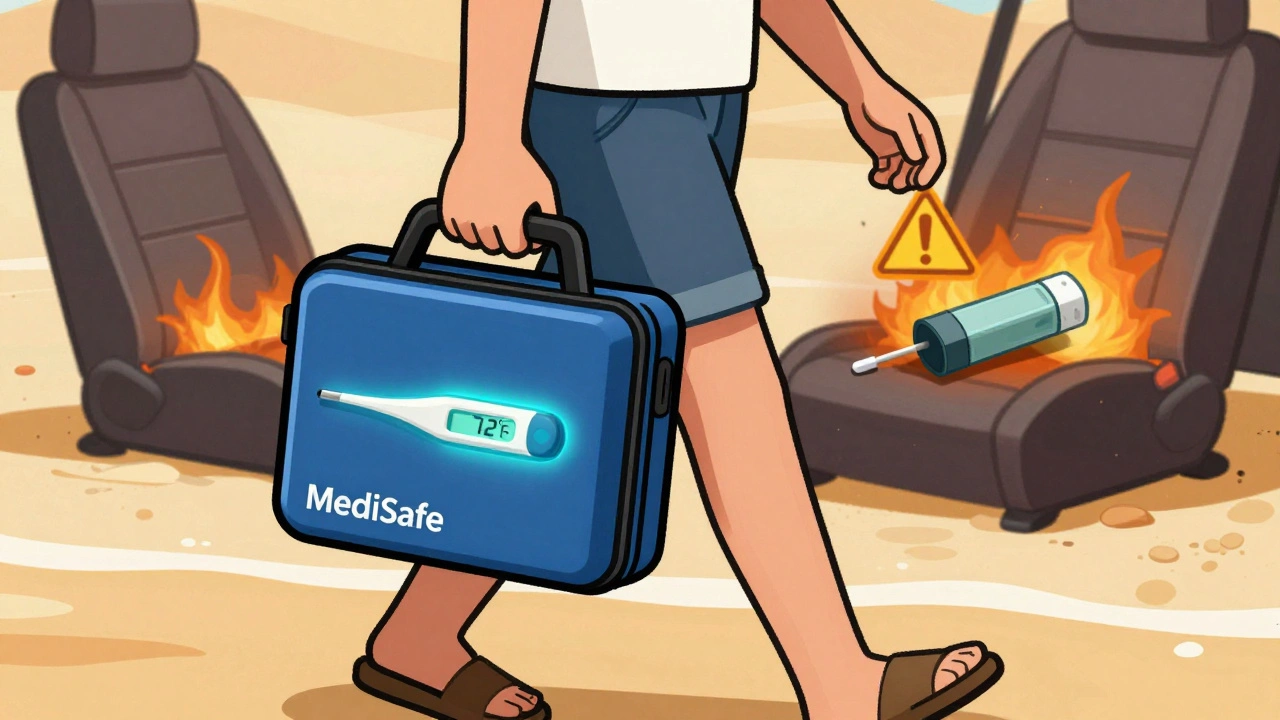
The American College of Physicians recommends the “Rule of 15”: don’t leave your inhaler in an uncontrolled environment for more than 15 minutes. That means if you’re at the beach, in a hot car, or walking from the parking lot to the clinic, keep it on your person-inside your jacket, not your backpack.Invest in an insulated travel case. The MediSafe case from Amazon, for example, keeps medications at safe temperatures for up to 15 hours. A 2022 patient forum on the Asthma and Allergy Foundation of America site reported zero issues using one in Florida summers for 18 months. That’s real-world proof.
For nebulizers, bring extra ampules in a cooler with a small ice pack. Don’t freeze them-just keep them cool. Some newer cases now come with temperature alerts. The SmartInhale case, FDA-cleared in May 2023, connects to your phone and sends a notification if the temperature goes out of range.
What About Refrigerating Inhalers?
This is where confusion runs deep. Some people think refrigerating inhalers makes them last longer. It doesn’t. In fact, for most pMDIs and DPIs, refrigeration can cause condensation inside the device, which ruins the mechanism.The American Thoracic Society says no refrigeration for multi-dose inhalers. The European Respiratory Society allows it only during extreme heat (above 95°F) as a last resort. But even then, you must let the inhaler warm to room temperature for at least 15 minutes before using it. Shaking a cold inhaler and then puffing it can cause the medication to come out in large globs instead of a fine mist.
Only refrigerate what the label says to refrigerate-like Pulmicort Respules before opening. Everything else? Keep it cool and dry, not cold.
Why Storage Matters More Than You Think
Dr. Michael Foggs, President of the American College of Allergy, Asthma & Immunology, says improperly stored inhalers cause about 20% of preventable asthma ER visits during summer. That’s not a guess-it’s based on hospital data. If your inhaler doesn’t work, you’re not just inconvenienced-you’re at risk of a life-threatening attack.And it’s not just patients. A 2022 Joint Commission report found that 47% of hospital nebulizer stations didn’t follow storage guidelines. Many were placed near heating vents or in rooms above 80°F. That’s why some patients get treated in the ER, only to be told their medication was “expired”-when it was just overheated.
What to Do If Your Inhaler Stops Working
If your inhaler feels different-less spray, no hiss, or you feel no relief-you need to act. First, check the expiration date. Then, ask yourself: where was it stored? Was it in the car? The bathroom? The sun?Try a new inhaler if you have one. If you don’t, call your doctor immediately. Don’t wait. If you’ve been using the same inhaler for months and it suddenly doesn’t work, it’s likely due to storage, not your asthma getting worse.
Keep a backup. Many doctors recommend keeping two rescue inhalers-one at home, one in your bag. That way, even if one fails, you’re covered.
What’s Changing in 2025 and Beyond
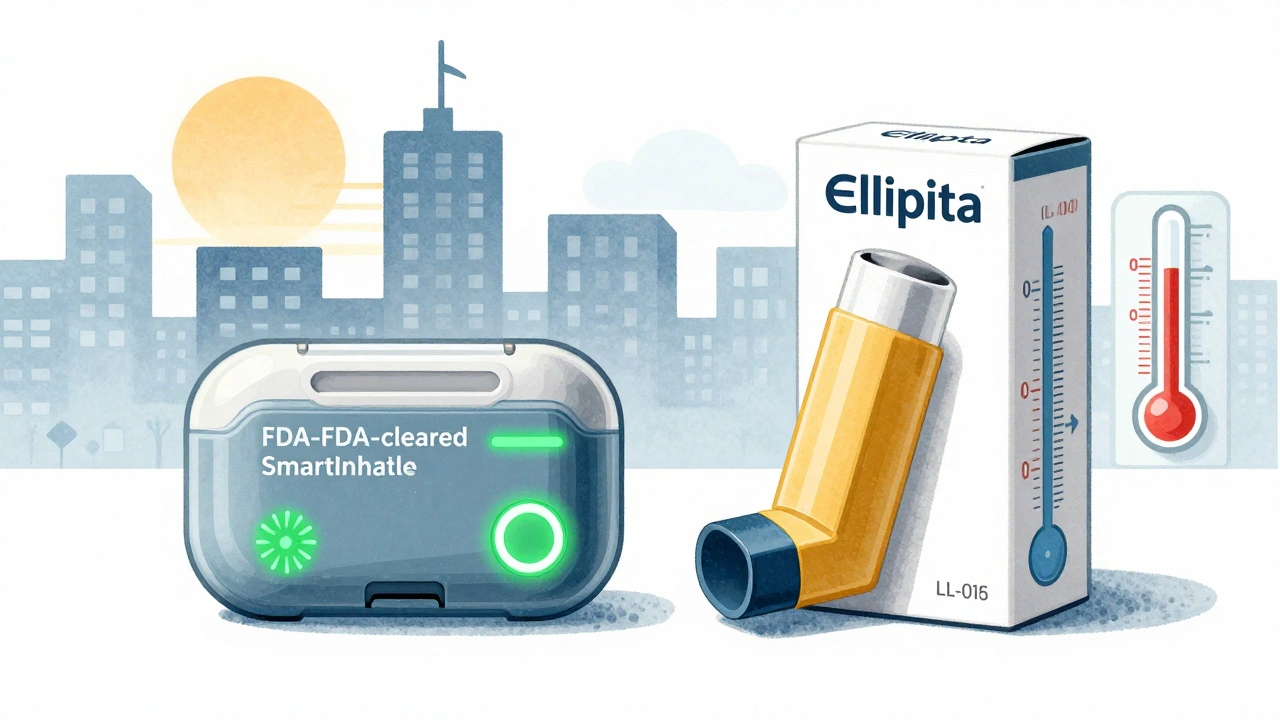
The FDA is pushing for digital monitoring of inhaler storage. By 2026, new rescue inhalers may come with built-in temperature sensors. GlaxoSmithKline already rolled out humidity-indicating packaging for Ellipta inhalers in late 2023-the packaging changes color if moisture levels are too high.Climate change is making this harder. A 2023 Lancet study predicts that by 2030, 32% of the U.S. population will face more than 60 days a year above 86°F. That means more people will need to rethink how they store their meds. The American Lung Association is now calling for federal funding to install climate-resilient storage units in schools and public spaces.
For now, the best defense is simple: know your numbers. Keep your inhaler between 59°F and 77°F. Keep humidity under 60%. Keep it away from heat, sunlight, and moisture. And if you’re ever unsure-when in doubt, get a new one.
Can I store my inhaler in the fridge?
Only if the label says so-like Pulmicort Respules before opening. For most inhalers, including albuterol pMDIs and DPIs, refrigeration causes condensation and can damage the device. Always let it warm to room temperature for 15 minutes before use if you’ve refrigerated it. For everything else, keep it cool and dry-not cold.
Is it safe to keep my inhaler in my car?
No. Even on a mild day, the inside of a parked car can reach over 120°F in under 30 minutes. That heat can permanently damage the medication, making it ineffective. The NIH found inhalers in cars can hit 158°F-hot enough to destroy the active ingredients. Always carry your inhaler with you, not in the glove box or trunk.
How do I know if my inhaler has gone bad?
Signs include: no spray or weak spray, unusual taste, or no relief during an attack. If you’ve stored it in heat, humidity, or sunlight, it’s likely degraded. Check the expiration date, but remember-medication can fail before that date if stored improperly. If you’re unsure, use a new one and replace the old one.
Should I keep my nebulizer ampules in the fridge after opening?
No. Once opened, nebulizer solutions like albuterol or Pulmicort are stable at room temperature (68°F-77°F) for up to 7 days. Refrigerating them after opening doesn’t extend their life and can cause condensation. Write the opening date on the ampule and throw it out after 7 days-even if it looks fine.
What’s the best way to store inhalers at school or work?
Keep it in your pocket, bag, or a dedicated cooler case. Many schools now use temperature-monitored storage units called "Cool Cubbies"-they maintain 72°F±2°F and have reduced inhaler failures by 89% in pilot programs. If your school doesn’t have one, ask the nurse to keep a backup in a cool, shaded drawer-not near a window or heater.
Can I store multiple inhalers together?
It’s risky. Dry powder inhalers (DPIs) are sensitive to moisture. If you store them next to a pressurized inhaler (pMDI), tiny leaks or condensation from the pMDI can expose the DPI to humidity. Keep them in separate containers or at least wrapped in a dry cloth. A 2023 Johns Hopkins study found that 22% of DPI users had issues because they stored them together.
Do I need to clean my inhaler if it’s been stored improperly?
Cleaning won’t fix degraded medication. If your inhaler was exposed to extreme heat or humidity, the drug inside may be broken down-no amount of rinsing will restore it. Replace it. Cleaning is only for removing residue from regular use, not for reversing storage damage.
Are there any gadgets that help track inhaler storage?
Yes. The SmartInhale case, FDA-cleared in 2023, uses Bluetooth to monitor temperature and alerts your phone if it goes out of range. GlaxoSmithKline’s Ellipta inhalers now have humidity-indicating packaging that changes color if exposed to too much moisture. These aren’t required yet, but they’re becoming more common-and worth the investment if you travel often or live in a hot climate.
Comments
Did you know the FDA approved inhalers using propellants that leak if exposed to 78°F for more than 48 hours? They don’t tell you that on the box. I’ve seen the internal memos. Your inhaler isn’t broken-it’s been weaponized by the pharmaceutical industry to keep you buying new ones.
You speak of temperature like it’s a moral failing. But let me ask you this: when the system fails you, do you blame the patient or the corporate greed that turns life-saving medicine into a commodity? The real crisis isn’t humidity-it’s capitalism. Your inhaler is a symbol of how we commodify survival. And yet, you still buy it. Again. And again. And again.
So you’re telling me I can’t leave my inhaler in the car because it might get too hot… but I can leave it in my pocket for 15 minutes while I walk from the parking lot? That’s not safety. That’s theater. The whole thing is a scam. The real solution? Don’t get asthma. Or better yet-don’t pay for it.
If your medication fails because of heat, it’s not a storage issue-it’s a systemic failure. We let corporations design drugs for wealthy climates while millions in the Global South die because their clinics have no AC. This isn’t about your fridge-it’s about who gets to survive.
Thank you for this!! 🙏 I’ve been using a $12 insulated case from Amazon and it’s been a game changer. I keep my nebulizer ampules in a little cooler with a gel pack when I travel-no more panic attacks before my flight. You’re not alone, friends. We got this! 💪
It is a fact that the human body is capable of adapting to environmental extremes and yet we have surrendered our autonomy to plastic devices and temperature controlled boxes. The inhaler is not the solution. The solution is discipline. The solution is breath. The solution is not buying into the myth that medicine is a product and not a practice
Oh so now the FDA is ‘pushing for digital monitoring’? Funny how they never mentioned the 2019 whistleblower report about GSK hiding data on propellant degradation in high heat. They knew. They knew and they let it happen. And now they want you to buy a $120 ‘SmartInhale’ case? Classic. This isn’t innovation. It’s extortion.
My inhaler got warm in my purse once and I almost died. Now I keep it in a sock inside my bra. Cold? Nah. Safe? Hell yeah. And if you got a problem with that, go check your own meds, Karen.