
Drug-Induced Pulmonary Fibrosis Risk Assessor
Step 1: Select Your Medication
Select the medication you are currently taking or have taken recently.
Step 2: Check Symptoms
Check any symptoms you are currently experiencing.
Your Assessment Results
Risk Analysis:
Recommended Actions:
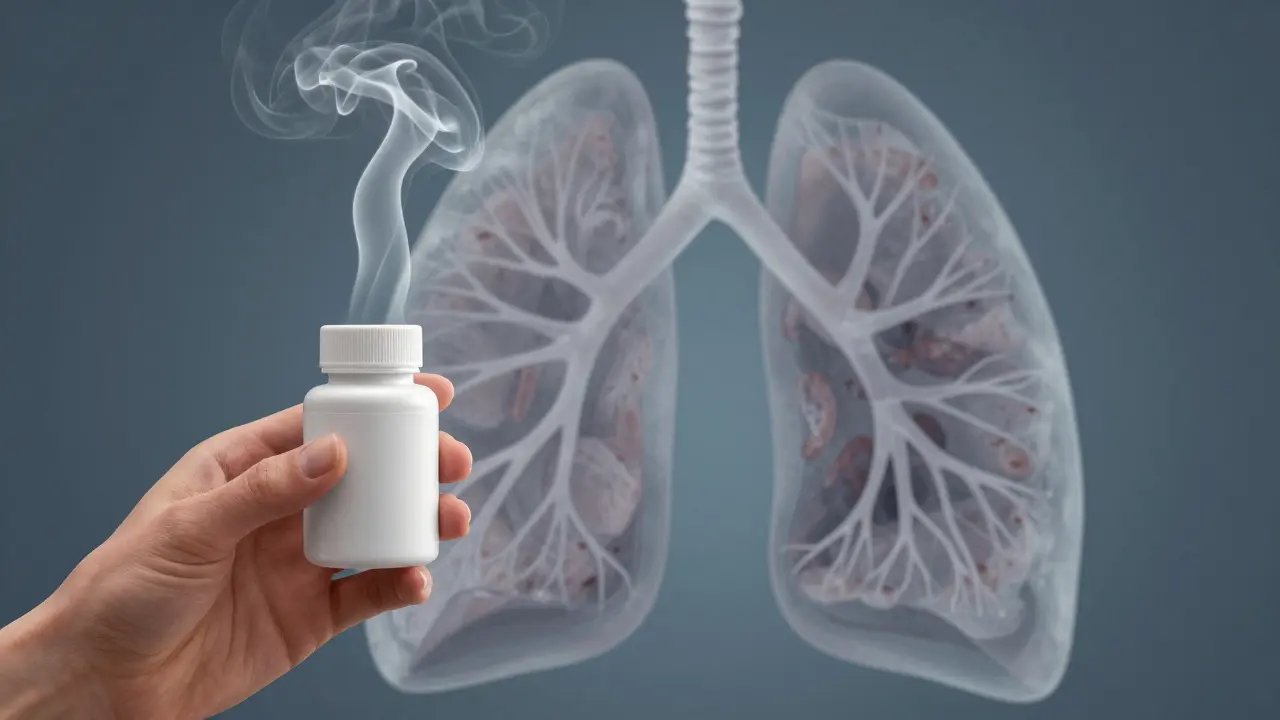
Imagine taking a pill to heal an infection or control your heart rhythm, only for that same medicine to slowly turn your lungs into stiff, scarred tissue. It sounds like a medical nightmare, but it is a real condition known as Drug-Induced Pulmonary Fibrosis, which is a specific form of interstitial lung disease caused by medication exposure leading to inflammation and progressive scarring of lung tissue. This isn't just a rare anomaly; it represents a significant subset of lung diseases where the cure becomes the cause of severe respiratory damage. If you are on long-term medication, understanding this risk could literally save your life.
The scary part? You might not feel sick at first. The symptoms often creep in quietly-a dry cough that won’t go away, getting winded easier than usual during a walk, or feeling unusually tired. By the time you realize something is wrong, the scarring may have already started. The good news is that unlike some other forms of pulmonary fibrosis, drug-induced cases can sometimes be reversed if caught early enough. Let’s break down which drugs carry this risk, how to spot the warning signs, and what steps doctors take to stop the damage.
What Is Drug-Induced Pulmonary Fibrosis?
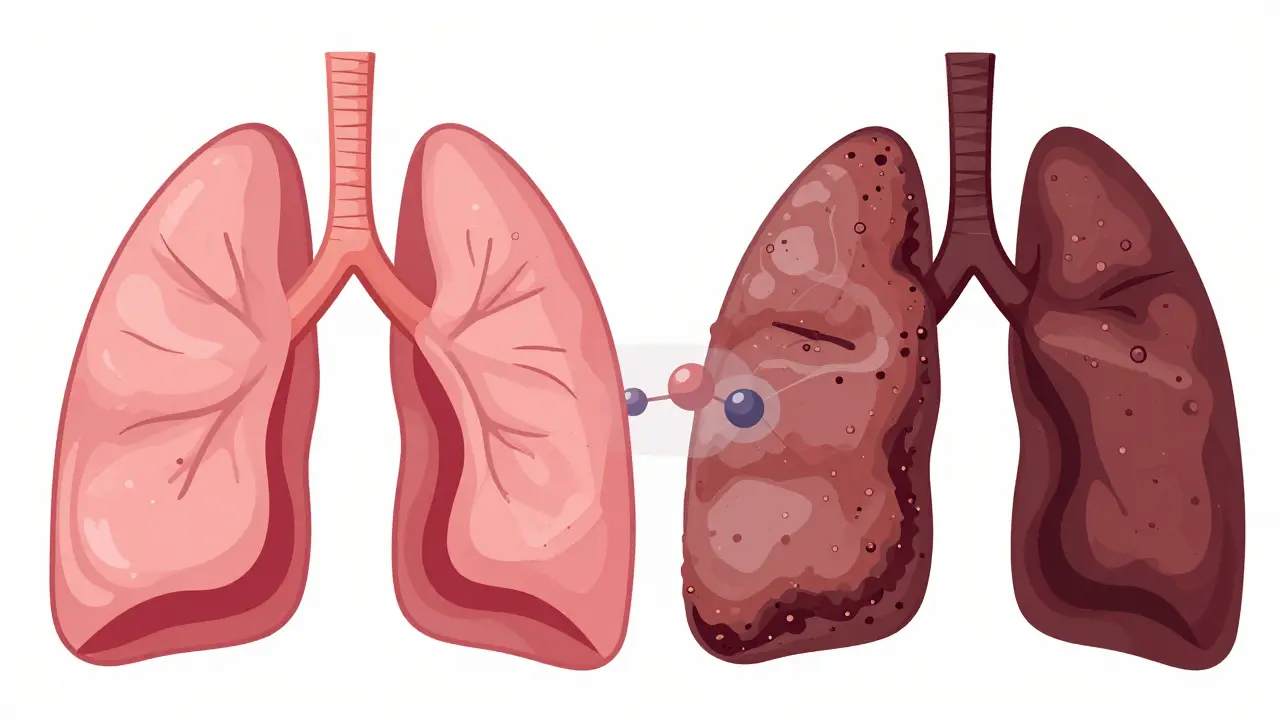
To understand why this happens, you need to know what is happening inside your chest. Your lungs are made up of tiny air sacs called alveoli, surrounded by delicate tissue that allows oxygen to pass into your blood. In healthy lungs, this tissue is soft and elastic. In Interstitial Lung Disease (ILD), which is a broad group of disorders characterized by inflammation and scarring of the lung's air sac walls and surrounding tissue, that tissue thickens and hardens.
When a medication triggers this process, we call it drug-induced pulmonary fibrosis (DIPF). According to data from the Pulmonary Fibrosis Foundation, DIPF accounts for about 5% to 10% of all ILD cases. The mechanism usually involves the drug causing direct injury to lung cells through oxidative stress or triggering an immune response that leads to collagen deposition-essentially, your body lays down scar tissue instead of normal lung tissue. What makes this tricky is that there is no single "look" for this disease on scans. As experts note in medical literature, there are no distinct physiologic or radiographic patterns specific to drug-induced ILD. This means diagnosis relies heavily on knowing your medication history and ruling out other causes.
The High-Risk Medications You Need to Know
Not every pill carries this risk, but several common classes of drugs have well-documented links to lung scarring. Here are the main culprits identified in pharmacovigilance databases and clinical studies:
- Nitrofurantoin, which is an antibiotic used primarily for urinary tract infections since 1953: Often prescribed for long-term prevention in older adults, it has become one of the most frequently reported causes of ILD in recent years. Cases have been reported after anywhere from six months to ten years of use.
- Amiodarone, which is a cardiac medication used to treat irregular heart rhythms, marketed since 1962: This drug accumulates in lung tissue over time. Toxicity typically appears after cumulative doses exceed 400 grams, often developing 6 to 12 months after starting therapy.
- Methotrexate, which is a disease-modifying antirheumatic drug approved in 1949 for conditions like rheumatoid arthritis: It can cause acute pneumonitis with rapid progression, affecting roughly 1% to 7% of users.
- Bleomycin, which is a chemotherapy agent approved by the FDA in 1969: Known for its high pulmonary toxicity risk, occurring in 10% to 20% of patients, especially when cumulative doses exceed 400 units.
- Immune Checkpoint Inhibitors, which are a class of cancer immunotherapy drugs introduced around 2011: These newer therapies boost the immune system to fight cancer but can sometimes attack healthy lung tissue.
| Medication | Primary Use | Risk Profile / Incidence | Typical Onset |
|---|---|---|---|
| Nitrofurantoin | Urinary Tract Infections | High frequency in reports; affects elderly on long-term prophylaxis | 6 months to 10 years |
| Amiodarone | Heart Rhythm Control | 5-7% of long-term users; dose-dependent (>400g) | 6-12 months |
| Methotrexate | Rheumatoid Arthritis/Cancer | 1-7% of users; can present as acute pneumonitis | Variable, often early |
| Bleomycin | Chemotherapy | 10-20% of patients; highest relative risk among chemo agents | During or shortly after treatment |
| Checkpoint Inhibitors | Cancer Immunotherapy | Emerging risk; unpredictable idiosyncratic reaction | Variable |
Why Diagnosis Is So Difficult
You might wonder why doctors don’t catch this immediately. The problem is that the symptoms of drug-induced pulmonary fibrosis mimic many other conditions. A persistent dry cough and shortness of breath are classic signs of aging, asthma, COPD, or even heart failure. In fact, patient accounts from support groups reveal an average diagnostic delay of over eight weeks from symptom onset to correct identification.
Furthermore, the reaction is often "idiosyncratic," meaning it is unpredictable. As the Pulmonary Fibrosis Foundation notes, it is not known why some people develop fibrosis while others take the same drug safely. There is no simple blood test that confirms drug-induced lung scarring. Doctors must rely on a process of elimination. They look at your high-resolution CT scans, perform pulmonary function tests to measure lung capacity, and review your complete medication history. Only when other causes like autoimmune diseases or environmental exposures are ruled out does the suspicion fall on the drugs.
Real-World Data: How Common Is It?
While exact global numbers are hard to pin down due to underreporting, recent data paints a concerning picture. A comprehensive report from New Zealand’s Medsafe, published in December 2024, analyzed pharmacovigilance data from 2014 to 2024. During this period, they documented 173 cases of medication-related interstitial lung disease, resulting in 30 fatal outcomes-a mortality rate of 17.3%. The top three offenders were Nitrofurantoin (47 cases), Methotrexate (45 cases), and Amiodarone (39 cases).
This isn't an isolated trend. A 2023 study published in Wiley journals reported a 23.7% increase in reported cases of drug-induced pulmonary fibrosis over the past decade. This rise likely reflects two factors: better recognition by healthcare providers and an expanding pharmaceutical landscape with more complex drugs entering the market. Regulatory bodies like the Medicines Adverse Reactions Committee in New Zealand are now actively reminding prescribers to monitor for these risks, signaling that awareness is finally catching up to incidence.
Symptoms to Watch For
If you are taking any of the high-risk medications listed above, you need to be vigilant. Don’t ignore subtle changes in your breathing. The most common symptoms include:
- Persistent Dry Cough: A cough that doesn’t produce mucus and doesn’t go away with standard treatments.
- Dyspnea (Shortness of Breath): Feeling breathless during activities that used to be easy, like climbing stairs or walking across a room.
- Fatigue: Unexplained tiredness that interferes with daily life.
- Joint Pains and Fever: Less common, but systemic inflammation can cause flu-like symptoms without an actual infection.
According to Action Pulmonary Fibrosis, 78% of patients with drug-induced pulmonary fibrosis experience worsening breathlessness, and 65% report chronic cough. If you notice these symptoms, do not wait. Seek prompt medical attention. Early intervention is the single most critical factor in determining your outcome.

Treatment and Prognosis: Can the Scarring Reverse?
Here is the silver lining: because the trigger is external (the drug), removing it can stop the damage. The cornerstone of management is immediate cessation of the offending medication. Studies show that 89% of patients show improvement within three months of stopping the drug. However, "improvement" doesn't always mean "complete cure."
In many cases, doctors will prescribe high-dose corticosteroids, such as prednisone (0.5-1 mg/kg/day), to reduce inflammation and slow the scarring process. This is typically tapered over 3 to 6 months. For patients whose oxygen levels drop below 88% at rest, supplemental oxygen therapy becomes necessary to protect the heart and other organs.
The prognosis depends heavily on timing. If diagnosed quickly, 75% to 85% of patients make a good recovery. Unfortunately, 15% to 25% experience permanent lung function impairment, meaning they will live with reduced lung capacity indefinitely. In severe cases, particularly with bleomycin or advanced amiodarone toxicity, the mortality rate can reach 10% to 20% despite treatment discontinuation. This underscores why regular monitoring by a pulmonary specialist is non-negotiable for high-risk patients.
Prevention and Patient Advocacy
You play a huge role in preventing this condition. Before starting any new medication, especially those known for pulmonary toxicity, ask your doctor about the risks. Request baseline pulmonary function testing if you fall into a high-risk category, such as being over 65 or having existing lung issues. The European Respiratory Society recommends routine baseline testing before initiating high-risk drugs.
Be honest about your symptoms. If you feel short of breath, tell your doctor immediately. Do not assume it’s just part of getting older or a side effect you have to live with. Keep a list of all your medications, including over-the-counter drugs and supplements, and share it with every healthcare provider you see. With increasing awareness initiatives, such as the Pulmonary Fibrosis Foundation’s physician education program, the gap between symptom onset and diagnosis is narrowing-but only if patients speak up.
Is drug-induced pulmonary fibrosis reversible?
It can be partially or fully reversible if detected early. Stopping the offending drug is the first step, and 89% of patients show improvement within three months. However, 15-25% of patients may retain permanent lung function impairment depending on the extent of scarring before diagnosis.
Which antibiotics are most likely to cause lung scarring?
Nitrofurantoin is the most frequently reported antibiotic associated with interstitial lung disease, particularly in elderly patients using it for long-term urinary tract infection prevention. Sulfa medicines also carry a known risk, though less commonly reported than nitrofurantoin in recent datasets.
How soon after starting medication do symptoms appear?
The timeline varies significantly by drug. Chemotherapy agents like bleomycin can cause rapid toxicity during treatment. Amiodarone typically takes 6-12 months to manifest symptoms. Nitrofurantoin can take anywhere from six months to ten years of continuous use before symptoms emerge.
Can I prevent drug-induced pulmonary fibrosis?
You cannot completely eliminate the risk if you need the medication, but you can mitigate it. Discuss alternative treatments with your doctor, request baseline lung function tests, and monitor for symptoms like dry cough and shortness of breath. Prompt reporting of symptoms is the best preventive measure against severe outcomes.
What is the mortality rate for drug-induced pulmonary fibrosis?
Overall mortality rates vary, but recent pharmacovigilance data shows a 17.3% mortality rate in reported cases. For specific drugs like amiodarone, severe cases can have a 10-20% mortality rate despite stopping the drug. Early diagnosis significantly improves survival chances.
Comments
People need to stop treating antibiotics like candy. The data on nitrofurantoin is clear and it is being ignored by lazy prescribers who just want to treat UTIs without considering the long-term pulmonary risks for elderly patients. This is not a minor side effect, it is organ failure waiting to happen.
The pharmaceutical industry knows exactly what they are doing. They bury the reports of lung scarring because profit margins matter more than your ability to breathe. It is a slow poison disguised as medicine. Wake up sheeple. 🧐
This is another example of medical malpractice culture where doctors prioritize convenience over patient safety protocols. The jargon-heavy literature clearly indicates that oxidative stress mechanisms are well understood yet ignored in clinical practice. It is morally repugnant to allow such negligence to persist under the guise of standard care.
I think this article is really important for raising awareness! I have a friend who was on amiodarone for years and didn't realize her shortness of breath was linked to the medication until it was too late. It is so scary but also empowering to know that early detection can make a huge difference. We should all be more proactive about asking our doctors about these risks!
Oh my gosh, this is terrifying but so necessary to read! 😱 I always thought that if a doctor prescribed it, it must be safe, but seeing how many common drugs cause this makes me want to double-check everything with my pharmacist. It is crazy to think that something meant to heal could slowly scar your lungs without you even knowing until it gets bad. Please everyone, pay attention to those dry coughs! 💔
The notion that one should blindly trust medical authority is absurd. The idiosyncratic nature of these reactions proves that individual biological variance renders standardized dosing inherently flawed and dangerous. Society has surrendered its critical faculties to the medical-industrial complex, accepting pulmonary fibrosis as an acceptable collateral damage of modern pharmacology rather than demanding rigorous pre-market screening for such catastrophic outcomes.
You think this is accidental? No. The correlation between checkpoint inhibitors and lung toxicity is no coincidence; it is engineered vulnerability. They sell you the cure while simultaneously preparing the ground for the next round of treatments when your body fails. The system is designed to keep you sick and dependent. ;)
its wild how we accept risk without question i guess people just dont read the labels anymore or maybe they trust their docs too much which is fine but also kinda risky when the data shows otherwise
Great info here 👍 I think open dialogue is key. My uncle had issues with methotrexate and it was a tough journey but stopping early helped him recover significantly. Lets support each other in staying informed 🌿
In many cultures, the concept of healing is holistic, yet modern medicine often isolates symptoms from the whole person. This disconnect leads to tragedies like drug-induced pulmonary fibrosis where the systemic impact is ignored. We must advocate for a paradigm shift that values preventive monitoring and respects the intricate balance of human physiology. The silence around these risks is a cultural failure.
Everyone is panicking over a 5% risk while ignoring the actual diseases these drugs treat. Amiodarone saves lives from fatal arrhythmias. Nitrofurantoin prevents kidney infections that lead to sepsis. You contrarian types would rather let people die of untreated UTIs than take a calculated risk. It is pathetic.
Just sharing this because it feels important to look out for each other ✨