
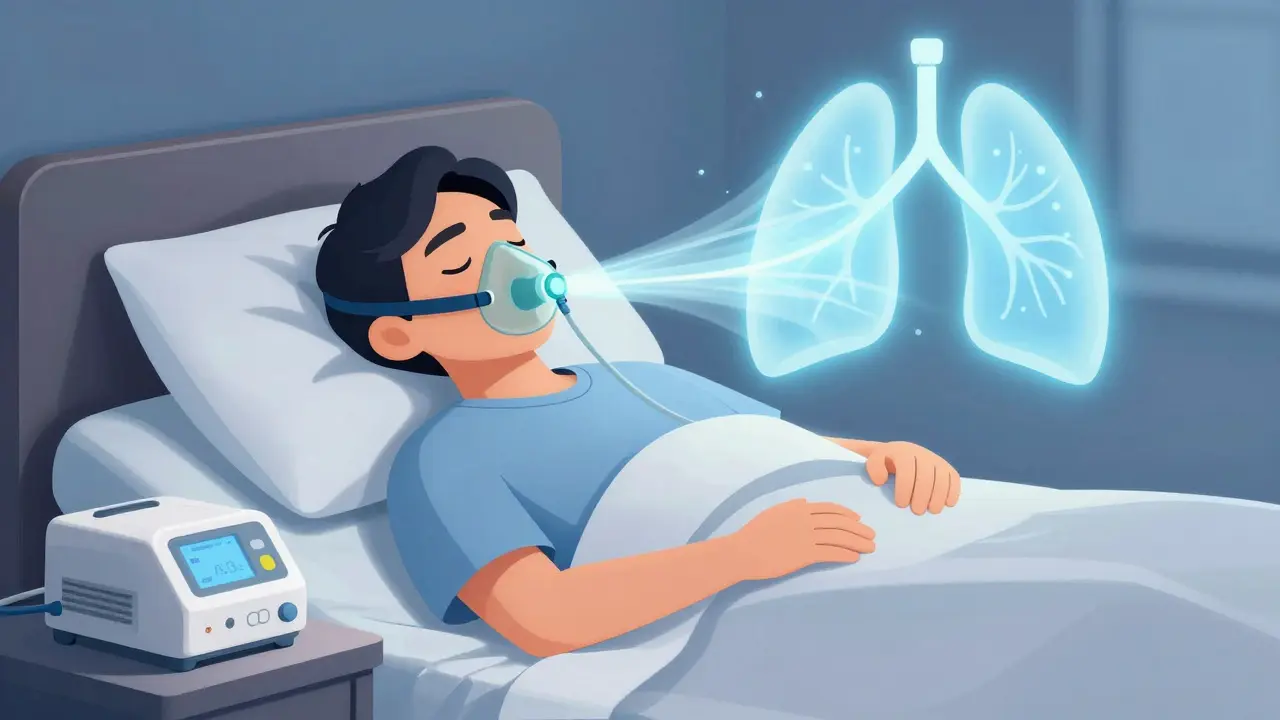
Living with Amyotrophic Lateral Sclerosis, also known as Lou Gehrig's disease, brings a steep learning curve. The physical decline can feel overwhelming, but two specific interventions have proven to dramatically change the trajectory of the disease: noninvasive ventilation and proactive nutritional support. These aren't just supportive measures; they are critical medical strategies that extend life and preserve quality of days. Understanding how and when to use them is the difference between struggling through symptoms and managing them effectively.
Understanding the Respiratory Challenge in ALS
The muscles that control breathing weaken over time. This isn't something you notice immediately. It starts subtly-perhaps difficulty lying flat at night, morning headaches that vanish after standing up, or feeling unusually tired despite sleeping eight hours. These are signs of respiratory insufficiency. Without intervention, this weakness leads to hypercapnia (high carbon dioxide levels) and hypoxia (low oxygen), which strain the heart and brain.
Noninvasive ventilation (NIV) addresses this directly. Unlike invasive mechanical ventilation, which requires a tube down the throat, NIV delivers pressurized air through a mask worn on the nose or face. It acts like an external diaphragm, helping push air into the lungs and assisting the exhale to clear CO2. According to guidelines from the European Federation of Neurological Societies (EFNS) and the Canadian Thoracic Society (CTS), NIV should be considered when forced vital capacity (FVC) drops below 80% of predicted normal or when symptoms like orthopnea appear.
Choosing the Right Device: BiPAP vs. Portable Ventilators
Not all machines are created equal. Most patients start with a bilevel positive airway pressure device, commonly called BiPAP. These devices provide two pressure levels: higher during inhalation (IPAP) and lower during exhalation (EPAP). Standard initial settings often begin at IPAP 12-14 cm H2O and EPAP 4-6 cm H2O, titrated based on comfort and blood gas results. A standard BiPAP costs between $1,200 and $2,500 USD, plus ongoing mask replacement costs of $100-$300 every few months.
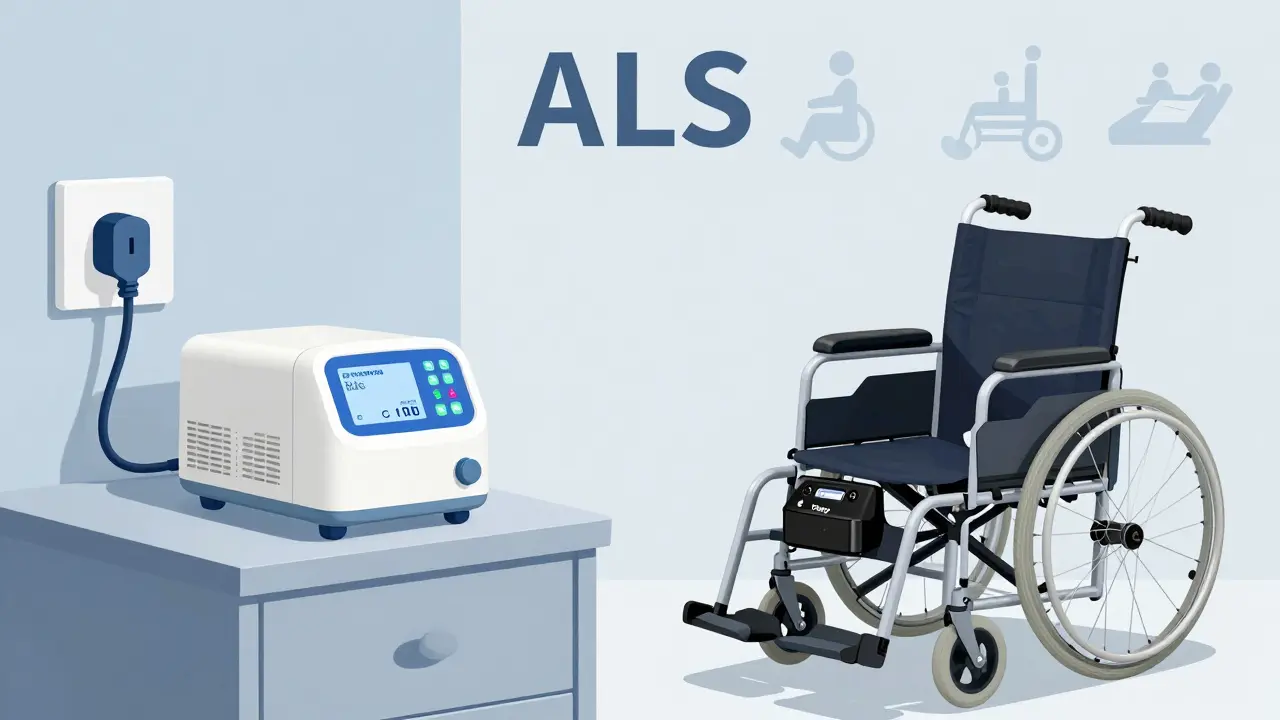
As the disease progresses, a standard BiPAP may not suffice. That’s where portable ventilators like the Trilogy 100/106 come in. These units weigh under 12 pounds, include internal batteries for 8-12 hours of mobility, and offer advanced modes like volume-assured pressure support (VAPS). While they cost significantly more ($6,000-$10,000 USD), they allow for daytime use and greater independence. Patient reviews consistently rate these higher-end devices better for comfort and usability compared to basic BiPAPs.
| Feature | Standard BiPAP | Portable Ventilator (e.g., Trilogy) |
|---|---|---|
| Cost Range | $1,200 - $2,500 USD | $6,000 - $10,000 USD |
| Primary Use | Nocturnal only | Nocturnal and Daytime |
| Mobility | Stationary (corded) | Portable (battery-powered) |
| Advanced Modes | Limited | Volume Control, Dual Backup Rates |
| Weight | Varies (often heavier) | <12 lbs (5.4 kg) |
Overcoming Adherence Barriers
Having the machine is only half the battle. Using it consistently is what saves lives. Studies show that using NIV for more than four hours a day correlates with a significant survival benefit-increasing median survival from roughly 215 days without NIV to 453 days with it. However, early adherence is tricky. Data shows that in the first 30 days, many patients struggle, averaging only 20 out of 30 days of use. Common barriers include mask discomfort, skin breakdown, and the sensation of fighting against the air pressure.
Don’t give up if it feels hard at first. Adherence improves drastically over time. By one year, median usage jumps to 27.5 out of 30 days. Working closely with a respiratory therapist is crucial. They can adjust humidity settings, swap mask styles, and tweak pressures to make the experience tolerable. Remember, NIV benefits both bulbar and non-bulbar ALS patients equally, so don’t let swallowing difficulties deter you from starting therapy.
Nutrition Strategies: The Role of PEG Tubes
Weakness doesn't stop at the diaphragm; it affects the muscles used for chewing and swallowing. Malnutrition and dehydration accelerate muscle loss and increase the risk of aspiration pneumonia. This is why timely nutritional intervention is vital. The gold standard here is the Percutaneous Endoscopic Gastrostomy (PEG) tube.
A PEG tube is placed surgically through the abdominal wall directly into the stomach. It allows for direct delivery of liquid nutrition and hydration. The American Academy of Neurology (AAN) strongly recommends considering PEG placement before forced vital capacity drops below 50% or body mass index (BMI) falls below 18.5 kg/m². Why so early? Because surgery becomes riskier as respiratory function declines. Early placement stabilizes weight-reducing mean weight loss from 12.6% to just 0.5% over six months-and has been shown to prolong survival by approximately 120 days.
The Power of Multidisciplinary Care
Treating ALS isn't a solo effort. Research indicates that patients receiving multidisciplinary care-which includes coordinated respiratory and nutritional management alongside physical therapy and counseling-live an average of 7.5 months longer than those receiving standard care alone. When you combine NIV and PEG tube support, the impact is even greater. A multinational registry analysis found that combined implementation of these two strategies resulted in a 12.3-month median survival advantage compared to no intervention.
This holistic approach ensures that while one specialist manages your breathing pressures, another monitors your caloric intake and electrolyte balance. It prevents the common pitfall of treating symptoms in isolation. Regular monitoring of blood gases, sleep architecture, and weight metrics ensures that adjustments are made proactively rather than reactively.

Navigating Insurance and Access
One of the most frustrating aspects of ALS care is the gap between clinical guidelines and insurance coverage. While European and Canadian guidelines suggest initiating NIV at FVC <80%, many US insurance providers require stricter criteria, such as FVC <50% or sniff nasal inspiratory pressure (SNIP) <40 cm H2O. This delay can compromise patient safety and comfort.
To bridge this gap, document everything. Keep records of morning headaches, daytime sleepiness, and any episodes of shortness of breath. Work with your neurologist to obtain letters of medical necessity that cite specific symptoms and guideline recommendations. Some clinics now offer specialized counseling within 30 days of documented respiratory decline to help navigate these bureaucratic hurdles. Persistence pays off, as proper equipment access is non-negotiable for long-term health.
Practical Tips for Daily Management
- Mask Fit: Check your mask seal daily. Leaks reduce efficacy and cause eye irritation. Replace cushions every 3-6 months.
- Skin Care: Use barrier creams or silicone masks to prevent facial pressure sores. Cleanse skin gently after each use.
- Nutrition Tracking: Work with a dietitian to calculate exact caloric needs. Overfeeding can cause bloating and reflux, which worsens breathing issues.
- Device Maintenance: Clean tubing and filters weekly to prevent mold and bacteria growth. Follow manufacturer instructions strictly.
- Emergency Plan: Have a backup power source for your ventilator. Know who to call if your primary device fails.
When should I start noninvasive ventilation for ALS?
You should consider starting NIV when your forced vital capacity (FVC) drops below 80% of predicted normal or if you experience symptoms like morning headaches, daytime sleepiness, or difficulty breathing while lying flat. Early initiation is linked to better survival outcomes and improved quality of life.
How much does a BiPAP machine cost for ALS patients?
A standard BiPAP device typically costs between $1,200 and $2,500 USD. Ongoing costs include mask replacements, which run about $100-$300 every three to six months. More advanced portable ventilators can cost between $6,000 and $10,000 USD.
Is a PEG tube necessary for everyone with ALS?
While not mandatory, PEG tubes are highly recommended for patients experiencing significant weight loss or swallowing difficulties. Evidence shows that placing a PEG tube before FVC drops below 50% or BMI falls below 18.5 kg/m² can stabilize weight and extend survival by approximately 120 days.
Can NIV help if I have bulbar ALS?
Yes. Recent studies confirm that NIV provides similar survival benefits for patients with bulbar-onset ALS as it does for those with limb-onset ALS. It should not be withheld due to swallowing dysfunction, though careful monitoring for aspiration is required.
How long do I need to use NIV each day to see benefits?
Research indicates that using NIV for more than four hours per day is associated with significant survival benefits. Consistency is key, and while early adherence can be challenging, most patients improve their usage patterns over the first year.
Comments
Look, I don't care what the European guidelines say. If you want real strength, you stop relying on machines and start relying on your own body. This whole narrative about needing a ventilator to survive is just weakness masquerading as medical advice. We used to handle these things with grit and determination, not by hiding behind a mask that breathes for you because you're too soft to do it yourself. It's pathetic.
I get where you're coming from regarding the frustration, but ALS isn't a choice or a lack of grit. It's a progressive neurodegenerative disease. The muscles literally stop working. NIV doesn't replace willpower; it replaces function that has been lost. My dad started BiPAP when his FVC dropped to 75%. He hated it at first, said it felt like being choked, but once we got the humidity right and adjusted the IPAP, he could actually sleep through the night without waking up gasping. It gave him back his energy to spend time with us. It’s not about being soft; it’s about using tools to preserve quality of life when the body fails. Don’t let anger blind you to the science here.
The real issue isn't the machine, it's the control. Who decides when you switch from BiPAP to the Trilogy? Is it really about 'comfort' or is it about keeping you dependent on their expensive hardware ecosystem? I’ve seen how these companies push the more expensive units because the margins are better. They want you hooked on the battery-powered lifestyle so you never question why you can't breathe naturally anymore. It’s a subtle form of enslavement disguised as healthcare. :/
They’re watching you. Every breath you take is recorded by those devices. Data mining your respiratory patterns to sell to insurance companies who will then deny your claims because they know exactly when you’ll fail. That’s why they push the portable ones. To track your movements. To know where you are when you die. Do not trust the cloud connectivity features. Unplug them if you can. Protect your privacy before you protect your lungs.
Oh wow, another person convinced the government is breathing down their neck via a CPAP machine. Sure, Tucker. Because the NSA definitely cares more about my CO2 levels than my tax returns. Meanwhile, I’m just trying to figure out if Medicare will cover the $300 mask replacements every few months because apparently, my face is too unique for standard sizes. But yeah, let’s ignore the actual financial ruin while we worry about data mining.
It is truly heartbreaking to see such fear and aggression in the face of suffering 🥺. The human spirit is resilient, yes, but it is also fragile. These interventions are not chains; they are bridges. Bridges that allow us to stay present for our loved ones a little longer. Think of the PEG tube not as an invasion, but as a gift of nourishment when the hands can no longer hold the spoon. Let us choose compassion over suspicion. Light over darkness. ✨🙏
While your poetic sentimentality is noted, it lacks empirical rigor. The survival statistics cited in the post-specifically the 12.3-month median survival advantage with combined NIV and PEG-are derived from robust multinational registry analyses. To dismiss these findings as mere 'gifts' ignores the physiological reality of hypercapnia and malnutrition. One must adhere to the evidence-based protocols established by the AAN and EFNS. Sentiment does not lower carbon dioxide levels; pressure support does. Morality dictates we utilize the most effective treatments available, regardless of personal aesthetic preferences regarding medical devices.
i feel like you guys are missing the point entirely... its about the connection you lose when you put that mask on. i had a friend who refused the peg tube because she said it changed her identity. now she cant even speak clearly because her throat muscles are gone. dont wait until you are starving to make the decision. talk to your family. let them in. it hurts but it heals. trust me.
Exactly.