Learn how to choose between acetaminophen and NSAIDs like ibuprofen and naproxen for OTC pain relief. Understand which works best for headaches, arthritis, or fever-and how to avoid serious side effects.

When you reach for a pain reliever, chances are you’re holding acetaminophen, a common over-the-counter pain and fever reducer also known as paracetamol in many countries. It's in more than 600 medications—from Tylenol to cold syrups, sleep aids, and prescription combos—making it one of the most used drugs in the world. But because it’s so common, people often forget it’s not harmless. Even a little too much can cause serious liver damage, and many don’t realize they’re taking it multiple times a day.
Acetaminophen works differently from NSAIDs like ibuprofen. It doesn’t reduce inflammation, but it’s gentler on the stomach, which is why doctors often recommend it for people with ulcers or kidney issues. But here’s the catch: your liver breaks it down, and if you take more than your body can handle—whether it’s one extra pill, mixing it with alcohol, or taking it for days on end—the liver gets overwhelmed. A single overdose of 7 to 10 grams can cause acute liver failure. That’s not some rare scenario—it’s what happens when someone takes 10 extra-strength pills thinking, "It can’t hurt me." And it’s not just accidental. Some people take it daily for chronic pain without knowing the long-term toll.
drug interactions, especially with alcohol or certain antibiotics and seizure meds, can turn a safe dose into a dangerous one. Even liver damage, a silent, slow-progressing risk that shows no symptoms until it’s too late is often missed until blood tests reveal it. Seniors, people with existing liver conditions, or those who drink regularly are at higher risk, but anyone can be affected. You don’t need to be a heavy drinker to be in danger—just one drink a day with regular acetaminophen use can raise your risk.
What’s worse, many don’t know acetaminophen is hiding in their nighttime cold medicine, their migraine combo pill, or their prescription painkiller. If you’re taking more than one product, you’re likely doubling up without realizing it. The FDA limits acetaminophen in prescription combos to 325 mg per pill now, but that doesn’t stop people from taking multiple pills a day. And while the label says "do not exceed 4,000 mg per day," that’s the absolute max. For most people, 3,000 mg or less is safer, especially if you’re using it regularly.
There’s no magic number that tells you when it’s safe—it depends on your weight, liver health, alcohol use, and what else you’re taking. That’s why so many of the posts here focus on drug safety signals, medication interactions, and how to avoid hidden risks. You’ll find guides on how to spot when acetaminophen is in your meds, how to talk to your doctor about safer alternatives, and what to do if you think you’ve taken too much. You’ll also see how other drugs like gabapentin, opioids, and diabetes meds can interact with it, and why monitoring kidney and liver function matters, especially as you age.
Acetaminophen isn’t evil. It’s a useful tool when used right. But like any tool, misuse turns it into a hazard. The goal isn’t to scare you off—it’s to make sure you know exactly what you’re taking, how much, and why. If you’ve ever wondered why your doctor asked about your pain meds or why your pharmacist checked your bottles twice, now you know. The information below isn’t just about acetaminophen—it’s about learning to read the fine print, ask the right questions, and protect your body from the quiet dangers hiding in plain sight.
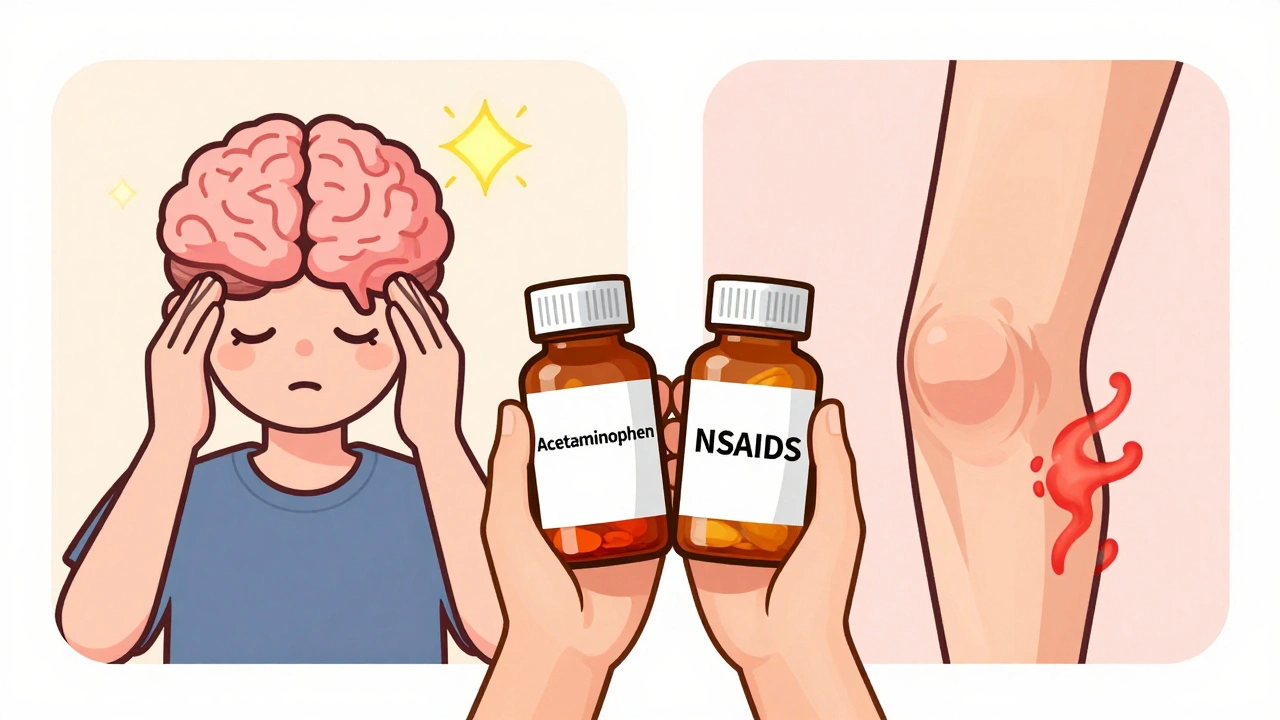
Learn how to choose between acetaminophen and NSAIDs like ibuprofen and naproxen for OTC pain relief. Understand which works best for headaches, arthritis, or fever-and how to avoid serious side effects.
Health and Wellness