
Medication Sleep Impact Checker
Check Your Medications
Select medications you're currently taking to assess potential sleep impact
Many people assume that if they’re having trouble sleeping, it’s just stress, aging, or bad habits. But for millions, the real culprit is something in their medicine cabinet. Medication-induced insomnia isn’t rare - it’s common, often overlooked, and entirely manageable. About 1 in 5 adults say their sleep troubles started after starting a new prescription or over-the-counter drug. And it’s not just caffeine or stimulants. Even drugs meant to help you - like antidepressants, blood pressure meds, or allergy pills - can wreck your sleep without you realizing why.
Which Medications Are Most Likely to Keep You Awake?
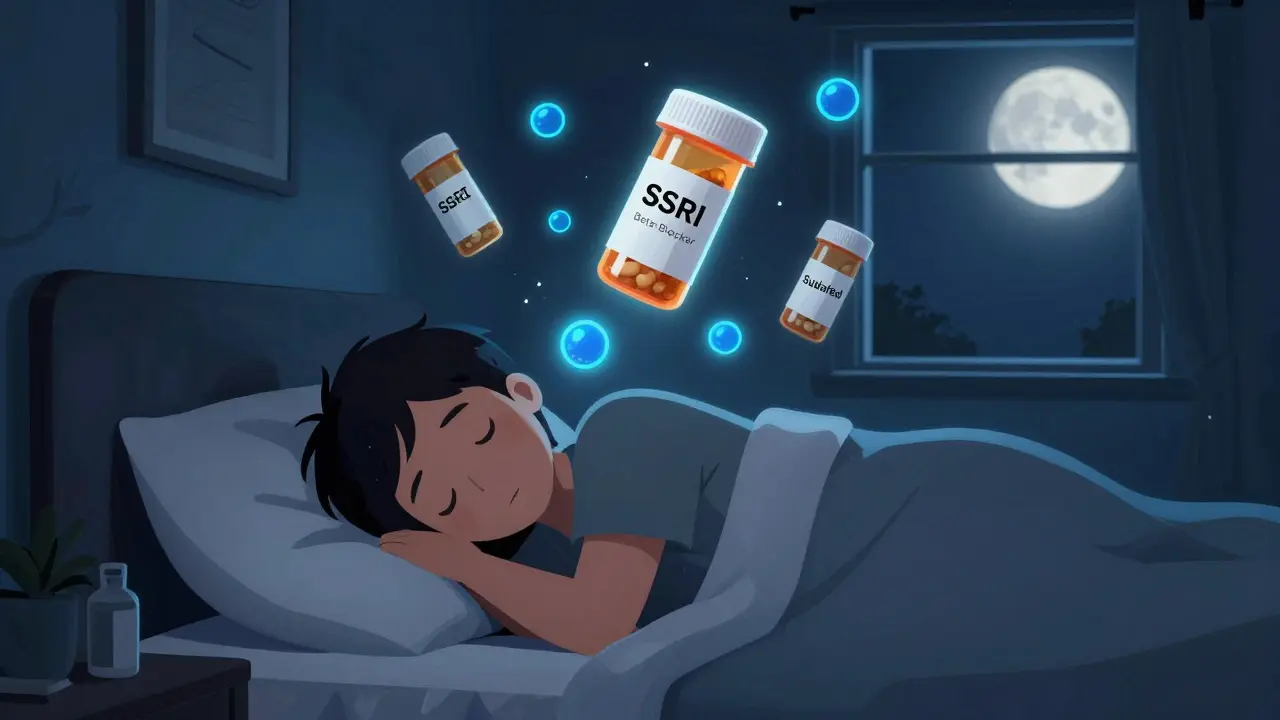
It’s not just one drug. Dozens of common medications interfere with sleep, and they do it in different ways. Here are the biggest offenders:- SSRIs (like fluoxetine/Prozac): These antidepressants boost serotonin, which sounds good - until it disrupts your natural sleep cycle. Studies show they shorten REM sleep by over 20% and increase nighttime awakenings in 25-30% of users.
- Beta-blockers (like metoprolol/Lopressor): Used for high blood pressure and heart conditions, these drugs slash melatonin production by up to 42%. That means less of the hormone that tells your body it’s time to sleep.
- Corticosteroids (like prednisone): These powerful anti-inflammatories spike cortisol levels at night, turning your body into a state of alertness. One study found people on 20mg of prednisone had nearly 3 times more nighttime awakenings than those not taking it.
- ADHD stimulants (like Adderall XR): These are designed to keep you focused - and awake. Up to half of users report delayed sleep onset by more than an hour.
- Over-the-counter decongestants (like pseudoephedrine/Sudafed): Even though they’re sold for colds, they’re mild stimulants. About 1 in 8 users get insomnia from them.
- Non-drowsy antihistamines (like loratadine/Claritin): Ironically, these are meant to be non-sedating, but they can still interfere with sleep onset in 8-10% of people.
- St. John’s Wort: This herbal supplement is often used for mood, but it can cause sleep problems in 15% of users - even though many take it hoping to improve sleep.
And don’t forget the elderly. The American Geriatrics Society specifically warns against drugs like diphenhydramine (Benadryl) for people over 65. These older antihistamines don’t just cause drowsiness - they disrupt sleep architecture, leading to poor quality rest and next-day brain fog in 35-40% of users.
Why Do These Drugs Mess With Sleep?
It’s not magic. It’s biology. Each drug affects your brain chemistry differently:- SSRIs flood your brain with serotonin, which can overstimulate areas that regulate sleep-wake cycles.
- Beta-blockers block signals to your pineal gland, which makes melatonin. No melatonin? No sleep signal.
- Corticosteroids trick your body into thinking it’s morning - even at midnight - by raising cortisol levels way too high.
- Stimulants pump up dopamine and norepinephrine, the brain’s natural wake-up chemicals, long after bedtime.
These aren’t random side effects. They’re direct, measurable changes in your body’s sleep machinery. And the more meds you take - especially if you’re over 50 - the higher your risk. The National Sleep Foundation found 28% of people aged 50-65 report sleep issues tied to medications, likely because they’re on an average of 5-7 prescriptions.
What You Can Do: Practical, Proven Fixes
The good news? You don’t have to suffer. Here’s what actually works:1. Change When You Take It
Timing matters more than you think. For many drugs, shifting the dose from evening to morning can make all the difference:- Take corticosteroids before 9 a.m. - this cuts insomnia risk by 63% compared to afternoon or evening doses.
- Move SSRIs to the morning. A 2022 study showed this reduced sleep disturbances by 45%.
- If you’re on a beta-blocker, ask if you can switch to atenolol. It’s water-soluble and causes 37% fewer nighttime awakenings than fat-soluble versions like propranolol.
2. Talk to Your Doctor About Alternatives
Sometimes, there’s a better option. For example:- If an SSRI is wrecking your sleep, switching to mirtazapine (Remeron) - which is actually sedating - resolves insomnia in 68% of cases.
- For allergies, try a nasal spray instead of oral antihistamines. Less systemic effect means fewer sleep issues.
- If you’re on a stimulant for ADHD, ask about non-stimulant options like atomoxetine or guanfacine.
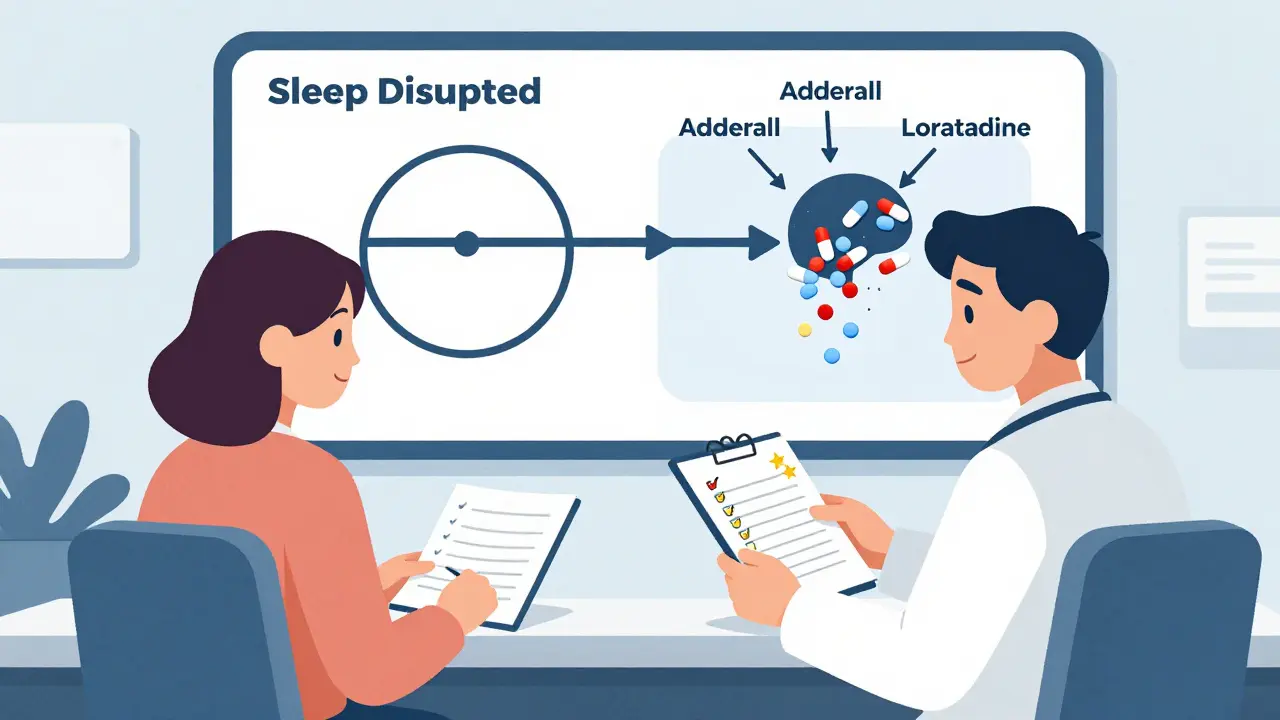
Don’t assume your doctor knows. Many aren’t trained to connect sleep problems to medications. Bring up your sleep diary - yes, a simple one. Writing down when you go to bed, wake up, and how rested you feel for 14 days gives your doctor clear evidence.
3. Try Melatonin (The Right Way)
For beta-blocker users, supplemental melatonin can help. A 2020 study found taking 0.5-3mg of melatonin 2-3 hours before bed reduced insomnia symptoms by 52%. But don’t take it right before bed - it needs time to work. And don’t overdo it. More than 3mg rarely helps and can make things worse.4. Avoid the Trap of Self-Discontinuing
A Consumer Reports survey found 34% of people stopped taking a medication because of sleep problems - and 61% never told their doctor. That’s dangerous. Stopping cold turkey can cause rebound effects, worsen your original condition, or even trigger withdrawal symptoms. Always talk to your provider first.When to See a Sleep Specialist
Not every sleep issue is caused by meds. Sometimes, you have two problems: a drug side effect and an underlying sleep disorder. Experts say if you have:- Sleep problems lasting more than 3 weeks,
- Occurring 3 or more nights per week,
- And causing daytime fatigue, irritability, or trouble focusing on 3 or more days a week,
…then it’s time to see a sleep specialist. This is called the 3-3-3 Rule, and it’s backed by sleep experts at UCLA and Keck School of Medicine. About half of people who think their insomnia is from meds actually have something else going on - like sleep apnea or restless legs.
Non-Drug Solutions That Work
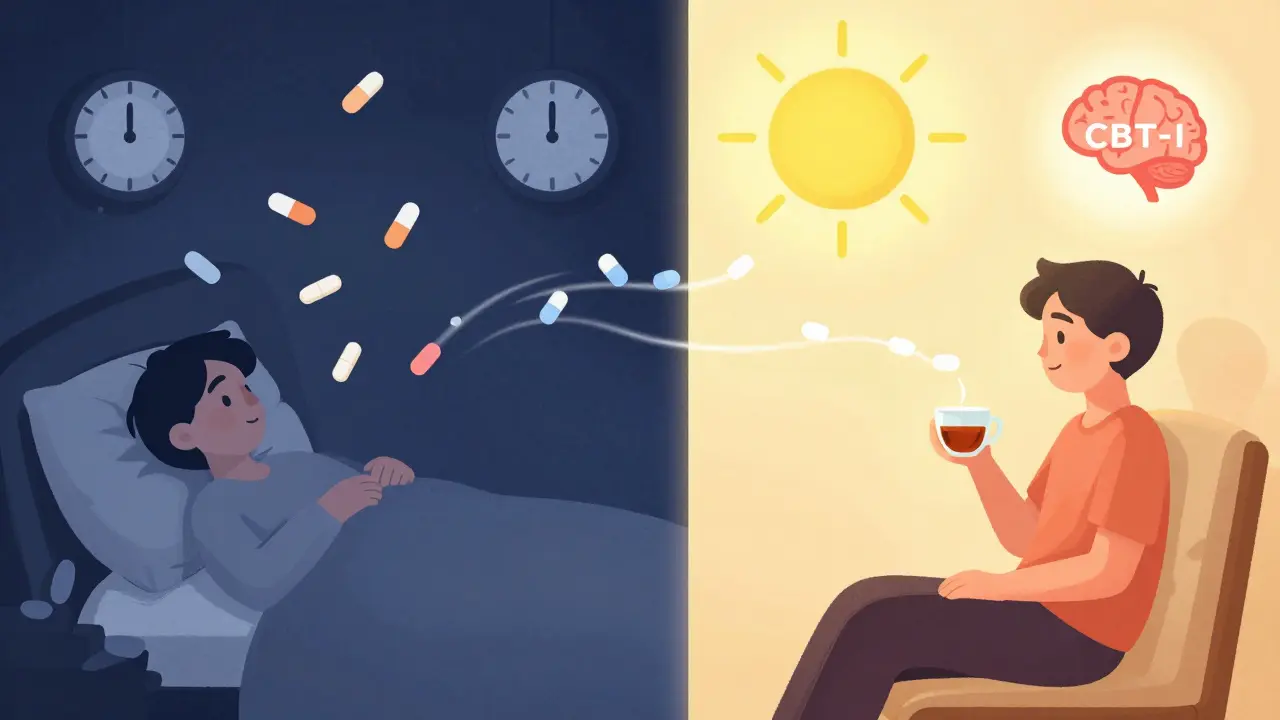
Medication isn’t the only answer. Cognitive Behavioral Therapy for Insomnia (CBT-I) is now the gold standard - even for drug-induced cases. A 2023 meta-analysis showed CBT-I helped 65-75% of people with medication-related sleep issues. It doesn’t require pills. It teaches you how to reset your brain’s sleep habits through:- Sticking to a consistent wake-up time (even on weekends),
- Limiting time in bed to only when you’re sleepy,
- Avoiding screens and bright lights before bed,
- Training your brain to associate bed with sleep - not scrolling or worrying.
And here’s something new: timed light therapy. Emerging research shows that getting 30 minutes of bright morning light (even on cloudy days) can help your body re-sync its clock after meds mess with melatonin. One 2023 study found it improved sleep efficiency by 28% in people taking insomnia-causing drugs.
What to Do Right Now
You don’t need to wait. Start with this:- Write down every medication, supplement, and OTC pill you take - including doses and times.
- Track your sleep for 7 nights: When did you go to bed? When did you wake up? How many times did you wake up? Rate your sleep quality from 1-10.
- Look at your list. Do any of the drugs above match what you’re taking?
- Ask your doctor: "Could any of these be affecting my sleep? Is there a timing change or alternative I could try?"
- If you’re on a beta-blocker or corticosteroid, ask about switching the time you take it.
Don’t assume it’s normal to lie awake at night. Sleep isn’t a luxury - it’s a biological necessity. And if a pill is stealing it, there’s almost always a way to fix it - without quitting the medicine you need.
Comments
Honestly, this hit home. I’ve been on sertraline for years and thought my insomnia was just stress. Turns out, switching it to morning fixed everything. No more 3 a.m. panic sessions. Simple fix, huge difference.
Thanks for laying this out so clearly.
Beta-blockers wrecked my sleep. Switched to atenolol and now I actually sleep through the night. Doctor didn’t mention it - had to research myself. Always ask about alternatives.
Lmao i took prednisone for a rash and thought i was just being dramatic about not sleeping. turns out my body was screaming at me. 🤡
Medication induced insomnia is just capitalism’s way of making us pay for health in invisible ways. We’re told to optimize sleep but no one tells us the drugs we’re forced to take are the problem. The system doesn’t care if you dream - it just wants you functional. Melatonin? A bandaid on a bullet wound.
CBT-I is the real MVP here. I did the 6-week program and it changed everything - even with my Adderall. No magic pills, just rewiring. If you’re struggling, just start with a consistent wake time. It’s dumb simple but works.
Also, light therapy. Get outside for 30 min before 9 a.m. Even if it’s cloudy. Your pineal gland will thank you. 🌞
Oh honey. You wrote a 2000-word essay on how to fix your own poor decision-making. Did you really need a whole post to realize that taking 7 medications at once might not be the healthiest lifestyle? 🙄
Also, St. John’s Wort? Really? You’re still trusting herbal supplements over peer-reviewed pharmacology? Sweetie.
The fact that this post even needs to exist is tragic. We live in a world where people have to Google whether their blood pressure med is keeping them awake. And yet, doctors still don’t ask about sleep during med reviews. The healthcare system is a poorly written IKEA manual - instructions missing, parts swapped, and the whole thing collapses under pressure.
Also, melatonin at 3mg? That’s like using a flamethrower to light a candle.
I’ve been on a beta-blocker for 8 years and never knew melatonin could help. Took 1mg at 8 p.m. for a week - fell asleep faster, stayed asleep. No side effects. Just proves how little doctors tell you. Thank you for sharing this. Small wins matter.
Yall actin like the system is out to get you. If you dont wanna sleep take less pills. America got too soft. I take 3 meds and still sleep 6 hours. Just deal. 🇺🇸🔥
It is with profound gratitude that I acknowledge the courage it takes to illuminate these hidden burdens. Sleep - this sacred, biological imperative - has been, for too many, a casualty of pharmaceutical oversight. The quiet dignity with which individuals endure this silent erosion of rest is both heartbreaking and galvanizing. Let us not merely treat symptoms, but restore agency. To the medical community: listen. To the suffering: you are not alone. And to the author - thank you for lighting the path. 🌙