
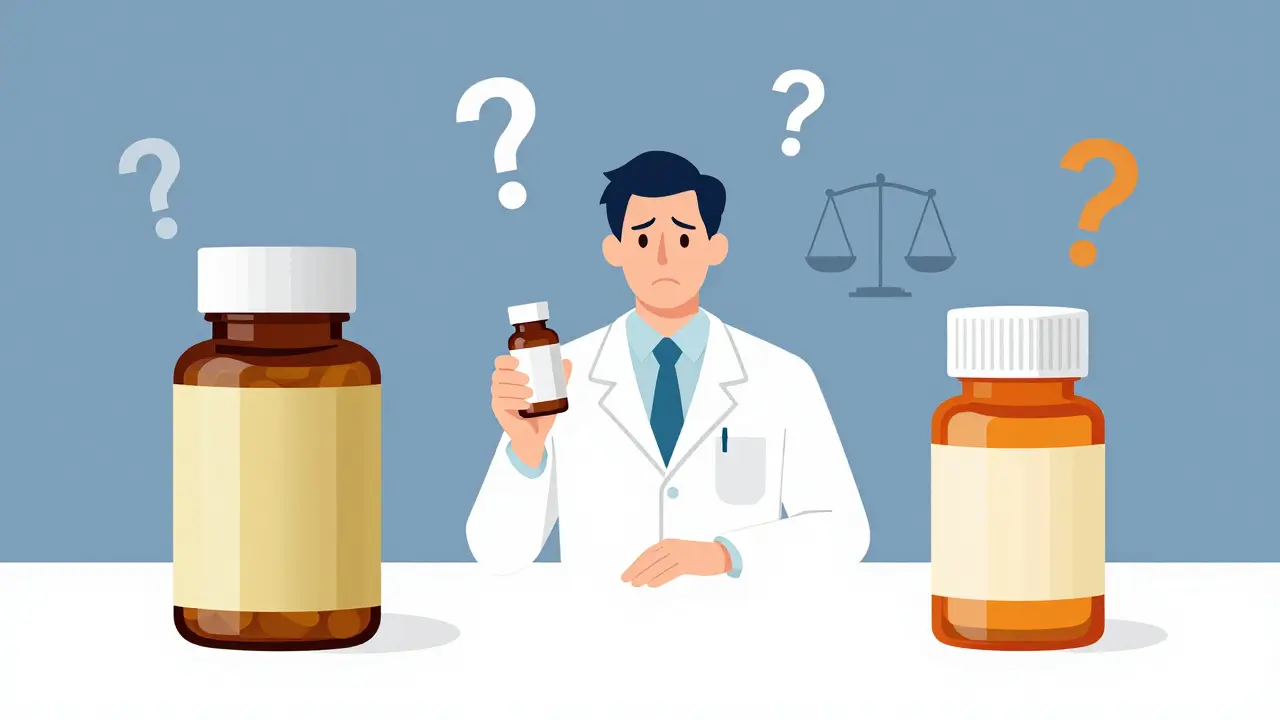
Imagine you walk into a pharmacy to pick up a medication your doctor prescribed. You expect the exact pill you’ve been taking for years. Instead, the pharmacist hands you a different color, a different shape, and a different brand name. It’s cheaper, sure. But does it work the same? This scenario plays out millions of times a day. While generic substitution is designed to save money and maintain health, it creates a complex web of concerns for pharmacists who stand at the front lines of this process.
For pharmacists, swapping a brand-name drug for its generic counterpart isn’t just a clerical task. It involves navigating strict regulations, managing patient anxiety, and ensuring clinical safety. The tension between cost-saving mandates and individual patient needs often leaves pharmacists feeling caught in the middle. Let’s look at what keeps pharmacists up at night regarding generic substitution.
The Bioequivalence Gap: Science vs. Perception
At the heart of every generic substitution debate is the concept of bioequivalence, which is a measure used by regulatory agencies like the FDA to ensure that a generic drug delivers the same amount of active ingredient into a patient's bloodstream as the brand-name version over the same period of time. Regulatory bodies require generics to show absorption rates within 80-125% of the reference product. On paper, this means they are therapeutically equivalent. In practice, however, pharmacists know that "equivalent" doesn't always mean "identical experience" for every single patient.
Pharmacists often face skepticism from patients who believe that if a drug costs less, it must be lower quality. This perception gap is difficult to bridge during a quick consultation. When a patient reports side effects or reduced efficacy after switching, the pharmacist has to investigate whether it’s a true clinical reaction or a nocebo effect (where negative expectations cause negative symptoms). Without clear data on individual patient responses, pharmacists rely on general guidelines, which can feel insufficient when dealing with unique cases.
| Attribute | Brand-Name Drug | Generic Drug |
|---|---|---|
| Active Ingredient | Specific chemical compound | Identical chemical compound |
| Inactive Ingredients | Proprietary fillers/binders | Different fillers/binders allowed |
| Appearance | Distinctive color/shape | Varies by manufacturer |
| Cost | High (covers R&D) | Low (competitive market) |
| Bioequivalence Standard | N/A (Reference Product) | 80-125% absorption rate |
The difference in inactive ingredients-fillers, dyes, and binders-is a major source of concern. Some patients have allergies or sensitivities to these non-active components. A switch might introduce a new filler that causes gastrointestinal upset, even if the active drug works perfectly. Pharmacists must remember these nuances, yet detailed information about specific generic formulations isn't always readily available at the counter.
Narrow Therapeutic Index Drugs: The High-Stakes Category
Not all medications are created equal when it comes to substitution. The biggest worry for many pharmacists involves narrow therapeutic index (NTI) drugs, which are medications where small changes in blood concentration can lead to treatment failure or serious toxicity. Examples include warfarin (blood thinner), levothyroxine (thyroid hormone), and certain anti-seizure medications.
For NTI drugs, the standard 80-125% bioequivalence range can be problematic. A slight variation in absorption might push a patient out of their safe therapeutic window. Switching brands frequently can lead to instability in blood levels. Pharmacists often advise against frequent switching for these conditions, preferring to keep patients on one consistent manufacturer whenever possible. However, supply chain issues or insurance formulary changes can force substitutions anyway, creating significant clinical risk.
This dilemma forces pharmacists to make tough calls. Do they follow the automatic substitution protocol to save the patient money? Or do they override it to maintain stability, potentially costing the patient more? Many states allow pharmacists to override substitutions for clinical reasons, but doing so requires documentation and justification, adding administrative burden to an already busy workflow.

Patient Trust and Communication Challenges
Perhaps the most exhausting part of generic substitution is the human element. Patients often view their medication as a personal contract with their doctor and the original brand. Changing that without explicit discussion feels like a breach of trust to some. Studies show that while most patients accept generics for acute conditions, acceptance drops significantly for chronic diseases where long-term stability is crucial.
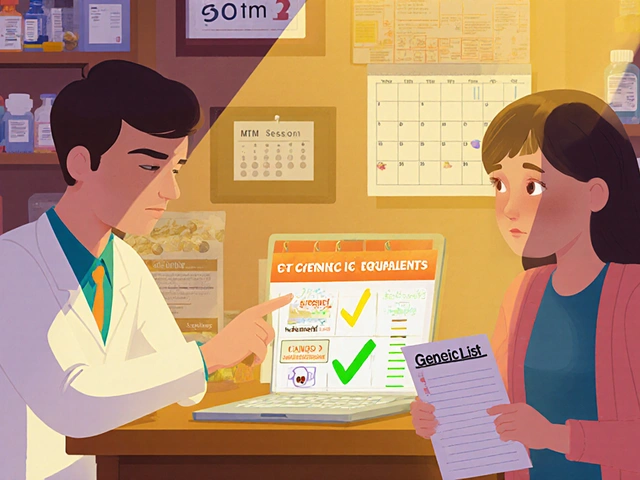
Pharmacists spend considerable time explaining why the change happened. They have to reassure patients that the new pill is safe, effective, and approved by regulators. For elderly patients or those with cognitive impairments, visual changes in pills can cause confusion. If the new generic looks nothing like the old one, patients might accidentally double-dose or skip doses thinking they’ve already taken them.
- Visual Confusion: Different colors or shapes can lead to medication errors, especially in polypharmacy scenarios where patients take multiple drugs.
- Loss of Control: Patients may feel disempowered when their choice of medication is altered without their direct input.
- Mistrust of Industry: Skepticism about pharmaceutical companies cutting corners can spill over onto generic manufacturers, regardless of actual quality standards.
Building trust takes time. Pharmacists act as educators, bridging the gap between scientific evidence and patient belief. Yet, with limited counseling time per customer, providing thorough explanations for every substitution is nearly impossible. This leads to frustration on both sides: pharmacists feel rushed, and patients feel unheard.
Regulatory Hurdles and Workflow Disruptions
Behind the scenes, generic substitution is governed by a patchwork of laws that vary by region. In some jurisdictions, automatic substitution is the default unless the doctor writes "Dispense As Written." In others, patient consent is required before any swap occurs. Navigating these rules adds complexity to daily operations.
When a substitution happens, it triggers additional steps. The pharmacist must verify that the generic is authorized, check for any contraindications, and sometimes contact the prescriber if there are doubts. If a patient refuses the generic, the pharmacist may need to call the doctor to request a brand-name exception, which involves phone tag and potential delays in filling the prescription.
Insurance companies also play a role. Formularies often incentivize generics by setting lower copays. While this encourages substitution, it can create conflicts if a patient prefers a specific generic brand due to past positive experiences. Insurance policies might not cover that specific manufacturer, forcing another round of negotiations between the patient, pharmacist, and insurer.

The Rise of Biosimilars: A New Frontier
As biologic drugs lose patent protection, biosimilars are highly similar versions of existing biologic drugs that are developed using living cells rather than chemical synthesis. entering the market, pharmacists face a new layer of complexity. Unlike small-molecule generics, biosimilars are not identical copies. They are large, complex proteins produced in living organisms, meaning minor variations are inevitable.
Substituting biosimilars requires stricter oversight. Regulatory approval processes are more rigorous, demanding clinical studies to demonstrate similarity. Pharmacists must stay updated on interchangeability designations, which determine whether a biosimilar can be swapped without the prescriber’s intervention. Misunderstanding these distinctions could lead to inappropriate substitutions, affecting outcomes for patients with cancer, autoimmune diseases, or other serious conditions.
The learning curve is steep. Many pharmacists feel underprepared to counsel patients on biosimilars compared to traditional generics. Clearer guidelines and better educational resources are needed to support confident decision-making in this evolving landscape.
Strategies for Smoother Substitutions
Despite the challenges, generic substitution remains vital for healthcare affordability. To mitigate concerns, pharmacists can adopt several proactive strategies:
- Proactive Counseling: Briefly explain the reason for the substitution at pickup. Highlight benefits like cost savings and confirmed bioequivalence.
- Consistency Where Possible: For NTI drugs or sensitive patients, try to maintain the same manufacturer across refills to minimize variability.
- Collaborate with Prescribers: Encourage doctors to discuss generic options during appointments, reducing the burden on pharmacists to educate from scratch.
- Document Overrides: Keep clear records when overriding automatic substitutions for clinical reasons, protecting both the patient and the pharmacy.
- Stay Informed: Regularly update knowledge on local regulations, formulary changes, and new biosimilar approvals.
By focusing on communication and consistency, pharmacists can turn a potential point of friction into an opportunity for improved patient care. The goal isn’t just to dispense a cheaper pill; it’s to ensure the patient stays healthy, adherent, and confident in their treatment plan.
Are generic drugs exactly the same as brand-name drugs?
Generic drugs contain the same active ingredient, strength, dosage form, and route of administration as the brand-name drug. However, they may differ in inactive ingredients such as fillers, colors, and flavors. Regulatory agencies require generics to be bioequivalent, meaning they perform similarly in the body, but they are not molecularly identical copies.
Why do pharmacists worry about narrow therapeutic index (NTI) drugs?
NTI drugs have a very small margin between a therapeutic dose and a toxic dose. Small variations in how the body absorbs the drug can lead to treatment failure or harmful side effects. Because generic versions can have slight differences in absorption, frequent switching between manufacturers can destabilize a patient's condition, making consistency crucial.
Can I refuse a generic substitution?
Yes, in most regions, patients have the right to refuse a generic substitution. You may need to pay the higher price associated with the brand-name drug, and your insurance might not cover the full cost. It’s best to inform your pharmacist and doctor of your preference so they can document "Dispense As Written" on your prescription.
What should I do if I experience side effects after switching to a generic?
Contact your pharmacist or doctor immediately. Explain the symptoms and when they started relative to the switch. It could be due to inactive ingredients or a true sensitivity. Your healthcare provider can help determine if you should switch back to the brand name or try a different generic manufacturer.
How do biosimilars differ from traditional generic drugs?
Traditional generics are chemically synthesized copies of small-molecule drugs. Biosimilars are biological products derived from living cells, making them more complex and larger molecules. They cannot be identical copies, so they are called "similar" rather than "generic." Approval requires extensive clinical testing to prove similarity in safety and efficacy.
Comments
You think this is about science? nah it's about control. the system wants you dependent on whatever cheap pill they push that week. i've seen people lose their minds over a color change and its not in their heads its the placebo effect working in reverse because they feel violated by the process itself. why do we even trust these regulators anymore?
i totally get where you're coming from rachel. it can feel really unsettling when your routine changes without warning. but i think most pharmacists are just trying to help keep costs down so more people can afford their meds. it's a tough balance for sure.
Let us be absolutely clear: generic substitution is a cornerstone of public health economics, not a conspiracy. The FDA’s bioequivalence standards are rigorous. If you believe otherwise, you are disregarding decades of clinical data. However, the article correctly identifies the issue with Narrow Therapeutic Index (NTI) drugs. For medications like warfarin or levothyroxine, consistency is paramount. Pharmacists must exercise clinical judgment here, not just follow insurance algorithms. This is basic medical ethics.
in india we have generics too but nobody complains like this. maybe because we know what real healthcare inequality looks like. here in usa everyone acts like they own the pharmacy. stop being so dramatic about pill colors. if it works it works. simple as that.
The notion that 'if it works, it works' is a profoundly simplistic view of pharmacokinetics, Aswin. It ignores the nuanced reality of bioavailability variances which, while statistically insignificant in large populations, can be clinically relevant in individual cases-particularly those with metabolic idiosyncrasies. Furthermore, the psychological impact of the 'nocebo' effect, as mentioned in the text, cannot be dismissed as mere drama; it is a documented physiological response to negative expectation. One might argue that the American patient's heightened awareness is less 'drama' and more an assertion of bodily autonomy in a system that often treats them as line items.
it is interesting how we perceive safety. some people need the brand name to feel secure. others are fine with any option. there is no right way. just different ways of coping with the uncertainty of health. i try to stay open minded about both sides.
this makes me so anxious!! 😰 i had a seizure med switched once and i felt terrible for weeks. my pharmacist said it was just in my head but i knew it wasn't. why is it so hard to just let us keep the same pill?? it feels like they don't care about our specific needs. 😞
look, the average person doesn't understand pharmacology. they see a different color and panic. it's embarrassing honestly. the system works for the majority. if you are one of the few who reacts differently, deal with it. don't expect special treatment because you have a sensitive constitution. life isn't fair.
While Hassan’s perspective highlights the statistical norm, it fails to account for the ethical obligation of personalized medicine. The article rightly points out the challenges with biosimilars and NTI drugs. From a regulatory standpoint, the variability in inactive ingredients can indeed trigger allergic responses or gastrointestinal issues in susceptible individuals. Therefore, dismissing patient concerns as 'embarrassing' overlooks the complexity of human physiology. A robust healthcare system should accommodate these outliers through better communication protocols, not ridicule.
you guys are missing the point. its about morality. why should big pharma profit off of brand names when generics exist? but also why should patients suffer because insurers want to save pennies? its a moral failure on all fronts. we need to take back control of our bodies from these corporations. dont let them tell you what is equivalent. you know best.
I find that the discourse surrounding generic substitution often becomes unnecessarily polarized, with participants oscillating between extreme skepticism of pharmaceutical regulations and an almost blind faith in corporate efficiency, neither of which serves the patient well, particularly when one considers the intricate web of insurance formularies and state-specific laws that govern dispensing practices, which can lead to significant delays and frustration for individuals who are already dealing with the stress of managing chronic conditions, thereby exacerbating the very health issues they are trying to treat, and it is imperative that we foster a more collaborative environment where pharmacists, prescribers, and patients engage in meaningful dialogue about therapeutic options, rather than relying on automatic substitution protocols that fail to account for individual patient histories and preferences, which ultimately undermines trust in the healthcare system.