
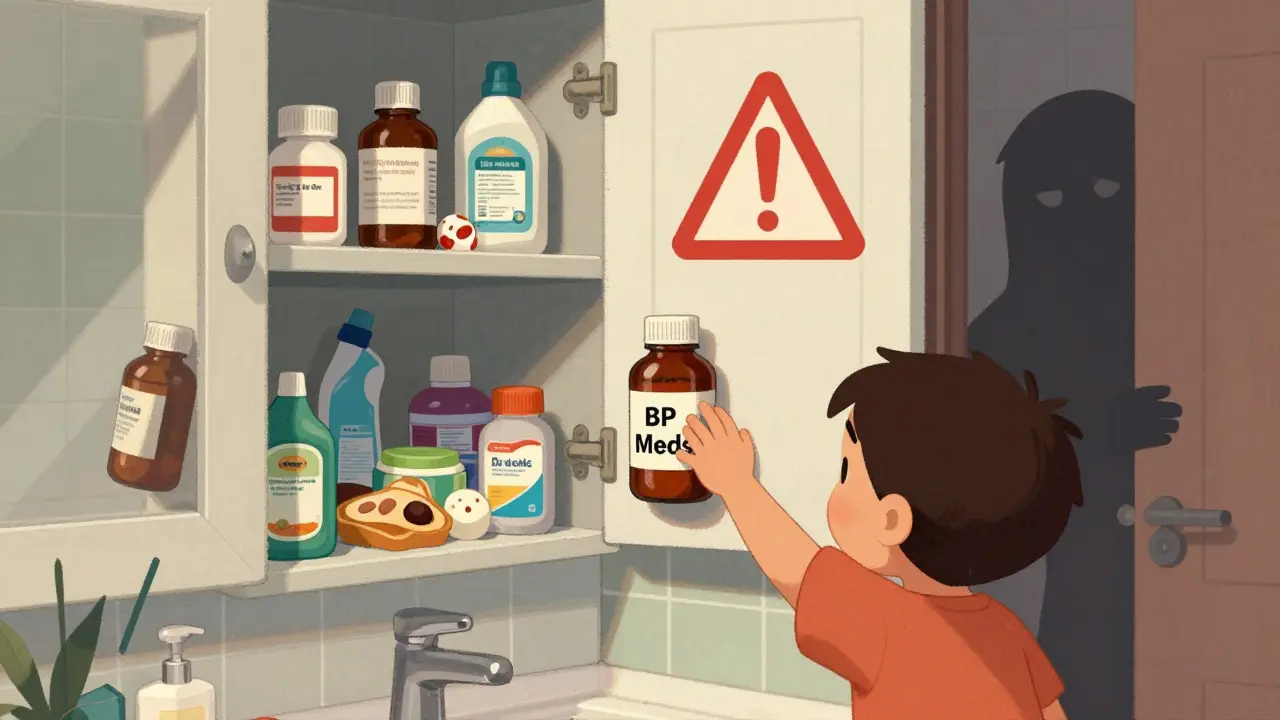
When multiple people live together-whether it’s a multi-generational home, an assisted living facility, or a group house-keeping medications safe and effective isn’t just a good idea. It’s a necessity. A single misplaced pill can lead to an overdose, a bad reaction, or even death. In shared spaces, the risks are higher because medications are often stored in the same cabinets, drawers, or refrigerators as food, toiletries, or cleaning supplies. And without clear rules, someone might accidentally take the wrong medicine-or worse, intentionally misuse it.
Why Medication Storage in Shared Spaces Is So Critical
Medications aren’t like snacks. They don’t expire the same way, and they don’t always look dangerous. A bottle of pills might seem harmless sitting on a bathroom counter, but if a child grabs it, or someone with dementia takes it by mistake, the consequences can be immediate and deadly. According to the Joint Commission, 13% of hospitals received citations between 2020 and 2021 for improper medication storage. That’s not just a statistic-it’s a pattern that repeats in homes too.
In multi-generational households, 67% of families reported at least one medication-related incident in the past year, according to a 2025 survey by SeniorHelpers. Nearly half of those incidents involved children accessing medicine stored in unlocked cabinets. In assisted living facilities, where staff are trained, the numbers are better-but still concerning. One facility was found storing medications on an unlocked shelf in the dining room, even though they had a locked closet nearby. Policy doesn’t always mean practice.
What You Need to Store Medications Safely
Safe storage isn’t about locking everything away and forgetting it. It’s about matching the storage method to the medication and the people living around it. Here’s what matters most:
- Locks: All prescription and over-the-counter meds should be kept in locked containers. This isn’t optional. Even if you think your roommate is trustworthy, what about a visitor? A teenager? A confused elder? A simple key lock on a drawer or a digital safe is enough.
- Temperature: Some medications, like insulin, certain antibiotics, and eye drops, need to be refrigerated. But not just anywhere. The center of the fridge is the coldest and most stable spot. Door shelves? Those fluctuate by up to 10°F-enough to ruin a drug’s effectiveness. One caregiver found her father’s blood sugar spiraling because his insulin had been on the fridge door for weeks.
- Labeling: If a pill bottle doesn’t have the name, dosage, and expiration date clearly printed, it’s a hazard. The Joint Commission found that 12% of facilities had labeling issues. In homes, it’s worse. Old bottles get reused. Labels fade. People mix pills into pillboxes without writing what’s inside. That’s how mistakes happen.
- Separation: Keep prescriptions, OTC meds, vitamins, and supplements in different containers. Don’t store them all in one big bin. Mixing them makes it harder to track what’s been taken-and who took it.
Different Settings, Different Rules
What works in a nursing home won’t always work in a family home. Here’s how the two differ:
| Feature | Assisted Living Facilities | Multi-Generational Homes |
|---|---|---|
| Storage Location | Dedicated medication rooms or locked carts (100% in large facilities) | Bedroom drawers (recommended), bathroom cabinets (common but risky) |
| Locking System | Locked cabinets with audit trails; access logged | Only 28% use locked storage; many rely on "just don’t touch" rules |
| Temperature Control | Dedicated medication refrigerators; temperature logs kept | Shared fridge; no monitoring; 10°F fluctuations common |
| Documentation | Individualized Medication Administration Records (MARs) for each resident | Almost never used; reliance on memory or sticky notes |
| Training | 8-12 hours initial training + quarterly refreshers | Most caregivers get no formal training |
In professional settings, staff are trained to follow strict protocols. In homes, it’s often guesswork. That’s why families need their own system.
How Families Can Build a Safe Medication System
If you live with others and someone takes regular meds, here’s how to set up a system that works:
- Clear out the clutter. Go through every medicine cabinet, drawer, and fridge. Toss expired pills, old prescriptions, and bottles you don’t recognize. The FDA recommends disposing of unused meds through take-back programs or pharmacy drop-offs-not the toilet or trash.
- Categorize by need. Separate daily prescriptions, as-needed meds (like painkillers), vitamins, and OTC drugs. Put insulin, eye drops, and other temperature-sensitive items in one place. Label everything.
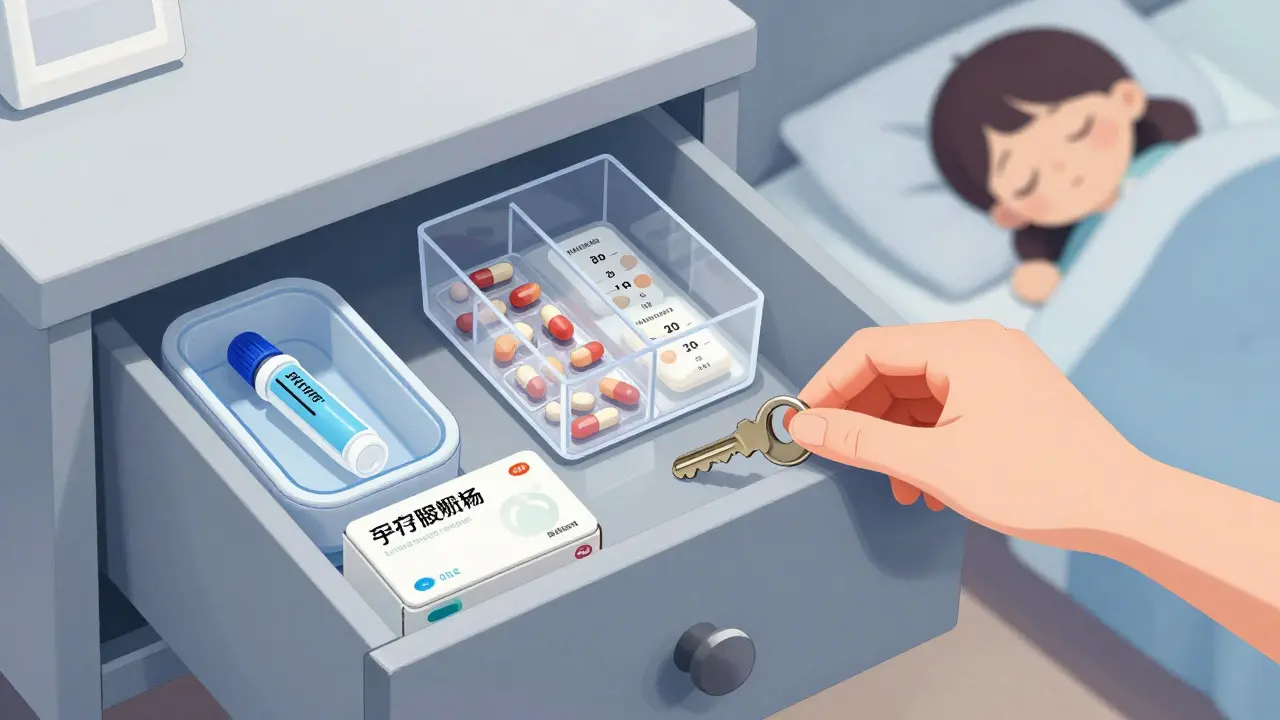
- Choose one locked spot. A locked drawer in the bedroom, a small safe on a shelf, or a medicine lockbox. Don’t use the kitchen or bathroom. Those are high-traffic areas. The bedroom is quieter, more private, and easier to monitor.
- Use a pill organizer with clear labels. Pre-filled weekly pillboxes help reduce errors. But make sure they’re labeled with the person’s name, the time of day, and the drug name. Don’t just write "AM" and "PM." Write "Lisinopril 10mg - 8 AM".
- Assign responsibility. Who checks the fridge? Who refills the pillbox? Who logs when a dose is taken? One person should be in charge. If someone else is helping, they should be trained too.
What About Controlled Substances?
Drugs like opioids, benzodiazepines, or stimulants need extra care. These aren’t just dangerous if taken by accident-they’re targets for misuse. In 2024, the DosePacker smart storage system was introduced to help with this. It locks automatically, logs every access, and sends alerts if someone tries to open it outside of scheduled times.
In homes, even a basic key lock on a small safe is better than nothing. But don’t just hide them under a pillow. Use a lockbox with a digital code or biometric access. Keep them separate from other meds. And never leave them unattended in a guest room.
The Hidden Cost of Poor Storage
It’s easy to think, "It’s just a few pills. What’s the harm?" But the data says otherwise. Temperature fluctuations can cause up to 30% degradation in some antibiotics within 24 hours. A drug that’s supposed to last six months might become useless in weeks if stored on a hot windowsill or a fluctuating fridge shelf.
And then there’s the human cost. In 2025, a 12-year-old in Ohio accidentally took her grandfather’s blood pressure medication after finding it in the bathroom cabinet. She ended up in the ER with dangerously low blood pressure. The family had no system. No locks. No labels. Just hope.
On the flip side, families who use locked, labeled, temperature-controlled storage report 89% fewer incidents than those who don’t. That’s not a coincidence. It’s a direct result of structure.
What’s New in 2026
Technology is catching up. In early 2026, 112 care facilities across 27 states are using smart medication storage systems that monitor temperature, humidity, and access in real time. These systems auto-log every time a pill is taken and alert staff if conditions go out of range.
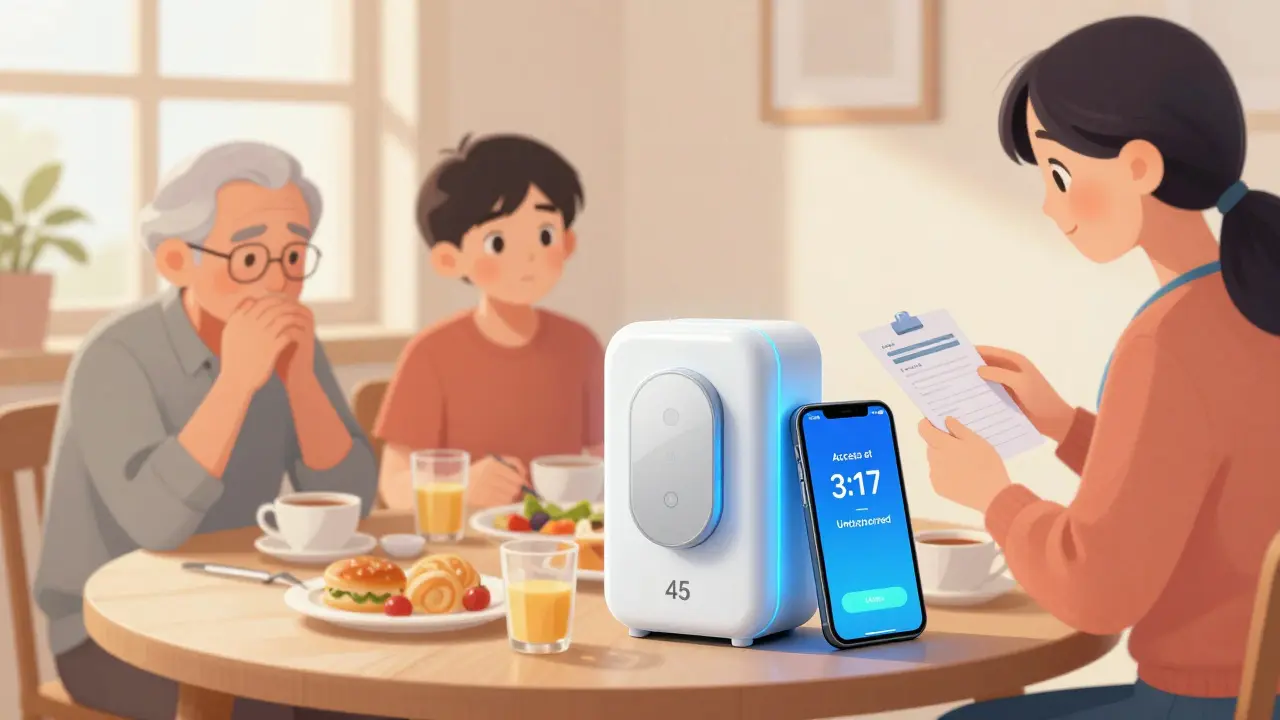
For homes, there are now affordable options. A $45 smart medicine lockbox with a digital code and temperature sensor is available from major retailers. It syncs with your phone and sends alerts if someone opens it at 3 a.m. or if the inside gets too warm.
Also in 2026, the FDA updated its guidance for 47 common medications, clarifying exactly which ones need refrigeration and which can be stored at room temperature. If you’re unsure, check the label or call your pharmacist. Don’t guess.
Final Checklist for Safe Medication Storage
- ☐ All medications are in locked containers
- ☐ Temperature-sensitive drugs are stored in the center of the fridge
- ☐ Every pill bottle or box has a clear label with name, dose, and time
- ☐ Expired or unused meds are disposed of properly
- ☐ One person is responsible for managing the system
- ☐ Everyone in the home knows where meds are kept-and why they’re locked
- ☐ Controlled substances are stored separately with extra security
Medication safety isn’t about control. It’s about care. When you live with others, your choices affect more than just yourself. A simple lock, a clear label, and a quiet drawer can mean the difference between safety and tragedy.
Can I store all my medications in one place?
No. Different medications need different conditions. Insulin must be refrigerated. Some antibiotics need dry, cool storage. Others are stable at room temperature. Mixing them all in one bin increases the risk of errors and degradation. Use separate containers and label them clearly by type and storage needs.
Is it safe to keep medications in the bathroom?
Not recommended. Bathrooms are humid and warm, which can break down pills and reduce their effectiveness. Moisture from showers and sinks can damage blister packs and liquid medications. Plus, bathrooms are easily accessible to children and guests. A locked drawer in a bedroom or closet is much safer.
What should I do with expired medications?
Don’t flush them or throw them in the trash. The safest way is to use a drug take-back program at a pharmacy or local police station. If that’s not available, mix pills with an unappetizing substance like coffee grounds or cat litter, seal them in a container, and throw them in the trash. Remove labels first to protect privacy.
Do I need a special refrigerator for medications?
Not always, but it helps. If you’re storing insulin, eye drops, or certain antibiotics, keep them in the center of your fridge where it’s coldest and most stable. Avoid the door. If multiple people in the home need refrigerated meds, a small dedicated fridge or a medication fridge insert (available for under $100) can prevent cross-contamination and temperature swings.
How do I get everyone in the house to follow the rules?
Start with a family meeting. Explain why it matters-not just for the person taking the meds, but for everyone. Show them the risks: accidental overdoses, ruined drugs, hospital visits. Make it simple: one locked spot, clear labels, no exceptions. If someone resists, offer a compromise: a small lockbox they can keep in their room. The goal isn’t control-it’s safety.
Comments
Oh wow, so we're just supposed to trust that the teenager who thinks "vitamins" means "candy" won't raid the medicine cabinet? 😂 I've seen this play out in real life - cousin took Grandma's blood pressure pills thinking they were gummy bears. She ended up in the ER, and we had to explain to her that no, you don't get high off lisinopril. Just... lock it. Please.
as someone who grew up in a 5-person household with 3 different med regimens, i can say the only thing that worked was a dumbass $30 lockbox from walmart. no drama, no questions, just "this is where the pills are, don't touch unless you're named on the label." saved my mom's kidneys and my sanity. also, fridge door = death zone for insulin. learned that the hard way.
Y'all need to stop treating meds like snacks and start treating them like firearms. 🔒 One locked box. One person in charge. No exceptions. I had a friend whose mom had diabetes and kept insulin in the bathroom cabinet because "it's convenient." She didn't know it was 10 degrees warmer than the FDA recommends. Her mom ended up with a diabetic coma. It wasn't negligence - it was ignorance. And ignorance is fixable. Just... educate. Lock. Repeat.
the universe does not care if your meds are "just sitting there." it doesn't whisper "be careful" - it waits. then it strikes. a child. a confused elder. a bored roommate. a 3 a.m. craving. and when it does? no second chances. we treat our phones with more care than we treat life-saving drugs. we have a 24-hour lockbox with biometrics now. it cost $50. it saved three lives last year. not because we're saints - because we stopped hoping and started planning. 🌌
People still don't get it. You don't "label" a pillbox with "AM" and think you're done. That's not organization - that's a death wish. I've seen people mix Adderall with Tylenol because "they're both white pills." Then they wonder why their roommate had a seizure. No. Just no. If you can't read the label clearly, you shouldn't be handling it. Period.
in india, we have a different reality. in joint families, medication is not stored - it is shared. grandmother's blood pressure pill becomes uncle's headache cure. mother's insulin becomes daughter's "energy boost." we do not have lockboxes. we have trust. we do not have FDA guidelines. we have intuition. and yet - we survive. perhaps the western obsession with control is not wisdom, but fear. perhaps safety lies not in locks, but in love. perhaps...
you people are so obsessed with american solutions. lockboxes? smart fridges? you think that's safety? in india, we don't need tech to tell us not to steal medicine - we have culture. we have respect. we have elders. you don't need a biometric lock when you grow up knowing that touching someone else's medicine is worse than stealing from a temple. your system is broken because your values are. stop exporting your anxiety as "best practices."
agree with mike. the lockbox is the only thing that ever worked. also - fridge door is a myth. it's not "a little warmer." it's a 10-degree swing every time someone opens it. insulin degrades in hours. i've seen it. don't be lazy. put it in the middle. it's not hard.
I have a question - if the FDA updated guidance in 2026 for 47 common medications, where can we find the official list? The article mentions it but doesn't link. I'd like to verify this before updating our home storage protocol. Thank you.
Thank you for this thorough breakdown. I work in geriatric care and can confirm: 89% reduction in incidents aligns with our facility's data post-implementation. The real win? Families who adopt this system report less anxiety, not just fewer errors. Structure reduces fear. It’s not about control - it’s about peace of mind. I’ll be sharing this with every client I serve.
smart lockbox? $45? you're kidding. i just bought a 30-year-old key lock from a hardware store for $12. same security. no battery. no wifi. no "alerts." just a lock. the tech is a marketing trap. the solution is simple: lock. label. separate. the rest is noise.
Lock it. Label it. Assign it. Repeat daily. No exceptions. No drama. No guesswork. Safety is a habit, not a product.
you all are missing the point. this isn't about storage. it's about control. who gets to decide who takes what? who's the authority? in a home, that's a power dynamic disguised as safety. the real issue? families don't talk. they don't have boundaries. they just hide pills and pretend everything's fine. you can lock all the boxes you want - if you don't talk about why they're locked, you're just delaying the explosion.
you think this is complicated? in my household, we have 8 people, 14 prescriptions, 3 insulin pens, 5 types of vitamins, 2 emergency epipens, and a 17-year-old who thinks "ibuprofen" is "pain candy." we use a 3-tier system: locked drawer for daily meds, fridge center for cold-sensitive, and a color-coded pillbox for the teen (yes, she has her own). we also have a whiteboard with a checklist: "Who took what? When?" and a rule: if you didn't log it, you didn't take it. we haven't had an incident in 14 months. it takes 3 minutes a day. you're not too busy. you're just not committed.