Most people know how to lose weight. What they don’t know is how to keep it off. After months of counting calories, skipping desserts, and hitting the gym, the scale finally drops. But then-slowly, inevitably-the pounds creep back. Why? Because losing weight is only half the battle. Weight maintenance is where most programs fail, and where your real work begins.
Here’s the hard truth: 75% of people who lose weight regain it within a year. That’s not because they lacked willpower. It’s because their bodies fight back. When you lose weight, your metabolism slows down. Your hunger hormones spike. Your brain starts screaming for food. This isn’t weakness-it’s biology. A 2016 study in Obesity found that after losing 10% of body weight, resting metabolism drops by 15-25% more than expected. Your body thinks you’re starving, even if you’re eating normally.
What Successful Maintainers Do Differently
The National Weight Control Registry has tracked over 10,000 people who lost at least 30 pounds and kept it off for a year or longer. Their habits aren’t glamorous. They’re simple, consistent, and repeatable.
- 90.6% exercise daily-about an hour of moderate activity like brisk walking, cycling, or swimming.
- 78.2% eat breakfast every single day.
- 62.3% weigh themselves at least once a week.
- 75% watch less than 10 hours of TV per week.
- They eat around 1,800-2,000 calories a day, with 52% carbs, 19% protein, and 28% fat.
These aren’t outliers. These are patterns. The people who succeed aren’t the ones who follow the most extreme diets. They’re the ones who built routines that fit into real life.
Start Maintenance During Weight Loss-Not After
Most programs treat weight loss and maintenance like two separate phases. Lose first. Then maintain. That’s a recipe for failure.
Research from the University of Florida shows that weight regain often begins the moment a diet ends. People don’t suddenly slip up after 12 weeks-they’ve been slowly drifting back since week 8. The body doesn’t wait for the program to finish to start defending its old weight.
The fix? Start practicing maintenance habits while you’re still losing. That means:
- Weighing yourself daily or at least 4 times a week.
- Logging meals-even if you’re not counting calories.
- Planning meals ahead, especially for busy days.
- Building movement into your day, not just squeezing in a workout.
When maintenance becomes part of your daily rhythm, it doesn’t feel like a new job. It feels like how you live.
Why Daily Weighing Works (Even If It Feels Weird)
One of the most surprising habits among successful maintainers? They weigh themselves every day.
It sounds obsessive. But here’s why it works: daily weighing gives you early warnings. A 2-pound gain isn’t a disaster-it’s a signal. Maybe you ate more salt. Maybe you skipped a workout. Maybe you drank more alcohol. You catch it early, adjust, and move on.
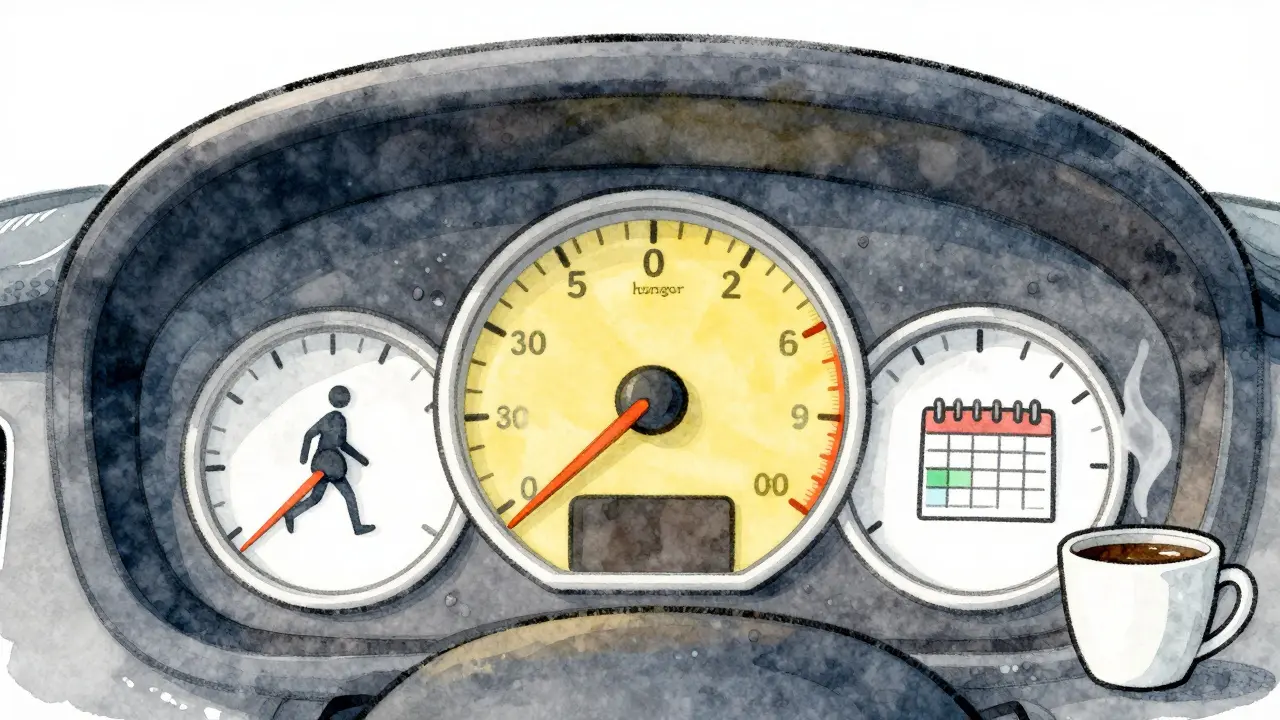
People who weigh less than once a week are 37% more likely to regain weight, according to research. Daily weighing doesn’t mean obsessing over the number. It means using it like a dashboard. If the needle moves, you tweak your behavior. No guilt. No panic. Just course correction.
One Reddit user from r/loseit put it simply: “Weighing daily kept me accountable when I started slipping.” That’s the mindset. Not perfection. Awareness.
Food Is Still Important-But Not the Only Thing
You don’t need to eat perfectly. You need to eat consistently.
Successful maintainers don’t avoid treats. They plan for them. They eat breakfast to avoid overeating later. They don’t skip meals to “save calories.” They know that’s a setup for bingeing.
Portion control matters more than food labels. A 2021 survey by the Obesity Action Coalition found that 82% of successful maintainers focused on finding physical activities they actually enjoyed. Hiking. Dancing. Gardening. Playing with kids. If you hate the gym, don’t go to the gym. Move in ways that feel good.
And forget the all-or-nothing mentality. One bad meal doesn’t ruin your progress. But one bad meal that turns into a bad week? That’s the trap. A 2020 study in Appetite found that 67% of people who regained weight blamed this mindset. They didn’t bounce back. They collapsed.
The Role of Medications-And Why They’re Not a Magic Fix
Drugs like semaglutide (Wegovy) and tirzepatide (Zepbound) are changing the game. In clinical trials, people lost 15-20% of their body weight. That’s huge.
But here’s the catch: when people stop taking them, they regain weight. Fast. The drugs don’t rewire your metabolism. They temporarily suppress hunger. Once you stop, your body goes back to defending its old weight.
These medications are tools-not solutions. They’re most effective when paired with behavioral changes. A 2023 study in Nature Medicine warned that relying on pills without lifestyle support is like putting a bandage on a broken bone.
Cost is another barrier. Wegovy costs over $1,300 a month without insurance. Most people can’t afford it long-term. And side effects-nausea, fatigue, potential mental health risks-mean they’re not right for everyone.
Life Happens. Plan for It.
There will be holidays. Vacations. Stressful weeks. Sick days. You can’t avoid them. But you can prepare for them.
The National Weight Control Registry found that 89% of successful maintainers plan meals ahead of time. That doesn’t mean packing salads for every trip. It means knowing what you’ll eat if you’re stuck at an airport, or if your in-laws serve dessert.
Here’s a simple trick: set a “slip prevention” rule. For example:
- “I’ll eat one dessert, but I won’t have seconds.”
- “I’ll walk 30 minutes every day, even if I skip the gym.”
- “I’ll weigh myself the morning after a big meal.”
These aren’t restrictions. They’re safety nets.
Studies show people gain an average of 0.8-1.2 kg between Thanksgiving and New Year’s. That’s not a failure. It’s expected. The difference between those who regain and those who don’t? They don’t wait until January to fix it. They adjust in December.

Support Systems Matter More Than You Think
Trying to maintain weight loss alone is like running a marathon with no water stops.
Commercial programs like WW and Noom report moderate success, but their real value isn’t the app-it’s the community. People who attend weekly group sessions (even virtual ones) are more likely to stick with it. The accountability, the shared struggles, the encouragement-it adds up.
Even just one person who knows your goals can make a difference. Tell a friend. Join a subreddit. Find a partner. You don’t need a coach. You just need someone who gets it.
It’s Not About Perfection. It’s About Persistence.
Weight maintenance isn’t a destination. It’s a daily practice. Some days you’ll feel strong. Other days you’ll want to quit. That’s normal.
Successful people don’t have more discipline. They just keep going. They don’t wait for motivation. They build systems that work even when they’re tired, stressed, or busy.
The goal isn’t to be perfect. It’s to be consistent. To weigh yourself. To move your body. To plan ahead. To forgive yourself when you slip. To start again the next day.
Science says you can do this. The data doesn’t lie. The people who keep the weight off aren’t superhuman. They’re just stubborn. And they didn’t wait for the perfect plan. They started with what worked-then stuck with it.
Your body wants to go back to its old weight. But you don’t have to let it.
Why do I keep gaining weight back after losing it?
Your body actively defends its previous weight through biological changes. After weight loss, your metabolism slows down by 15-25% beyond what’s expected from reduced size. Hormones like leptin drop by about 50%, increasing hunger. This isn’t a lack of willpower-it’s a natural survival response. Studies show these changes can last for years.
Do I have to weigh myself every day?
No, but it helps. Research shows people who weigh themselves at least 4 times a week are 37% more likely to maintain weight loss. Daily weighing isn’t about obsession-it’s about early detection. A small gain is easy to fix. A big one isn’t. If daily weighing causes anxiety, try 3-4 times a week instead.
Can weight loss medications like Wegovy help me keep weight off long-term?
They can help you lose weight, but they don’t fix the underlying biology. When you stop taking them, most people regain the weight. Medications are most effective when combined with lifestyle changes like regular movement, mindful eating, and consistent self-monitoring. They’re tools, not permanent solutions.
What’s the most important habit for keeping weight off?
Daily movement. People who maintain weight loss average 2,800 kilocalories burned per week-about one hour of moderate activity every day. It doesn’t have to be intense. Walking, gardening, dancing, or playing with kids all count. Movement keeps your metabolism active and reduces hunger signals.
Is it possible to maintain weight loss without counting calories forever?
Yes. Many successful maintainers stop counting calories after the first few months. Instead, they focus on portion control, eating protein and fiber at every meal, and avoiding liquid calories. They rely on hunger cues and consistent routines rather than strict numbers. Tracking food early helps build awareness, but long-term success comes from habits, not apps.
How do I avoid gaining weight during holidays or vacations?
Plan ahead. Eat a protein-rich snack before parties. Stick to your usual meal timing as much as possible. Don’t skip meals to “save calories.” Drink water before alcohol. Walk after meals. Weigh yourself the morning after. Small adjustments prevent big gains. The average person gains 1-1.5 kg during holidays or vacations-but those who plan ahead often gain less than half that.
What Comes Next?
If you’ve lost weight and are now trying to keep it off, you’re already ahead of most people. The hardest part is behind you.
Now, focus on sustainability. Build routines that work on tired days. Find movement you love. Let yourself eat without guilt. Celebrate small wins. And remember: this isn’t about being perfect. It’s about showing up, day after day.
The science is clear. The people who keep the weight off aren’t the strongest. They’re the most consistent. And you can be one of them.