Ever looked at a prescription bottle and seen a date that isn't quite an expiration date? If you've received a custom-mixed medicine, you're likely looking at a Beyond-Use Date (BUD). This is the specific day after which your compounded preparation should no longer be used. Unlike standard store-bought drugs with fixed expiration dates verified by the FDA, BUDs are calculated by the compounding pharmacist based on scientific data and storage conditions. Getting this wrong can lead to ineffective treatment or worse, microbial contamination.
The core problem is simple: compounded medications are custom-made. They haven't gone through the massive, multi-year stability testing that commercial brands undergo. So, how do we know when they go bad? The answer lies in understanding the rules set by the United States Pharmacopeia (USP), specifically Chapter USP <797>. This guide breaks down exactly how those dates are determined, what factors shorten them, and how you can verify if your medication is still safe to use.
What Exactly Is a Beyond-Use Date?
A Beyond-Use Date is the deadline by which a compounded drug must be consumed to ensure it remains chemically stable, physically intact, and free from microbial growth. It is not a guess. It is a calculated limit based on the date the drug was mixed. For example, if a liquid antibiotic is compounded on August 1st and has a 30-day BUD, it is good until September 1st. After that, the risk of degradation outweighs the benefit.
This concept differs sharply from manufacturer expiration dates. Commercial drugs follow ICH Q1A(R2) guidelines, which require rigorous long-term stability testing. Compounded drugs, however, rely on "stability-indicating methods" or literature data. According to the American Society of Health-System Pharmacists (ASHP), the primary goal of a BUD is patient safety. Studies show that improperly assigned BUDs contribute to nearly 13% of medication errors involving compounded preparations. That’s a significant number, and it highlights why precision matters more here than with off-the-shelf pills.
The Four Ways Pharmacists Determine Your BUD
You might wonder how a pharmacist knows a custom mixture lasts 14 days instead of 30. USP <797> outlines four specific methods for assigning these dates. Understanding these helps you ask better questions at the counter.
- Product Labeling: The pharmacist looks at the original ingredient labels. If the raw material says "use within 6 months," the compounded product often inherits a similar or shorter window.
- Manufacturer Consultation: For complex ingredients, pharmacists may contact the supplier to ask about stability in different forms (e.g., turning a powder into a liquid).
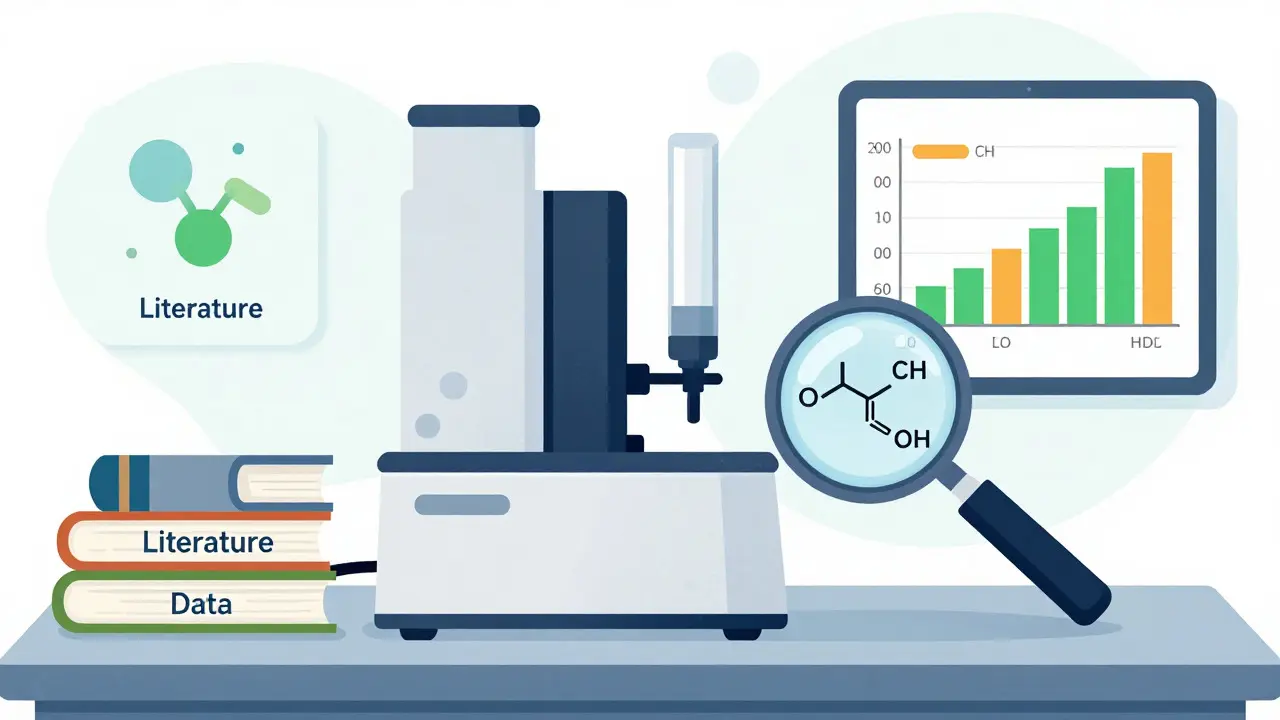
- Literature Review: This is common. Pharmacists check databases like the International Journal of Pharmaceutical Compounding's Stability Database. As of late 2023, this database contains over 14,000 validated formulations. However, finding an exact match for your unique recipe can be tricky.
- Direct Testing: The gold standard. The pharmacy runs its own lab tests, usually using High Performance Liquid Chromatography (HPLC), to see how fast the drug degrades. Only about 37% of pharmacies properly validate these methods, so this is the most reliable but least common approach.
It’s worth noting that Dr. Qiang Liu, a research supervisor at ArLok, points out that literature-based dating involves assumptions. If your formulation is slightly different from the one in the study-say, a different pH level-the actual stability could be up to 58% lower than expected. This is why context matters.
Risk Categories and Time Limits
Not all compounded sterile preparations (CSPs) are created equal. The USP categorizes them by risk, which directly dictates the maximum allowed BUD. Here is how the 2023 revision of USP <797> breaks it down:
| Risk Level | Storage Condition | Maximum BUD | Typical Examples |
|---|---|---|---|
| Low-Risk CSP | Controlled Room Temperature | 48 Hours | Sterile injections prepared in a clean environment without multiple steps |
| Medium-Risk CSP | Controlled Room Temperature | 30 Hours | Preparations involving multiple components or less controlled environments |
| High-Risk CSP | Controlled Room Temperature | 24 Hours | Complex mixtures with higher potential for contamination |
| Water-Based Formulations | Refrigerated | 30 Days | Liquid suspensions or solutions stored cold |
Notice the shift in water-based formulations. Previously, many were limited to 14 days, but with proper testing, the limit extended to 30 days. This change reflects improved monitoring technologies and stricter initial quality controls. If your liquid medication is stored in the fridge, check if it falls under this new 30-day rule or the older 14-day guideline, depending on when it was compounded and tested.
Why Containers Matter More Than You Think
Here is a fact that surprises many patients: the bottle or syringe holding your medicine affects its lifespan. Approximately 68% of BUD errors stem from ignoring container-closure interactions. Plastic containers can leach chemicals into the drug, while glass might not protect against certain light-induced reactions. Syringes, in particular, are a gray area. The FDA has warned that syringes are not approved devices for long-term medication storage. Yet, a 2022 survey found that over 40% of retail pharmacies still assign BUDs for syringe-stored products based on vial data. If your medication comes in a syringe, ask your pharmacist specifically about the stability in that device, not just the active ingredient.
Common Pitfalls and How to Avoid Them
Even experienced pharmacists face challenges. One major issue is "formulation drift." If a commercial tablet is converted into a liquid for a child who can't swallow pills, the degradation rate can increase significantly. A 2023 study found that altered pH levels in compounded liquids led to degradation rates 3.7 times faster than the original solid form. This means a 12-month expiration on the tablet doesn't translate to a 12-month BUD on the liquid.
Another pitfall is documentation. State regulations vary, but 47 states now require written justification for each BUD assignment. If your pharmacy provides a label with just a date and no reference to the source (e.g., "Based on USP <797> Low Risk Category"), it might be a red flag. Proper documentation protects you by ensuring someone actually checked the science rather than guessing.
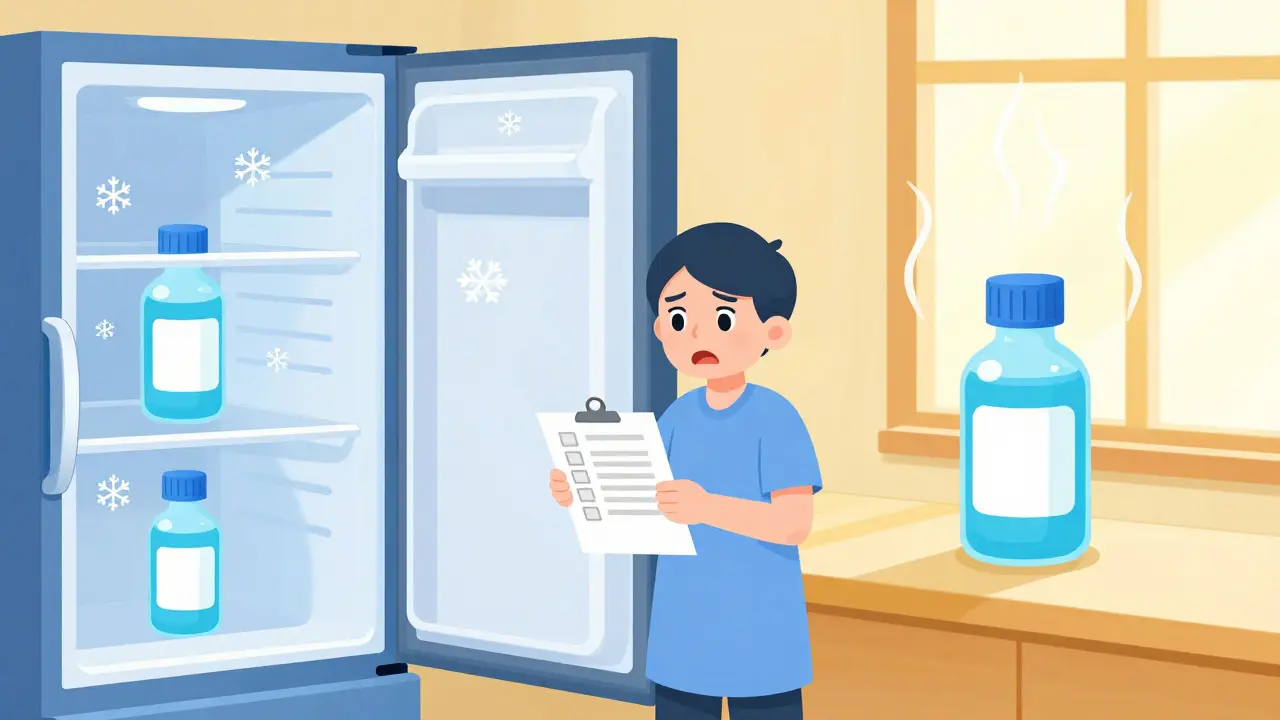
Practical Steps for Patients
You don't need to be a chemist to stay safe. Here is a simple checklist to use when picking up compounded meds:
- Ask for the Source: "Was this BUD based on direct testing, literature, or manufacturer data?" Direct testing is best, but literature is acceptable if the match is close.
- Confirm Storage: Double-check if it needs refrigeration. Leaving a refrigerated compound at room temperature can halve its effective life.
- Check the Container: If it's in a syringe or a non-standard bottle, ask if that specific container was part of the stability assessment.
- Watch for Changes: BUDs are time limits, not absolute guarantees. If your liquid changes color, smells odd, or develops particles before the date, stop using it and call the pharmacy.
As personalized medicine grows, compounded medications are projected to represent nearly 18% of all prescriptions by 2030. This means more people will encounter BUDs. Staying informed isn't just about compliance; it's about ensuring your custom therapy works as intended.
Frequently Asked Questions
Is a Beyond-Use Date the same as an expiration date?
No. An expiration date is assigned by the manufacturer after extensive testing of a mass-produced product. A Beyond-Use Date is calculated by the compounding pharmacist for a custom mixture, taking into account specific ingredients, container type, and storage conditions. BUDs are generally shorter because the formulation hasn't undergone the same rigorous long-term validation.
What happens if I use my compounded medication after the BUD?
The medication may degrade chemically, becoming less effective. In sterile preparations, there is also a risk of microbial contamination. While it might not always cause immediate harm, the safety margin is gone. It is safer to discard the medication and request a fresh supply if the dose is critical.
How accurate are BUDs based on literature?
They are generally reliable if the literature matches your exact formulation, including pH, excipients, and container. However, minor differences can alter stability by up to 58%. Direct laboratory testing is the only way to guarantee accuracy, but literature-based dating is accepted by USP standards when done carefully.
Do all compounded medications have short BUDs?
Not necessarily. Solid oral forms (like capsules) often have longer BUDs (up to 6 months) if stable. Sterile injections and water-based liquids have much shorter BUDs (hours to 30 days) due to higher risks of degradation and bacterial growth. The dosage form and storage method are key determinants.
Should I trust a pharmacy that doesn't specify their BUD source?
You should ask. Regulatory bodies require documentation for BUD assignments. A transparent pharmacy will tell you if the date comes from USP guidelines, specific literature, or internal testing. If they seem unsure, consider asking for a second opinion or checking if they follow USP <797> standards.