

Ever been handed a prescription only to find out you can't actually pick it up because of some paperwork or a registry? It's frustrating, but there's a reason for it. Some medicines are so powerful or carry such specific risks that the government doesn't just let them sit on a shelf. They use something called Risk Evaluation and Mitigation Strategies is a drug safety program mandated by the U.S. Food and Drug Administration (FDA) for medications with serious safety concerns. Commonly known as REMS, these programs ensure that the benefits of a high-risk drug actually outweigh the potential dangers.
If your doctor mentions a REMS program, don't panic. It doesn't mean the drug is "poison"; it just means the REMS requirements are there to keep you safe. Whether it's preventing birth defects or monitoring for severe reactions, these steps are non-negotiable. The goal is to get you the medication you need without a dangerous accident happening in the process.
Quick Guide to Verifying REMS Requirements
If you're staring at a new prescription and aren't sure if there's a safety program attached, use this quick workflow. Don't wait until you're at the pharmacy counter to find out you're missing a certification.
- Check the Prescribing Information: Look at the professional labeling or the "package insert." If a REMS program is required, it will be stated clearly in the warnings or usage sections.
- Use the FDA REMS Public Dashboard: The FDA maintains an interactive web tool where you can search for active programs, see if the drug has "Elements to Assure Safe Use" (ETASU), and find links to the official requirements.
- Call Your Pharmacist: Your pharmacist is the final gatekeeper. They can tell you exactly what paperwork the doctor needs to submit and what you need to sign before the medication can be dispensed.
- Visit the Manufacturer's Website: Most high-risk drugs have a dedicated portal (like the iPLEDGE site for isotretinoin) where you can register and track your eligibility.
Understanding the Different Levels of REMS
Not every REMS program is the same. Some are just "heads-up" warnings, while others are strict lockdowns. Understanding which one you're dealing with helps you manage your expectations for how long it will take to get your meds.
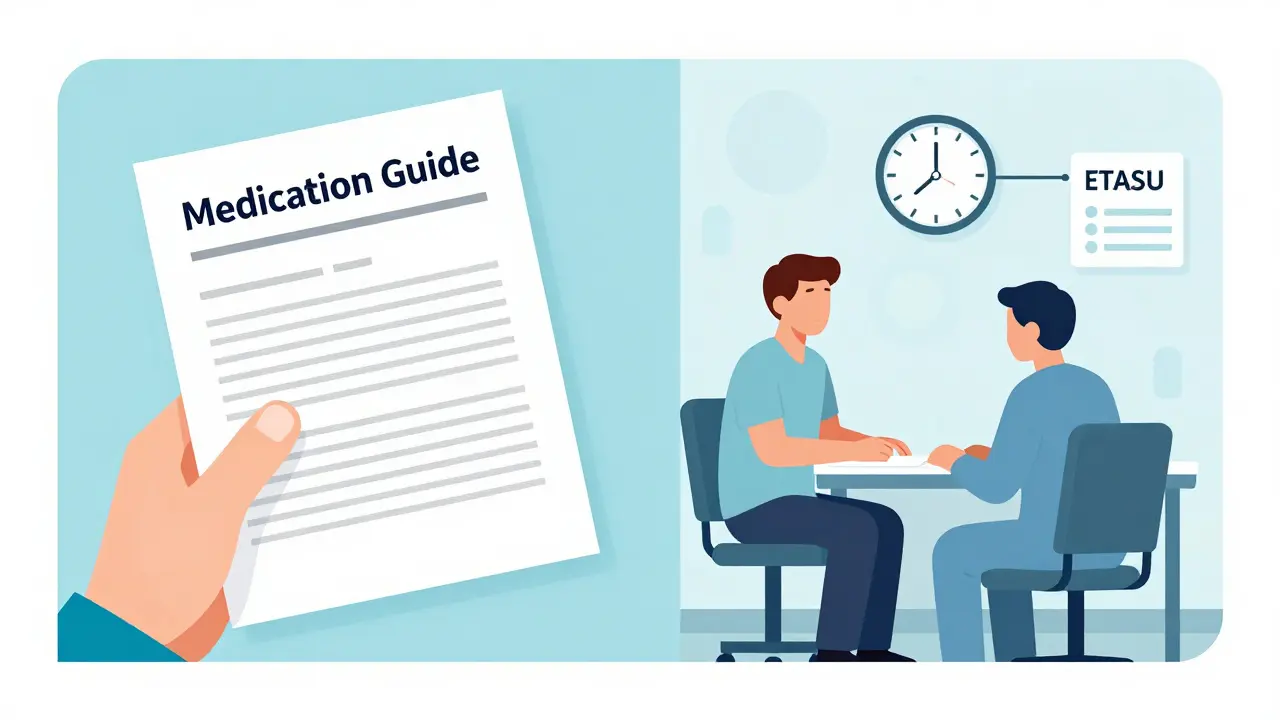
Medication Guides are the most basic form. These are paper handouts given to you every time you get the drug. They explain the risks in simple language so you know what to watch for at home.
Then you have Elements to Assure Safe Use (or ETASU), which are much more restrictive. If a drug has ETASU, it means the FDA has decided that a simple guide isn't enough. You might need to be in a certified facility, have a doctor who has passed a specific training course, or prove you're taking a pregnancy test every month.
| Program Type | Primary Requirement | Patient Impact | Example Medication |
|---|---|---|---|
| Medication Guide | Review of safety handout | Low (Read and keep) | Various high-risk drugs |
| Communication Plan | Provider education | Low (Doctor is informed) | Opioid Analgesics |
| ETASU (Strict) | Certification & Registry | High (Enrollment/Testing) | Isotretinoin (iPLEDGE) |
| Facility-Based | On-site observation | High (Must stay at clinic) | Zyprexa Relprevv |
Real-World Examples of REMS in Action
To make this concrete, let's look at how these programs actually play out in a clinic. Take the iPLEDGE program. This is used for isotretinoin (Accutane). Because the drug causes severe birth defects, both the doctor and the patient must register in a shared system. The patient has to prove they aren't pregnant through regular testing before the system "unlocks" the ability for the doctor to write the prescription. No registration, no drug.
Another example is Zyprexa Relprevv. This medication can cause a dangerous condition called post-injection delirium sedation syndrome. Because of this, it can't just be taken home. It must be administered in a certified healthcare facility where staff can watch the patient for at least three hours. In this case, the REMS requirement isn't just a form; it's a physical location requirement.
On the other end of the spectrum, the Opioid Analgesic REMS focuses more on the provider. The goal is to ensure doctors understand the risks of addiction and overdose. While it encourages continuing education, it doesn't typically require the patient to register in a database to get their pain medication.
Common Pitfalls and How to Avoid Delays
The biggest headache with REMS is the "administrative lag." A survey by the National Organization for Rare Disorders found that about 42% of patients experienced treatment delays because of these requirements, sometimes waiting over six business days just to get a script filled. Why does this happen? Usually, it's because the doctor isn't certified or the patient's registration expired.
To avoid these delays, don't assume your doctor's office has everything handled. Ask them directly: "Is this a REMS drug? Are you certified to prescribe it, and do I need to create an account on a portal?" If you're using a new specialist, check if they've completed the necessary training. For medications like thalidomide, doctors often have to spend over an hour in training before they can legally prescribe the drug.
Also, be mindful of the 10-year record-keeping rule. The FDA requires that documentation for these programs be kept for a decade. If you're switching doctors, it might be helpful to keep your own digital folder of your registration confirmations and signed acknowledgment forms to help the new office get you up to speed faster.
The Future of Drug Safety Monitoring
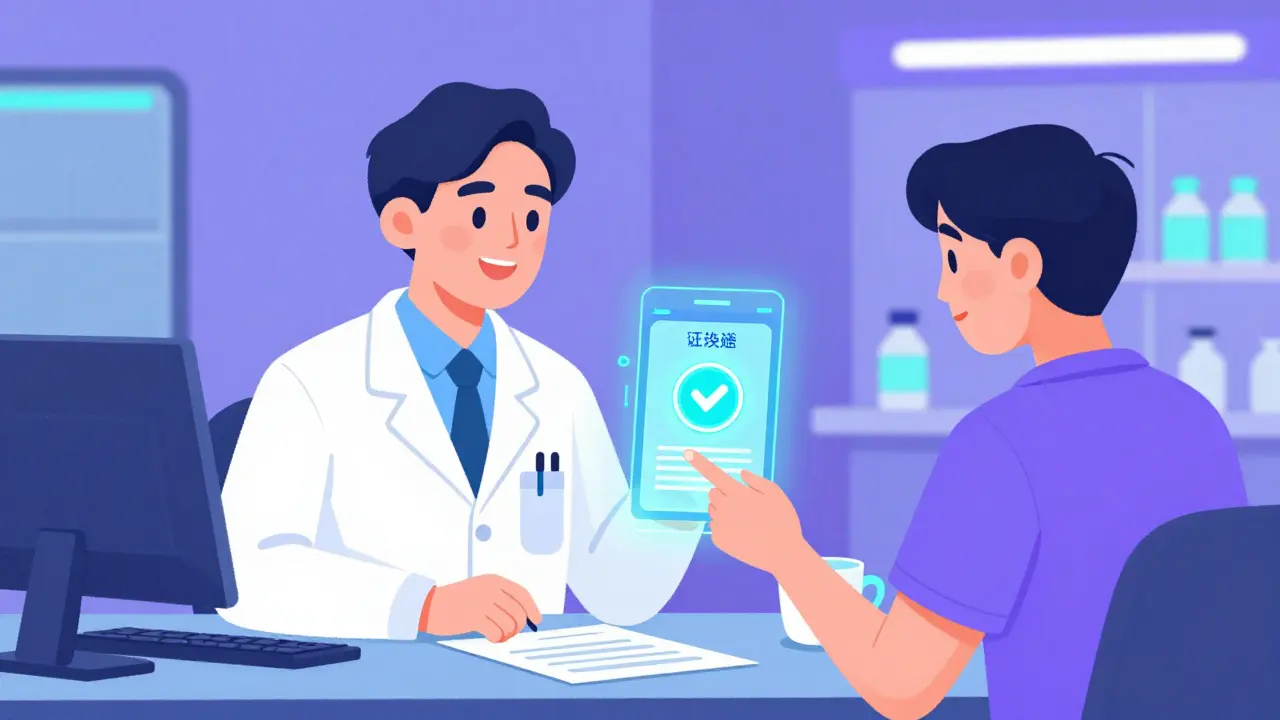
The FDA is trying to make these programs less of a burden. They've already modified over a third of their programs to cut out unnecessary red tape. We're seeing a shift toward smartphone apps for patient verification, making it easier to upload test results or sign forms without driving to a clinic.
Looking ahead, there's talk of using blockchain technology to handle certifications. Imagine a world where your doctor's certification is a secure, instant digital token that the pharmacy can verify in a millisecond, rather than waiting for a manual check of a database. As we move toward more complex gene therapies and biologics, these safety nets will become even more common, but hopefully, they'll become invisible.
What happens if I refuse to participate in a REMS program?
If a medication is mandated by the FDA to have a REMS program, the pharmacy cannot legally dispense the medication without the required verification. If you refuse to register or follow the safety steps, you simply won't be able to obtain the medication. You should discuss alternative treatment options with your doctor that don't have these strict requirements.
Are REMS requirements only for the United States?
REMS is a specific program managed by the U.S. FDA. However, other countries have similar safety monitoring systems (pharmacovigilance), though they may be called different things and operate under different regulatory bodies, such as the EMA in Europe or the MHRA in the UK.
Does a REMS program mean the drug is unsafe?
Not necessarily. It means the drug has a known, serious risk that can be managed. The program actually allows the FDA to approve drugs that are incredibly effective but would be too dangerous if used without strict supervision. It's a way to balance access to life-saving medicine with patient safety.
How long does it take to get certified for a REMS drug?
It varies wildly. For some drugs, it's a simple online registration. For others, like certain oncology drugs or thalidomide, doctors may need to complete a training module that takes about 65 minutes. For patients, the time depends on the required tests (like pregnancy tests) and the time it takes for the manufacturer's portal to process the registration.
Where can I find the most up-to-date list of REMS drugs?
The best source is the FDA REMS Public Dashboard. This is an interactive tool that lets you search for active programs, see which drugs are covered, and find the exact requirements for each. You can also check DailyMed for the most recent prescribing information for your specific drug.
Next Steps for Patients and Providers
If you've just been prescribed a medication and suspect it has safety requirements, here is the best way to handle it based on your role:
For Patients: Start by asking your doctor for the Medication Guide. If the drug requires registration (like iPLEDGE), create your account immediately. Don't wait for the pharmacy to call you; be proactive so you don't face a week-long delay in your treatment.
For Providers: Incorporate a three-step check into your workflow: first, check the label for a REMS indication; second, verify your certification status on the FDA list or manufacturer portal; and third, confirm the dispensing requirements with the pharmacist before the patient leaves your office.

Comments
This is such a solid breakdown! For anyone currently in the thick of it, I've found that calling the pharmacist *before* the doctor even sends the script over can save hours of back-and-forth. Just a heads up that some insurance companies also have their own internal 'prior authorization' that is totally separate from REMS, so you might be fighting two battles at once. Keep your energy up, you'll get through the red tape!
Too much red tape in the US
Oh great, another way for the government to make getting basic healthcare feel like applying for a top-secret security clearance. I absolutely love spending my Tuesday mornings filling out digital forms just to prove I'm not a hazard to myself. Truly a peak efficiency move right here.
Everyone keeps complaining but this is basic safety. If you can't handle a simple registration, you shouldn't be on high-risk meds. It's not that hard to follow a few steps if you actually care about your health. Most people are just lazy and want a shortcut to things that could actually kill them if they mess up the dosage or timing. Just do the work and stop whining about the 'burden' of not dying.
Exactly. Only in America do we have the gold standard for safety though these idiots act like it's a chore. If you live in a third world country you just pray it doesnt have impurities but here we have a whole dashboard. Its practically a luxury to have this level of oversight and these people are crying over a website login
I totally see where you're coming from regarding the frustration, but let's try to look at the silver lining! The fact that we have these systems means there's a real safety net. Maybe we can share some tips on how to organize those digital folders mentioned in the post? I personally use a cloud-based folder for all my health docs so I can just email a PDF to a new clinic in seconds. It really helps lower the stress for everyone involved!
stop whining about forms and just do the work you want the medicine then follow the rules its simple as that
Please be kind to each other! 😊 The system is just trying to keep us safe. Just take a deep breath and follow the steps. Everything will work out! ✨
Meh, this is just a long way of saying the FDA is bureaucratic.
It is my humble opinion that while the administrative process may be arduous, the preservation of patient safety must remain our highest priority. We should strive to support the healthcare providers who navigate these complex regulations daily to ensure the wellbeing of their patients.
I'm sure the move toward blockchain and apps will make this much easier for everyone soon. It's great to see the FDA acknowledging the friction and trying to trim the fat. Looking forward to a time when safety doesn't have to mean a week of waiting.
I truly believe that being proactive is the key here. If you take the initiative to ask the questions listed in the guide, you will likely find that the process goes much smoother. It is quite empowering to take control of your own medical journey by understanding the regulations before they become an obstacle.