Garlic & Anticoagulant Risk Estimator
Calculate your specific risk profile for bleeding complications by inputting your current supplement usage and medical context.
Your Current Profile
Risk Assessment Result
Enter your details and click Assess to see your personalized risk level and recommendations.
Key Mechanisms Explained
Irreversibly binds to platelets. Full recovery takes 7–10 days after stopping the supplement.
On Warfarin, garlic can raise INR above 4.0, significantly increasing spontaneous bleeding risk.
Both substances hit the same target (clot prevention) from different angles, compounding the effect.
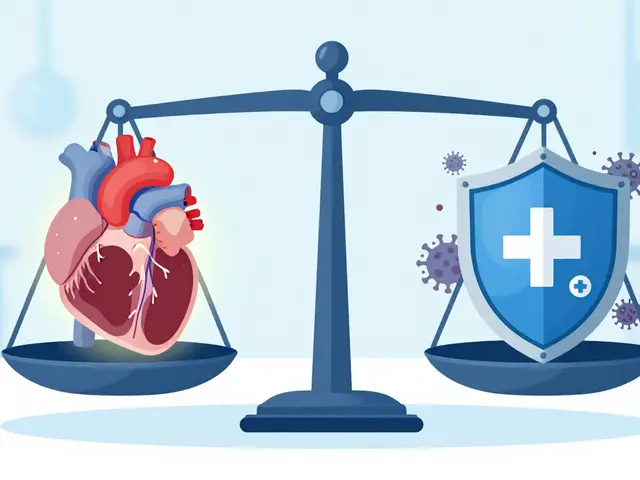
Imagine you’re taking your daily blood thinner to keep a clot at bay, and then you pop a garlic pill for heart health. It sounds harmless, right? But for millions of people on anticoagulants, this combination can turn a routine day into an emergency room visit. The issue isn’t just that both products affect the blood; it’s that they work in ways that stack up, creating a dangerous gap in your body’s ability to stop bleeding. You might not even realize you’re at risk because garlic is often viewed as food, not a medicine. Yet, when concentrated into supplement form, its active compounds become potent enough to interfere with how your blood clots. This article breaks down exactly why garlic supplements interact with blood thinners, who is most vulnerable, and what you should do if you’re currently using both.
How Garlic Affects Your Blood Clotting
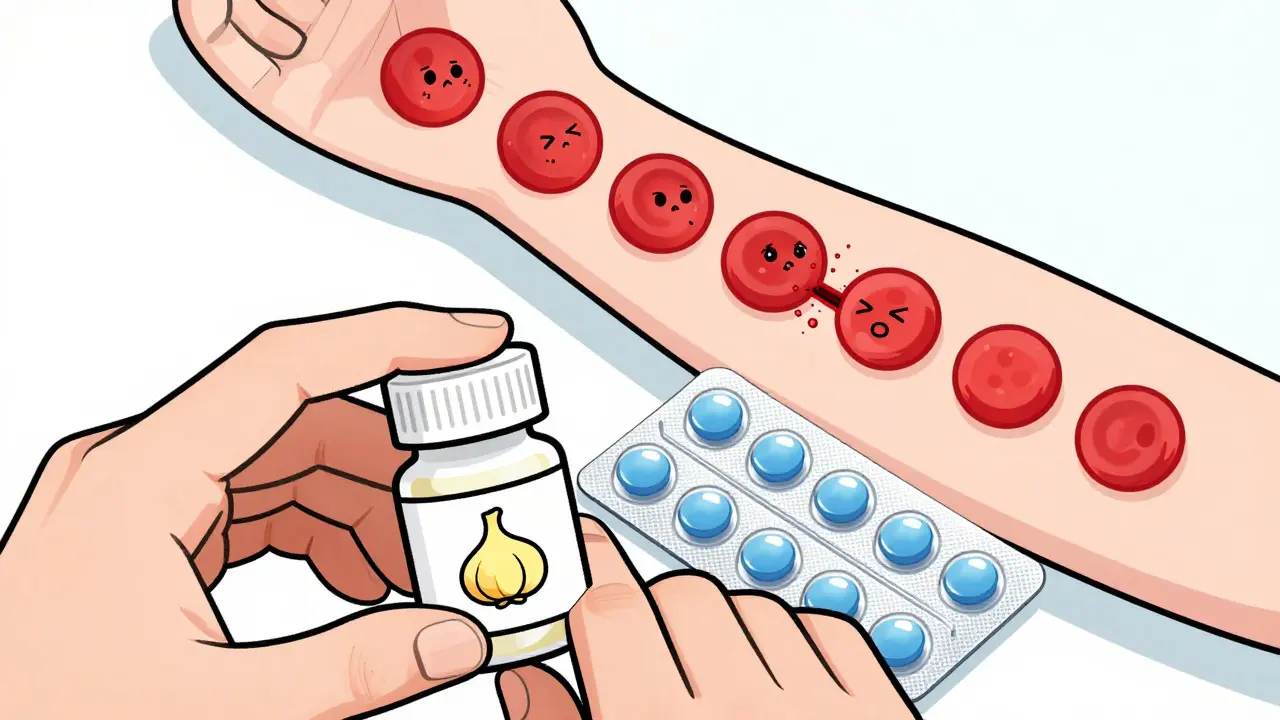
To understand the danger, we have to look at what’s actually inside those pills. Raw garlic contains a sulfur-rich compound called ajoene. When you eat fresh garlic, you get small amounts of this. But in standardized supplements, ajoene concentrations are much higher. Ajoene works by inhibiting platelet aggregation-the process where tiny blood cells stick together to form a plug over a cut or wound.
Unlike some other substances that just slow things down slightly, ajoene binds irreversibly to platelets. This means once a platelet is affected, it stays disabled until your bone marrow produces new ones, which takes about seven to ten days. In healthy individuals, this effect is usually mild. However, studies show that standard doses of garlic supplements (600-1,200 mg) can inhibit platelet function by 20% to 40%. For someone whose blood is already "thinned" by medication, this extra inhibition is significant.
The Interaction with Common Blood Thinners
The risk varies depending on which anticoagulant you take. There are two main categories: Vitamin K antagonists (like warfarin) and Direct Oral Anticoagulants (DOACs, like apixaban or rivaroxaban).
- Warfarin: This is the older, well-known blood thinner. Garlic doesn’t just add antiplatelet effects; it can also increase the International Normalized Ratio (INR), a measure of how long it takes your blood to clot. Case reports have shown INR values jumping from a safe therapeutic range of 2.0-3.0 to dangerous levels above 4.0 within weeks of starting high-dose garlic. An INR above 4.0 significantly increases the risk of spontaneous internal bleeding.
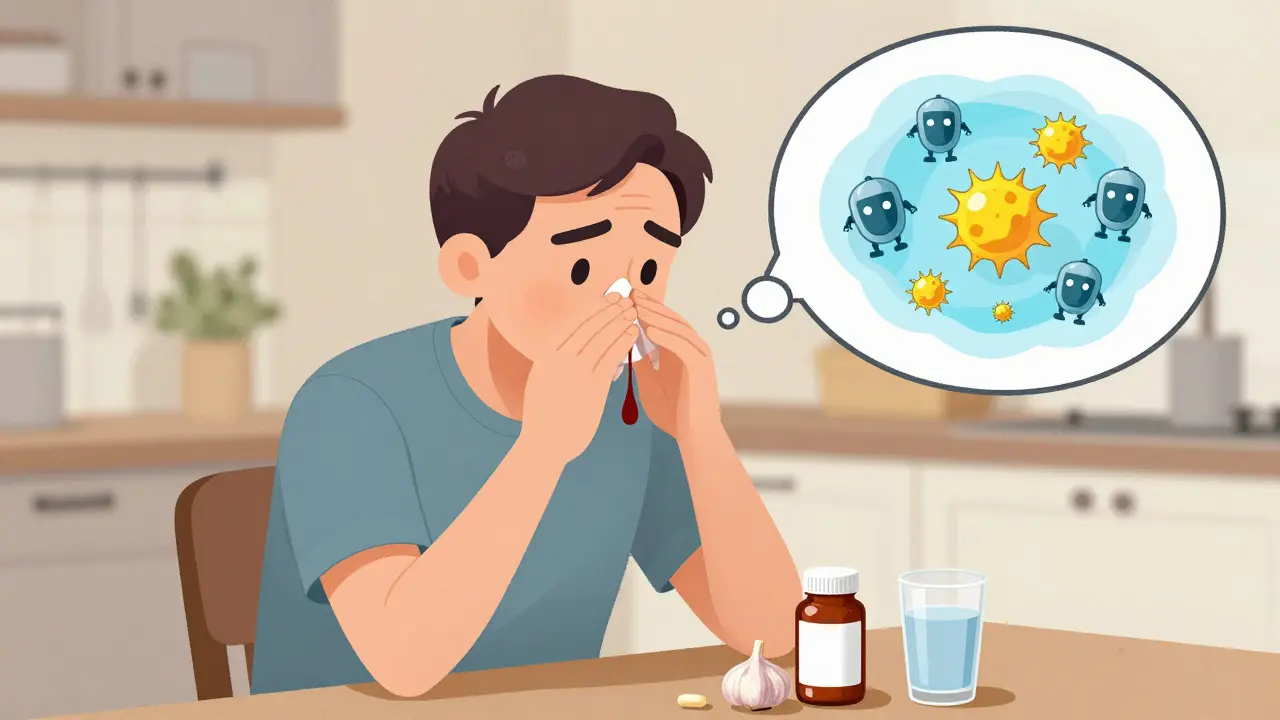
- DOACs (Apixaban, Rivaroxaban): These newer drugs don’t require regular INR monitoring, which makes the interaction sneakier. While there are fewer lab tests to track the change, clinical evidence suggests the bleeding risk is similar. Patients report prolonged nosebleeds, deep bruising, and in severe cases, gastrointestinal bleeding. Because DOACs are taken without routine blood tests, many patients don’t know their bleeding risk has increased until something goes wrong.
The mechanism here is pharmacodynamic. It’s not necessarily that garlic changes how fast your liver processes the drug (pharmacokinetic), but rather that both substances hit the same target-preventing clots-from different angles. The result is a compounded effect that exceeds what either substance does alone.
Who Is Most at Risk?
Not everyone taking a blood thinner will bleed out from eating garlic bread. The risk is highest in specific scenarios:
- Surgical Procedures: This is the biggest red flag. If you are scheduled for any surgery, dental work involving drilling, or invasive procedures, your body needs to be able to form clots to stop surgical site bleeding. Anesthesiologists classify garlic as a high-risk supplement. The American Society of Anesthesiologists recommends stopping garlic supplements 14 days before surgery to allow new, unaffected platelets to enter circulation.
- High-Dose Users: People taking multiple capsules daily or using concentrated oil extracts face higher risks than those taking one low-dose tablet.
- Elderly Adults: Older adults have slower platelet turnover and are more prone to falls. A minor fall combined with heightened bleeding potential can lead to serious issues like intracranial hemorrhage.
Interestingly, the risk isn't limited to prescription meds. Even over-the-counter antiplatelets like aspirin or ibuprofen can worsen the situation if combined with garlic, though the interaction with prescription anticoagulants is more clinically documented and severe.
Signs That Something Is Wrong
If you are on an anticoagulant and start taking garlic supplements, watch for these warning signs. They indicate your bleeding time may be too long:
- Nosebleeds that last longer than 10 minutes or return after stopping.
- Bruises that appear easily and are larger or darker than usual.
- Gums that bleed during brushing or flossing.
- Pink or dark urine, which could signal kidney or bladder bleeding.
- Tarry or bright red stools, indicating gastrointestinal bleeding.
- Heavy or prolonged menstrual periods.
If you experience any of these, don’t wait. Contact your healthcare provider. If you have uncontrolled bleeding, seek emergency care immediately.

Practical Steps to Stay Safe
You don’t necessarily have to choose between heart health and safety, but you need to manage the overlap carefully. Here is a practical approach:
1. Talk to Your Doctor Before Starting
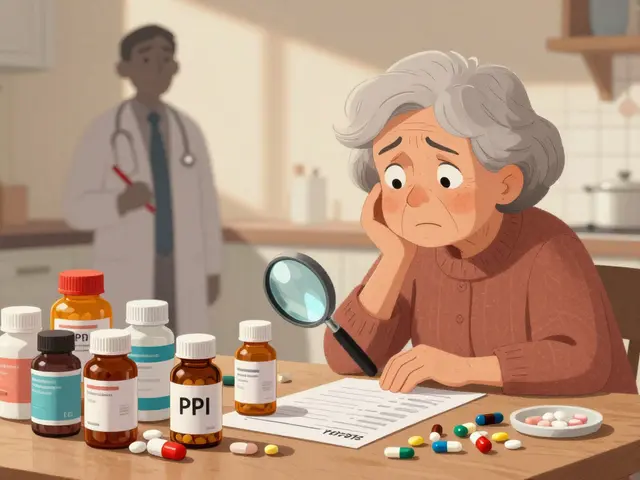
Don’t assume your doctor knows you’re taking garlic pills. Many patients forget to mention them because they think of garlic as food. Explicitly ask: "Is it safe to combine my [medication name] with garlic supplements?" Bring the bottle with you so they can see the dosage.
2. Monitor Your INR (If on Warfarin)
If you take warfarin and decide to continue garlic, you must increase your INR testing frequency. Weekly checks are often recommended instead of monthly. This allows your doctor to adjust your warfarin dose quickly if your INR spikes.
3. Stop Before Surgery
Mark your calendar. If you have a procedure coming up, stop taking garlic supplements 14 days prior. This gives your body enough time to replace the inhibited platelets. Tell your surgeon and anesthesiologist about your history of use, even if you’ve stopped.
4. Check Supplement Quality
Not all garlic supplements are created equal. Some contain high levels of ajoene, while others (like aged garlic extract) have very little. Look for standardized extracts that list allicin or ajoene content. However, note that labeling standards vary, so consistency across brands is not guaranteed.
| Supplement | Mechanism of Action | Relative Bleeding Risk with Anticoagulants | Recommended Pre-Op Discontinuation |
|---|---|---|---|
| Garlic | Irreversible platelet inhibition via ajoene | Moderate to High | 7-14 days |
| Ginkgo Biloba | Inhibits platelet-activating factor | High | 7-14 days |
| Fish Oil (Omega-3) | Mild antiplatelet effect | Low to Moderate | 5-7 days |
| Vitamin E | Antioxidant affecting clotting factors | Low | 1 week |
Frequently Asked Questions
Can I eat fresh garlic if I am on blood thinners?
Generally, yes. Cooking fresh garlic reduces the potency of its active compounds compared to raw garlic or supplements. While large amounts of raw garlic might still have a mild effect, normal culinary use is rarely associated with significant bleeding events in patients on anticoagulants. The risk primarily comes from concentrated, standardized supplements.
How long does the effect of garlic supplements last?
The antiplatelet effect peaks 2 to 4 hours after ingestion but persists for up to 72 hours. Because the inhibition is irreversible, full recovery of normal platelet function takes approximately 7 to 10 days after stopping the supplement entirely.
Is aged garlic extract safer than raw garlic powder?
Aged garlic extract typically contains lower levels of ajoene, the primary compound responsible for strong antiplatelet effects. Therefore, it may pose a slightly lower risk than high-concentration raw garlic powder or oil macerates. However, it is not risk-free, and caution is still advised for patients on anticoagulants.
What should I do if I accidentally took garlic supplements with my blood thinner?
Don’t panic, but monitor yourself closely for signs of excessive bleeding such as unusual bruising or nosebleeds. If you are on warfarin, consider getting an INR test sooner than scheduled. If you have a major bleed, go to the emergency room and tell the doctors exactly what you took.
Do I need to stop garlic before dental work?
For simple cleanings or fillings, it may not be necessary. However, for extractions, implants, or any procedure involving significant gum tissue manipulation, it is wise to consult your dentist and doctor. They may recommend stopping the supplement 7 days prior to minimize bleeding during and after the procedure.