
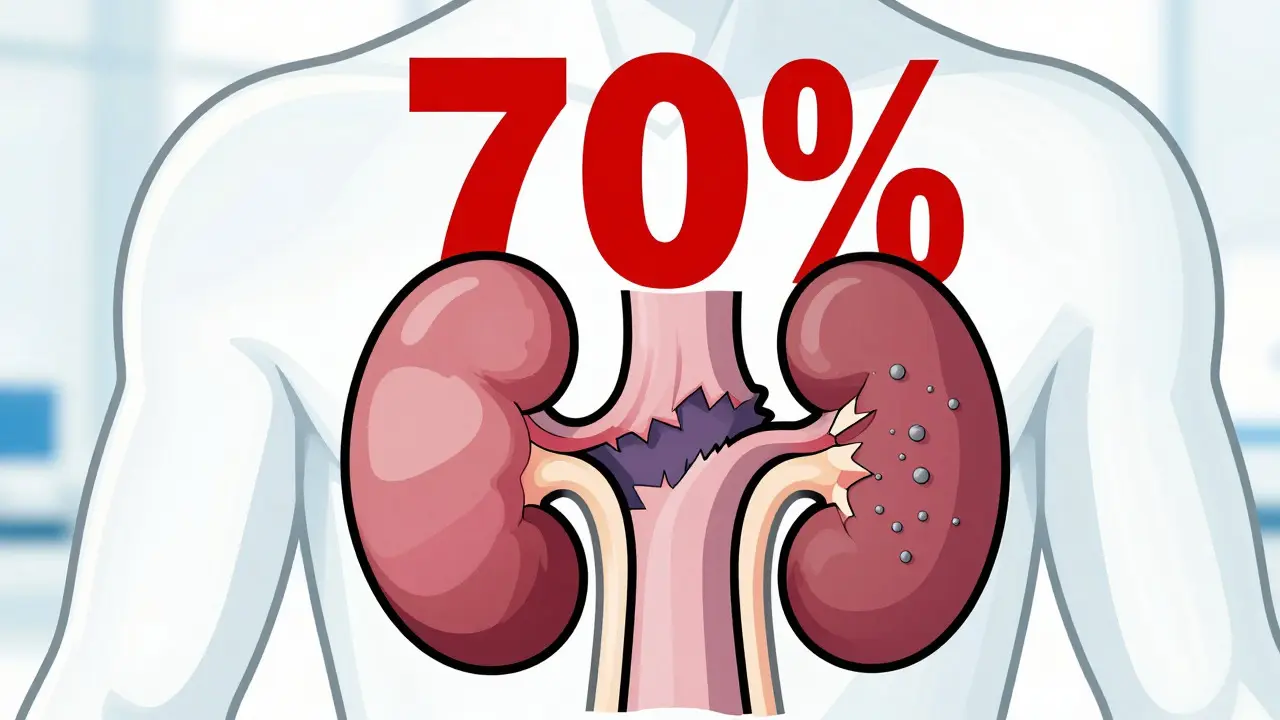
You pass a kidney stone. The pain is unbearable, but once it’s gone, you breathe a sigh of relief. You think the ordeal is over. But here is the hard truth: if you do nothing to change your habits, there is a 30% to 50% chance another stone will form within three to five years. In fact, without proper management, that risk jumps to nearly 70% over five years. This isn’t just an occasional bad luck event; it is a chronic metabolic condition. Treating it as such is the only way to stop the cycle.
Key Takeaways
- Kidney stones are a chronic disease with high recurrence rates (up to 70% in 5 years) if untreated.
- The single most effective prevention strategy is drinking enough water to produce at least 2.5 liters of urine daily.
- Do not cut calcium from your diet; restricting it actually increases stone risk by allowing more oxalate absorption.
- Limit sodium intake to under 2 grams per day and animal protein to less than 8 ounces daily.
- Add lemon juice to water to boost urinary citrate, a natural inhibitor of stone formation.
Understanding Kidney Stones as a Chronic Condition
For decades, medical treatment focused on the acute phase-getting the stone out. Today, experts like Dr. Juan Calle argue we must shift our mindset. As he noted in recent urological discussions, patients should be managed with a multidisciplinary approach involving dietitians, nephrologists, and urologists. Why? Because kidney stone disease is a marker of underlying metabolic issues. If your body formed one stone, it has the chemical environment to form another.
The statistics are stark. Approximately 8-10% of the global population develops kidney stones, with higher rates in industrialized nations. In the United States, this burden costs an estimated $10 billion annually in healthcare expenses alone. More importantly, recurrent stone formers face a 19% risk of developing chronic kidney disease (CKD). This connection transforms kidney stones from a painful nuisance into a serious long-term health threat. The goal of prevention is not just comfort; it is preserving kidney function for life.
The Hydration Rule: Volume Matters Most
If you take away only one thing from this guide, let it be this: drink more water. It sounds simple, but most people fail to execute it correctly. The European Association of Urology (EAU) and the American Academy of Family Physicians (AAFP) agree on the target: you need to produce at least 2.5 liters of urine every day. To achieve this, you typically need to consume between 2.5 and 3 liters of fluid daily, accounting for losses through sweat and breathing.
How do you know if you’re hitting the mark? Look at your urine color. It should be pale yellow or clear. Dark yellow means you are dehydrated. However, thirst is a poor indicator. By the time you feel thirsty, you are already behind. Use marked bottles to track your intake. If you exercise or live in hot weather, increase your intake further. Water is best, but tea and coffee count toward your total, provided they are not loaded with sugar or cream.
Dietary Myths: Why You Should Not Cut Calcium
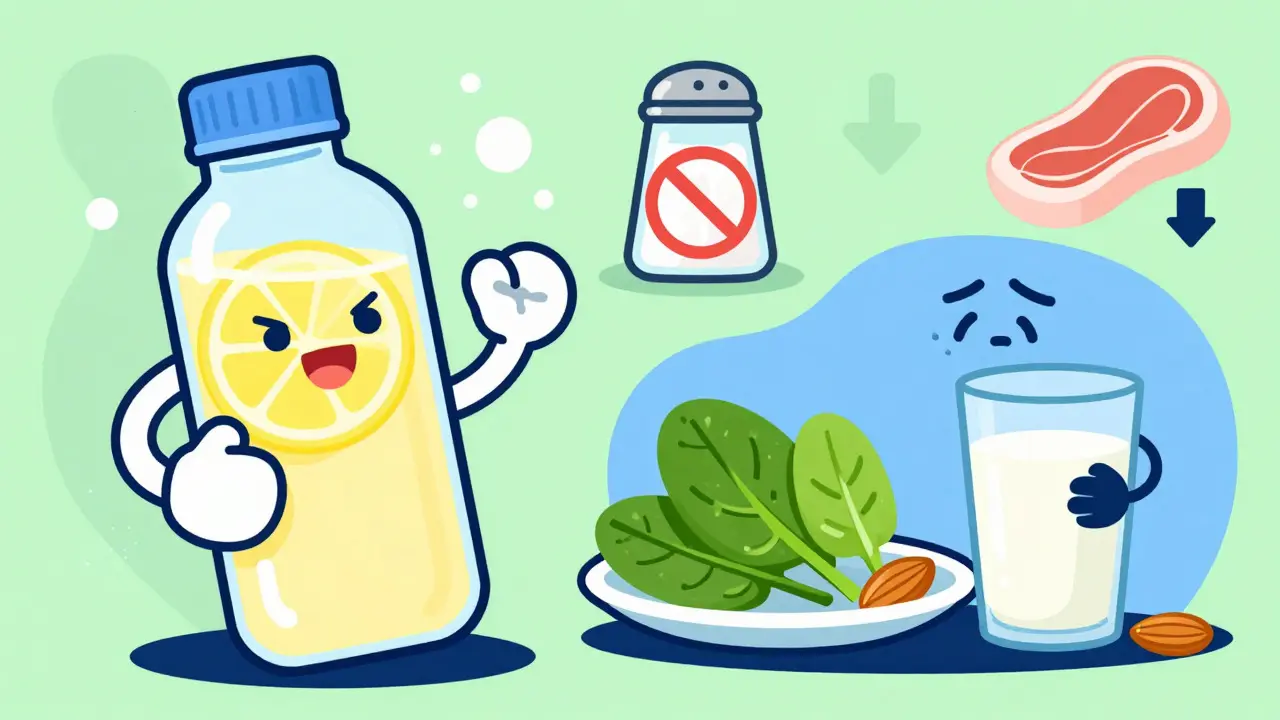
Here is a common mistake: people hear "calcium stones" and assume they should avoid dairy. This is dangerous advice. Current guidelines from the EAU, AAFP, and National Kidney Foundation explicitly state: do NOT restrict dietary calcium. Here is why. Calcium binds to oxalate in your gut, preventing oxalate from being absorbed into your bloodstream. If you eat low-calcium foods, free oxalate enters your blood, gets filtered by your kidneys, and combines with calcium there to form stones.
Instead, aim for normal calcium intake, roughly 1,000 to 1,200 mg per day, preferably from food sources like milk, yogurt, and fortified plant milks. Take calcium supplements with meals if prescribed, but never on an empty stomach. The key is balance. Eat calcium-rich foods alongside oxalate-rich foods (like spinach or nuts) to bind the oxalate before it reaches your kidneys.
Sodium and Protein: The Hidden Drivers
While calcium gets the blame, sodium and animal protein are often the real culprits. High sodium intake forces your kidneys to excrete more calcium into the urine. High calcium in the urine leads to stones. The recommendation is strict: limit sodium to 2 grams per day (which equals about 5 grams of table salt). Since 75% of dietary sodium comes from processed foods, this means reading labels carefully. Avoid canned soups, deli meats, and fast food.
Animal protein works similarly. Meat, poultry, fish, and eggs are acidic. When metabolized, they lower urinary pH and increase uric acid and calcium excretion while decreasing citrate. Citrate is crucial because it prevents crystals from sticking together. Limit animal protein to no more than 8 ounces (about 225 grams) per day. Consider swapping some meat for plant-based proteins like beans or lentils, which are less likely to promote stone formation.
Oxalate Management and the DASH Diet
About 80% of kidney stones are calcium oxalate stones. Oxalate is a compound found in many healthy foods, including spinach, rhubarb, almonds, and beets. You don’t need to eliminate these foods entirely, but you should moderate them if you are a known stone former. Pair them with calcium-rich foods as mentioned earlier.
A highly recommended approach is the DASH diet (Dietary Approaches to Stop Hypertension). Clinical studies show that following the DASH diet can reduce kidney stone risk by 40-50%. This diet emphasizes fruits, vegetables, whole grains, and low-fat dairy while limiting saturated fats, cholesterol, and sodium. It naturally provides high levels of potassium and magnesium, minerals that help prevent stone formation. Melanie Betz, a registered dietitian at the National Kidney Foundation, notes that people who eat more plant foods tend to have fewer kidney stones.

Citrate: Your Natural Protector
Citrate is a substance in your urine that blocks stones from forming. Low urinary citrate is a major risk factor. You can boost citrate levels naturally by adding fresh lemon juice to your water. Lemons and limes are rich in citric acid, which converts to citrate in the body. The NHS specifically recommends this simple hack. Aim for the juice of one lemon mixed in a large glass of water daily. For those with severely low citrate levels, doctors may prescribe potassium citrate supplements, but dietary changes should always come first.
Monitoring and Medical Follow-Up
Prevention is not a one-time fix; it is a lifelong commitment. Recurrence rates climb steadily: 14% at one year, 35% at five years, and 52% at ten years. To stay ahead, work with your healthcare provider on a metabolic evaluation. This usually involves a 24-hour urine collection test. The EAU guidelines suggest performing the first follow-up test eight to twelve weeks after starting any new prevention protocol. This test measures your urine volume, calcium, oxalate, citrate, uric acid, and pH. These numbers tell your doctor exactly what adjustments to make.
Also, analyze any stones you pass. Knowing whether your stone is calcium oxalate, uric acid, or struvite allows for targeted dietary changes. For example, uric acid stones require alkalizing the urine, while calcium stones focus on calcium and oxalate balance. Personalized prevention based on stone composition is far more effective than generic advice.
| Nutrient/Factor | Effect on Stone Risk | Recommended Action | Daily Target |
|---|---|---|---|
| Fluid Intake | Decreases risk significantly | Drink water consistently throughout the day | Produce >2.5L urine/day |
| Sodium | Increases risk | Reduce processed foods, read labels | <2 grams (5g salt) |
| Dietary Calcium | Decreases risk (when consumed with meals) | Eat normal amounts with food, avoid isolated supplements | 1,000-1,200 mg |
| Animal Protein | Increases risk | Limit portion sizes, substitute with plants | <8 ounces |
| Oxalate | Increases risk (if unbound) | Moderate high-oxalate foods, pair with calcium | Varies by individual tolerance |
| Citrate | Decreases risk | Add lemon/lime juice to water | Urine level >320 mg/day |
Practical Steps for Daily Implementation
Changing your diet feels overwhelming, so start small. First, buy a large water bottle with time markers. Keep it with you everywhere. Second, audit your pantry. Remove high-sodium snacks and replace them with fresh fruit or unsalted nuts. Third, plan your meals around the DASH principles. Include a serving of low-fat dairy or calcium-fortified alternatives with every meal. Fourth, add a splash of lemon to your morning water. Finally, schedule a follow-up with your urologist or nephrologist to discuss a 24-hour urine test if you haven’t had one recently.
Remember, consistency beats perfection. Missing one day of hydration won’t cause a stone, but years of neglect will. Treat your kidneys with the same care you treat other chronic conditions. With the right diet and lifestyle adjustments, you can break the cycle of recurrence and protect your long-term health.
Should I stop eating calcium to prevent kidney stones?
No. Restricting dietary calcium actually increases the risk of kidney stones. Calcium binds to oxalate in the gut, preventing it from being absorbed into the bloodstream and reaching the kidneys. Without enough dietary calcium, more oxalate is absorbed, leading to higher concentrations in the urine where it can form stones. Aim for 1,000-1,200 mg of calcium daily from food sources.
How much water should I drink to prevent kidney stones?
You should drink enough fluid to produce at least 2.5 liters of urine per day. This typically requires consuming 2.5 to 3 liters of fluid daily. Monitor your urine color; it should be pale yellow or clear. Increase intake during hot weather or exercise.
Does lemon juice really help prevent kidney stones?
Yes. Lemon juice is rich in citric acid, which converts to citrate in the body. Citrate prevents calcium crystals from sticking together and forming stones. Adding fresh lemon juice to your water is a recommended, natural way to boost urinary citrate levels.
What is the DASH diet and how does it help?
The DASH (Dietary Approaches to Stop Hypertension) diet emphasizes fruits, vegetables, whole grains, and low-fat dairy while limiting sodium and saturated fats. Studies show it can reduce kidney stone risk by 40-50% by improving overall metabolic health and providing protective minerals like potassium and magnesium.
How often do kidney stones recur?
Recurrence rates are high. About 30-50% of people form another stone within 3-5 years. Without preventive measures, the risk rises to 70% over five years. Long-term data shows a 52% recurrence rate at ten years, highlighting the need for ongoing management.
Can kidney stones lead to chronic kidney disease?
Yes. Recurrent stone formers have a 19% risk of developing chronic kidney disease (CKD). Stones can cause blockages, infections, and direct damage to kidney tissue over time. Preventing recurrence is essential for preserving long-term kidney function.
What foods should I avoid if I have kidney stones?
Limit high-sodium foods (processed meats, canned soups, fast food), excessive animal protein (more than 8 ounces per day), and high-oxalate foods if you are prone to calcium oxalate stones (spinach, rhubarb, almonds). Avoid sugary sodas and fizzy drinks, which can increase risk.
When should I get a 24-hour urine test?
You should consider a 24-hour urine test if you have had multiple stones or if you want personalized prevention advice. The test measures calcium, oxalate, citrate, uric acid, and other markers to identify specific metabolic risks. Guidelines suggest repeating the test 8-12 weeks after starting new treatments to check effectiveness.
Comments
Man, this is exactly what I needed to read today! I’ve been struggling with this issue for years and honestly felt like I was just getting lucky when the pain stopped. Knowing that it’s a metabolic condition changes everything because now I know I have to treat it like a long-term project rather than a one-off emergency. The bit about not cutting calcium blew my mind because every time I got a stone, some random guy at the gym told me to stop drinking milk. Turns out he was probably wrong and I was just making things worse by letting all that oxalate run wild in my system. I’m going to start tracking my water intake immediately using those marked bottles mentioned here. It feels good to finally have a clear plan instead of just hoping for the best. Let’s get these kidneys healthy folks! :)
Oh, look at everyone rushing to drink more water like they haven't heard this before... really? Groundbreaking stuff right there. You people are so easily impressed by basic biology. But let's be real, most of you won't actually do any of this because human nature is lazy and stupid. The article says 30-50% recurrence if you do nothing, but I bet for half the commenters here, it'll be 100% because you can't even manage to drink three liters of fluid without complaining about bathroom breaks. And don't get me started on the sodium thing. Try telling a modern American to cut processed food. Good luck with that one. You're all walking into a trap of your own making. ;)
I actually found this super helpful thanks for sharing it! I always thought kidney stones were just bad luck or genetics but reading about the diet connection makes so much sense now. The part about pairing calcium with oxalate rich foods like spinach was new to me because I used to avoid dairy thinking it would help prevent them. I guess I was doing the exact opposite of what I should have been doing which is kind of scary to think about. I’m going to try adding lemon juice to my water starting tomorrow since it sounds so easy and natural. Does anyone else struggle with remembering to drink enough water during work hours?
This is garbage advice. You guys are overcomplicating simple things. Just eat less meat and drink water. That’s it. Why do we need all these fancy charts and doctors talking about pH levels and citrate inhibitors? People are too dumb to follow complex rules so keep it simple. If you pass a stone it means you ate too much junk. Stop eating junk. Problem solved. All this talk about metabolic conditions is just fear mongering to sell supplements and tests. Most people are fine if they just stop being lazy.
The ontological shift required to view nephrolithiasis not as an acute episodic trauma but as a chronic systemic manifestation of dietary dysregulation is profound yet largely ignored by the layperson. We exist in a paradigm where immediate relief supersedes long-term homeostasis. By restricting calcium, one inadvertently facilitates hyperoxaluria, creating a perfect storm for crystallization within the renal pelvis. It is a tragic irony that the very substance blamed for the pathology is the antidote to its precursor. One must engage in a dialectic with their own consumption habits. Embrace the citrus. Reject the sodium. Become the change you wish to see in your urinary tract. :)
It is truly fascinating how our bodies communicate with us through such intense signals; pain is merely a messenger, after all! This article beautifully illustrates that prevention is a collaborative effort between patient and provider. We must listen to our internal wisdom while also respecting scientific data. The DASH diet recommendation is particularly insightful because it aligns with holistic health principles. Have you considered how stress might impact your hydration levels? Often, we forget to drink simply because we are overwhelmed. Let us support each other in this journey toward better health! ;)
One must question the veracity of these 'guidelines' which appear conveniently aligned with pharmaceutical interests. Is it mere coincidence that the recommended treatments involve expensive lab tests and potential prescriptions for potassium citrate? The industrial complex thrives on chronicity. Perhaps the true cause lies in environmental toxins filtered poorly by compromised municipal systems, rendering individual dietary adjustments insufficient. Trust no one. Drink distilled water only. The mainstream narrative seeks to pacify you with lemon juice while your organs fail silently under the weight of systemic neglect.
Everyone needs to wake up and realize that animal protein is basically poison for your kidneys if you have a history of stones. I switched to plant-based proteins like lentils and beans and haven't had a single issue since. It’s not rocket science. Meat lowers your pH and increases uric acid which is a recipe for disaster. Plus, processed food is everywhere so cutting sodium is impossible unless you cook from scratch every day. Just stop eating like a caveman and start eating like a human who wants to live past fifty.
There is a moral imperative to take care of our bodies because suffering unnecessarily is a failure of discipline. When we ignore the signs our body gives us, we disrespect the vessel we inhabit. This article provides a clear path to redemption through hydration and dietary restraint. To continue eating high-sodium processed foods after knowing the risks is almost negligent. We owe it to ourselves and our families to maintain optimal health. Let us choose the harder right over the easier wrong.
As someone who works closely with patients dealing with recurrent stones, I can confirm that the 24-hour urine collection test is a game changer! It removes the guesswork completely. So many people come to me thinking they need to cut out all dairy, and we have to reverse that damage first. The key is consistency; you cannot just drink water for a week and then go back to soda. It is a lifestyle adjustment. Also, please remember that tea and coffee count towards your fluid intake which is great news for caffeine lovers! Stay hydrated friends! ;)
In many cultures, herbal teas are already a staple for digestive and renal health, so this advice resonates deeply with traditional practices. For example, in parts of Asia and South America, specific leafy infusions are consumed daily to promote kidney function. While the Western medical model focuses heavily on chemical markers like citrate and oxalate, integrating these cultural wisdoms with modern guidelines creates a robust framework for prevention. It is important to honor both ancestral knowledge and clinical evidence when crafting a personal health strategy.
i just passed a stone last month and yeah it sucks big time. i didnt know about the calcium thing though. i was avoiding cheese like crazy. gonna start drinking more water and maybe add some lemon. seems legit. hope it helps.