
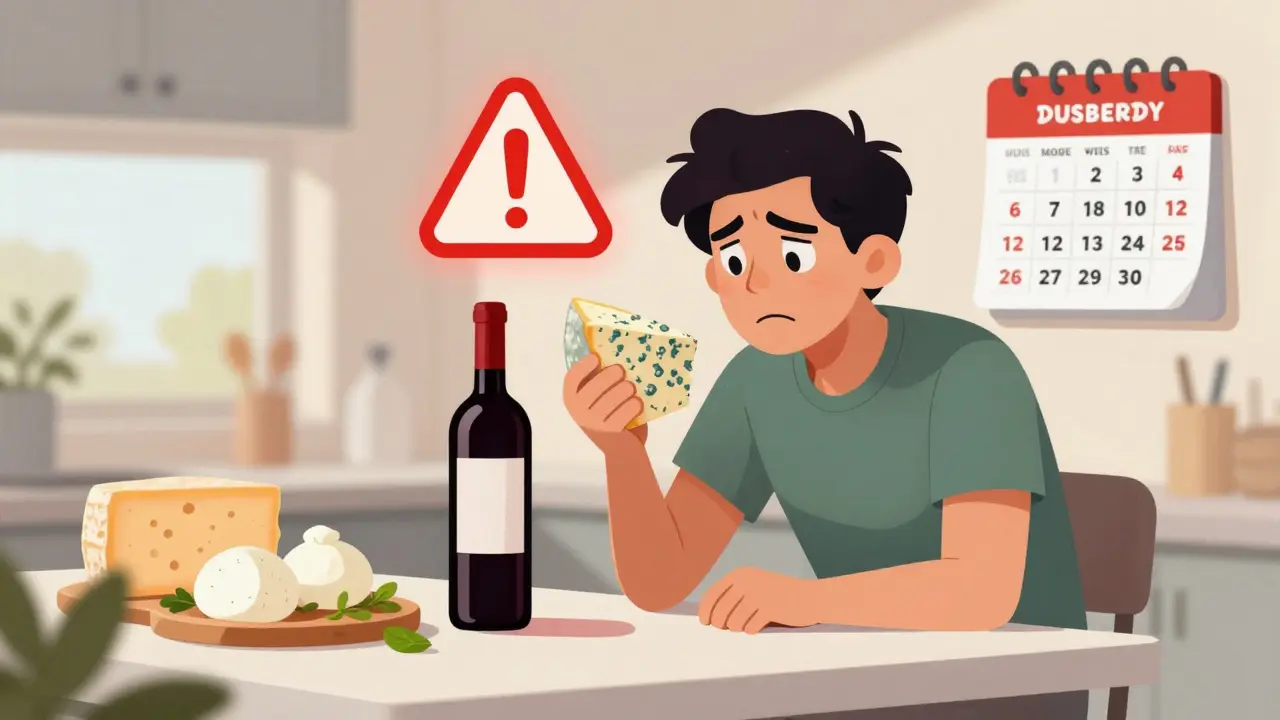
When you’re taking an MAO inhibitor for depression, your diet isn’t just about nutrition-it’s a safety issue. A single bite of aged cheese, a sip of red wine, or even leftover meat in the fridge could trigger a dangerous spike in blood pressure. This isn’t a myth. It’s a real, documented risk called a hypertensive crisis, and it can happen in minutes. For people on older antidepressants like phenelzine or tranylcypromine, avoiding certain foods isn’t optional. It’s life-saving.
Why Tyramine and MAOIs Don’t Mix
Your body normally breaks down tyramine-a naturally occurring compound in aged or fermented foods-using an enzyme called monoamine oxidase A (MAO-A). But MAO inhibitors block this enzyme. When that happens, tyramine builds up in your bloodstream. Instead of being safely processed, it floods your system and forces your nerve endings to release huge amounts of norepinephrine. That’s your body’s natural stress chemical. A sudden surge causes blood vessels to constrict violently, and your blood pressure rockets upward.
Studies show that as little as 5-10 milligrams of tyramine can trigger a dangerous rise in blood pressure in someone on a traditional MAOI. That’s less than a tablespoon of soy sauce or a small piece of blue cheese. Within 15 to 30 minutes, systolic pressure can jump 30 to 50 mmHg. At 10-25 mg, the risk of full-blown hypertensive crisis kicks in. Symptoms? A pounding headache at the back of your skull, blurred vision, chest pain, nausea, and a racing heartbeat. Left untreated, it can lead to stroke, heart attack, or death.
Which Foods Are Actually Dangerous?
Not all aged foods are created equal. Some have tiny amounts of tyramine. Others are ticking time bombs. Here’s what you need to avoid:
- Aged cheeses: Blue cheese, cheddar, Swiss, parmesan, and gorgonzola can contain 9-41 mg of tyramine per 100 grams. Some aged cheeses, especially those left unrefrigerated or stored too long, can hit over 400 mg per 100g. A single ounce (28g) of strong blue cheese could push you over the danger line.
- Fermented soy products: Soy sauce, miso, and tempeh are high. Soy sauce alone can have 20-70 mg per 100ml. A few tablespoons can be enough.
- Cured or smoked meats: Pepperoni, salami, pastrami, and liverwurst. These are fermented and aged, and tyramine builds up over time. Even refrigerated leftovers can become risky after a few days.
- Fermented fish: Pickled herring, surströmming, and other fermented seafood contain 110-230 mg per 100g. That’s more than 10 times the safe limit.
- Alcohol: Red wine (especially Chianti), tap beer, and fortified wines like sherry or port. Tyramine levels vary, but 4-15 mg per 100ml adds up fast. A single glass can be enough.
- Overripe fruits: Bananas, avocados, and figs that are overly ripe or bruised can have elevated levels. Fresh ones? Fine. Overripe? Skip them.
- Yeast extracts: Marmite, Vegemite, and concentrated bouillon cubes. These are concentrated sources of tyramine.
Here’s the key: freshness matters. Fresh meat, fresh cheese, fresh vegetables, and fresh fruit have less than 5 mg per 100g. The danger comes from aging, fermentation, or spoilage. If it’s been sitting in your fridge for days, or if it smells strong, it’s likely unsafe.
Not All MAOIs Are the Same
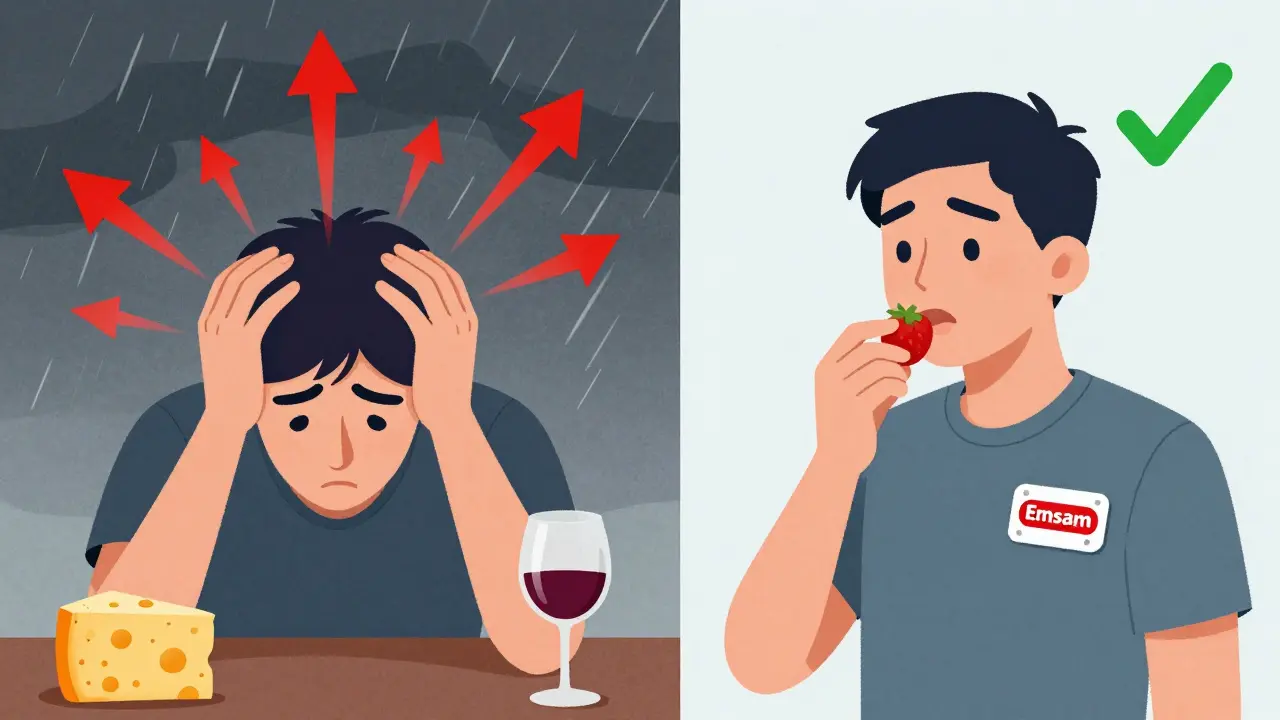
There’s a big difference between the older MAOIs and the newer ones. If you’re on phenelzine (Nardil) or tranylcypromine (Parnate), you need to follow strict rules. But if you’re on transdermal selegiline (Emsam patch), your restrictions are much lighter.
The lowest dose of Emsam (6 mg/24 hours) only blocks MAO-B in the gut, leaving MAO-A free to break down tyramine. That means you can eat most foods without restriction. Only at higher doses (9 mg and 12 mg) do you need to limit tyramine-rich foods. A 2020 review found that 87% of patients on traditional MAOIs found dietary rules unbearable-compared to just 22% on the low-dose patch.
Then there’s moclobemide (RIMA), used in Europe and Canada. It’s reversible, meaning tyramine can still get through and be broken down. Studies show it doesn’t cause hypertensive crises even at tyramine doses up to 100 mg. That’s why some patients switch to it when available.
What If You Accidentally Eat Something Risky?
It happens. More than 70% of MAOI users admit to accidentally eating a high-tyramine food at least once. Most times, nothing serious happens. But you need to know the warning signs and what to do.
Early symptoms: a sudden, intense headache at the back of your head (occipital), flushing, sweating, rapid heartbeat, or feeling anxious for no reason. These can start within 15 minutes. If your systolic blood pressure hits 180 mmHg or higher, that’s an emergency.
Don’t wait. Call your doctor or go to the ER. Emergency treatment now uses nicardipine, a fast-acting blood pressure medication that gently lowers pressure without crashing it too fast. Old protocols that used strong drugs like nitroprusside are outdated-they can cause brain damage by dropping pressure too quickly.
Keep a home blood pressure monitor. Log your readings daily. If you notice a sudden spike-especially after eating something questionable-contact your prescriber immediately. Many clinics now use automated alerts that notify them if your BP crosses a danger threshold.
Living With the Diet: Real Tips
Yes, this is hard. People quit MAOIs because of the diet. Social events, dining out, family meals-it all becomes stressful. But it’s doable. Here’s how:
- Buy fresh, not aged: Choose young cheeses like mozzarella, ricotta, or cottage cheese. Avoid anything labeled “aged,” “sharp,” or “blue.”
- Check expiration dates: If it’s been in the fridge longer than a week, throw it out. Tyramine builds up over time.
- Ask for plain, unseasoned meat: At restaurants, request fresh grilled chicken or fish without sauces or marinades. Ask if the meat is cured or smoked.
- Use fresh herbs and lemon: Flavor food with garlic, ginger, citrus, and fresh herbs instead of soy sauce or yeast extracts.
- Read labels: Since 2022, U.S. food labels must state tyramine content if it exceeds 10 mg per serving. Look for it on cheese packaging.
- Plan ahead: If you’re going out to eat, check menus online. Call the restaurant and ask about ingredients. Most are happy to accommodate.
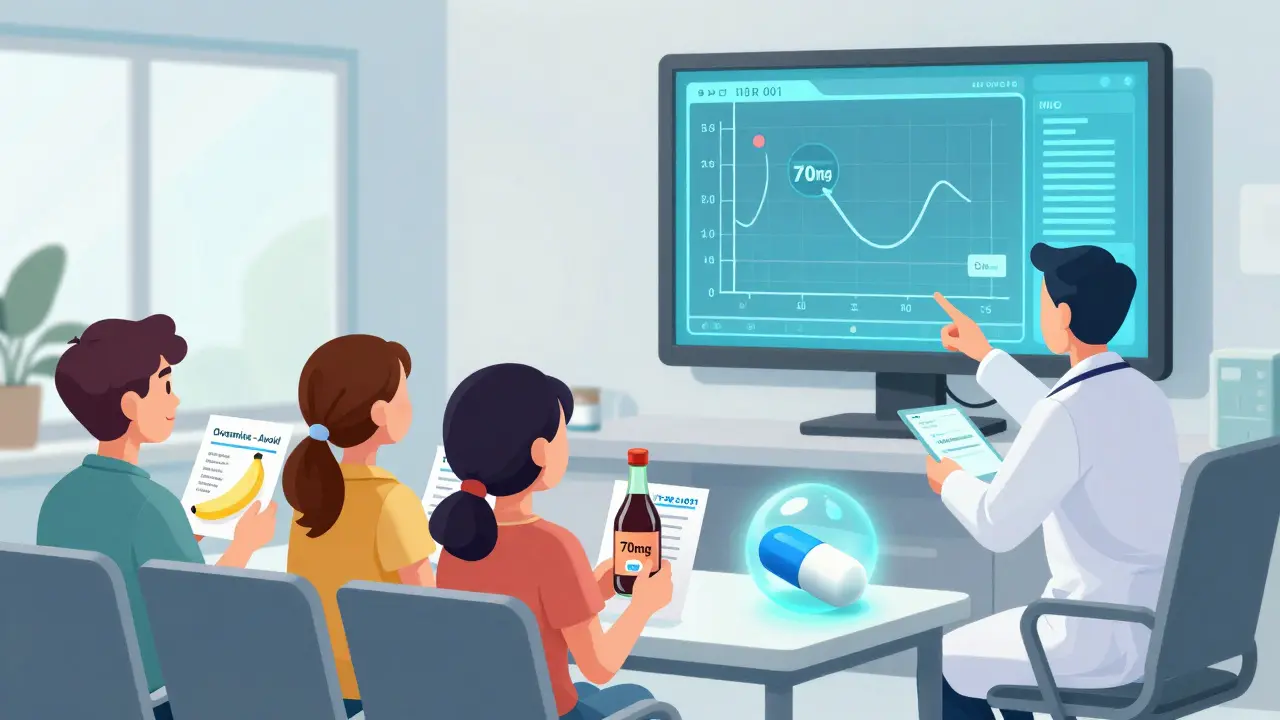
A 2020 study from Massachusetts General Hospital showed that a 45-minute education session cut dietary violations by 75%. The secret? Specifics. Not “avoid cheese.” But “avoid more than 1 ounce of aged cheese. Mozzarella is safe.”
The Bigger Picture: Why MAOIs Still Matter
MAOIs aren’t the first-line treatment anymore. But for people who’ve tried three or more antidepressants with no luck, they’re often the only thing that works. Studies show 50-60% of treatment-resistant patients respond to MAOIs. Some call it life-changing.
And the future is getting better. In March 2024, the FDA gave breakthrough status to a new enzyme supplement called TYR-001. Early trials show it lets people eat whatever they want while staying on MAOIs-no hypertension, no risk. Phase III trials are underway. If it works, it could change everything.
For now, the rules are clear: know your food, know your medication, and know your body. A few simple changes can keep you safe. And if you’re doing this right, you’re not just avoiding a crisis-you’re reclaiming your life.
Can I eat cheese if I’m on an MAOI?
It depends on the type. Fresh cheeses like mozzarella, cottage cheese, cream cheese, and ricotta are safe. Avoid aged cheeses like cheddar, blue, parmesan, Swiss, and gorgonzola. Even a small amount-less than an ounce-can be dangerous. Always check labels; since 2022, U.S. packaging must list tyramine content if it exceeds 10 mg per serving.
Is red wine always dangerous with MAOIs?
Yes, for traditional MAOIs like phenelzine or tranylcypromine. Red wine, especially Chianti, can contain 4-15 mg of tyramine per 100ml. One glass can trigger a dangerous blood pressure spike. Even if you’ve had it before without issues, your sensitivity can change. Better to avoid it entirely. White wine has less tyramine, but it’s still not recommended unless you’re on the low-dose Emsam patch.
Do I need to avoid all fermented foods?
Not all. Fermentation itself doesn’t always mean danger. Yogurt and kefir are low in tyramine and safe. But fermented soy products like soy sauce, miso, and tempeh are high. Pickled herring, sauerkraut, and kimchi can also be risky, especially if they’ve been stored for weeks. When in doubt, choose fresh over fermented. Fresh vegetables, fruits, and meats are always the safest option.
Can I take over-the-counter cold medicines with MAOIs?
No. Many OTC cold and flu remedies contain decongestants like pseudoephedrine or phenylephrine. These can also cause dangerous blood pressure spikes when combined with MAOIs. Always check labels for these ingredients. Even some herbal supplements like St. John’s Wort or 5-HTP can cause serotonin syndrome. Talk to your doctor before taking anything new.
What should I do if I think I’ve had a hypertensive crisis?
Call 911 or go to the nearest emergency room immediately. Symptoms include a sudden, severe headache at the back of your head, chest pain, blurred vision, nausea, or a racing heart. Do not try to manage it at home. Emergency teams now use nicardipine to slowly lower blood pressure-this prevents brain damage. The faster you get help, the better your outcome.
Comments
Just got prescribed Emsam last month. No diet restrictions so far. I ate a whole wheel of blue cheese last week. Didn’t even blink. Game changer.
Let’s be real - this whole ‘tyramine crisis’ thing is just pharma’s way of keeping people scared and dependent. I’ve been on Parnate for 12 years. Had soy sauce on sushi. Ate leftover pepperoni pizza. Drank two glasses of red wine. Never had a headache. Never had a spike. The FDA’s numbers are inflated. People panic because they’re told to. Your body’s not a bomb. It’s a system. It adapts. And if it doesn’t? Maybe the drug’s not right for you, not the cheese.
Also, ‘fresh’ is a marketing term. That ‘fresh’ mozzarella? Probably sitting in a warehouse for three weeks. That ‘aged’ cheddar? Could’ve been cut yesterday. Labels lie. Trust your gut - literally.
As a clinical pharmacist with 18 years in psychiatric care, I must emphasize: the data on tyramine-induced hypertensive crisis is robust. Multiple case reports from the 1980s to 2023 confirm that even 8 mg of tyramine can trigger systolic BP >180 mmHg in MAOI users. The risk is not theoretical - it’s quantifiable. The 2020 MGH study cited in the post is peer-reviewed and replicated. Dietary adherence reduces crisis incidence by over 80%. This isn’t fearmongering. It’s pharmacology.
For those questioning ‘fresh’ vs ‘aged’ - refrigeration slows, but doesn’t stop, tyramine accumulation. After 72 hours, levels rise measurably. The 10 mg/serving threshold on labels is conservative. Many cheeses exceed 15 mg after 5 days. When in doubt: discard.
Wait. So if I eat blue cheese and get a headache… is that the tyramine… or is the government putting something in the cheese to make us scared? I heard they’re testing mind control through food. And what about the WHO? They’re hiding the truth. My cousin’s neighbor’s dog died after eating cheddar. Coincidence? I think not.
People are so weak these days. You take a pill and now you can’t eat cheese? That’s not medicine that’s surrender. My grandpa took MAOIs in the 70s and ate ham and wine every Sunday. He lived to 92. You’re not sick. You’re lazy.
So if I’m on Emsam 6mg, can I have kimchi? I love kimchi. I’ve had it for years. I’m curious. What’s the real science? I don’t want to be paranoid. But I also don’t want to end up in the ER.
Oh wow. Another ‘science’ post. Let me guess - the next one will tell us oxygen is dangerous if you’re on SSRIs. This is why people hate psychiatry. You take a drug that makes you feel like a zombie, then you have to give up your entire culture. You can’t have wine? You can’t have pizza? You can’t have *life*? So what’s the point? You’re not curing depression. You’re just making it more boring.
And that ‘breakthrough enzyme’? It’s a placebo. Big Pharma’s got another magic bullet. They’ll charge $10,000 a pill. And then we’ll be told to take it with a side of organic kale.
Hey I’m on Nardil and I’ve been eating aged cheddar for 3 years. No issues. I monitor my BP daily. It’s chill. Maybe it’s because I’m chill. Maybe the rules are too strict. I think people panic too much. I just eat what I want and keep a log. If something spikes I stop. Simple. No drama. No fear.
Let me tell you something real. I was on tranylcypromine. Ate a whole block of gorgonzola. Felt like my head was going to explode. Blood pressure hit 210. Paramedics came. They gave me nicardipine. I lived. Now I’m on moclobemide. I eat kimchi, soy sauce, and red wine like it’s Thanksgiving. You wanna live? Stop being a rule-follower. Find what works. Your body isn’t a lab rat. It’s a warrior.
As a Korean-American, I’ve eaten miso soup daily since childhood. On MAOIs? I avoid it. But I also know that traditional fermentation methods (like in my grandma’s house) produce far less tyramine than industrial versions. It’s not black and white. Context matters. Local, small-batch ferments? Often safer. Corporate food? Riskier. Knowledge > fear.
So… I can eat fresh mozzarella. But if I leave it in the fridge for 4 days? Suddenly it’s a death trap? Cool. So my fridge is now a minefield. Next thing you know, I’ll need a PhD to buy a banana. I’m just here for the cheese. Not the chemistry lecture.
You’re not alone. I’ve been on MAOIs for 5 years. I cried the first time I had to say no to pizza night. But here’s what I learned: you don’t lose your life. You redesign it. I cook. I meal prep. I find new flavors - lemon zest, fresh basil, garlic, chili flakes. I make my own sauces. I eat with intention. And guess what? I feel better than I did on 4 other meds. This isn’t a prison. It’s a practice. You’ve got this.
And yet… people still eat blue cheese. And still get headaches. And still go to the ER. And still blame the doctor. Why? Because they didn’t read the fine print. Because they thought ‘I’m special.’ You’re not special. You’re a statistic waiting to happen.
I’ve been on phenelzine for 7 years. I’ve never had a crisis. But I’ve had panic attacks when I thought I ate something risky. The fear is real. Sometimes more than the tyramine. I wish the medical community talked more about that. The weight of this diet… it’s emotional. It’s lonely. You’re not just avoiding cheese. You’re avoiding dinners, holidays, connections. That’s the hidden cost. And no one talks about it.