

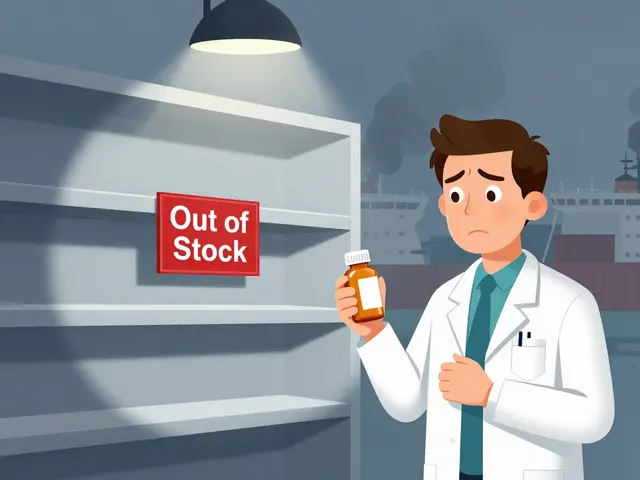
In early 2026, we see a stark reminder of why global trade matters when your local pharmacy runs out of essential antibiotics. It sounds minor until you realize that a single port closure can delay life-saving treatments for weeks. We spent decades optimizing our systems for efficiency, shipping parts from three different continents to assemble a final product. Now, that same network leaves us vulnerable to shocks we never saw coming.
The situation we face today is less about 'if' and more about 'how much' we rely on foreign soil to manufacture the basics of modern medicine. By 2025, 94% of multinational companies admitted that raw material procurement was their most fragile link. When that link snaps, hospitals scramble, and patients wait. Understanding this dependence is no longer just for supply chain managers; it is a matter of public health security.
The Reality of Global Manufacturing Dependence
When we talk about international supply chains, we aren’t just discussing boxes on trucks. We are talking about a complex web where international supply chains represent the global network of organizations, people, and activities involved in moving products across borders. This system, originally built on post-WWII trade liberalization efforts, now handles everything from electronics to active pharmaceutical ingredients (APIs).
Consider the sheer scale of what we import. According to World Bank data from 2025, Asia accounts for 50% of global manufacturing output. For many healthcare providers, this means the critical components needed to treat infections or manage chronic conditions often originate in factories thousands of miles away from the patient. If a factory in Guangdong halts production for maintenance or faces regulatory hurdles, the ripple effect is felt immediately in Manchester, London, or New York.
Foreign manufacturing offers cost advantages that are hard to ignore. The value proposition remains simple: specialized regional production lowers the price tag. However, the trade-off is visibility. A 2025 survey by the National Foreign Trade Council found that while these networks drive efficiency, they create significant blind spots. You cannot optimize what you cannot see clearly.
| Location | Avg. Lead Time Increase | Operational Cost Impact | Resilience Risk Level |
|---|---|---|---|
| China to U.S. | Increased by 50% | Tariff costs up 20% | High |
| Nearshoring (Mexico) | Reduced by 30% | Labor costs up 20% | Medium |
| Reshoring (Domestic) | Negligible | Setup cost up 40% | Low |
Why Drug Shortages Are Rising
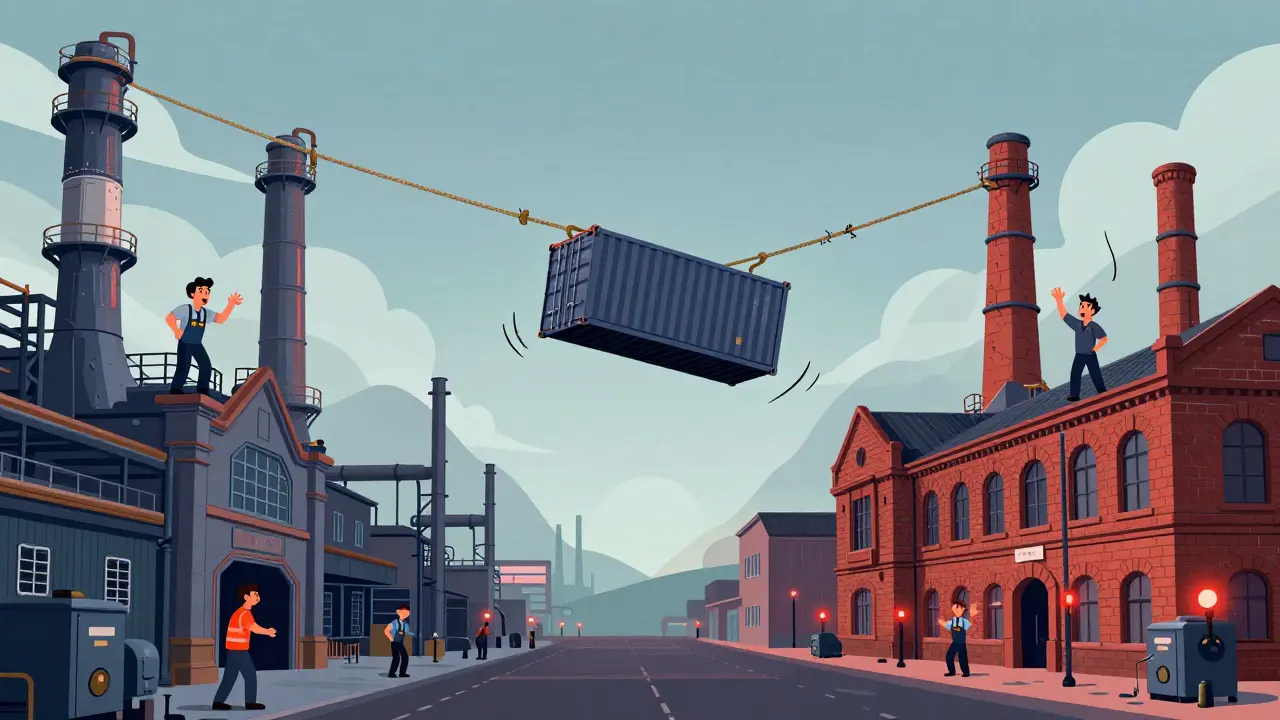
The direct link between supply chain fragility and drug shortages is becoming undeniable. In 2024 alone, several major incidents highlighted the dangers of concentrated sourcing. Companies maintaining single-source dependencies faced average disruption periods of 120 days during port closures. Compare that to diversified competitors who managed similar disruptions in just 45 days. The math is brutal: lack of options equals lack of medication.
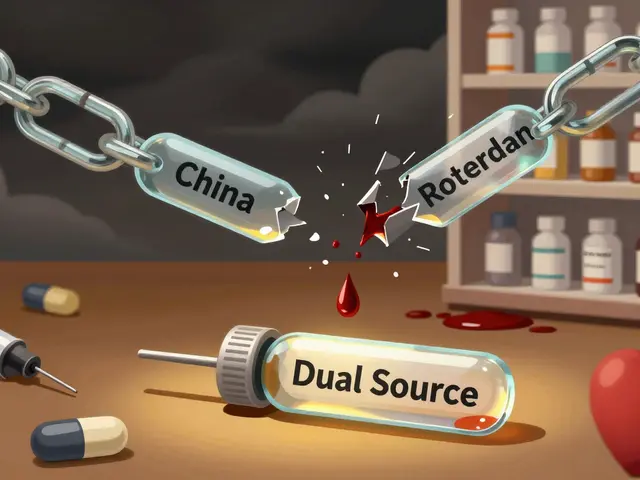
We need to look at the technical metrics driving this issue. Average lead times for goods traveling from China to the United States have increased by 50% since 2019. When those containers arrive late, inventory buffers run dry. Active Pharmaceutical Ingredients (APIs), which are the basic building blocks of medicines, are particularly vulnerable because there is often only one viable manufacturer in a specific region. If that facility goes offline due to power issues or labor strikes, there is no immediate backup plan.
This isn't just about logistics; it’s about economic forces. Business logistics costs in the U.S. reached $2.3 trillion in 2025, representing 8.7% of national GDP. As these costs rise, companies cut corners elsewhere, sometimes reducing stock levels to save cash. That decision backfires when the next crisis hits. Dr. John Westerman of the World Economic Forum emphasized in his 2025 report that climate events and geopolitical fragmentation are converging into systemic shocks. These shocks don't respect borders, and neither do the resulting shortages.
Shifting Strategies: From Single Source to Multi-Shoring
The industry is waking up to the need for balance. We are seeing a massive shift from "just-in-time" to "just-in-case" inventory models. According to McKinsey, Just-in-case inventory models have increased stock levels by 15%. This approach acts as a buffer against unexpected delays. Instead of running on empty, warehouses keep a few weeks' worth of raw materials on hand. It costs more to store them, but the cost of a shortage is far higher.
Many companies are also adopting multi-shoring strategies. This doesn't mean bringing everything home, but rather diversifying suppliers across different geographic regions. IDC’s FutureScape forecast indicates that 50% of companies are shifting to balanced multi-shoring by 2025. The result is a boost in supply reliability of approximately 10 percentage points. If one country locks down trade routes, another supplier in a friendly nation can step up.
Another popular avenue is nearshoring. Moving production to countries like Mexico allows manufacturers to keep quality control high while drastically cutting transportation distance. Data from Plante Moran's 2025 analysis suggests this offers 30-40% reduced transportation costs compared to trans-Pacific shipping. The trade-off is labor investment, which requires about 15-20% more spending, but the operational stability makes up for the expense.
Technology as a Stabilizer
Human oversight alone isn't enough to manage these complex webs. We are turning to digital tools to add transparency and predictive power. One key technology is Digital Twins used in supply chains, allowing firms to simulate scenarios before they happen. Investment in digital infrastructure-specifically the Industrial Internet of Things (IIoT) and Artificial Intelligence-is no longer optional. It is essential for survival.
Take Artificial Intelligence, for instance. Adoption rates for enterprise AI in supply chain management reached 68% in 2025, a massive jump from 22% in 2020. Generative AI integration is expected to improve decision-making workflows by 35%. These tools can predict tariff changes, monitor vessel movement in real-time, and even flag potential cyber vulnerabilities before hackers get through. For smart supply chains, E-BI’s IoT-enabled logistics demonstrate potential improvements by reducing lead times by 20% in Asia.
We also have to consider cybersecurity. With increased connectivity comes increased risk. Cybersecurity vulnerabilities affect 60% of manufacturers reporting concerns in smart supply chains. A hack that shuts down a manufacturing line is effectively a supply chain disruption. Industry-wide, we are looking at an additional $18.7 billion required for security investments during 2025-2026 to close these gaps.

The Human Factor and Workforce Gaps
Behind every algorithm and shipping container is a team of professionals trying to make things work. Unfortunately, there is a growing skills gap in global trade management. Current data shows that 33% of companies report understaffing in these critical positions in 2025. We simply don't have enough people skilled in the new requirements, such as digital twin management or advanced AI-driven forecasting.
This shortage creates a bottleneck. Even if the software exists, someone needs to interpret the data and make strategic decisions. The complexity of modern trade regulations, such as the 12 new tariff categories implemented by the U.S. government affecting $340 billion in imports, requires dedicated expertise. Without this human layer, the sophisticated technology sits idle or gets misconfigured.
What Comes Next for Patients and Producers?
Looking toward late 2026 and beyond, the trend is clear: we are moving toward geographically distributed production. Complete reshoring isn't economically feasible for everyone-as Professor Richard Baldwin notes, U.S. manufacturing wages remain 4.8 times higher than in China. Instead, we are seeing a hybrid model where critical supplies come from nearby allies while non-critical items continue global transit.
The OECD forecasts gradual improvement with global GDP growth potentially recovering to 3.1% by 2027 if trade tensions de-escalate. Until then, we must expect friction. The competitive landscape shows that firms using inventory buffers and supplier diversification experience 65% fewer disruption days annually. If you want reliable access to medicine, supporting diversified supply chains is the only logical path forward.
Why do drug shortages occur if technology has improved?
Despite better tools, many drugs rely on a single source for active ingredients. If that specific foreign factory stops production, there is no backup. Technology helps track the issue, but diversity in sourcing is the only fix.
Is reshoring too expensive for pharmaceutical companies?
Yes, initial setup costs average 22% of annual procurement spend, and transition takes 18-24 months. While expensive, the long-term savings from avoiding tariffs and faster delivery often offset the investment over five years.
How does nearshoring to Mexico help supply chains?
Nearshoring reduces transportation time and costs by 30-40% compared to shipping from Asia. It allows for quicker response to demand spikes and easier quality inspections within the same continent.
What role does AI play in preventing disruptions?
AI analyzes data to predict delays before they happen. It improves decision workflows by 35% and can identify cyber threats. It doesn't stop a storm, but it helps reroute shipments around it instantly.
Are current workforce shortages slowing down these improvements?
Yes, 33% of companies are understaffed in trade roles. We need more experts in digital twin management and global compliance to fully utilize new resilience technologies.

Comments
The nature of human reliance on distant networks is something we rarely contemplate deeply until the consequences arrive at our doorstep. We build systems designed for peak efficiency during stable times, ignoring the fragility inherent in such perfection. When the world functions smoothly, the risk appears negligible to the average consumer who simply expects medicine on the shelf. Yet history teaches us that complexity often breeds vulnerability in ways that seem unpredictable. A single disruption in the far east can ripple through to local pharmacies in a manner that feels almost personal. We prioritize cost savings over security because the immediate financial gain is tangible while the risk is abstract. This abstraction allows corporations to sleep soundly even when their supply lines are perilously thin. The true cost of this optimization becomes visible only when shelves remain empty for weeks on end. Patients suffer the consequences of these corporate decisions without having any voice in the matter. It forces us to question whether our definition of progress includes resilience as a core metric. We seem to accept trade-offs that endanger public health without fully understanding the gravity of the situation. The shift toward just-in-case inventory is a logical correction to past mistakes made in the name of profit. However, building redundancy requires capital that many companies are hesitant to allocate without pressure. Society must demand higher standards from these organizations before another crisis hits. Until then, we remain at the mercy of logistics managers who cannot see beyond the next quarter. We are essentially waiting for the next failure event to occur again. True stability comes from recognizing interdependence rather than attempting to control it completely.
This definitely makes sense to us down here where supply routes are already pretty stretched out.
It’s wild thinking that a port delay could mean we run out of basic meds entirely.
Just hope the government steps up faster than usual to sort things out properly.
Your simplistic view ignores the complex realities of global markets!!!!!
; Do you truly understand the magnitude of this issue????
; Many factors prevent simple solutions here!!
; You really need to educate yourself before posting nonsense!!!!!
While your frustration is understandable!
; it overlooks the regulatory hurdles involved!
; Compliance takes time and budget!
; We cannot rush production safely!
It’s funny how we pretend everything is fine until the lights go out.
We need action now not talk.
Stop wasting time fixing old problems.
People get sick while you argue.
Make the changes now.
The potential impact on my local hospital is genuinely frightening to consider right now.
My family relies on consistent medication schedules that could vanish overnight.
We prepare for storms yet ignore the supply risks quietly looming above us.
It feels like living on borrowed time in every possible way.
The uncertainty creates anxiety that affects daily life choices significantly.
Nobody talks about this enough until it becomes a crisis.
You dramatic people miss the bigger picture entirely regarding systemic economic shifts.
History repeats itself constantly while you panic unnecessarily.
Fear clouds your ability to analyze the data objectively and rationally.
We must look at trends over decades not just current news cycles.
Patience is required when restructuring industrial networks globally.
The solution involves patience and strategy.
Rushing into reshoring creates inflationary pressures that hurt the poor most of all.
Stability is achieved through balance not extreme reactions.
Your emotional response is typical of the uneducated masses reacting to fear.
True leadership understands nuance and long-term planning.
You focus on symptoms while ignoring the disease affecting the economy.
Economic fundamentals dictate what is feasible regardless of sentiment.
We need to respect the laws of supply and demand strictly.
Ignoring costs leads to shortages in different forms eventually.
Wisdom lies in moderation rather than extreme policy swings.
We should trust experts who manage these systems carefully.
We should try to find balance instead of arguing back and forth about what is best for everyone involved today.
Cooperation seems to yield better results than division here.
Listening to different perspectives helps clarify the path forward significantly.
We all want safe access to medicine regardless of politics.
Finding middle ground ensures progress continues without unnecessary friction.
Compromise is key when dealing with complex global issues.
Everyone deserves to feel heard in this debate process.
Moving forward together is always stronger than fighting alone.
Understanding each side reduces tension in the conversation naturally.
Diversified supply chains reduce risk effectively according to the data.
Multi-shoring helps when one region faces issues.
Companies need to invest in this strategy immediately.
Customers benefit from stable stock levels consistently.
Technology supports these goals when used correctly.