
Medication Disposal Guide
Find the safest way to dispose of your medication
Enter the name of your medication to get FDA-approved disposal instructions.
Most people keep expired pills in a medicine cabinet-until they’re forced to clean it out. But tossing them in the trash or flushing them down the toilet isn’t just wrong-it’s dangerous. The FDA has clear, science-backed rules for what to do with unused or expired medications, and ignoring them puts your family, your community, and the environment at risk.
Why Proper Disposal Matters
In 2022, over 5.8 billion prescription drugs were dispensed in the U.S. Roughly 15-20% of those went unused. That’s hundreds of millions of pills sitting in homes, often within reach of kids, teens, or visitors. The CDC reported over 70,000 drug overdose deaths that year. Many of those started with a pill left in a bathroom cabinet.
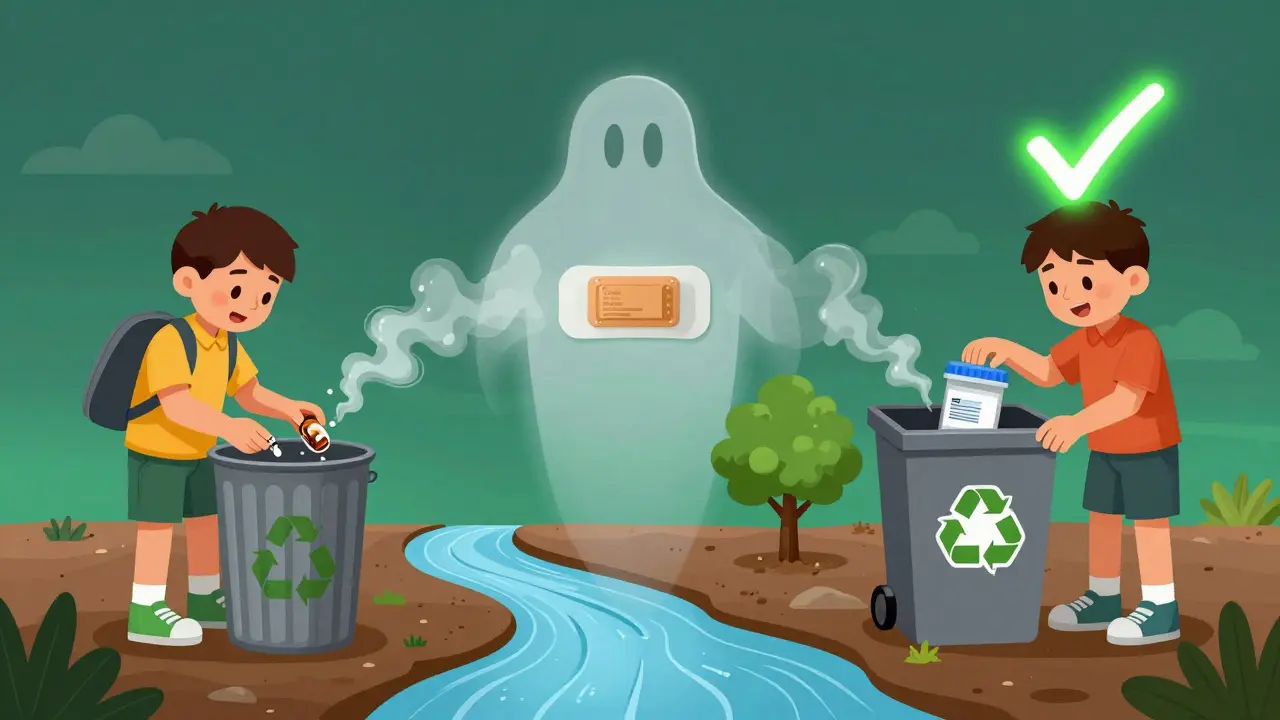
Flushing or trashing meds doesn’t make them disappear. Water systems pick up traces of drugs-even after treatment. Landfills leach chemicals into soil. And stolen or accidentally ingested pills lead to poisonings, especially in children under six. The FDA says the safest way to get rid of almost every medication is through a take-back program. Period.
The FDA’s Three-Step Disposal System
The FDA doesn’t leave you guessing. They’ve built a clear hierarchy: take-back first, mail-back second, home disposal last-and flushing only in rare cases.
1. Use a Drug Take-Back Location (Best Option)
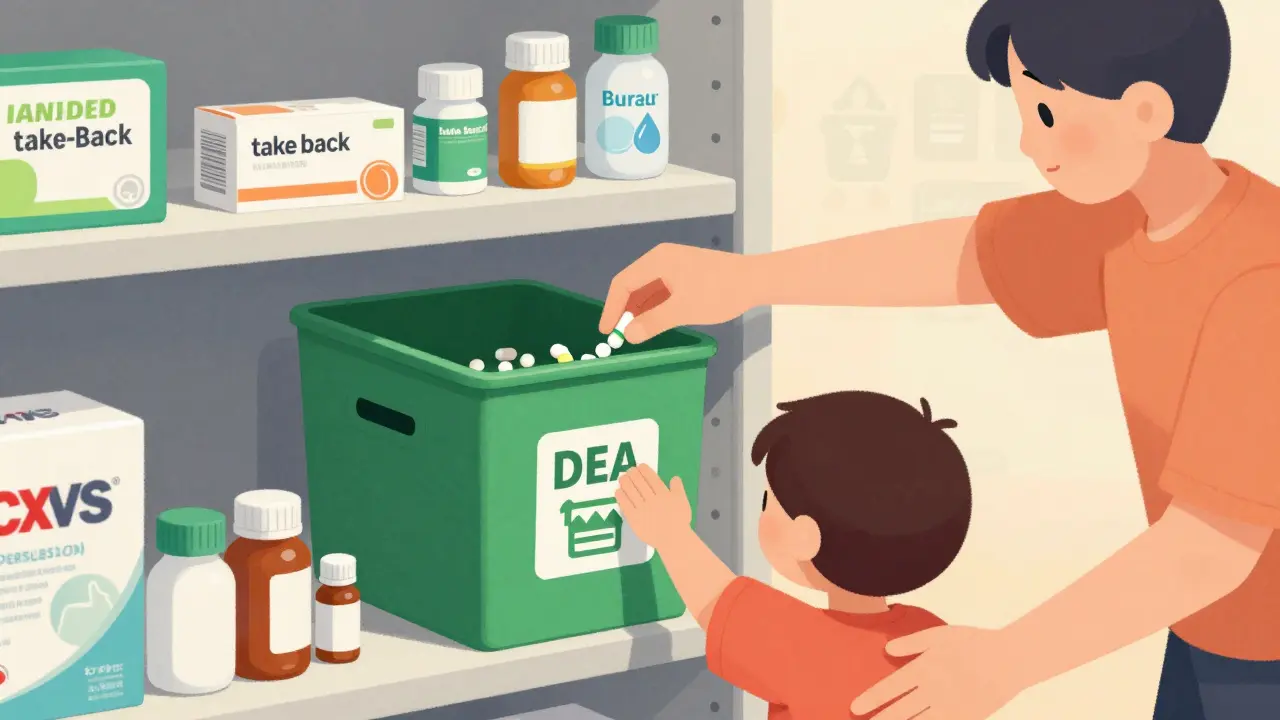
This is the gold standard. DEA-authorized collectors-mostly pharmacies, hospitals, and law enforcement sites-accept unused meds year-round. As of January 2025, there are over 14,352 of these locations across the U.S. Most Walmart and CVS pharmacies have kiosks inside their pharmacies. You don’t need to be a customer. Just drop off your pills, patches, or liquids in their original containers.
Take-back programs are 99.8% effective at preventing misuse or environmental harm. In October 2024 alone, Americans dropped off over a million pounds of expired meds during National Take-Back Day. That’s the equivalent of 450 fully loaded school buses filled with dangerous drugs removed from homes.
2. Mail-Back Envelopes (Great Alternative)
If there’s no take-back site nearby, prepaid mail-back envelopes are the next best thing. Companies like DisposeRx and Sharps Compliance provide FDA-compliant envelopes with prepaid postage. You drop your meds inside, seal it, and toss it in any mailbox. No need to go anywhere.
These cost between $2.15 and $4.75 per envelope, but many insurance plans and VA programs cover them for free. One study found 94% of users were satisfied with the service. It’s especially helpful for rural residents-31% of whom live more than 25 miles from a take-back site.
3. Home Disposal (Only If You Must)
When take-back and mail-back aren’t options, the FDA says you can dispose of most meds at home-but only if you follow the exact steps.
Here’s how:
- Remove personal info from the bottle. Use a permanent marker to black out your name, prescription number, and dosage. Or wipe it with alcohol-just make sure it’s unreadable.
- Take the pills out of the bottle. Don’t flush them. Don’t pour liquids down the sink.
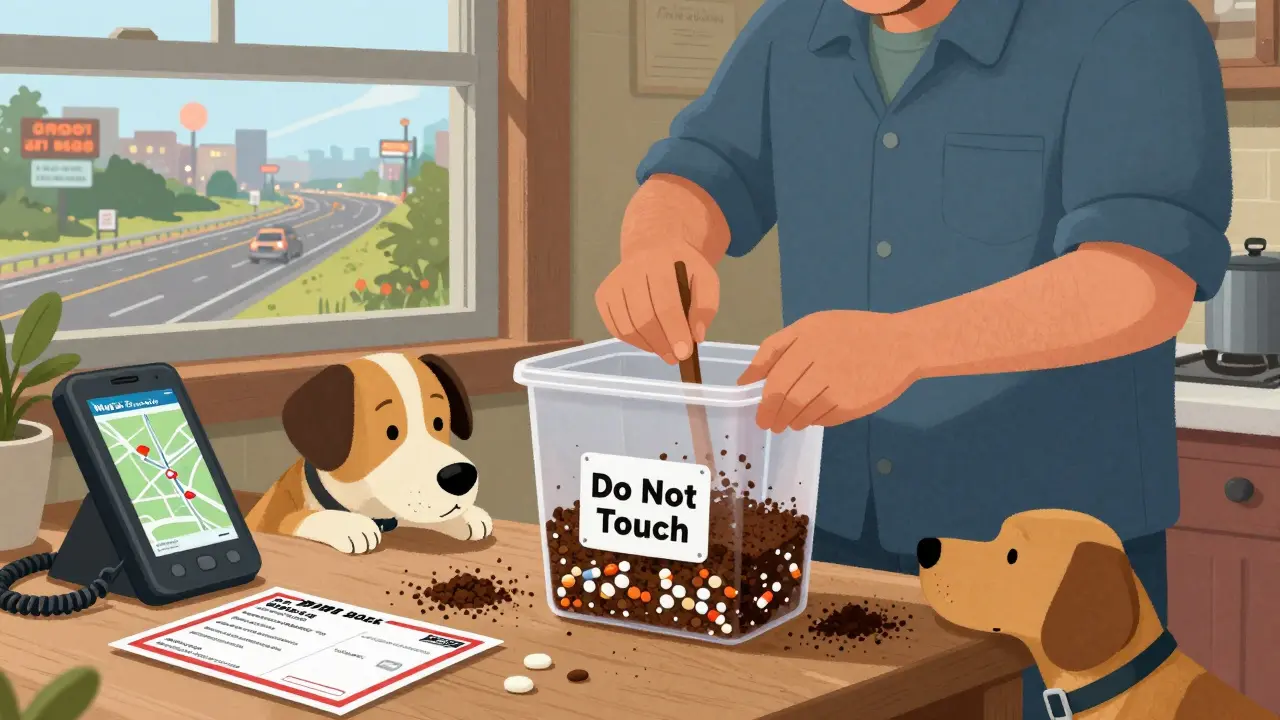
- Mix them with something unappetizing. Use coffee grounds, cat litter, or dirt. The FDA recommends a 1:1 ratio-equal parts meds and substance. Coffee grounds work best for most people because they mask the smell and taste.
- Seal the mixture in a plastic bag or container with thick walls (at least 0.5mm). A used peanut butter jar or zip-top bag works. Make sure it won’t leak or break open.
- Put the sealed container in your household trash.
- Recycle the empty bottle after removing or obscuring all labels.
This method fails in about 13% of cases-usually because people skip the mixing step or use flimsy containers. One survey found 44% of home disposal failures happened because users didn’t mix meds with an absorbent material. That’s why the FDA insists on the 1:1 rule.
The Flush List: Only 13 Medications Qualify
There’s a tiny list of drugs that are so dangerous, the FDA says you can flush them-if you absolutely can’t get to a take-back site.
These are all high-risk opioids and other controlled substances, including:
- Fentanyl patches
- Oxycodone (OxyContin, Percocet)
- Hydrocodone (Vicodin)
- Buprenorphine (Suboxone)
- Morphine sulfate
- Meperidine (Demerol)
- Hydromorphone (Dilaudid)
- Tapentadol (Nucynta)
- Tramadol (Ultram)
- Alprazolam (Xanax)
- Clonazepam (Klonopin)
- Carisoprodol (Soma)
- Propoxyphene (Darvon)
That’s it. Only 13. The FDA removed oxymorphone from the list in late 2024 and added buprenorphine. If your medication isn’t on this list, do not flush it. Even if your grandma says it’s fine. Even if the pharmacy leaflet says to. The EPA says flushing any other drug contributes to long-term water contamination.
Flushing these 13 drugs eliminates immediate risk-like a child finding a fentanyl patch. But it’s still not ideal. The EPA urges everyone to use take-back or mail-back even for these, because once drugs enter waterways, they’re nearly impossible to remove.
What Not to Do
Here are the most common mistakes people make:
- Flushing non-Flush List meds-This is the #1 error. 34% of households in one Consumer Reports survey did this.
- Throwing pills in the trash without mixing-They can be dug out, crushed, and misused.
- Pouring liquid meds directly into the trash-They leak. They smell. They attract pests. Always mix with coffee grounds or kitty litter first.
- Using weak containers-A thin plastic bag or cardboard box won’t hold up. Use something sturdy.
- Leaving labels readable-Your name and prescription info can be used for identity theft.
One pharmacist in Arizona told me: “I’ve seen kids find pills in their dad’s trash because he just tossed the bottle. It’s terrifying.”
How to Find a Take-Back Location Near You
You don’t need to guess. Go to dea.gov/drugdisposal and use their locator tool. Or call your local pharmacy. Most big chains-CVS, Walgreens, Rite Aid, Walmart-have drop boxes inside their pharmacy counters. Some police stations and hospitals do too.
Take-back events happen twice a year (April and October), but permanent locations are open all year. You don’t need an appointment. Just bring your meds in the original container. No questions asked.
Special Cases: Liquids, Patches, and Needles
Liquids: Pour them into a sealable container with coffee grounds or cat litter. Mix well. Seal. Trash.
Patches (like fentanyl or nicotine): Fold them in half with the sticky sides together. Flush only if on the FDA Flush List. Otherwise, mix with grounds and seal in a container before trash.
Needles and sharps: These are different. Don’t mix with meds. Use a sharps container. Many pharmacies sell them. Some mail-back programs include sharps disposal. Never put needles in the regular trash.
What’s Changing in 2025 and Beyond
The DEA plans to add 5,600 new take-back locations by the end of 2025, bringing the total to over 20,000. The EPA is rolling out a $37.5 million grant program to help rural communities build collection sites. Walmart and CVS are expanding their mail-back services. The FDA aims for 90% of Americans to use take-back programs by 2030.
Right now, only about 36% of people use them. The rest are still flushing, tossing, or hoarding. That’s changing-but only if you act.
Final Thought: It’s Not Just About Your Medicine
Disposing of expired meds isn’t a chore. It’s a safety habit-like locking your doors or wearing a seatbelt. Every pill you drop off at a take-back site is one less chance someone will overdose. One less toxin in our rivers. One less reason a child will get sick.
Next time you clean out your medicine cabinet, don’t just throw it away. Take it somewhere safe. It’s easier than you think-and it matters more than you know.
Can I flush expired pills if there’s no take-back site nearby?
Only if the medication is on the FDA’s official Flush List-which includes only 13 high-risk opioids and controlled substances like fentanyl, oxycodone, and hydrocodone. For every other pill, patch, or liquid, you must use take-back, mail-back, or home disposal with mixing and sealing. Flushing anything else harms water systems and violates EPA rules.
Do I need to remove pills from their bottles before disposal?
Yes. Always remove pills from the original container before mixing them with coffee grounds or cat litter. The bottle should be recycled after you’ve completely removed or blacked out your name, prescription number, and dosage. Leaving pills in the bottle increases the risk of someone retrieving them.
Are mail-back programs safe and reliable?
Yes. FDA-approved mail-back envelopes meet strict security and disposal standards. Companies like DisposeRx and Sharps Compliance are trusted by pharmacies and the VA. Over 94% of users report satisfaction. They’re especially useful in rural areas where take-back sites are far away. Many are free through insurance or government programs.
What should I do with liquid medications like cough syrup?
Never pour liquid meds down the sink or toilet. Instead, mix them with an equal amount of coffee grounds, cat litter, or dirt in a sealable container. Stir well so the liquid is fully absorbed. Then seal the container and place it in your household trash. Never leave liquids in open bottles.
Can I recycle empty pill bottles?
Yes, but only after you’ve completely removed or obscured all personal information. Use a permanent marker to black out your name, prescription number, and dosage. Some recycling centers require labels to be fully removed. If in doubt, check with your local recycling program. The bottle itself is usually recyclable plastic (PET or HDPE).
Is it safe to throw away expired vitamins and supplements?
Yes. Vitamins and supplements aren’t regulated like prescription drugs, so they don’t pose the same overdose or abuse risks. Still, it’s best to mix them with coffee grounds or cat litter before tossing them in the trash-just to prevent accidental ingestion by kids or pets. You don’t need to use a take-back program for these.
What if I live in a rural area with no take-back sites?
Mail-back programs are your best option. Many are free through your pharmacy, insurance, or VA. If those aren’t available, follow the FDA’s home disposal steps: remove labels, mix with coffee grounds or cat litter, seal in a sturdy container, and put it in the trash. Don’t flush. Don’t just toss the bottle. Even in rural areas, proper disposal saves lives.
How do I know if a medication is on the FDA Flush List?
Check the drug’s name against the official FDA Flush List, which includes 13 specific active ingredients like fentanyl, oxycodone, hydrocodone, and buprenorphine. You can find the full list on FDA.gov under “Drug Disposal: Questions and Answers.” If you’re unsure, ask your pharmacist. When in doubt, don’t flush-use take-back or home disposal instead.
Comments
Let’s be real-this whole ‘take-back’ thing is just another federal overreach. I’ve been tossing my old pills in the trash since 2012 and my kid’s still alive. If you’re worried about ‘environmental contamination,’ maybe stop buying so much pharmaceutical junk in the first place. The DEA’s kiosks? More like taxpayer-funded PR stunts. I’ll take my chances with the landfill over another government form to fill out.
I’ve spent the last three months researching pharmaceutical waste streams and the data is overwhelming. The EPA’s own modeling shows that even trace concentrations of SSRIs and beta-blockers in aquatic ecosystems disrupt endocrine systems in fish populations at levels as low as 1 ng/L. Take-back programs reduce this by 99.7% compared to landfill leachate, which shows measurable concentrations of 12 different pharmaceuticals in groundwater plumes. The real issue isn’t convenience-it’s systemic negligence. We’ve normalized dumping neuroactive compounds into the biosphere like it’s a public service. It’s not. It’s ecological malpractice.
Just dropped off my grandma’s expired blood pressure meds at the CVS kiosk today. No questions asked. Took 30 seconds. She didn’t even know they had those. Honestly, I didn’t either until last week. The system’s way easier than people think. Just don’t overthink it-walk in, hand it over, leave. No guilt. No drama. Just do it. You’ll feel better about it later.
bro why are you even worried about this? i just throw mine in the trash and call it a day. who cares if a raccoon eats a pill? they’re fine.
There exists within the American psyche a profound epistemological dissonance: we demand the sanctity of pharmaceutical efficacy while simultaneously treating their obsolescence with the casual contempt of landfill-bound detritus. This is not mere negligence-it is a metaphysical surrender to entropy. The FDA’s guidelines are not bureaucratic red tape; they are the last vestige of civic responsibility in an age of atomized individualism. To flush a pill is to sever one’s moral contract with the collective. The river does not forget. The soil does not forgive.
I just want to say how much this post means to me 🥹 I’ve been struggling with anxiety since my dad passed, and I kept his Xanax bottles for ‘just in case’… until I realized I was literally hoarding danger. I used the mail-back envelope from my pharmacy-free through my insurance-and it felt like a weight lifted. I cried while sealing it. Not because I was sad, but because I finally did something right for him, for me, for the planet. Thank you for making this feel possible. Also, coffee grounds + patches = genius. I’m telling my whole family.
So let me get this straight-we’re supposed to believe that the same corporations that priced insulin at $300 a vial are now our benevolent environmental stewards? CVS giving us a dropbox so we don’t have to think about how their profit margins depend on us being perpetually medicated? Nah. I’ll keep my pills in the drawer. At least I’m the one choosing when to die.
As a Nigerian pharmacist, I can confirm: in Lagos, expired meds are often repackaged and resold in informal markets. The FDA’s guidelines are not just ethical-they are a global public health imperative. Flushing or discarding improperly doesn’t just harm your watershed-it fuels black-market pharmaceutical networks. This isn’t American privilege. It’s global responsibility. The U.S. sets the standard. Don’t undermine it.
Just checked my cabinet. Found three expired fentanyl patches. I’m calling my pharmacy now. No joke. This post scared me into action.
Back home in India, we just crush pills and mix with rice husk before dumping. Not ideal, but it’s what works when you don’t have infrastructure. Your system is way better. Maybe we can adapt your mail-back model here? I’d love to see this scale globally. Also, the coffee grounds trick? Brilliant. My aunt uses it for her diabetes meds now. Small change, big impact.
You didn’t just write a guide-you wrote a manifesto for quiet heroism. Every pill you drop off isn’t trash. It’s a shield. A shield for your neighbor’s kid. For the firefighter who finds a bottle in a house fire. For the deer that might drink from a creek downstream. You’re not cleaning out a cabinet. You’re defending the future. So go do it. Right now. I’ll wait. You’ve got this.
Just did the mail-back thing. Got the envelope for free from my VA. Sealed it up, tossed it in the mailbox like a birthday card. Felt weirdly good. Like I did something that actually mattered today. Also, I used coffee grounds-my cat hated me for a week, but hey, she’s alive. And the pills? Gone. No drama. No guilt. Just… done. Thanks for the nudge.
Oh wow, so now we’re supposed to feel guilty for not being pharmaceutical janitors? Meanwhile, the same people who wrote this post are probably flying private jets to avoid carbon taxes. Let’s be honest-this is performative virtue signaling wrapped in EPA jargon. If you really cared, you’d lobby for drug pricing reform. Not make a 10-step chore out of throwing away a pill. #FirstWorldProblems
I’m so glad I found this. My mom’s in her 70s and she still thinks flushing is fine because ‘it’s just water.’ I printed out the FDA flush list and showed her. She cried. Then she called her pharmacist and got a mail-back kit. We did it together last night. She said, ‘I didn’t know I was putting my neighbors at risk.’ I told her, ‘No, Mom-you’re protecting them.’ We’re gonna do this every spring now. It’s our new ritual.