
Antidepressant Sweating Risk Calculator
Excessive sweating is a common side effect of many antidepressants, but the risk varies significantly between medications. This tool helps you understand the relative sweating risk of different antidepressants and identify lower-risk alternatives.
Select Antidepressants to Compare
Sweating Risk Comparison
Medications with lower sweating risk are indicated by green, medium risk by yellow, and high risk by red. The percentage represents the estimated risk of experiencing excessive sweating while taking that antidepressant.
What Your Results Mean
Based on your selections, you can see which antidepressants have the lowest risk of causing excessive sweating. This information can help you discuss safer alternatives with your doctor.
Remember: Never stop or change your antidepressant without consulting your healthcare provider. They can guide you through safe transitions if you experience problematic side effects.
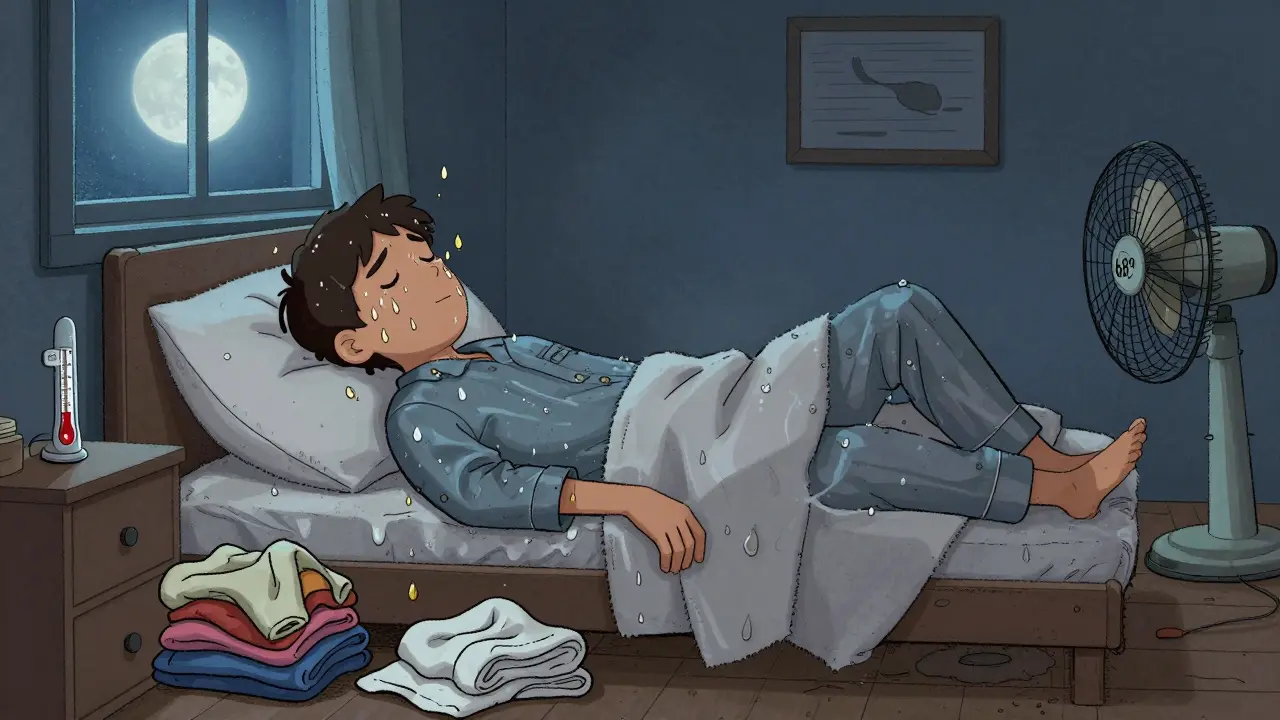
More than 1 in 10 people taking antidepressants experience sweating so heavy it soaks through clothes, ruins sleep, and makes daily life feel unbearable. It’s not just being hot-it’s drenching sweats at 6 a.m., sticky armpits during meetings, and pajamas changed three times a night. This isn’t normal perspiration. It’s antidepressant-induced excessive sweating (ADIES), a real, documented side effect tied to how these drugs interact with your brain’s temperature control system.
Why Do Antidepressants Make You Sweat So Much?
Antidepressants don’t just lift your mood-they tweak the chemicals in your brain that control everything from sleep to body temperature. Serotonin, the main target of SSRIs like sertraline and escitalopram, doesn’t just affect your emotions. It also signals your hypothalamus, the part of your brain that regulates sweat. Too much serotonin? Your body thinks it’s overheating-even when the room is cool.
SNRIs like venlafaxine and tricyclics like amitriptyline do something similar, but they also mess with norepinephrine, another chemical that turns on sweat glands. Even bupropion, often chosen because it doesn’t cause sexual side effects, can trigger sweating at rates nearly as high as SSRIs. The problem? It doesn’t always get better over time. Many people assume the sweating will fade after a few weeks. For up to 60% of users, it doesn’t.
Which Antidepressants Cause the Most Sweating?
Not all antidepressants are equal when it comes to sweating. Some are far more likely to trigger it than others.
- Paroxetine (Paxil): Highest risk-up to 19% of users report heavy sweating.
- Sertraline (Zoloft): Around 10-15% of users experience noticeable sweating.
- Escitalopram (Lexapro): About 12% of users report sweating, though switching to its mirror-image molecule, citalopram, often reduces it.
- Fluoxetine (Prozac): Lower risk-closer to 7%.
- Fluvoxamine: One of the lowest sweating risks among SSRIs.
- Tricyclics (e.g., amitriptyline): Similar rates to SSRIs, but rarely used now due to other side effects.
- Trazodone: Often a better choice for people who sweat heavily-it’s less likely to cause this side effect.
- Extended-release venlafaxine: 23% less sweating than the immediate-release version.
Even small differences matter. Escitalopram and citalopram are almost the same drug-but because of how their molecules are shaped, citalopram causes significantly less sweating in many people. That’s why switching between them can be a game-changer.
What Does Real-Life ADIES Look Like?
It’s not just inconvenient. It’s isolating.
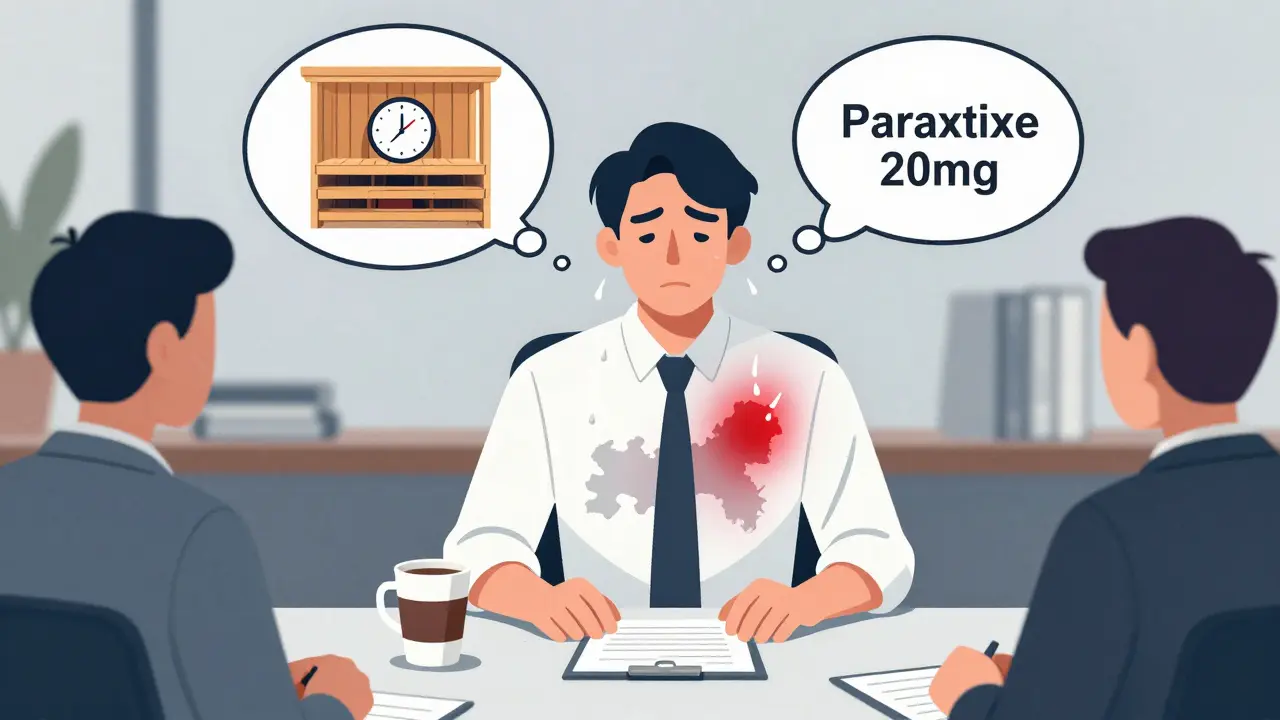
On Reddit, users describe waking up soaked, needing to change clothes before work, avoiding hugs or handshakes, and skipping social events because they’re terrified of sweating through their shirts. One woman stopped taking sertraline after two months-even though her anxiety improved-because she was changing her undershirts three times a day. Another said night sweats made her feel like she was living in a sauna, and she’d lie awake, drenched, wondering if she’d ever sleep normally again.
GoodRx reviews show that 68% of people who quit their antidepressant because of sweating did so because the side effect outweighed the mental health benefits. That’s not just a nuisance-it’s a treatment failure.
How to Cope: Cooling Strategies That Actually Work
If you’re dealing with this, you’re not alone-and there are real, evidence-backed ways to manage it.
1. Dress Smart
Wearing cotton or moisture-wicking fabrics isn’t just a suggestion-it’s a necessity. Look for athletic wear labeled “performance” or “anti-odor.” These fabrics pull sweat away from your skin and dry fast. Avoid synthetic blends like polyester unless they’re specifically designed for moisture control.
Layering helps. A lightweight, breathable undershirt under your regular shirt gives you an easy swap if you get soaked. Keep a spare shirt at work or in your bag. Many people swear by cooling vests-worn under clothes-designed to lower skin temperature. A 2022 pilot study found a 60% reduction in sweating for users who wore them daily.
2. Use Strong Antiperspirants
Regular deodorants don’t stop sweat-they just mask odor. You need antiperspirants with 15-20% aluminum chloride. Apply them at night, right before bed, on dry skin. That’s when sweat glands are least active, so the product can block them effectively. Wash off in the morning. It takes a few nights to build up, but many users report dramatic results.
3. Keep Your Environment Cool
Use a fan at night-even if it’s winter. Keep your bedroom below 68°F. Invest in a cooling mattress pad or a pillow with gel inserts. Avoid heavy blankets. Drink cold water throughout the day. Even small drops in room temperature can reduce the frequency and intensity of sweats.
4. Avoid Triggers
Spicy food, caffeine, alcohol, and stress all make sweating worse. You don’t have to eliminate them entirely, but track what makes it worse. Cut back on coffee after noon. Skip hot sauces. Practice deep breathing or mindfulness if anxiety spikes your sweating.
Medical Solutions: When Cooling Isn’t Enough
If lifestyle changes don’t help, talk to your doctor. There are medical options that work.
Switching Medications
Switching from paroxetine to fluvoxamine or from escitalopram to citalopram can cut sweating in half for many people. Trazodone is another option-less likely to cause sweating and often used for sleep issues too. Never switch on your own. Work with your prescriber to taper safely.
Adding a Medication to Help
Some drugs can block the sweating without affecting your mood:
- Glycopyrrolate (1-2 mg daily): An anticholinergic that reduces sweat production. Often used for hyperhidrosis. Side effects include dry mouth or constipation.
- Benztropine (0.5-1 mg daily): Another anticholinergic with strong results in case studies-75% of users saw improvement.
- Terazosin (1-5 mg at night): A blood pressure drug that also reduces sweating by blocking certain nerve signals. Works well for night sweats.
These aren’t first-line treatments, but they’re proven. Many doctors don’t know about them-so bring up the research. The PMC9129361 study and the Psychiatric Times case reports back this up.

When to Worry: Sweating vs. Serotonin Syndrome
Not all sweating is ADIES. If you’re sweating heavily and have:
- High fever (over 101°F)
- Tremors or muscle stiffness
- Rapid heartbeat or confusion
- Diarrhea or agitation
-this could be serotonin syndrome. It’s rare but dangerous. Go to the ER immediately. ADIES doesn’t cause fever or confusion. Serotonin syndrome does.
What’s Next? The Future of Managing Medication Sweating
Research is moving fast. New antidepressants in development, like LS-2-1123, are designed to avoid serotonin receptors that trigger sweating-and early trials show only 3.2% of users experienced sweating, compared to nearly 15% on escitalopram.
Transdermal patches (like selegiline) are already showing 60% less sweating than pills. And soon, doctors may use genetic tests to predict who’s at risk. If you’re a slow metabolizer of certain drugs (CYP2D6), you’re more likely to build up serotonin levels that trigger sweating. That test could become standard within the next few years.
For now, you have options. You don’t have to suffer in silence. Many people have found relief-through smarter clothing, targeted antiperspirants, switching meds, or adding a low-dose pill to block the sweat. You’re not broken. Your body is just reacting to a chemical change. And that reaction can be managed.
What to Do Today
Start simple:
- Write down when and how often you sweat. Note the time, what you were doing, and what you were wearing.
- Try a strong antiperspirant (15-20% aluminum chloride) at night for one week.
- Buy one moisture-wicking undershirt and wear it daily.
- Lower your bedroom temperature by 3°F tonight.
- Make a list of your current medication and its known sweating risk (see the table above).
Then, bring this to your doctor. Ask: “Is this ADIES? What are my options?” You deserve to feel better-mentally and physically.
Is excessive sweating from antidepressants common?
Yes. Between 7% and 22% of people taking antidepressants experience excessive sweating, depending on the medication. SSRIs like sertraline and paroxetine are the most likely to cause it, with up to 19% of users affected. It’s one of the top reasons people stop taking their medication.
Can I stop my antidepressant if I’m sweating too much?
Don’t stop abruptly. Stopping suddenly can cause withdrawal symptoms like dizziness, nausea, or mood crashes. Talk to your doctor first. They can help you taper safely or switch to a medication with lower sweating risk, like citalopram or trazodone.
Do cooling vests really work for antidepressant sweating?
Yes. A 2022 pilot study found that people who wore cooling vests under their clothes saw a 60% reduction in sweating episodes. They’re especially helpful during the day at work or in warm environments. Look for vests with phase-change materials or gel inserts designed for medical use.
Is there a medication that can stop the sweating without affecting my depression?
Yes. Glycopyrrolate and benztropine are anticholinergic drugs that reduce sweat production without interfering with antidepressant effects. Terazosin, usually used for blood pressure, also helps with night sweats. These are added on top of your current antidepressant, not replacements. They’re low-dose and generally well-tolerated.
How do I know if my sweating is serotonin syndrome?
Serotonin syndrome is a medical emergency. If your sweating is accompanied by fever over 101°F, muscle stiffness, tremors, rapid heartbeat, confusion, or diarrhea, seek emergency care immediately. ADIES causes sweating alone-no fever, no neurological symptoms. If in doubt, get checked.
Will I always sweat if I’m on antidepressants?
Not necessarily. Some people develop tolerance over time, but many don’t. The good news is that switching to a different antidepressant or adding a low-dose medication like glycopyrrolate often resolves the issue. Research shows that up to 75% of people find relief with the right strategy.
Can lifestyle changes alone fix antidepressant sweating?
For mild cases, yes. Using antiperspirants, wearing moisture-wicking clothes, staying cool, and avoiding triggers like caffeine can reduce sweating significantly. But for moderate to severe cases-like drenching night sweats or daily soaking-lifestyle changes alone usually aren’t enough. Medical options are needed for full relief.
Comments
I swear to god, I was drenched during my Zoom meeting yesterday. Like, my shirt looked like I jumped in a pool. 😭 I thought I was the only one. Now I know it’s the damn sertraline. I’m switching to fluvoxamine next week. No more sweating like a sauna monster.
This is why people shouldn’t just pop pills like candy. You want mental health help? Try therapy. Or yoga. Or prayer. But no-everyone wants the quick fix, then complains when their body rebels. It’s not the drug’s fault-it’s your lack of discipline. 🙄
The data here is statistically significant but methodologically flawed. You cite GoodRx reviews as evidence of treatment failure, but those are self-selected, unvalidated, and subject to confirmation bias. Also, the 60% figure for persistent sweating? Where’s the longitudinal cohort study? Without proper controls, this reads like a pharmaceutical marketing pamphlet disguised as medical advice.
In my country, we don’t rely on pills to fix everything. We use herbs, meditation, and discipline. Sweating is your body’s way of telling you you’re out of balance. Maybe you need to stop fighting nature and start listening to it.
I’ve been on citalopram for 3 years and barely sweat at all. Switching from escitalopram was the best decision I ever made. Seriously, if you’re sweating buckets, talk to your doc about swapping. It’s not weak to change meds-it’s smart. And yes, cooling vests? Game changer. I wear one under my dress shirt and no one even knows. You’re not broken. You just need the right tools.
Thank you for this comprehensive, evidence-based resource. The inclusion of clinical references, such as PMC9129361, elevates this beyond anecdotal testimony. I encourage all clinicians to familiarize themselves with the pharmacological alternatives outlined herein, particularly the off-label use of terazosin for nocturnal hyperhidrosis. This is precisely the kind of nuanced, patient-centered guidance that is too often absent in primary care.
Honestly, if you’re sweating through your shirt because of a pill, maybe you shouldn’t be on it at all. I mean, look at the alternatives-lifestyle, therapy, even ketamine now. You’re not a lab rat. Don’t let Big Pharma turn you into a walking sweat sock. 🧴
I started using Certain Dri at night and it cut my night sweats in half. Didn’t even need to change meds. Just give it 3 days. And wear cotton. Seriously. Cotton.
I’ve been on paroxetine for 18 months. The sweating was brutal-changed shirts 4x a day. Switched to fluoxetine and it’s like a different person. I didn’t lose the mood benefits. I just stopped being a human sweatshop. If you’re struggling, don’t suffer in silence. Ask your doctor about switching. It’s not failure. It’s optimization.
This is all a lie. They’re hiding the truth. The sweating? It’s not the antidepressants-it’s the microchips in the pills. They’re tracking your body heat to sell ads to air conditioner companies. I saw it on a documentary. You think they care if you’re soaked? They just want your data. And your money. Don’t be fooled. 🕵️♀️🚨