
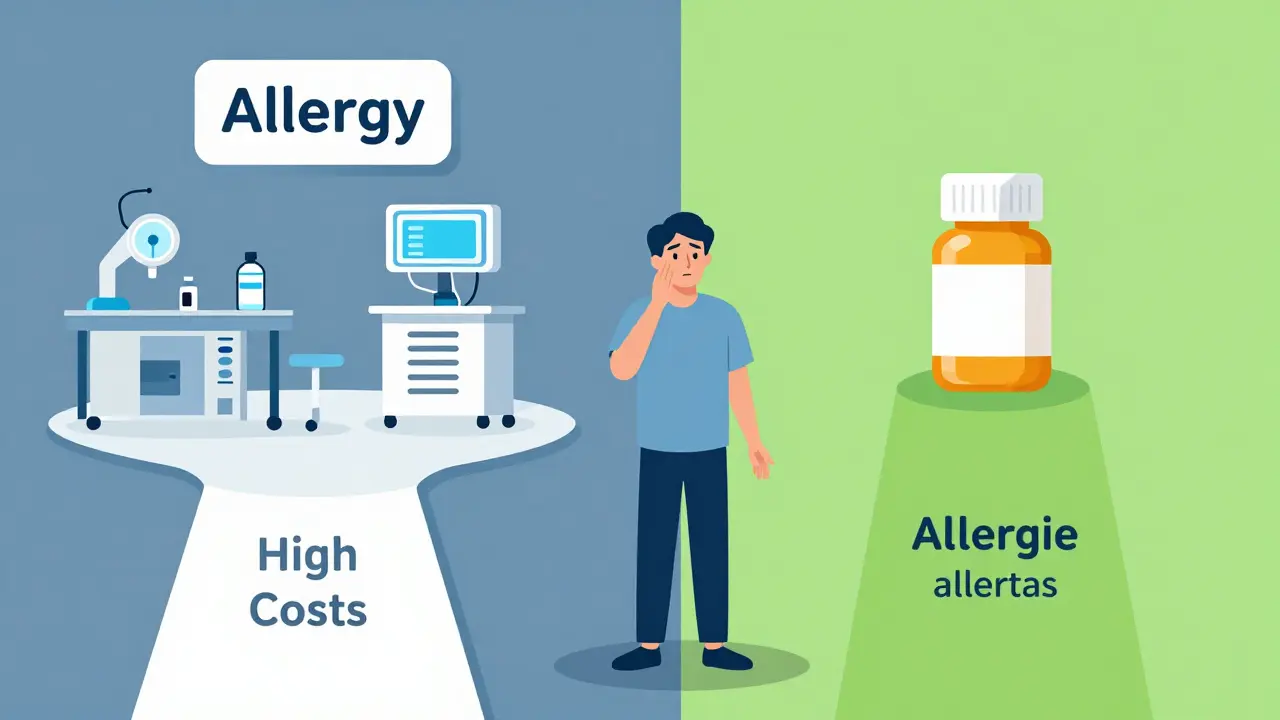
Imagine being told you can't take the most effective, cheapest, and safest antibiotic available because of a reaction you had twenty years ago. You aren't alone. About 10% of people in the U.S. say they are allergic to penicillin. But here is the shocker: when those patients actually get tested by an allergist, less than 1% are truly allergic. The rest have been living with a label that limits their medical options, drives up costs, and pushes doctors toward stronger, riskier drugs.
If you suspect your antibiotic allergy might be a false alarm, getting tested is one of the best health decisions you can make. But you can't just walk into a clinic on a whim. Preparing for antibiotic allergy testing requires strict medication adjustments and understanding what happens during the procedure. Getting this wrong could mask results or put you at unnecessary risk. Let’s break down exactly how to prepare so you can get accurate results and potentially reclaim access to first-line treatments.
Why Accurate Preparation Matters More Than You Think
Most people assume allergy testing is like a blood draw-quick, painless, and requiring no prep. That is not the case here. The accuracy of skin prick tests and intradermal injections relies entirely on your body's natural histamine response. If you are taking medications that block histamine, the test won't work. You'll get a "negative" result even if you are allergic, which is dangerous because it gives you a false sense of security.
The stakes are high. Patients who carry an unconfirmed penicillin allergy label receive broader-spectrum antibiotics 69% more often than those without the label. This isn't just about comfort; it's about public health. Overuse of broad-spectrum drugs fuels antibiotic resistance and increases healthcare costs by roughly $6,000 per patient annually. Proper testing helps "de-label" these patients, allowing them to use safer, narrower-spectrum drugs like penicillin or amoxicillin. According to data from the American Academy of Allergy, Asthma & Immunology (AAAAI), proper testing has a negative predictive value of 95-98%, meaning if the test says you're safe, you almost certainly are.
Medication Restrictions: What to Stop and When
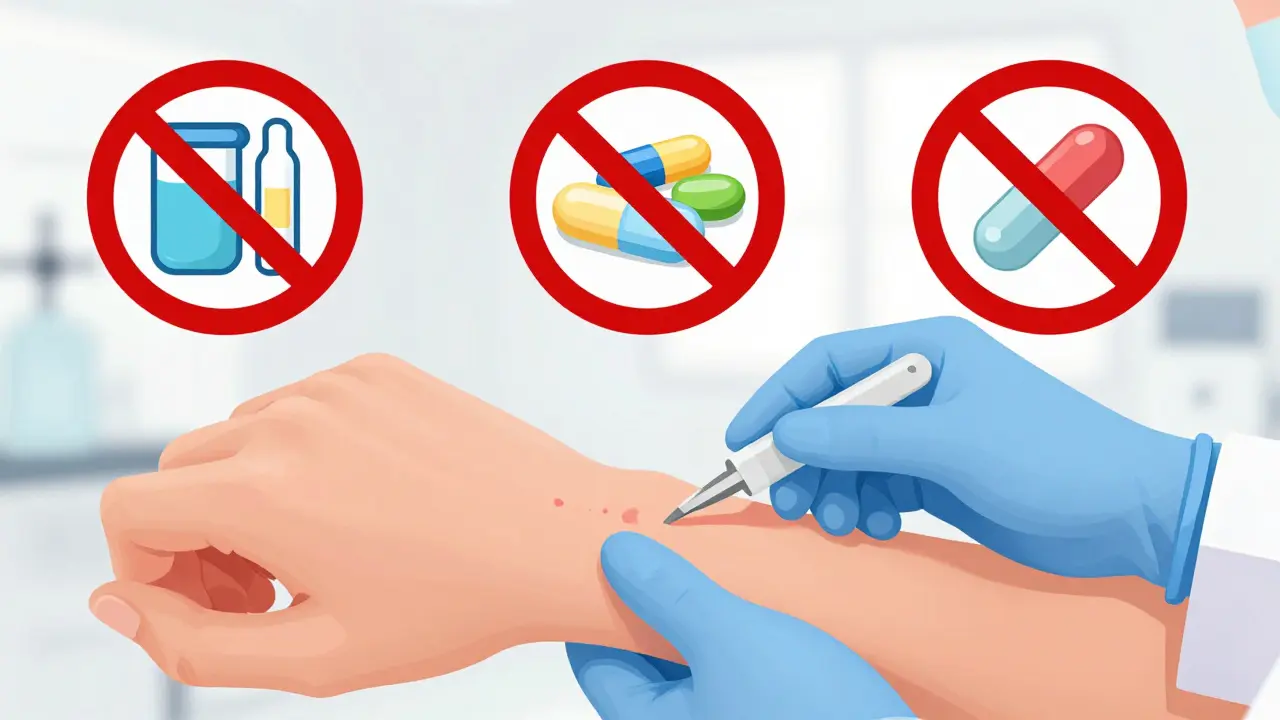
This is the most critical part of your preparation. You must stop certain antihistamines before your appointment. These drugs interfere with the skin's ability to show a reaction. Here is the timeline you need to follow, based on guidelines from major medical centers like UCSF and the University of Mississippi Medical Center:
- First-generation antihistamines: Stop at least 72 hours (3 days) before testing. This includes diphenhydramine (Benadryl) and hydroxyzine. These older drugs cross the blood-brain barrier and strongly suppress skin reactions.
- Second-generation antihistamines: Stop 7 full days (one week) before testing. This list includes loratadine (Claritin), cetirizine (Zyrtec), fexofedine (Allegra), levocetirizine (Xyzal), and desloratadine (Clarinex). Even though these don't make you as drowsy, they still block the histamine receptors needed for a positive skin test.
- Tricyclic antidepressants: If you take doxepin or similar tricyclics with antihistamine properties, you must stop them 14 days prior. Consult your psychiatrist before making this change, as abrupt cessation can cause withdrawal symptoms.
Do not stop essential medications like beta-blockers, blood pressure meds, or thyroid drugs unless your allergist specifically tells you to. However, you must disclose everything. Beta-blockers, for instance, can complicate the treatment of anaphylaxis if a severe reaction occurs, so your doctor needs to know to take extra precautions. ACE inhibitors can also affect how your body reacts to epinephrine, another crucial detail for your safety team.
Understanding the Three-Step Testing Process
Knowing what to expect reduces anxiety. The standard protocol, used by institutions like Memorial Sloan Kettering Cancer Center and Boston Children's Hospital, follows a three-step escalation. Each step builds on the previous one to ensure safety while maximizing diagnostic accuracy.
- Skin Prick Test: The technician introduces small amounts of penicillin reagents to the surface of your skin using a tiny plastic lancet. It feels like a mild mosquito bite or a quick scratch. There is virtually no risk of systemic reaction here (less than 0.01%). If the area becomes red, swollen, or itchy within 15 minutes, the test is positive.
- Intradermal Test: If the prick test is negative, they move to the next level. They inject a small amount of medication (including normal saline as a control, Penicillin G, and Pre-Pen) just under the skin to form a small bump called a bleb. A positive reaction is defined as redness or swelling exceeding 3mm in diameter around the bleb within 15 minutes. This step is slightly more uncomfortable but remains very safe.
- Oral Challenge (Test Dose): If both skin tests are negative, you proceed to the oral challenge. You will swallow a pill containing 10% of the target antibiotic dose. You are monitored for 30 minutes. If nothing happens, you take the full dose and are monitored for another 60 minutes. This is the gold standard for confirming safety.
During all steps, emergency equipment including epinephrine (EpiPen), albuterol inhalers, and IV fluids must be immediately available in the room. The risk of a severe reaction (anaphylaxis) during a supervised test dose is extremely low, approximately 0.06%, but the environment is designed to handle it instantly if it occurs.

Interpreting Your Results: Positive vs. Negative
A negative result is great news. It means you can safely take penicillin and related beta-lactam antibiotics. This opens the door to cheaper, more effective treatments for infections like strep throat, pneumonia, and bone infections. As one patient documented in the *Journal of Allergy and Clinical Immunology*, switching from expensive daptomycin ($1,850 per dose) to penicillin ($12 per dose) after de-labeling saved tens of thousands of dollars.
A positive skin test indicates a high likelihood (95-98%) of true IgE-mediated allergy. In this case, you should avoid penicillins and likely cephalosporins with similar side chains. However, remember that allergies can fade. Approximately 50% of people lose their penicillin allergy within 5 years, and 80% within 10 years. If you had a reaction decades ago, testing is especially valuable because you may no longer be allergic at all.
Be aware of delayed reactions. Some patients experience itching or swelling at the injection site 4-8 hours after leaving the clinic. This affects about 15% of patients and is usually manageable with over-the-counter hydrocortisone cream. Isolated symptoms like mild nausea or anxiety during the oral challenge are common and typically considered negative results if no other signs of anaphylaxis (like breathing trouble or hives) appear.
Cost, Accessibility, and Future Options
Is it worth the effort? Absolutely. Every dollar spent on penicillin allergy testing saves an estimated $5.70 in reduced healthcare costs related to alternative antibiotic use and complications. Despite this, access remains a barrier. Only 17.3% of primary care providers consistently follow current testing guidelines, largely due to a shortage of allergists, especially in rural areas where 63% of counties have no specialists.
However, the landscape is changing. The NIH recently awarded grants to develop point-of-care blood tests that could eventually replace skin testing, though current blood tests are not yet accurate enough for clinical use. Telemedicine-guided test dosing is also emerging, with pilot studies showing success rates over 94% for supervised at-home challenges in low-risk patients. Until these technologies become widespread, seeing a board-certified allergist in a controlled setting remains the safest and most reliable path.
Can I eat normally before my antibiotic allergy test?
Yes, you can eat normally. Unlike some blood tests, antibiotic allergy testing does not require fasting. Eating a light meal beforehand may actually help stabilize your blood sugar and reduce anxiety during the procedure.
What if I accidentally took an antihistamine before my appointment?
Contact your allergist immediately. Do not hide this information. Taking antihistamines can cause a false-negative result, meaning the test might say you're safe when you're actually allergic. Your doctor may need to reschedule your appointment to ensure accurate results.
Does insurance cover antibiotic allergy testing?
In many cases, yes. Since testing prevents costly hospitalizations and inappropriate antibiotic use, many insurers consider it medically necessary. Check with your provider and insurance company beforehand. Highlight the potential cost savings and clinical benefits when requesting authorization.
How long does the entire testing process take?
Plan for a half-day visit. The skin tests themselves take about 20-30 minutes for reading. If you proceed to the oral challenge, add another 1.5 to 2 hours for observation. Total time in the clinic is typically 3-4 hours depending on your schedule and whether you need multiple stages.
Are there any risks associated with the test?
The risk is very low but present. Mild local itching or redness is common. Severe reactions like anaphylaxis occur in only about 0.06% of supervised test doses. Because of this, testing is always done in a clinic equipped with emergency medications like epinephrine and staff trained in resuscitation.
Comments
yo this is super helpful info tbh i had no idea stopping zyrtec took a full week before the test most people just think its like a blood draw but nah skin tests need your histamine to be active or it gives false negatives which is scary af
Exactly! So important to follow the timeline!!
I always tell my patients that skipping the antihistamine washout period renders the entire procedure useless!! It’s frustrating when people don’t read the prep instructions carefully!! Please share this with anyone who has an unconfirmed allergy label!!
It is rather disheartening to observe the sheer level of medical illiteracy prevalent in modern society, where individuals fail to comprehend the basic pharmacological mechanisms underlying diagnostic procedures such as antibiotic allergy testing, thereby necessitating the existence of such rudimentary guides for those who lack the intellectual fortitude to consult primary literature or engage in meaningful discourse with their healthcare providers regarding the nuanced implications of histamine receptor antagonism on cutaneous reactivity assessments.
i dont trust these big pharma companies pushing penicillin again they want you hooked on their cheap drugs while hiding the side effects that cause long term damage to your microbiome and immune system the allergists are paid off to give false negative results so you keep buying their products instead of natural remedies that actually work without suppressing your body's natural defenses against infection
they want to control us through antibiotics make sure you hide your real symptoms from the doctor because if they know you are allergic they will put you in the database and track your health data for the government experiments happening in rural areas right now
The epistemological framework underpinning contemporary allergology is fraught with contradictions, particularly when one considers the subjective nature of symptom reporting versus the objective metrics of IgE-mediated responses. To suggest that a mere skin prick can definitively ascertain one’s immunological disposition towards beta-lactam antibiotics is to ignore the complex interplay of genetic predisposition, environmental triggers, and the ephemeral nature of hypersensitivity reactions over time, thus rendering the 'gold standard' oral challenge a somewhat arbitrary ritualistic confirmation of what is often already known through careful clinical observation.
Honey, I get why you’re worried about allergies, but let’s talk about how this affects our national health security. If we rely too much on imported antibiotics or foreign testing standards, we compromise our sovereignty. But also, thinking about it philosophically, isn’t the allergy just a manifestation of our soul’s resistance to artificial substances? We need to embrace our natural state and stop letting doctors dictate our biological destiny, even if it means risking a reaction to reclaim our freedom.
u people are so naive to believe in western medicine protocols without questioning the moral implications of subjecting humans to potential anaphylaxis for the sake of cost savings its unethical to push these tests on vulnerable populations who might have genuine severe allergies just to save insurance money corporations care more about profit than human life and u should feel ashamed for promoting this dangerous practice
The essence of the matter lies not merely in the biochemical interaction between antigen and antibody, but in the broader existential question of how we define safety within a probabilistic universe. The act of testing itself becomes a performative gesture of control against the inherent chaos of biological systems, suggesting that by labeling ourselves as either allergic or non-allergic, we impose a false dichotomy upon a spectrum of immune response that defies such rigid categorization.
I’ve been looking into this because my sister has a penicillin allergy from childhood. She’s never had a reaction since she was seven, but her chart still says allergic. I’m wondering if the oral challenge is really necessary if the skin tests are negative? It seems like a lot of risk for a small gain, but maybe I’m missing something about the predictive value mentioned in the article.
The ethical ramifications of prioritizing economic efficiency over individual patient safety in the context of antibiotic de-labeling are profound and deeply troubling, as they reflect a societal shift towards utilitarian calculus at the expense of personal autonomy and bodily integrity, wherein the potential for catastrophic anaphylactic events, however statistically improbable, is dismissed as an acceptable collateral damage in the pursuit of reducing healthcare expenditures and combating antimicrobial resistance, thereby exposing vulnerable populations to unnecessary risks under the guise of scientific progress and public health optimization.