
Medication Adjustment Navigator
Select a symptom you are experiencing to find the best psychological strategy and medical guidance.
Please select a symptom from the list to see tailored strategies.
The Strategy: Practical Management
Nausea is a very common adjustment symptom that often peaks between day 3-5 and fades by day 21.
Tip: Use a journal to track if this happens only when you're stressed (Nocebo) or consistently after the dose.
The Strategy: Timing Adjustment
Insomnia is common with certain medications like SSRIs during the first 2-4 weeks.
Reminder: Apply the "Two-Week Rule" before deciding the medication is incompatible with your sleep.
The Strategy: Cognitive Restructuring
You may be experiencing the Nocebo Effect, where the fear of side effects creates real physical tension.
Recommended Approach: CBT (Cognitive Behavioral Therapy) can help break this panic loop.
Urgent Action Required
Some symptoms are not "adjustment phases" and require immediate medical attention.
- Difficulty breathing
- Swelling of the face, lips, or tongue
- A sudden, severe rash or hives
- Symptoms that worsen after the first 3 weeks
Psychological strategies are for management, not for masking severe allergic reactions.
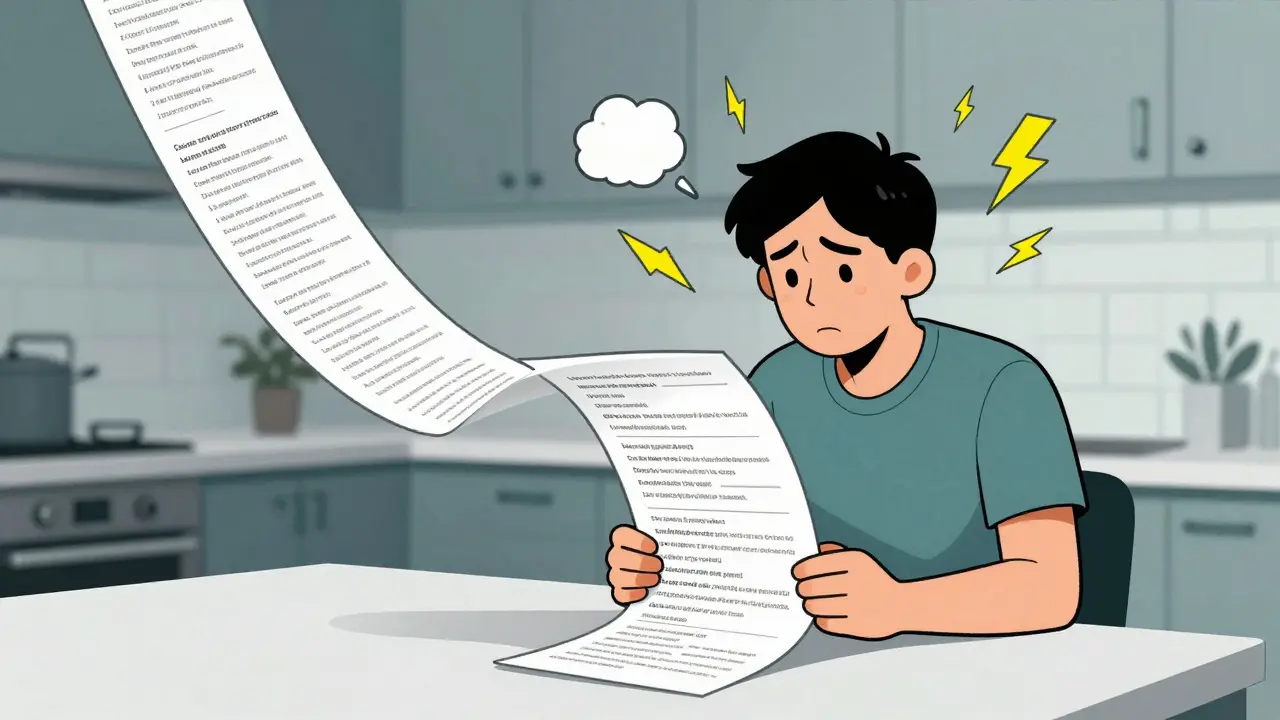
Starting a new prescription can feel like a gamble. You read the long list of possible side effects in the pamphlet, and suddenly, your mind is racing. You might start feeling a slight headache or a bit of nausea and immediately wonder, "Is this the medication? Is it getting worse?" This reaction is incredibly common, but it can create a frustrating loop: the anxiety about the drug actually creates physical symptoms that mimic the side effects you're afraid of.
The goal isn't to ignore your symptoms-because your health matters-but to change how you process the fear. By using a few managing anxiety about medication side effects techniques, you can stop the panic loop and actually give your treatment a fair chance to work. Research shows that addressing this mental hurdle can increase treatment compliance by up to 40%, meaning you're more likely to stick with a plan that actually helps you get better.
The Mind-Body Trap: Understanding the Nocebo Effect
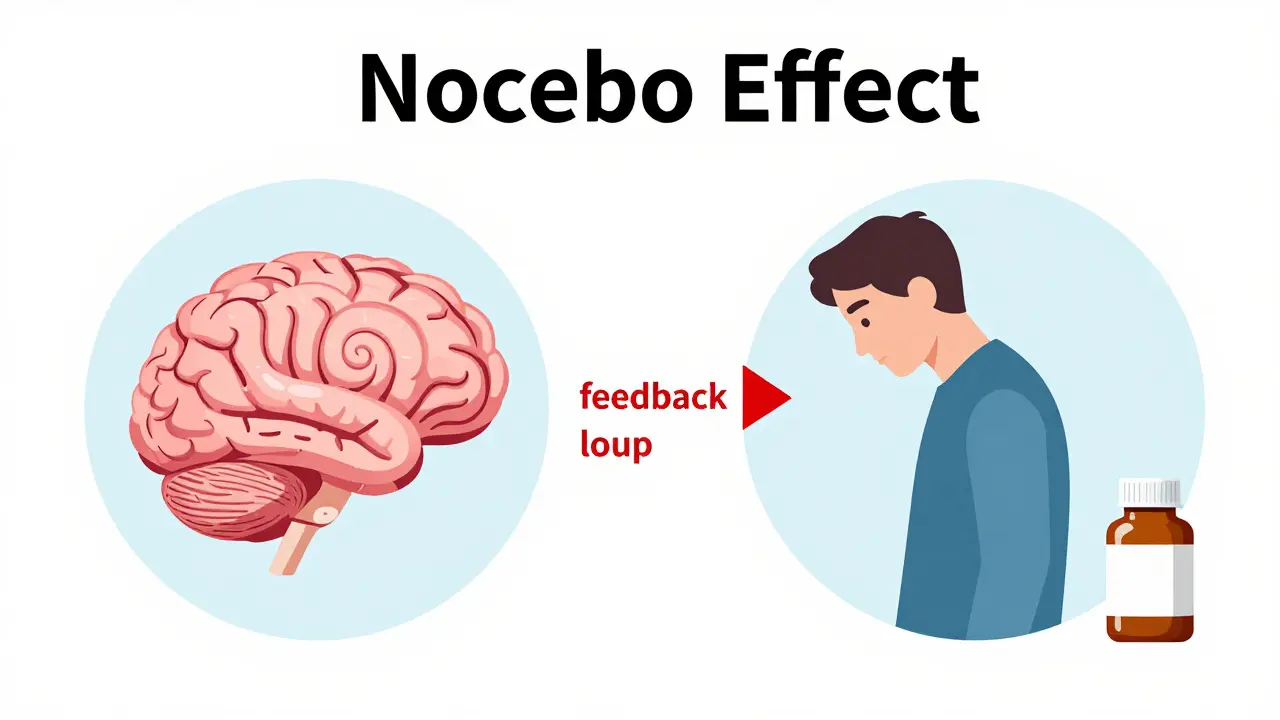
Have you ever heard of the placebo effect? The nocebo effect is its darker twin. The nocebo effect occurs when negative expectations about a treatment actually produce or amplify adverse symptoms. Essentially, if you are convinced a pill will make you dizzy, your brain can trigger a feeling of dizziness even if the chemical compound itself isn't causing it.
This isn't "all in your head" in a way that makes the pain fake; the physical sensation is real. However, the source is psychological stress rather than pharmaceutical chemistry. When you're anxious, your body enters a "fight or flight" mode, which naturally causes things like nausea, rapid heart rate, and muscle tension-the very same things listed as side effects on your medication label. Breaking this cycle requires moving from a state of alarm to a state of observation.
Rewiring Your Thoughts with Cognitive Restructuring
When we get anxious, we often engage in "catastrophic thinking." This is when a small symptom, like a dry mouth, becomes a sign that "this medication is poisoning my system." Cognitive Restructuring is a method used to challenge these irrational leaps in logic. Instead of accepting the first scary thought, you treat it as a hypothesis to be tested.
Try "probability testing." Ask yourself: "What is the actual likelihood that this specific symptom is a dangerous reaction versus a temporary adjustment?" For instance, Mayo Clinic notes that 70-80% of antidepressant side effects-like fatigue or nausea-usually clear up within two to four weeks. By reminding yourself that a symptom is temporary rather than permanent, you lower the emotional stakes.
| Approach | Estimated Efficacy | Main Benefit | Trade-off |
|---|---|---|---|
| CBT | 65-75% | High reduction in dropout rates | Requires 10-12 structured sessions |
| ACT | 60-70% | Better long-term maintenance | Focuses on acceptance over change |
| MBSR | 50-60% | Low clinical resource requirement | Moderate efficacy compared to CBT |
Practical Coping Tools for Common Symptoms
Psychological strength is great, but having a concrete plan for physical discomfort makes the mental game much easier. When you have a "tool kit" ready, you feel in control, which naturally lowers anxiety.
- For Nausea: Instead of panicking, try taking your medication with food or sipping cool water. Clinical trials show these simple shifts can reduce nausea severity by up to 65%.
- For Sleep Issues: If you're taking SSRIs (Selective Serotonin Reuptake Inhibitors) and can't sleep, ask your doctor about switching your dose to the morning. This simple change can drop insomnia rates from 35% down to 15% for many patients.
- The "Two-Week Rule": Commit to a 14-day trial period. Tell yourself, "I will not judge this medication until day 14." This removes the pressure to decide immediately if the drug is working or failing, giving your brain time to calibrate.
The Power of Psychoeducation and Timelines
Uncertainty is the fuel for anxiety. When a doctor says, "You might feel some nausea," it leaves a wide-open gap for your mind to fill with fear. "Psychoeducation" is the process of getting specific, data-driven timelines. Knowing that SSRI-induced nausea typically peaks around day 3 to 5 and resolves by day 21 changes the experience from a scary mystery to a predictable process.
If your provider doesn't give you a timeline, ask for one. Use a symptom journal to track exactly when a feeling starts and ends. You'll often find that "constant" side effects actually happen in waves, and seeing that pattern on paper helps you realize the symptoms are manageable and likely temporary.

Choosing the Right Therapy Support
If self-help isn't enough, professional support can bridge the gap. Cognitive Behavioral Therapy (CBT) is widely considered the gold standard here. It focuses on changing the thought patterns that lead to anxiety. In one meta-analysis, CBT protocols specifically targeting medication anxiety led to a 58% reduction in people quitting their treatment prematurely.
Alternatively, Acceptance and Commitment Therapy (ACT) helps you accept the presence of a bothersome symptom without letting it derail your life. Instead of fighting the nausea, you acknowledge it ("I am feeling nausea right now") and commit to your health goal regardless. This approach often has better long-term results at the six-month mark than traditional CBT.
When to Pivot: Distinguishing Anxiety from Actual Adverse Effects
While managing anxiety is key, it's equally important not to "gaslight" yourself. There is a difference between a temporary adjustment period and a genuinely problematic adverse reaction. Psychological strategies are meant to help you endure the normal onboarding process of a drug, not to mask a dangerous allergy or a severe adverse reaction.
You should contact your doctor immediately if you experience "red flag" symptoms that aren't typical adjustment issues, such as difficulty breathing, swelling of the face, or a sudden, severe rash. A good rule of thumb: if a symptom makes it impossible to function in your daily life or if it gets progressively worse after the first three weeks, it's time for a clinical review, not just a breathing exercise.
How do I know if my symptoms are side effects or just anxiety?
It can be tricky because anxiety mimics many side effects. The best way to tell is through tracking. If a symptom only appears when you're thinking about the medication or feeling stressed, it may be anxiety. If it follows a consistent physical pattern regardless of your mood, it's more likely a side effect. Always consult your doctor to confirm.
How long does it usually take for medication side effects to go away?
For many common medications, especially antidepressants, the "adjustment phase" lasts between 2 to 4 weeks. Many symptoms peak in the first 5 days and significantly fade by day 21. However, this varies by drug, so check your specific medication's timeline with your pharmacist.
What is the "Two-Week Rule"?
The Two-Week Rule is a psychological commitment to stay on a new medication for 14 days before deciding if the side effects are intolerable. This prevents impulsive discontinuation caused by the initial spike of anxiety and allows the body's chemistry to stabilize.
Can therapy actually help me stay on my medication?
Yes. CBT and ACT help you manage the emotional distress and catastrophic thinking associated with side effects. Research shows that patients using these strategies are significantly less likely to drop out of treatment compared to those who only receive medication without psychological support.
Is the nocebo effect a real physical thing?
Yes. The nocebo effect creates real physical sensations. When you expect a negative outcome, your brain can trigger the release of chemicals that cause actual physical discomfort, meaning you feel the symptoms even if the medication isn't causing them chemically.