
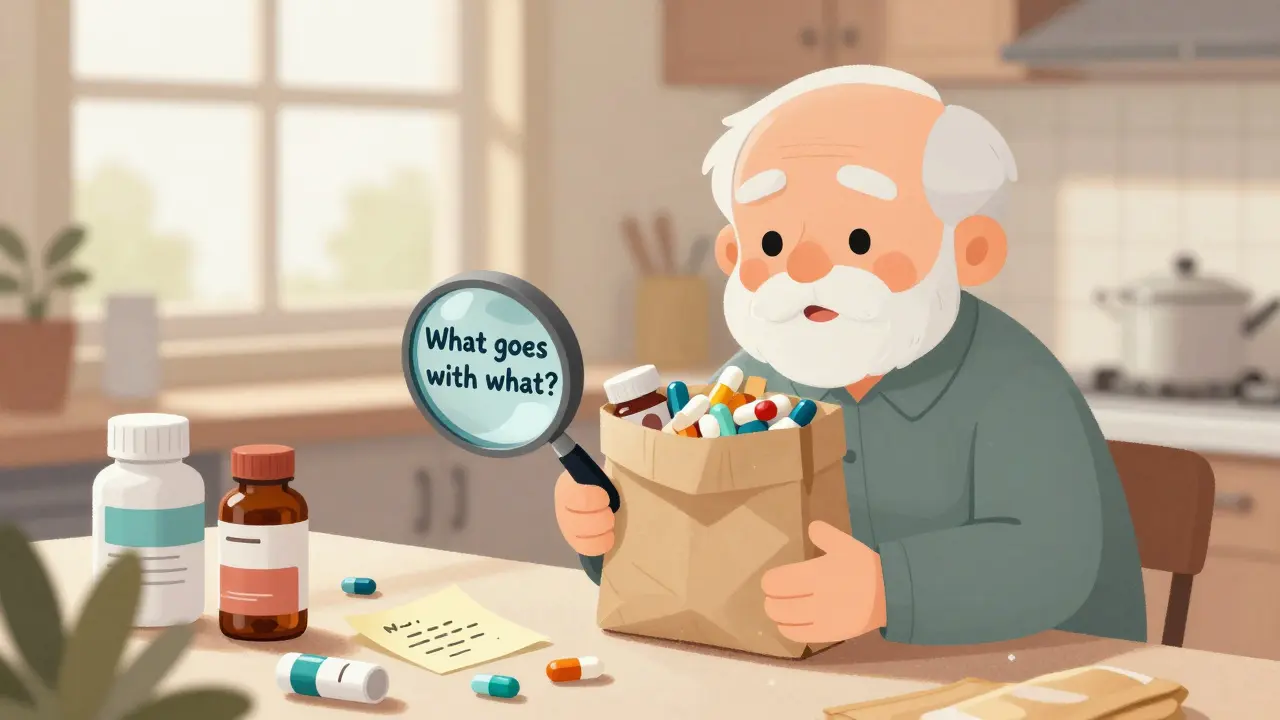
Managing multiple medications is harder than it looks. If you’re taking five or more pills a day - and nearly half of adults over 65 do - you’re not alone. But the real danger isn’t forgetting a pill. It’s taking two that shouldn’t be together. A blood thinner and an NSAID? That’s a recipe for internal bleeding. Thyroid medicine and calcium supplements? One cancels out the other. These aren’t rare mistakes. They happen every day, and they land people in the ER. The good news? You can stop them. With a clear, personalized medication schedule, you can avoid harmful interactions, reduce side effects, and actually feel better.
Start with a Complete Medication List
Before you even think about timing, you need to know exactly what you’re taking. Not just prescriptions. Not just the ones your doctor knows about. Everything. That includes over-the-counter painkillers, herbal supplements, vitamins, and even antacids. Many people don’t realize that St. John’s Wort can make antidepressants useless, or that grapefruit juice can turn a cholesterol pill into a dangerous overdose. A 2019 study found that patients who brought all their meds to appointments - in a brown bag - had an average of 3.2 discrepancies per person. That’s more than three mistakes in every single person’s list. Write down every pill, capsule, or drop. Include the dose, why you take it, and how often. Update this list every time you see a doctor, even if you think nothing changed.Use the Universal Medication Schedule (UMS) Framework
Forget vague instructions like “take twice daily” or “with meals.” Those are confusing, especially for older adults or people with low health literacy. A 2016 study showed that 34% of patients misinterpreted those kinds of directions. The solution? The Universal Medication Schedule. It breaks the day into four simple windows:- Morning (6-10 AM): Best for most daily meds, especially those that need to be taken on an empty stomach, like levothyroxine.
- Noon (10 AM-2 PM): Good for meds that work better with food, like statins or some antibiotics.
- Evening (2-6 PM): Useful for meds that cause drowsiness or need to be taken after dinner.
- Bedtime (8 PM-12 AM): Ideal for sleep aids, blood pressure meds that work overnight, or anything you want to take before bed.
Group Medications by Timing Rules
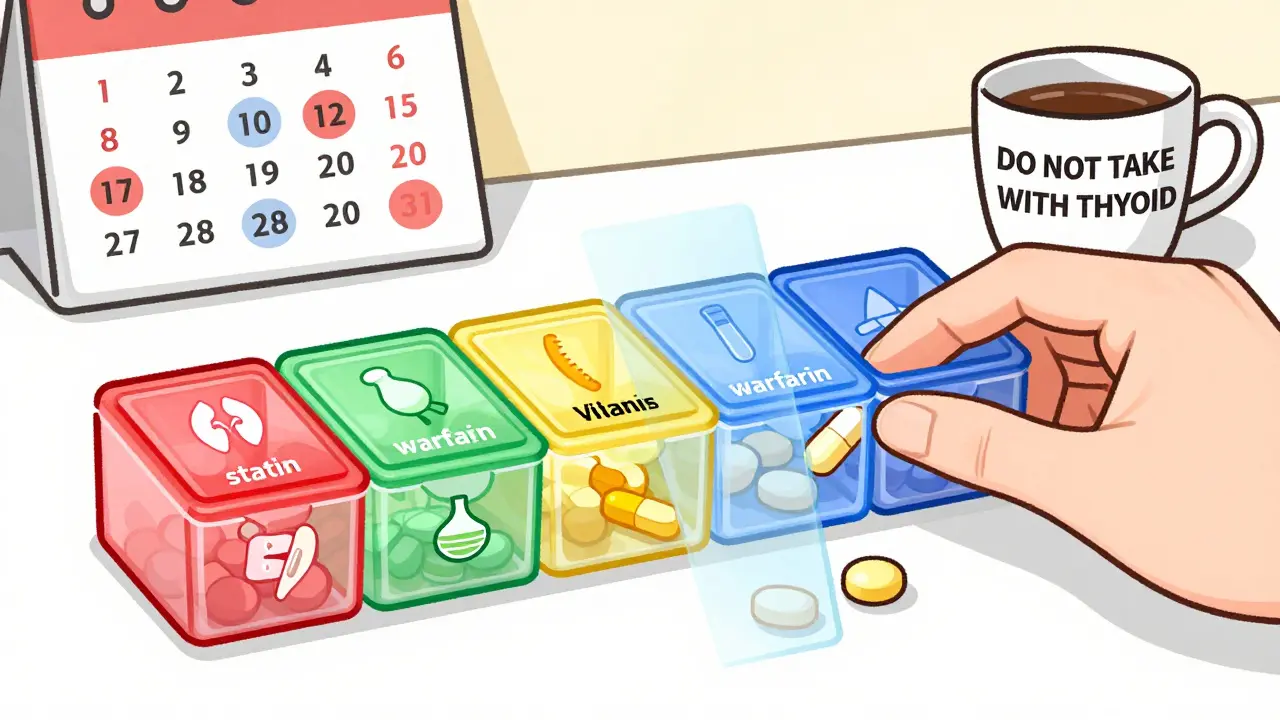
Not all pills can be taken together. Some need space. Calcium and thyroid meds? Keep them at least two hours apart. Iron and antacids? Don’t take them in the same window. Warfarin and vitamin K-rich foods? Be consistent - don’t eat a huge salad one day and none the next. Make a chart. Use a whiteboard, a printed sheet, or even a notes app. Put your meds in color-coded groups:- Red: Must be taken alone, on empty stomach (thyroid, bisphosphonates)
- Green: Can be taken with food (statins, some antibiotics)
- Yellow: Avoid with certain foods or supplements (warfarin, potassium)
- Blue: Can be grouped together safely (vitamins, blood pressure meds)
Use a Pill Organizer - But Choose the Right One
A simple pill box isn’t just convenient. It’s a safety tool. A 2018 meta-analysis found that using a pill organizer with AM/PM or 7-day compartments reduces dosing errors by 45%. But not all organizers work the same. If you take meds at four different times a day, you need a 4-compartment daily box. If you take the same meds every day, a 7-day box with morning, noon, evening, and bedtime slots is ideal. Avoid the cheap ones with tiny compartments - they’re hard to open and easy to mess up. Look for ones with clear labels, big compartments, and a locking lid. Some even have alarms. If you use a digital app like Medisafe or MyTherapy, great - but only if you actually use it. Only 38% of people over 65 stick with apps long-term. For many, a physical box with written labels is more reliable.Sync Your Refills to Avoid Chaos
Running out of one med but not another? That’s a recipe for missed doses or double-dosing. The AMA’s STEPS Forward program recommends “90 x 4”: get 90-day supplies for all your meds, and refill them all on the same day, four times a year. That means one trip to the pharmacy every three months instead of six or eight. It saves you time. It saves your doctor time. And it stops the chaos when one prescription runs out two weeks before the others. Talk to your pharmacist. Ask if your insurance allows 90-day fills. If not, ask if you can stagger refills to match up on one day each month. Consistency matters. If your blood pressure med runs out on Tuesday and your diabetes pill runs out on Friday, you’re more likely to skip one - or take the wrong one.Track Your Schedule - and Your Body’s Response
A schedule isn’t just a list. It’s a living plan. Keep a simple calendar. Every day, mark off when you took each pill. Use a paper calendar pinned to your fridge or a simple app. But don’t stop there. Pay attention to how you feel. Did you get dizzy after taking your blood pressure pill at noon? Maybe it’s better at bedtime. Did your stomach hurt after taking ibuprofen with breakfast? Try it with dinner. Write it down. Share these notes with your doctor. Your body gives you clues. If you start bruising easily, feel unusually tired, or get stomach pain out of nowhere - it could be an interaction. Don’t ignore it. These symptoms aren’t “just aging.” They’re signals.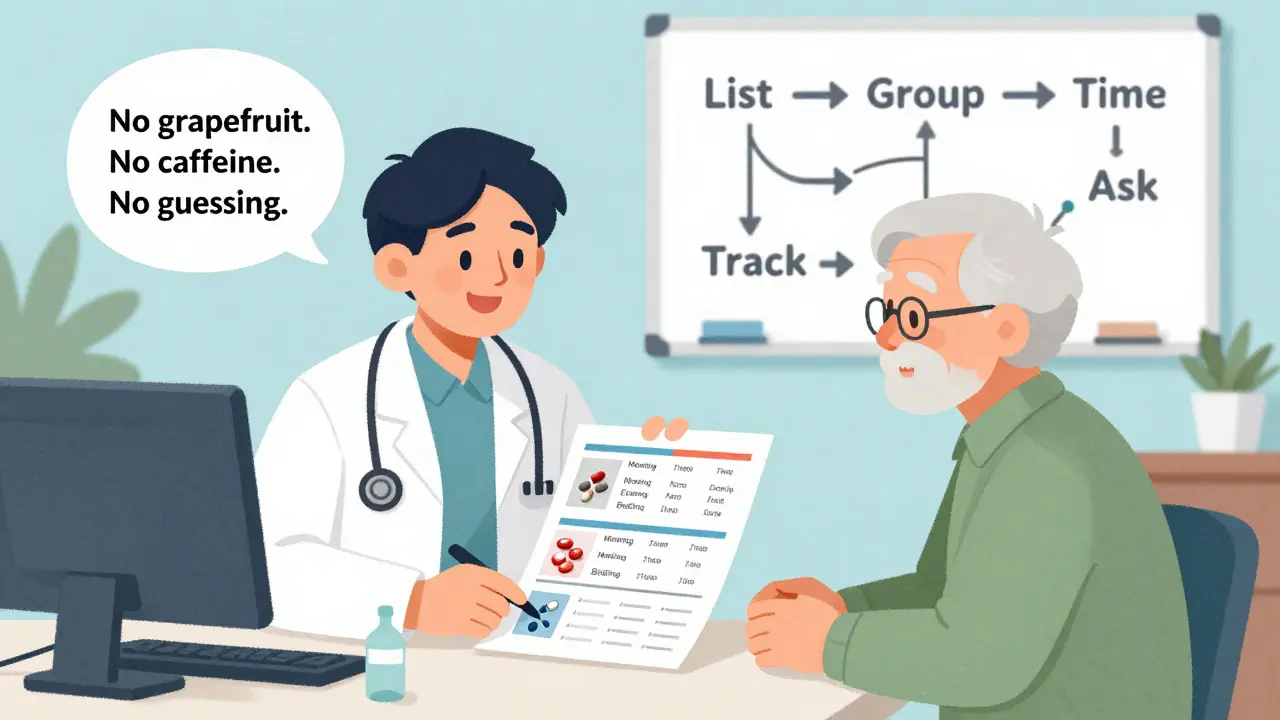
Get Help - You Don’t Have to Do This Alone
You don’t need to be a pharmacist to manage your meds. But you should talk to one. Many pharmacies offer free medication reviews. Bring your brown bag. Ask: “Are these safe together? Is there a simpler way?” Clinical pharmacists can cut drug interactions by 32% and reduce ER visits by 24%. If you see multiple doctors, ask for a medication reconciliation at every visit. The Joint Commission requires it during hospital discharges - but you should ask for it even if you’re just seeing a specialist. And if you’re overwhelmed, ask a family member to help. One caregiver on AgingCare.com spent three months working out a schedule for her mother’s nine medications. It took time. But now, her mom hasn’t had a single adverse reaction in over a year.What to Avoid
Here are the most common mistakes people make:- Assuming “natural” means safe - supplements like garlic, ginkgo, or ginseng can thin your blood just like aspirin.
- Skipping a dose to “catch up” - never double up unless your doctor says so.
- Using the same pill box for different regimens - if you have two different schedules, use two boxes.
- Ignoring food instructions - levothyroxine taken with coffee or calcium? It won’t work.
- Waiting until you feel bad to check your meds - prevention beats reaction every time.
What Works - Real Stories
One man in Ohio took 12 medications. He was dizzy every morning. He thought it was aging. He started using a color-coded pill box with UMS timing. He separated his thyroid med from his calcium. He synced his refills. Within two weeks, the dizziness stopped. He hadn’t realized the calcium was blocking his thyroid med. Another woman in Florida had trouble remembering whether to take her blood thinner before or after breakfast. She started using a printed chart with photos of each pill and exact times. She hasn’t missed a dose in 18 months. These aren’t miracles. They’re systems.Medication safety isn’t about being perfect. It’s about being organized. It’s about asking questions. It’s about using tools that work for you - whether that’s a paper calendar, a pill box, or a simple app. The goal isn’t to remember everything. It’s to make it impossible to get it wrong.
How do I know if my medications are interacting?
Common signs include sudden dizziness, unusual bruising or bleeding, stomach pain, confusion, or extreme fatigue. If you notice new symptoms after starting or changing a medication, check your list. Use a drug interaction checker like Lexicomp or ask your pharmacist. Don’t wait for a crisis - early detection saves lives.
Can I take my medications with coffee or alcohol?
Coffee can block absorption of thyroid medication and some antibiotics. Alcohol can intensify drowsiness from painkillers, sleep aids, and antidepressants. It can also raise blood pressure or cause dangerous drops in blood sugar. Always check the label or ask your pharmacist. When in doubt, take meds with water.
What if my doctors give me different instructions?
This happens often - especially if you see multiple specialists. Never guess. Bring your complete medication list to your primary care doctor. Ask them to reconcile the instructions. Your pharmacist can also help sort out conflicting advice. Consistency is key. One clear schedule beats four different ones.
Are digital apps better than paper calendars?
Apps like Medisafe or MyTherapy work well for tech-savvy users and offer reminders. But for people over 65 or with limited tech access, paper calendars and pill boxes are more reliable. A 2021 study found only 38% of seniors consistently use apps. Choose what you’ll actually use every day - not what’s trendy.
How often should I review my medication schedule?
Review it every time you see a doctor, even for a cold. Also review it after any hospital visit, ER trip, or change in health. Your body changes. Your meds might need to change too. Don’t wait for a problem - update your list proactively.


Comments
OMG this is so true. I had my grandma on 11 meds and she was falling over every morning until we figured out her thyroid pill was getting blocked by her calcium. Now she’s up and gardening like it’s 1998. Why do doctors just hand you a list and say ‘good luck’? 🤦♀️
thank you for this!! i’m helping my dad manage his meds and honestly i had no idea about the UMS thing. i was just telling him ‘take it with food’ and he was confused as hell. now i printed out the color chart and stuck it on the fridge. he even started remembering the times himself 😭
YESSSS this is the kind of post that makes me believe in humanity again 💖💖💖 I literally cried when I read the part about the Ohio man and his dizziness. Also, if you’re still using that cheap pill organizer from Walmart, please stop. You’re not saving money-you’re risking your life. Get the one with the alarm. I swear by mine. 🙏💊
The Universal Medication Schedule is evidence-based and empirically validated. The 34% misinterpretation rate for vague instructions versus 6% with UMS is statistically significant (p<0.001). Implementation requires patient education, but the ROI in reduced ER visits is undeniable. Recommend integrating this into primary care workflows.
I’ve been a pharmacist for 18 years and this is the most accurate summary I’ve seen in a long time. The brown bag method? Still the gold standard. I wish more patients brought their meds in. Most just say, ‘I think I take that one in the morning.’ No, you don’t. You take it with food. And no, grapefruit juice is not a substitute for water.
This is incredibly well-structured. I work with elderly patients in Delhi and often see them confused between ‘take before food’ and ‘take after food.’ The color-coded system you described is brilliant-simple, visual, and culturally adaptable. I’ve already shared this with my team. Thank you for making complex information accessible.
my uncle took 12 pills and he was always tired. we found out his blood pressure med was clashing with his vit d. now he only takes it at night and he’s like a new person. but man, the pharmacy guy was the real MVP here. he’s like a superhero with a clipboard.
Wow. A 1500-word essay on how to read a pill bottle. Groundbreaking. I’m sure the FDA will issue a press release. Next up: ‘How to Use a Spoon.’
Let me guess-this post was written by someone who’s never met a real elderly person. You think a color-coded chart fixes the fact that 70% of seniors can’t read their own prescriptions? That they’re on 12 meds because their doctors are profit-driven idiots? That their pharmacy charges $400 for a 30-day supply? This isn’t ‘organization.’ It’s victim-blaming with emojis. 🤡
And yet… people still take ibuprofen with warfarin. And still drink grapefruit juice. And still trust ‘natural’ supplements because Instagram told them it’s ‘cleansing.’ If you’re not willing to do the work, don’t blame the system. You’re not special. You’re not ‘too busy.’ You’re just lazy. And now you’re a statistic. 💔