
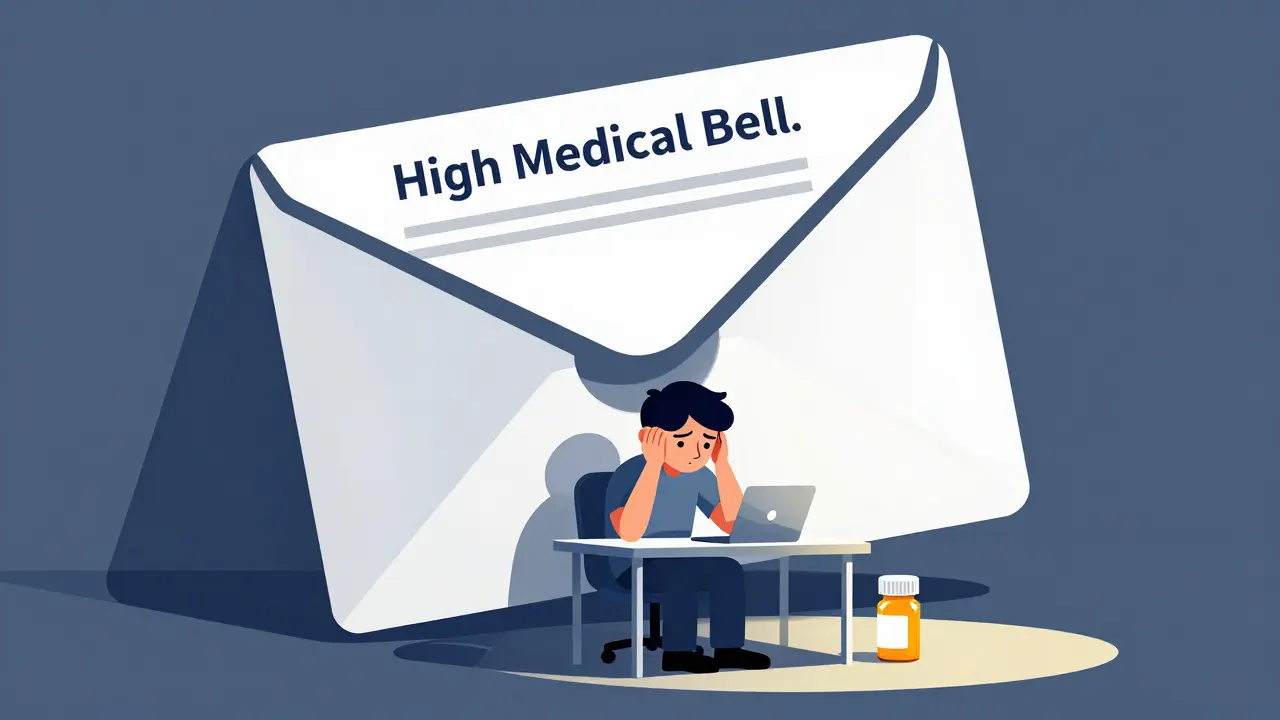
You open the mail, and there it is. A bill for $14,000 for a month's supply of medication. There is no cheaper version. No generic alternative. Just a brand-name drug that keeps you alive or stable, and a price tag that threatens your entire financial future. This isn't a nightmare scenario for many people living with chronic conditions today. When patent protections keep generics off the market, the cost of treatment can skyrocket, leaving patients with a stark choice: pay or risk their health.
Fortunately, there is a safety net designed exactly for this situation. Patient Assistance Programs are structured financial support mechanisms provided by pharmaceutical companies and nonprofit organizations to help patients access expensive brand-name medications when no generic alternatives exist. These programs can reduce your out-of-pocket costs to zero, but navigating them requires knowing the right steps and avoiding common traps that leave patients paying full price anyway.
Understanding the Role of Patient Assistance Programs
When a drug patent expires, generic versions usually enter the market, driving prices down by 80% to 90%. However, for many specialty drugs used to treat rare diseases, cancer, or complex autoimmune conditions, no generic exists. In these cases, the brand-name manufacturer holds a monopoly on the supply. Without intervention, these drugs often cost thousands of dollars per month.
Pharmaceutical Manufacturers are companies that research, develop, and produce prescription medications, often sponsoring Patient Assistance Programs to ensure access to their brand-name drugs. According to industry data, approximately 1,500 of these programs exist. About 85% are sponsored directly by the drug makers themselves. They offer this assistance for a few reasons: compliance with government expectations, ethical commitments to patient access, and sometimes to maintain market share when prices are high.
The core value here is reducing "financial toxicity." This is a medical term describing the physical and psychological burden of high treatment costs. Studies show that patients who utilize these programs for brand-name cancer drugs have significantly lower rates of skipping doses due to cost. For uninsured patients, these programs are often the only way to get the medication at all. For those with insurance, they can bridge the gap between what insurance covers and the total list price.
Determining Your Eligibility for Assistance
Not everyone qualifies for every program. Manufacturers set strict rules to ensure the aid goes to those who need it most. The most common barrier is income. Most programs use the Federal Poverty Level is a set of income thresholds used by the U.S. government to determine eligibility for various federal programs and benefits. (FPL) as a benchmark.
Typically, you need to earn below 400% of the Federal Poverty Level to qualify. In 2026, this means an individual earning up to $60,000 annually might still be eligible, though many programs have lower caps, often around 200% to 300%. You will need proof of income, such as a W-2 form, tax return, or recent pay stubs. If you are self-employed, you may need to provide a profit and loss statement.
Insurance status is the second major factor. These programs are most aggressive in helping the uninsured. If you have no insurance at all, your chances of getting full coverage (100% of the drug cost) are highest. If you have commercial insurance, you might qualify for copay assistance, but this is where it gets complicated. If you are on Medicare, the rules are different and stricter due to federal laws.
Step-by-Step Application Process
Applying for assistance isn't as simple as clicking a "buy now" button. It is a documentation-heavy process that requires patience. Here is how you navigate it effectively:
- Identify the Specific Program: Don't just search for "drug help." Go to the manufacturer's website for the specific brand name you are taking. Look for a link labeled "Patient Support," "Assistance," or "Savings Program."
- Check Eligibility Online: Many manufacturers use tools like RxHope is a free online tool that helps patients find patient assistance programs and financial support for prescription medications. to screen applications. These tools cover over 90% of manufacturer programs and can tell you instantly if you qualify based on your income and insurance status.
- Gather Documentation: Most applications require three main documents: proof of income, proof of prescription (from your doctor), and proof of insurance status (or a statement that you are uninsured). Your doctor will also need to sign a medical attestation form confirming the diagnosis and the necessity of the brand-name drug.
- Submit and Wait: Once submitted, manufacturer-sponsored programs typically take 7 to 10 business days to process. Nonprofit foundations might take longer, around 14 to 21 days. You will receive a confirmation letter or a card to present at the pharmacy.
Do not stop taking your medication while waiting. If you run out, ask your doctor for a short bridge supply or check if your pharmacy can hold the prescription pending approval. Some programs offer "fast-track" approval for patients who are out of medication.
The Insurance Trap: Accumulator Programs
If you have commercial insurance through an employer, there is a major pitfall you must understand. Many Pharmacy Benefit Managers are companies that administer prescription drug benefits on behalf of health insurance plans, often managing formularies and negotiating drug prices. (PBMs) use "accumulator adjustment" programs. This is a policy where the money the PAP pays for your drug does not count toward your deductible or out-of-pocket maximum.
Here is why this matters: You might get the drug for $0 today thanks to the PAP. But your insurance company says, "You haven't paid anything yet." So, at the end of the year, you still have to pay your full $5,000 deductible before insurance kicks in for anything else. In some cases, patients have found themselves paying thousands out-of-pocket despite having approved assistance because the PBM blocked the credit.
Before you apply, check your plan documents for "accumulator" or "maximizer" language. If your plan has this, a manufacturer copay card might not be worth it. In these cases, a nonprofit foundation PAP is often better because they sometimes pay directly to the pharmacy in a way that avoids these specific PBM restrictions, though this varies by plan.
Medicare Restrictions and the Inflation Reduction Act
If you are on Medicare Part D is the federal health insurance program that provides outpatient prescription drug coverage for Medicare beneficiaries., the landscape changed significantly in 2025. The Inflation Reduction Act prohibits Medicare beneficiaries from using manufacturer copay assistance for Part D medications. This means the standard coupons and savings cards from drug companies are no longer valid for you.
This rule was implemented to prevent manufacturers from artificially inflating list prices and then using copay cards to mask the true cost from seniors. So, if you are on Medicare, you cannot use the standard manufacturer PAP for cost-sharing. Your options are limited to nonprofit foundation programs that are not tied to the manufacturer's direct copay assistance structure. Organizations like the National Organization for Rare Disorders is a nonprofit organization that advocates for patients with rare diseases and manages assistance programs for specific conditions. (NORD) or the Patient Access Network Foundation (PAN) are critical resources here. They operate outside the manufacturer's direct copay system and can provide grants to help cover costs.
Comparing Assistance Options
Not all financial help is created equal. When no generic exists, you need to weigh your options carefully. A simple comparison helps clarify where you should focus your energy.
| Feature | Patient Assistance Programs (PAP) | Pharmacy Discount Cards (e.g., GoodRx) | State Pharmaceutical Assistance |
|---|---|---|---|
| Best For | Uninsured or high-cost brand drugs | Insured patients needing generics | Elderly or low-income residents |
| Cost Reduction | Up to 100% for eligible patients | Typically 10-50% off retail | Varies by state (often capped) |
| Application Time | 7-21 days | Instant | 30-60 days |
| Income Requirements | Yes (Strict) | No | Yes (Varies) |
| Medicare Compatible | Foundation PAPs only | Yes | Yes (State Specific) |
Discount cards like GoodRx is a digital platform that provides prescription drug coupons and price comparisons for consumers at pharmacies. are great for quick savings on generic drugs. However, for a brand-name drug without a generic, they often offer minimal discounts-sometimes less than 10%. If your drug costs $10,000, a 10% discount saves you $1,000, which is helpful but not life-changing compared to a PAP that could cover the full amount.
State programs can be a good backup. Some states have Pharmaceutical Assistance Programs for the elderly or disabled. However, these often have caps. For example, a state program might only pay $400 per month, leaving you responsible for the remaining $9,600 of a $10,000 drug bill. Manufacturer PAPs are generally more generous for high-cost specialty medications.
Tools and Resources to Find Programs
Searching for help shouldn't be a scavenger hunt. Several organizations aggregate these programs to make the process easier.
- RxHope: A free online screener that connects patients with manufacturer programs. It is widely used by pharmacists and social workers.
- NeedyMeds: A nonprofit that lists thousands of assistance programs, including disease-specific foundations.
- Patient Advocate Foundation: They offer case management and can help you navigate appeals if an application is denied.
- Disease-Specific Foundations: Look for organizations dedicated to your specific condition. For example, the American Cancer Society or the Arthritis Foundation often have grant programs.
Your healthcare provider's office is also a resource. Many hospitals now employ "medication access specialists" or social workers whose job is to handle these applications for you. If you have a complex condition, ask your doctor's office if they have a navigator who can submit the paperwork on your behalf. This can save you hours of work and reduce the chance of errors that lead to denial.
What to Do If You Are Denied
Rejection happens. About 40% of initial applications might face issues due to missing documents or income thresholds. If you are denied, do not give up. First, read the denial letter carefully. It usually states the specific reason. If it is a missing document, you can resubmit immediately.
If you are denied due to income, look for foundation grants instead of manufacturer programs. Foundations often have different criteria and may accept higher income levels or offer one-time grants. You can also ask your doctor to write a letter of medical necessity. Sometimes, if a doctor explains that the brand-name drug is the only one that works for your specific case, the program may make an exception.
Finally, consider the "cash price." Sometimes, the price you pay without insurance is lower than the negotiated rate your insurance uses. If you can't get a PAP, ask the pharmacy for the cash price. You might be able to use a discount card on that cash price to get a better deal than your insurance copay.
Can I use a Patient Assistance Program if I have insurance?
Yes, but it depends on your insurance type. If you have commercial insurance, you can use manufacturer copay cards, but be aware of "accumulator" programs that prevent these payments from counting toward your deductible. If you have Medicare, you generally cannot use manufacturer copay assistance due to federal law, but you may qualify for nonprofit foundation grants.
How long does it take to get approved for a PAP?
Processing times vary by program. Manufacturer-sponsored programs typically take 7 to 10 business days for initial approval. Nonprofit foundation programs may take longer, often 14 to 21 days, due to additional verification steps required for grant funding.
What documents do I need to apply?
Most programs require proof of income (W-2, tax return, or pay stubs), a prescription from your doctor on letterhead, and proof of insurance status. Some may also require a physician attestation form confirming the medical necessity of the brand-name medication.
Are Patient Assistance Programs free?
Yes, applying for and receiving assistance through a Patient Assistance Program is free. There is no cost to the patient to submit an application or to receive the medication if approved. Be wary of third-party services that charge fees to help you apply.
What if I run out of medication while waiting for approval?
Do not stop your medication. Contact your doctor immediately to see if they can provide a short bridge supply. Some programs offer "fast-track" approval for patients who are out of medication. You can also check with your pharmacy to see if they can hold the prescription pending approval.
Comments
this is why america is great we have systems to help people unlike other countries 😡😡😡 just fill out the forms and get your meds dont let the system beat you 🇺🇸🇺🇸
sure just fill out the paperwork and wait two weeks while you die lol
lol right but at least they try sometimes the insurance companies are the real villains here not the drug makers 🙄
I appreciate this detailed breakdown. It is important to know about the accumulator programs because many people overlook that part.
thank you for sharing that info it really helps to know what to look out for :) peace and health to all
most of this is just a waste of time honestly
You guys really need to check out RxHope it can save so much stress 🙏💊 keep fighting for your health everyone
Thank you so much for that tip about RxHope! I have been looking for a way to simplify the process because it is so overwhelming! When I first started dealing with my own prescriptions I felt completely lost in the system! The paperwork alone is enough to make anyone cry! I remember spending hours on the phone just trying to get the right form! It is so important to have resources like this available to us! We should all support each other when we face these challenges! Health is wealth and we cannot afford to lose it! I hope everyone finds the help they need very soon! Please share this post with anyone who might be struggling! We are in this together and we can overcome these obstacles! Keep your heads up and stay strong through the process! It really does make a difference when you know where to look! You are not alone in this journey at all! Sending love and good vibes to everyone reading this!
health is a commodity now and that is a sad truth we must accept :/ money dictates life span
watch out for scams people claiming they can help for a fee its illegal and a trap
yeah dont pay anyone just go direct
they want you to think its help but its just data collection!!! they track every application!!!
I found the National Organization for Rare Disorders really helpful when I needed info for a friend.
this system works if you follow the rules but the government makes it harder than it needs to be for us patriots
I understand your frustration but we must work within the system to help those in need right now.