
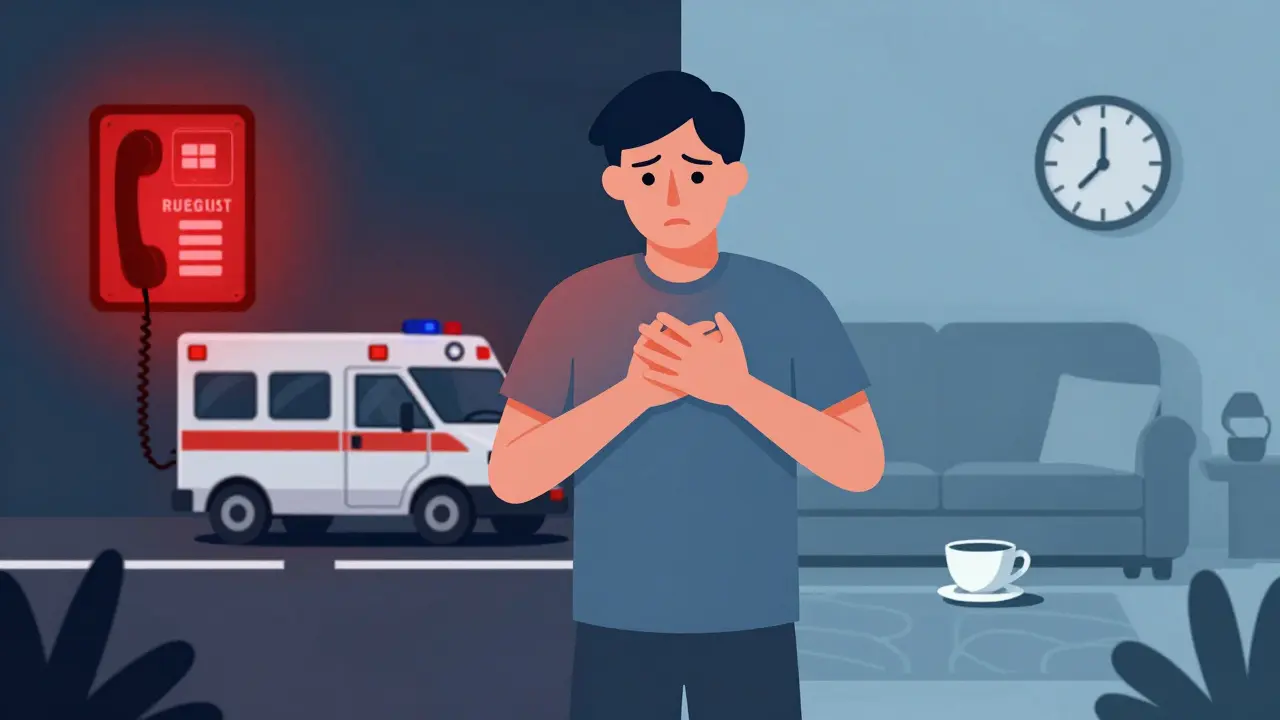
Feeling a sudden tightness in your chest or a strange pressure in your jaw can be terrifying. The biggest challenge in these moments isn't just the pain-it's the uncertainty. Should you call 911, drive yourself to the clinic, or just wait an hour to see if it passes? Making the wrong choice can be dangerous, but over-testing can lead to unnecessary stress and hospital bills. The goal here is to help you distinguish between a "wait and see" situation and a medical emergency that requires immediate action.
| Symptom/Sign | Urgency Level | Recommended Action |
|---|---|---|
| Crushing chest pain, cold sweats, shortness of breath | Critical | Call 911 immediately |
| Pain radiating to jaw, neck, or left arm | High | Emergency Department (ED) |
| Mild discomfort, predictable patterns, no shortness of breath | Moderate | Contact Primary Physician |
| Sharp pain that changes with breathing or position | Variable | Urgent Care or Physician |
Understanding Chest Pain Beyond the "Squeeze"
Most people imagine a heart attack as a sudden, crushing weight on the chest. While that happens, chest pain evaluation is a clinical process used to determine if chest discomfort is caused by a life-threatening event or something benign. It is important to realize that "chest pain" isn't always pain. It can feel like pressure, tightness, or a vague discomfort.
You should also watch for what doctors call "anginal equivalents." These are symptoms that act like chest pain even if your chest doesn't actually hurt. This includes sudden, unexplained fatigue or an intense shortness of breath. For some people, especially women and those with diabetes, a heart event might show up as pain in the shoulders, arms, neck, back, upper abdomen, or even the jaw. If you feel these symptoms alongside a sense of doom or sudden weakness, your body is sending a signal that something is wrong.
Red Flags That Demand an Immediate ED Visit
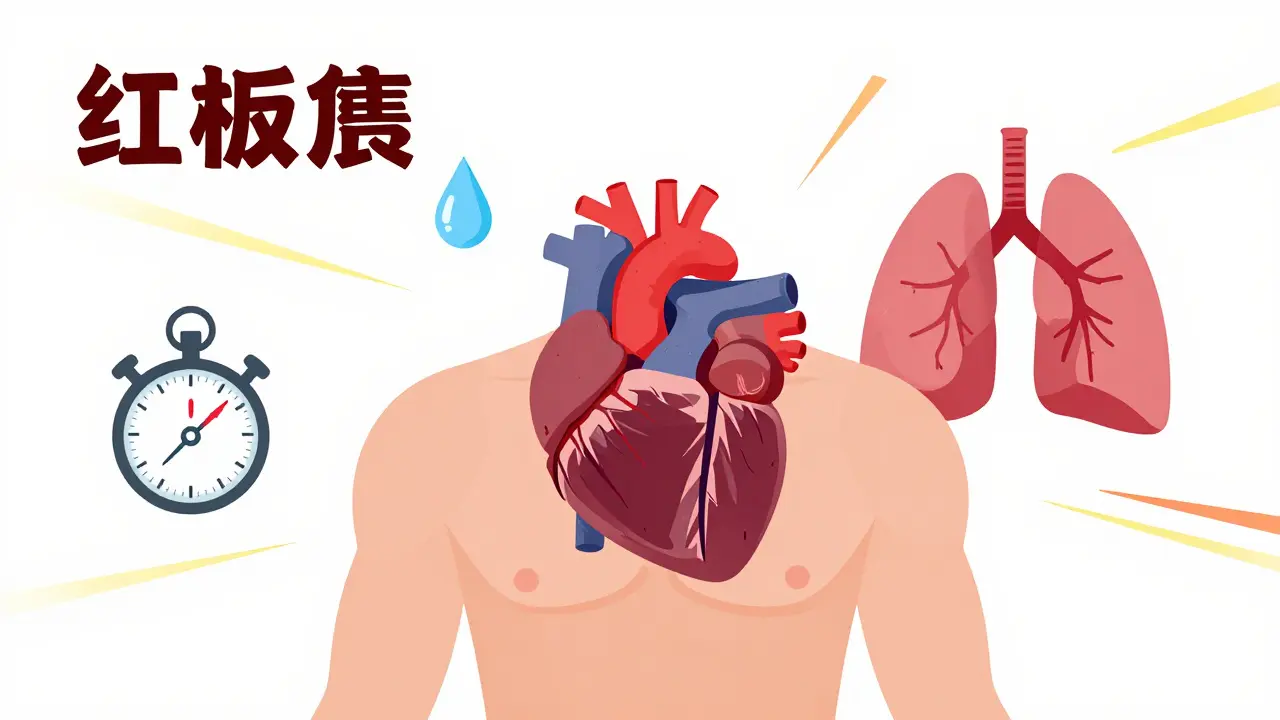
There are specific "red flags" that move a situation from a scheduled appointment to an emergency. If you experience any of the following, stop reading and call emergency services. Medical guidelines from the American Heart Association a leading organization focused on cardiovascular health and stroke prevention emphasize that these signs indicate a high risk of instability.
- Diaphoresis: This is the medical term for breaking out in a cold, clammy sweat without a clear reason (like exercise).
- Tachypnea and Tachycardia: If you are breathing more than 20 times per minute or your heart is racing over 100 beats per minute while resting.
- Hypotension: A sudden drop in blood pressure (systolic below 90 mmHg) often leads to dizziness or fainting.
- Respiratory Distress: Hearing "crackles" in the lungs or feeling like you are suffocating.
Why call 911 instead of driving yourself? Statistics show that people who drive themselves to the hospital have a 25-30% higher risk of adverse events compared to those who use EMS. Paramedics can start the evaluation the moment they arrive, often performing an ECG in your living room, which saves precious minutes of heart muscle.
What Happens When You Arrive at the Hospital?
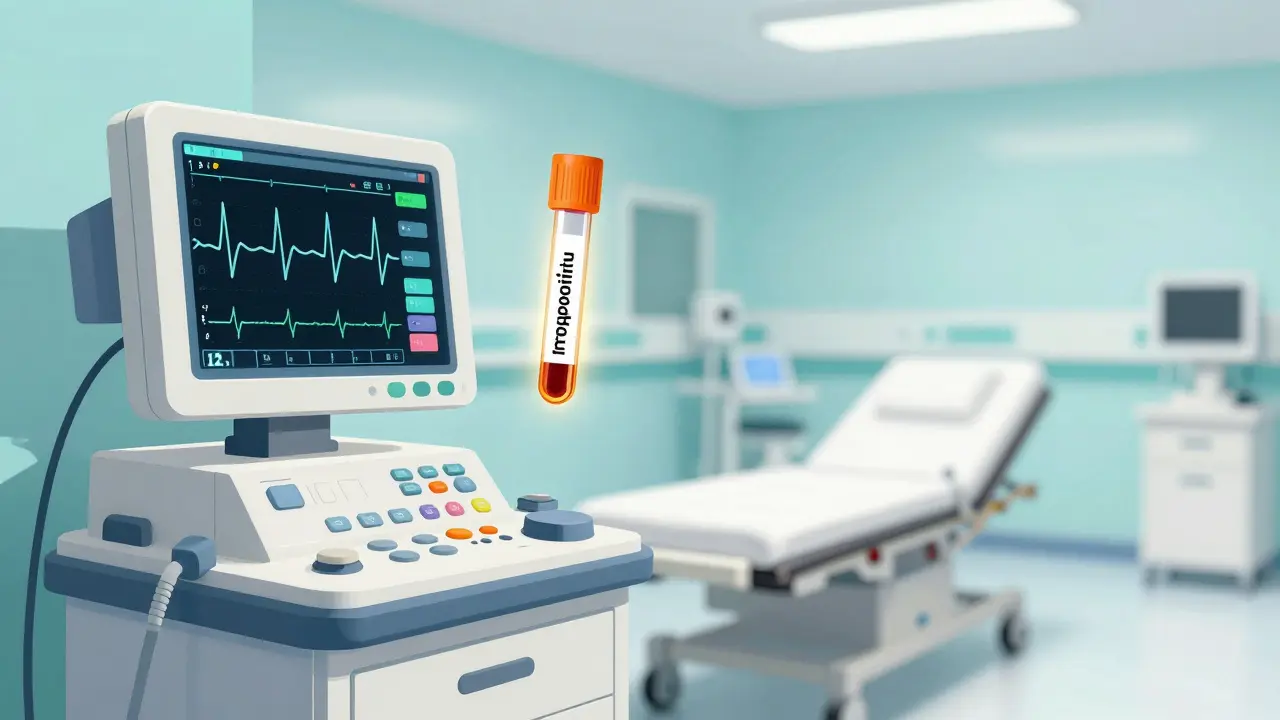
Once you hit the doors of the Emergency Department, the clock starts. The gold standard for care is to get a 12-lead Electrocardiogram a medical test that records the electrical activity of the heart to detect abnormal rhythms or signs of a heart attack (ECG) and have it interpreted within 10 minutes. This rapid test helps doctors identify if you are having a STEMI (ST-elevation myocardial infarction), which is a complete blockage of a coronary artery requiring immediate surgical intervention.
Next, the team will look at your bloodwork, specifically searching for Cardiac Troponin proteins released into the bloodstream when heart muscle cells are damaged . Modern hospitals use high-sensitivity assays that can rule out a heart attack in 70-80% of patients within just one to two hours. If your troponin levels are normal and your ECG is clear, the risk of a major cardiac event is significantly lower.
Sorting the Risk: High, Intermediate, and Low
Doctors don't treat all chest pain the same. They use risk stratification tools-like the HEART score-to decide your next move. This score looks at your History, ECG, Age, Risk factors, and Troponin levels.
High-Risk Patients: These individuals show clear signs of Acute Coronary Syndrome a range of conditions associated with sudden reduced blood flow to the heart, including unstable angina and myocardial infarction (ACS). They usually go straight to a cardiac catheterization lab for coronary angiography to open blocked arteries. The goal for these patients is a "door-to-balloon" time of less than 90 minutes.
Intermediate-Risk Patients: These patients are the "grey area." They may not have a STEMI, but they have risk factors. The doctor might order a Coronary CT Angiography a non-invasive imaging test that uses X-rays and contrast dye to see the coronary arteries (CCTA). CCTA is incredibly accurate (95-99% sensitivity) for finding blockages. If a patient has kidney issues or an allergy to the dye, a traditional stress test is used instead.
Low-Risk Patients: If the HEART score is low (0-3) and the initial tests are clean, you can usually be safely discharged with a plan to follow up with a cardiologist. This prevents unnecessary hospital stays while keeping you safe.
When the Heart Isn't the Problem
It is a bit of a relief to find out your heart is fine, but chest pain can be a mask for other emergencies. For instance, a pulmonary embolism (a blood clot in the lung) often presents with sharp, "pleuritic" pain-pain that gets worse when you take a deep breath. You might also notice swelling in one leg or a sudden onset of tachycardia.
There is also a condition called INOCA (Ischemia with Non-Obstructive Coronary Arteries). This affects about 5-10% of patients. In these cases, the large arteries look clear on a scan, but the smaller vessels aren't delivering enough blood. This is why some people still feel chest pain even after a "clear" angiogram. It requires a more specialized evaluation and shouldn't be ignored just because the first test was negative.
Can I just drive myself to the ER if I have chest pain?
It is strongly discouraged. Calling 911 is the safest option because paramedics can begin diagnostic tests like an ECG and provide oxygen or medication immediately. Driving yourself increases the risk of a crash if you lose consciousness and delays the start of life-saving treatment by 20-30 minutes on average.
What is a "normal" ECG?
A normal ECG shows a regular electrical rhythm without ST-segment elevation or depression, which are the primary markers for an active heart attack. However, some heart issues don't show up on a resting ECG, which is why doctors use serial ECGs and troponin blood tests to get a full picture.
How long does the heart attack rule-out process take?
With high-sensitivity troponin tests and rapid clinical decision pathways, many hospitals can rule out a myocardial infarction within 1 to 2 hours. However, some patients may need to stay for 3-6 hours for repeat blood tests to ensure the troponin levels aren't rising.
What if my pain goes away before I get to the hospital?
You should still seek evaluation. Pain that comes and goes (unstable angina) is often a warning sign that a major heart attack is imminent. The fact that the pain stopped doesn't mean the underlying blockage has disappeared.
Is a stress test better than a CT scan for chest pain?
Generally, no. Coronary CT Angiography (CCTA) has a higher sensitivity (up to 99%) for detecting obstructive disease. Stress tests are still useful for seeing how the heart functions under load or for patients who cannot tolerate the contrast dye used in CT scans.
Next Steps for Your Heart Health
If you have had a "false alarm" at the ED, don't just go home and forget about it. Use that experience as a catalyst to establish a baseline with a cardiologist. If you have a family history of heart disease, ask about a calcium score or a baseline stress test.
For those managing chronic conditions like hypertension or high cholesterol, keep a symptom diary. Note exactly what you were doing when the pain started-were you walking up stairs or stressed at work? This specific data helps your doctor differentiate between stable angina (which is predictable) and unstable patterns that require more aggressive treatment.
Comments
As a nurse, I can't stress enough how common it is for women to describe a 'heart attack' as just feeling really tired or having some weird indigestion. Most people wait too long because they don't fit the 'crushing chest pain' stereotype mentioned in the guides. If you've got that vague feeling of doom or you're suddenly wiped out for no reason, just go in. It's way better to be told it's just acid reflux than to ignore a major blockage.
This really makes you think about how fragile we are and how a tiny blockage can change everything in a second 🌟 Truly grateful for the paramedics who risk it all to get to us quickly! ❤️✨
The prose is dreadfully pedestrian and the simplification of the HEART score is borderline offensive to any moderately educated medical professional. One finds the lack of nuance regarding the specific modalities of troponin assays quite disappointing. It is utterly banal to suggest that a layman can discern 'pleuritic' pain without a clinical history. This entire summary is an exercise in mediocrity.
wow this is some top notch info. my uncle had a wild trip where he thought he had a bad burrito but actually his ticker was just glitching out big time. glad to see the real deal on the 911 stuff because drivin yourself is basically a gamble with a rigged deck lol. stay safe out there folks
Your body knows when it is sick. All these tests and scores are just ways for doctors to feel in control. If you feel a block in your energy, it is usually because you are not listening to your soul. Modern medicine just treats the symptom, not the spirit. Just breathe and be still.
It is a profound realization that the intersection of technology and human fragility allows us to identify a STEMI within minutes of arrival. One must appreciate the balance between the urgency of clinical intervention and the necessity of a thorough diagnostic process. I believe we should all approach these medical guidelines with a sense of humility and caution.
I had a similar thing happen to my neighbor's cousin three years ago and he actually tried to drive himself and ended up hitting a mailbox before the ambulance arrived. He's 64 now and still has a limp from the crash, not the heart issue.
The point about the 911 timing is very valid. Most peopel dont realize how much time is lost in the triage process at the hospital compared to the pre-hospital care provided by EMS.
It is truly a journey of resilience when someone faces a health crisis like this, and I want to encourage everyone reading this to remember that it is completely normal to feel anxious after a scare. Please be gentle with yourselves and your loved ones as you navigate the follow-up appointments, because the emotional toll of a 'false alarm' can be just as taxing as the physical symptoms themselves, and taking a slow, steady approach to your heart health is a wonderful way to reclaim your peace of mind over time.
While I appreciate the effort to synthesize this data for the masses, I find it absolutely infuriating that the healthcare system is designed such that a person must risk a catastrophic event just to determine if they need a basic CT scan, and frankly, the inefficiency of the current emergency room triage system in this country is a disgrace that borders on criminal negligence when you consider the systemic barriers people face just to get a simple ECG done in a timely manner!
wild that the 911 thing is such a big deal 😮’m just gonna keep my apple watch on 24/7 lol