
What Exactly Are Cataracts?
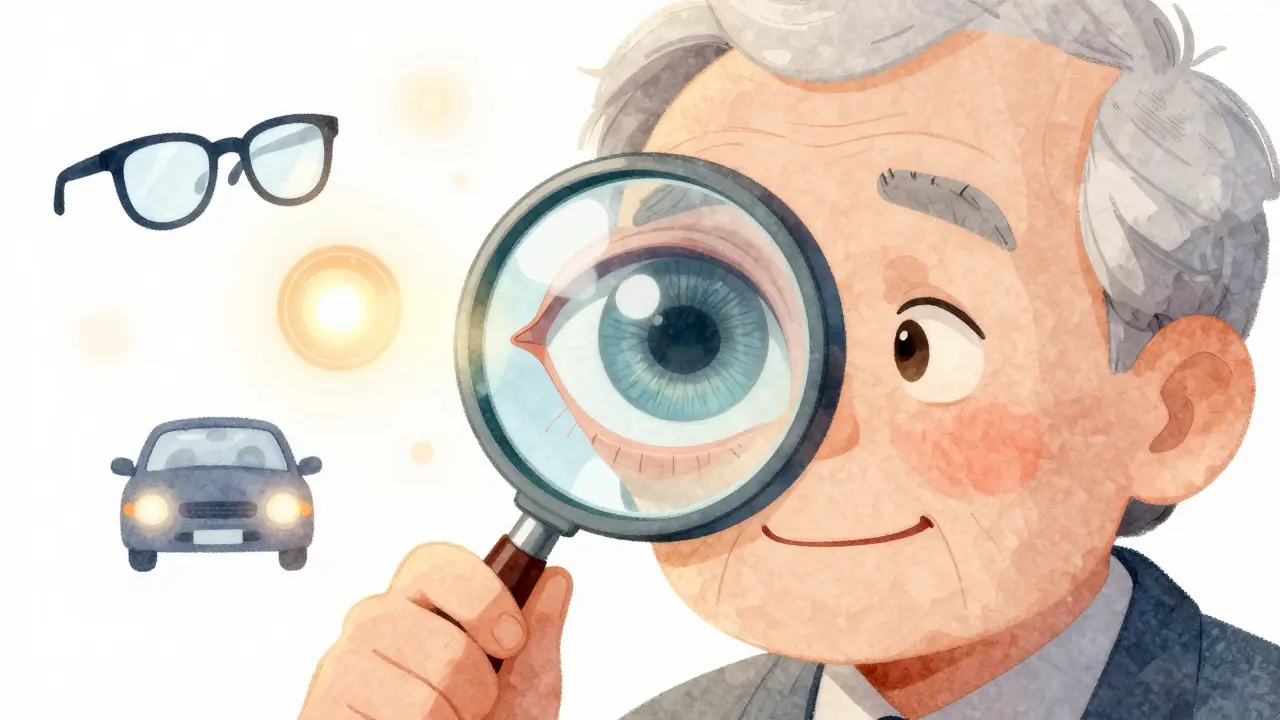
Cataracts are a natural part of aging for many people - not a disease, but a change in the eye’s lens. Over time, proteins in the lens start to clump together, clouding the clear surface that focuses light onto the retina. This isn’t something that happens overnight. It’s gradual. You might notice colors looking duller, headlights at night seeming too bright, or reading becoming harder even with your glasses on. By age 80, more than half of all people in the U.S. either have cataracts or have had surgery to remove them, according to the National Eye Institute.
Why Does This Happen?
The lens of your eye is made mostly of water and protein. As you age, those proteins begin to break down and stick together. Think of it like egg white turning cloudy when it’s cooked. It’s not an infection. It’s not caused by reading too much or using screens. It’s biological aging. Sun exposure, smoking, diabetes, and long-term steroid use can speed it up, but even healthy people get cataracts. There’s no pill, eye drop, or vitamin that can reverse it. Once the lens is cloudy, the only proven fix is surgery.
How Do You Know It’s Time for Surgery?
Not everyone with cataracts needs surgery right away. Many people live with mild clouding for years. But when your vision starts getting in the way of daily life - driving at night, recognizing faces, cooking, or even watching TV - it’s worth talking to an eye doctor. Your vision might still be 20/40 or 20/50 with glasses, but if you’re avoiding activities because you can’t see well enough, that’s when surgery becomes the best option. There’s no point waiting until you’re nearly blind. Modern surgery is safe, quick, and effective.
What Happens During Cataract Surgery?
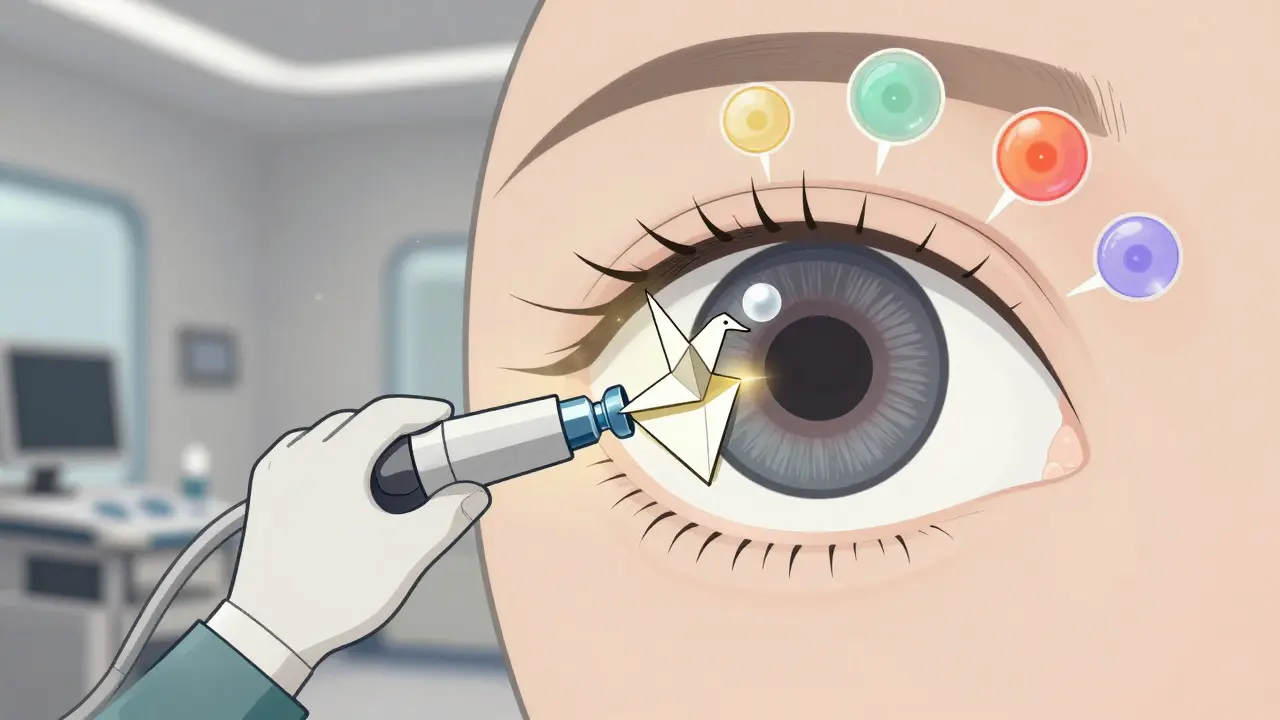
Today’s cataract surgery is nothing like the old ‘couching’ methods that just pushed the cloudy lens aside. The standard procedure is called phacoemulsification. A tiny ultrasound probe is inserted through a 2.2mm incision in the side of your eye. It breaks the cloudy lens into small pieces and suctions them out. Then, a foldable intraocular lens (IOL) is slipped in to replace the natural lens. The whole thing takes about 15 minutes per eye. Most people get local anesthesia - just numbing drops - and go home the same day.
What Kind of Lens Will You Get?
The IOL you choose makes a big difference in your vision after surgery. The most common type is a monofocal IOL, which gives you clear distance vision. But you’ll likely still need reading glasses for close work. If you want to reduce your dependence on glasses, there are premium options. Toric IOLs correct astigmatism. Multifocal and trifocal IOLs, like Alcon’s PanOptix or Johnson & Johnson’s Tecnis Symfony, let you see at multiple distances. These cost more - $2,500 to $4,500 per eye out-of-pocket - and aren’t covered by standard insurance. But for many, the freedom from glasses is worth it.
What’s Recovery Really Like?
Recovery isn’t the same for everyone, but most people notice better vision within a day or two. Your eye might feel scratchy or itchy for a few days. Things may look blurry at first - that’s normal. Your brain needs time to adjust to the new lens. Full healing takes about four to six weeks. During that time, you can’t lift heavy things, bend over with your head below your heart, or get water in your eye. You’ll need to use antibiotic and steroid eye drops for a few weeks, exactly as prescribed. Skipping doses can lead to infection or inflammation.
Can You Go Back to Normal Activities?
You can usually walk around the house the day after surgery. Light activities like walking or gentle stretching are fine after 24 hours. But avoid swimming, contact sports, and anything that could bump your eye for at least four weeks. Driving? Not until your doctor says it’s safe - usually after your first follow-up visit, which is typically the next day. Many patients report that colors look brighter, almost unreal. One person on Reddit said it felt like seeing in HD for the first time in decades. But some say their depth perception feels off at first. That’s because your brain has to relearn how to interpret the new visual input.
What Are the Risks?
Cataract surgery is one of the safest procedures in medicine, with a 99.5% success rate based on over a million cases. But nothing is risk-free. About 2-5% of patients have complications. The most common is posterior capsule opacification - sometimes called a ‘secondary cataract.’ It’s not a new cataract. It’s just a thin film growing behind the IOL, making vision cloudy again. It’s easily fixed with a quick, painless laser treatment called a YAG capsulotomy. Other rare risks include infection, bleeding, or retinal detachment. If you have diabetes or glaucoma, healing can be slower, and vision may not fully return to normal.
Will You Still Need Glasses?
It depends on the lens you choose. With a standard monofocal IOL, you’ll likely still need glasses for reading or close work. Even with premium lenses, some people still need glasses occasionally - especially for fine print or in low light. The goal isn’t always perfect vision without glasses. It’s better vision with fewer glasses. If you’re someone who spends a lot of time on the computer, newer trifocal lenses like Zeiss’s AT LISA tri 839MP, approved in early 2023, offer improved intermediate vision for screens. That’s a game-changer for people who work remotely or use digital devices all day.
What About Vision Therapy After Surgery?
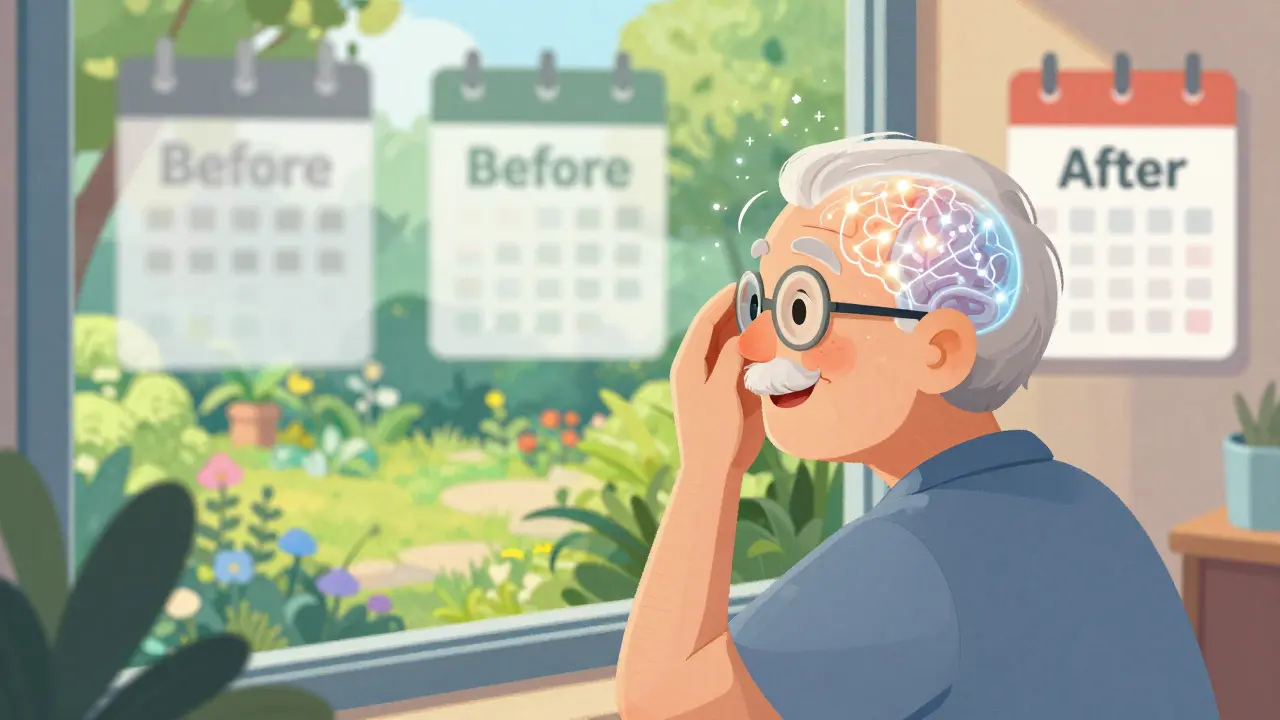
Most people don’t need it. But if your vision feels off - headaches, eye strain, trouble focusing - vision therapy can help. It’s not magic. It’s a series of simple, guided exercises designed to train your brain and eyes to work together after the IOL is implanted. Some patients struggle to adapt to the new way light enters their eye. Therapy can improve focus, reduce fatigue, and even help with memory and concentration linked to visual processing. It’s not covered by insurance, but for those who need it, the results can be meaningful.
Is There Anything New on the Horizon?
Yes. Researchers are working on accommodating IOLs - lenses that can move or change shape inside the eye, like a natural lens, to focus on near and far objects automatically. These are still in clinical trials, but early results are promising. Also, IOL technology is getting smarter. Newer lenses use advanced optics to reduce glare and improve contrast, especially at night. The global market for cataract devices is expected to hit $6.3 billion by 2027, driven by aging populations and better tech. The future isn’t just about clearer vision - it’s about more natural vision.
When Should You Get Checked?
If you’re over 60, get a comprehensive eye exam every year. If you’re under 60 but have diabetes, high blood pressure, or a family history of eye disease, talk to your doctor about starting earlier. Early detection doesn’t mean early surgery - but it means you’re in control. You can plan for it. You can choose your lens. You can prepare for recovery. Waiting until you’re struggling to see your grandkids’ faces isn’t necessary anymore. Cataract surgery isn’t just about restoring sight. It’s about reclaiming your independence, your confidence, and your life.
Comments
Cataract surgery is literally the only thing that works. No drops, no supplements, no ‘eye yoga’. Just cut it out and slap in a new lens. Done. I had it done last year and now I see my cat’s whiskers. No joke.
The real question isn’t whether to get surgery-it’s whether the healthcare industrial complex is profiting off your aging lens. Monofocal IOLs? Sure. But those premium trifocals? That’s not medicine, that’s luxury optics. You’re paying for the illusion of autonomy. And don’t get me started on the YAG capsulotomy upsell. It’s all just protein clumping... but now with a 15% markup.
I had my surgery last spring and I cried the first time I saw my granddaughter’s freckles. 🥹 Seriously, if you’re even thinking about it-just do it. Your future self will thank you. And yes, the colors are insane. Like someone turned up the saturation on life.
They say it’s safe but what they don’t tell you is the FDA approved these lenses without long term studies. I heard a guy on a podcast who said the IOLs are made with nanotech from China and they track your eye movements. You think your vision is better? Nah. You’re being monitored. And they’re not telling you because they profit off the follow-up visits. I’m not paranoid. I’m prepared.
In India, we call cataracts 'andhera ka darr'-fear of darkness. But now, with modern IOLs, even a rickshaw driver in Delhi can see the traffic lights clearly. The tech is amazing. Though I still think $4500 per eye is a bit much for someone earning ₹30k/month. Maybe the government should subsidize this. 🙏
I’m from the Philippines and we have this saying: 'Ang mata ay pinto ng kaluluwa.' The eye is the door to the soul. When my lola got her cataract surgery, she looked at her wedding photo and whispered, 'I forgot how blue your eyes were.' That’s what this is about. Not just vision. Memory. Love. 🌺
I appreciate the thorough breakdown, especially the note about vision therapy. Many assume recovery is purely physical. But the neurological adaptation is profound. The brain has spent decades interpreting degraded input. Replacing that signal requires recalibration. It’s not a mechanical swap-it’s a perceptual rebirth.
Man, I thought I was gonna be stuck with reading glasses forever. Got the PanOptix and now I’m reading the microwave clock from across the room. No glasses. No drama. The only downside? My dog now thinks I’m a robot because I stare at everything like I’m seeing it for the first time. He’s jealous.
I’ve seen this pattern before. People get surgery, their vision improves, and then they start blaming everything else on aging. ‘Oh, I can’t remember names anymore’-well, that’s not the lens. But hey, if it helps you cope, I get it. Just don’t confuse biological decline with optical correction.
Cataracts are just evolution’s way of saying ‘you’ve lived enough.’ But now we cheat it with glass and silicon. Irony. We extend life but make it dependent on corporate lenses. Still… I’d take the HD view over the foggy one. Even if it’s a paid upgrade.
I waited too long. My vision was 20/200. Couldn’t see the road signs. Surgery fixed it in a day. But now I keep forgetting I don’t need my glasses anymore and keep reaching for them. Like my brain still thinks I’m blind. lol
Let’s be real. The real ‘premium’ lens is your ability to afford it. If you’re on Medicare, you get the plastic version. If you’ve got a 401k and a sense of entitlement, you get the one that lets you read your phone without glasses. This isn’t healthcare. It’s tiered vision capitalism.
The success rate is indeed near perfect. But the real risk is complacency. People assume once the lens is in, everything’s fine. But post-op drop compliance? Critical. Skipping doses leads to endophthalmitis. One case. One infection. One lost eye. Don’t gamble with your vision.
I’ve read the studies. The IOLs contain microchips. They’re linked to the National Eye Registry. They collect pupil dilation data. That’s how they know when you’re reading. That’s how they know when you’re watching TV. That’s how they know when you’re sleeping. You think this is about sight? It’s about control.
It’s heartening to see how much progress has been made. One might assume, given the complexity of the human eye, that such a procedure would be fraught with risk. Yet here we are-millions of restored lives, each one quietly reclaiming the beauty of a sunset, a child’s smile, the precise shade of a bluebird’s wing. And yet, we still speak of it as if it’s merely a technical fix. Perhaps we should speak of it as an act of grace.