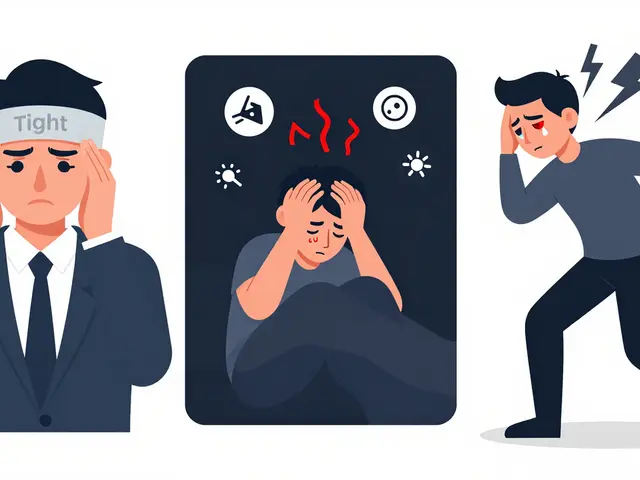
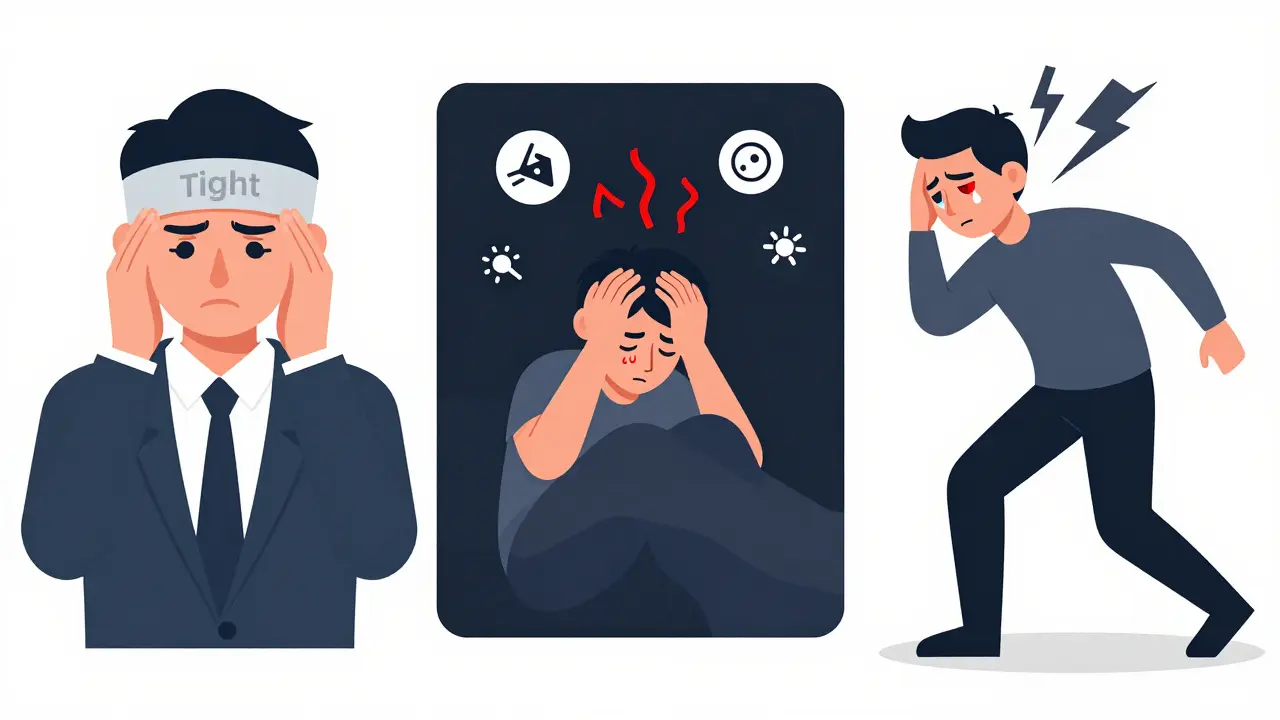
Headaches are more than just a nuisance; they are distinct neurological events with unique signatures. If you’ve ever taken a pill for what you thought was a simple tension headache only to find yourself doubled over in agony, you know how confusing these conditions can be. The problem isn’t just the pain-it’s that tension-type headaches, migraines, and cluster headaches look nothing alike under the hood, yet they often get lumped together. Misdiagnosis happens in up to half of all cases, leading to treatments that don’t work and unnecessary suffering.
To get relief, you first need to identify exactly what you’re dealing with. These three primary headache disorders have different causes, different symptoms, and different triggers. Understanding the specific markers of each type is the key to managing them effectively. Here is how to distinguish between them so you can stop guessing and start treating.
Tension-Type Headaches: The Constant Pressure
Tension-type headaches (TTH) are the most common form of headache, characterized by bilateral pressure-like pain without nausea or severe sensitivity to light. First described by Dr. Harold Wolff in 1948, this condition affects roughly 42% of the global population. You likely know it as the "standard" headache, but it has very specific traits that set it apart from its more severe cousins.
The hallmark of a tension headache is quality and location. Patients typically describe the sensation as a tight band around their head, like wearing a hat that’s two sizes too small, or a vice-like squeeze across the forehead and temples. Unlike migraines, which usually hit one side, TTH pain is almost always bilateral-meaning it hurts on both sides of your head equally. The intensity is usually mild to moderate. It’s annoying, distracting, and dulls your day, but it rarely stops you from functioning entirely.
Crucially, tension headaches do not worsen with routine physical activity. You can walk around, climb stairs, or do light chores without the pain spiking. This is a major diagnostic clue. Additionally, while some people might feel slightly sensitive to bright lights, true photophobia (intense light sensitivity) and phonophobia (sound sensitivity) are rare. Nausea is also largely absent. If you have a headache that feels like pressure, doesn’t get worse when you move, and leaves you feeling tired but capable, it’s likely a tension-type headache.
- Pain Quality: Pressing, tightening, non-pulsating.
- Location: Both sides of the head (bilateral), often extending to the neck.
- Duration: 30 minutes to 7 days.
- Associated Symptoms: None, or very mild sensitivity to light/sound (present in only 5-10% of cases).
- Response to Movement: Pain does not worsen with normal activity.
Migraines: The Neurological Storm
If tension headaches are a heavy weight, Migraines are a complex neurological disorder involving severe pulsating pain, nausea, and extreme sensitivity to sensory stimuli. Affecting nearly 20% of women and 10% of men globally, migraines are not just "bad headaches." They are a systemic event that changes how your brain processes signals. Documented since ancient times and formally classified in the 19th century, migraines involve a phenomenon called cortical spreading depression, followed by activation of the trigeminovascular system.
The pain of a migraine is distinctly different from TTH. It is often unilateral (on one side of the head), though about 40% of sufferers report bilateral pain during attacks. The sensation is throbbing or pulsating, matching your heartbeat. The intensity is moderate to severe, often incapacitating. You aren’t just distracted; you are unable to work, drive, or sometimes even speak. A migraine attack lasts between 4 and 72 hours if left untreated.
What truly separates a migraine from other headaches are the associated symptoms. About 90% of migraine sufferers experience nausea, and vomiting is common. Sensitivity is a massive factor: 80% of patients suffer from photophobia (pain from light) and phonophobia (pain from sound). Many will seek out a dark, silent room and lie still because any movement aggravates the pain. Roughly 25-30% of migraineurs experience an aura-a neurological warning sign featuring visual disturbances like flashing lights, zigzag lines, or blind spots that occur 5 to 60 minutes before the pain starts.
- Pain Quality: Throbbing, pulsating, sharp.
- Location: Often one-sided (unilateral), but can be both sides.
- Duration: 4 to 72 hours.
- Associated Symptoms: Nausea (90%), vomiting, severe light/sound sensitivity (80%).
- Aura: Visual or sensory disturbances preceding pain in 25-30% of cases.
- Response to Movement: Pain significantly worsens with physical activity.
Cluster Headaches: The Silent Epidemic
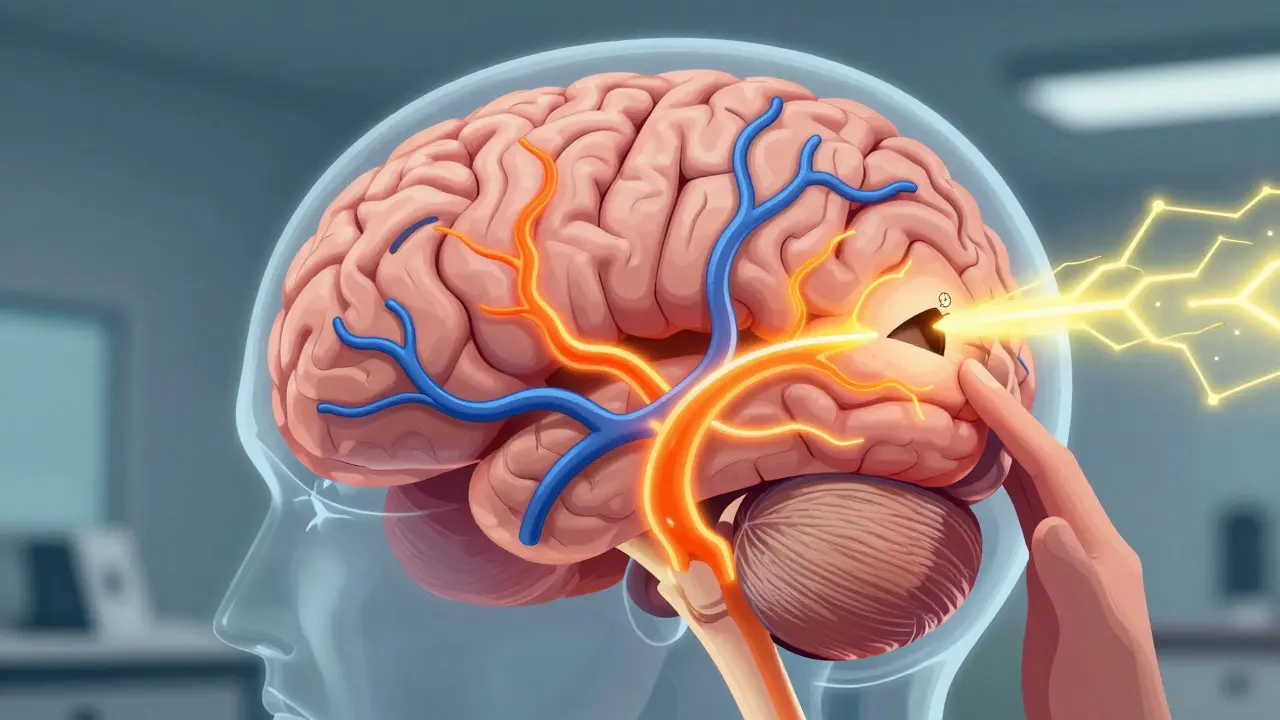
Cluster headaches are rare, excruciatingly painful headaches belonging to the trigeminal autonomic cephalalgias family, characterized by short duration and prominent autonomic symptoms. While less common-affecting only about 1 in 1,000 adults-they are arguably the most painful condition known to medicine. First described by Dr. Wilfred Harris in 1926, these headaches are driven by hypothalamic activation, which explains their bizarre timing patterns.
The pain is strictly unilateral and focuses around one eye or temple. Patients rate the pain as 8 to 10 on the severity scale, often describing it as worse than childbirth or being stabbed in the eye. Unlike migraines, where you want to lie still, cluster headache sufferers feel an intense restlessness. They pace, rock, or sit upright because lying down offers no relief. The attacks are short but frequent, lasting 15 to 180 minutes, with an average duration of 45 to 90 minutes. During a "cluster period," which can last 6 to 12 weeks, you might suffer 1 to 8 attacks per day, often at the exact same time each day or night.
The defining feature of cluster headaches is the presence of ipsilateral autonomic symptoms-meaning symptoms occur on the same side as the pain. During an attack, the affected eye may tear up (lacrimation in 90% of cases), become red (conjunctival injection in 85%), and the eyelid may droop (ptosis in 40%). Nasal congestion or runny nose on that side is also extremely common (80%). These symptoms happen automatically due to nerve activation, not because you are crying from pain.
- Pain Quality: Excruciating, boring, stabbing, burning.
- Location: Strictly one-sided, centered around the eye or temple.
- Duration: 15 to 180 minutes per attack.
- Frequency: 1 to 8 times per day during active periods.
- Associated Symptoms: Eye tearing, redness, nasal congestion, eyelid drooping on the painful side.
- Behavior: Restlessness, pacing, inability to lie still.
| Feature | Tension-Type | Migraine | Cluster |
|---|---|---|---|
| Pain Intensity | Mild to Moderate | Moderate to Severe | Severe (8-10/10) |
| Pain Quality | Pressure/Squeezing | Throbbing/Pulsating | Stabbing/Boring |
| Location | Bilateral (Both sides) | Unilateral or Bilateral | Strictly Unilateral (One side) |
| Duration | 30 min - 7 days | 4 - 72 hours | 15 - 180 minutes |
| Nausea | Rare | Common (90%) | Uncommon |
| Light/Sound Sensitivity | Mild or None | Severe (80%) | Mild or None |
| Autonomic Symptoms | None | Occasional | Prominent (Eye redness, tearing) |
| Patient Behavior | Normal function | Lies still in dark room | Paces/restless |

Why Diagnosis Matters More Than You Think
Getting the right label isn’t just semantics; it dictates treatment. A 2021 Mayo Clinic study found that misdiagnosis occurs in up to 50% of cases, leaving patients stuck in a cycle of ineffective care. For example, treating a cluster headache with standard migraine medications like triptans (unless specifically subcutaneous sumatriptan) or NSAIDs often yields poor results. Conversely, treating a migraine with simple ibuprofen designed for tension headaches frequently fails to break the cycle.
Dr. Shivang Joshi, a headache specialist, notes a common pitfall: patients with migraines who happen to have autonomic features (like a red eye) are often falsely diagnosed with cluster headaches in emergency rooms. This happens because doctors see the eye redness and assume cluster, missing the longer duration and nausea typical of migraines. Similarly, the term "cluster migraine" is not a valid medical diagnosis. Clustering of migraine attacks does not turn them into cluster headaches. Distinguishing between these requires looking at the full picture: duration, associated symptoms, and behavior.
Accurate diagnosis opens the door to targeted therapies. Tension headaches respond well to NSAIDs (70% efficacy). Migraines require specific interventions like triptans or newer CGRP inhibitors (50-70% efficacy). Cluster headaches have their own gold standards: high-flow oxygen therapy (70-80% efficacy) or subcutaneous sumatriptan (75% efficacy). Using the wrong tool means enduring pain that could have been stopped quickly.
Tracking Your Headaches for Better Care
Since symptoms can overlap or change over time, keeping a record is your best defense against misdiagnosis. The American Headache Society recommends maintaining a headache diary for at least four weeks before seeing a specialist. Don’t just write "I had a headache." Be specific.
- Time and Duration: When did it start? How long did it last? Did it wake you up at night?
- Location: Draw a face and mark where the pain is. Is it one side or both?
- Intensity: Rate it on a 0-10 scale. Was it a dull ache or blinding pain?
- Associated Symptoms: Did you have nausea? Was your eye red or watery? Were you sensitive to light?
- Behavior: Did you lie down and sleep, or did you pace around the room?
- Triggers: Note food, stress, weather changes, or alcohol consumption.
This data helps neurologists spot patterns. For instance, if your headaches always strike at 3 AM and last 45 minutes with a red eye, that points strongly to cluster headaches. If they last all day, come with nausea, and force you to stay in bed, that’s a migraine profile. Detailed records reduce the guesswork and speed up the path to effective treatment.
Can I have both migraine and cluster headaches?
Yes, it is possible to have both conditions, although it is relatively rare. Some patients experience migraines for years and then develop cluster headaches later in life. However, it is crucial to document each episode separately because the treatments differ significantly. Do not assume a new type of headache is just a variation of your old one without consulting a specialist.
What is the difference between a sinus headache and a cluster headache?
Sinus headaches are caused by inflammation in the sinuses, usually accompanying a cold or allergy flare-up, and involve facial tenderness and thick nasal discharge. Cluster headaches are neurological and occur in cycles unrelated to infections. Key differences include the severity (cluster is much more severe), the presence of autonomic symptoms like eye tearing (cluster), and the lack of fever or infection signs in cluster headaches. Many people diagnosed with "sinus headaches" actually have migraines or cluster headaches.
Why do cluster headaches happen at the same time every day?
This regularity is linked to the hypothalamus, a part of the brain that regulates circadian rhythms (your body clock). Brain imaging studies show increased activity in the hypothalamus before cluster attacks begin. This biological clock mechanism is why attacks often strike at predictable times, such as during REM sleep or early morning hours, and why seasonal patterns are common.
Are tension headaches dangerous?
Tension headaches are not dangerous or life-threatening. They are primarily a quality-of-life issue. However, chronic tension headaches (occurring 15 or more days a month) can lead to medication overuse headaches if treated excessively with painkillers. Managing stress, improving posture, and using preventive strategies are key to avoiding chronicity.
When should I see a doctor for my headaches?
You should see a doctor if your headaches are new, changing in pattern, or interfering with daily life. Seek immediate emergency care if you experience a "thunderclap" headache (sudden, severe peak pain within seconds), headaches accompanied by fever/stiff neck/confusion, weakness/numbness, or if the headache follows a head injury. Regular consultation is also advised if over-the-counter medications fail to provide relief.