
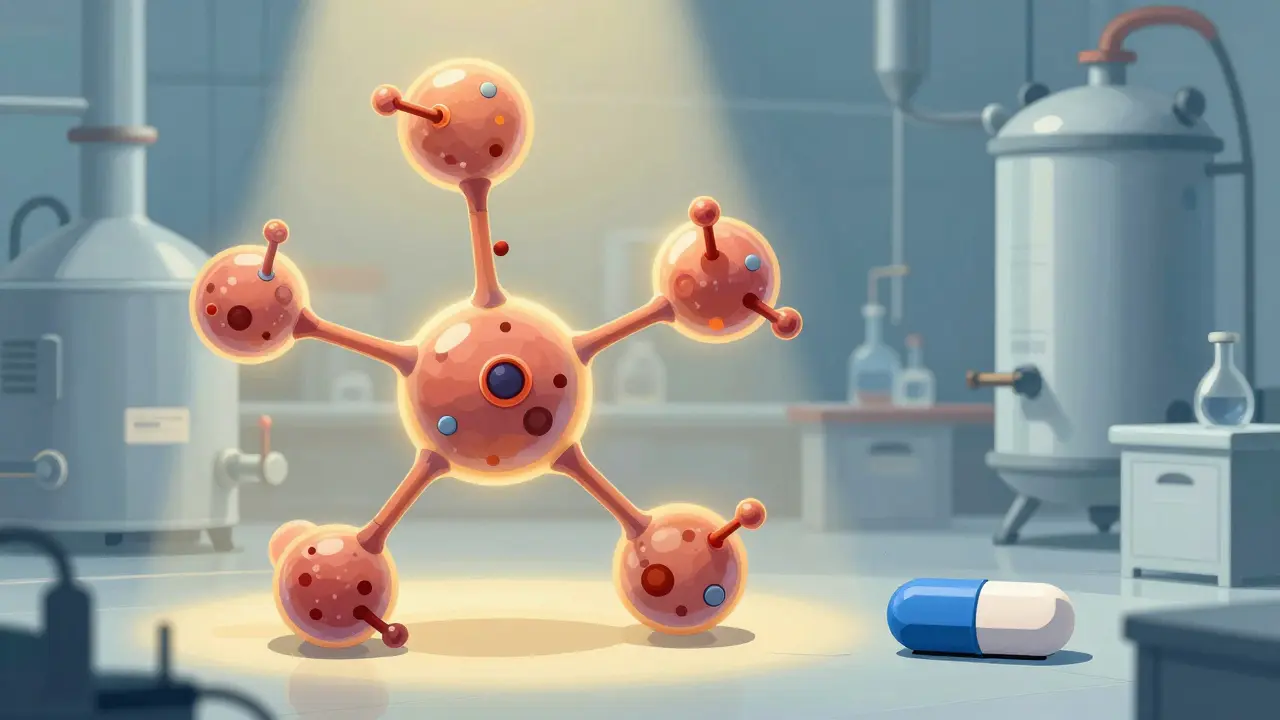
When you hear the word biosimilar, you might think it’s just a cheaper version of a brand-name drug-like a generic pill. But monoclonal antibody biosimilars are nothing like that. They’re not copies. They’re not duplicates. They’re incredibly complex biological medicines made from living cells, and getting them right takes years of science, thousands of tests, and billions of dollars. And yet, they’re changing how cancer and autoimmune diseases are treated-making life-saving treatments more affordable without sacrificing safety or effectiveness.
What Makes Monoclonal Antibody Biosimilars Different From Generics?
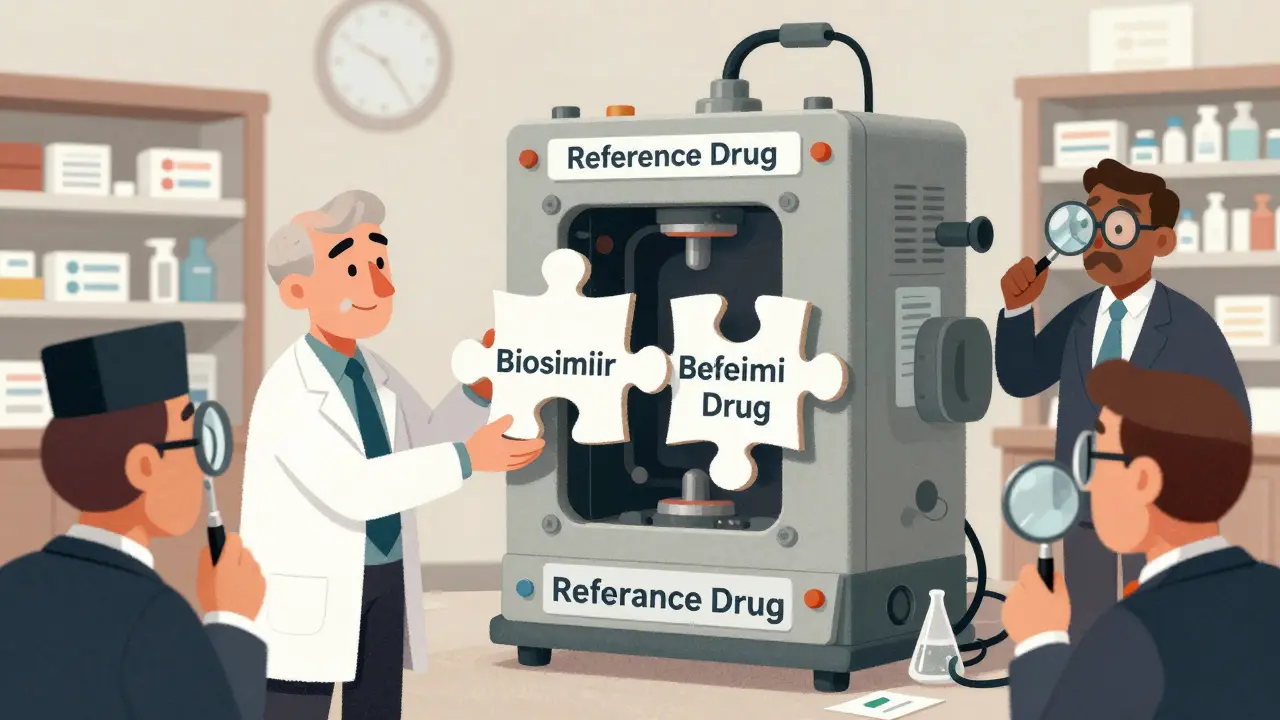
Generics are simple. They’re small molecules-chemical compounds you can synthesize in a lab. Aspirin, metformin, or ibuprofen? Those are generics. You can make them over and over, and every tablet is identical. That’s not possible with monoclonal antibodies. Monoclonal antibodies are huge proteins. They weigh about 150,000 daltons-over 25 times heavier than insulin and nearly seven times heavier than growth hormone. These proteins are made by living cells-usually Chinese hamster ovary cells in bioreactors. Even tiny changes in temperature, pH, or nutrient mix during production can alter the protein’s shape, folding, or sugar attachments (called glycosylation). These small differences don’t make the drug less effective, but they do mean no two batches are exactly the same-even from the original manufacturer. That’s why biosimilars aren’t called generics. They’re called biosimilars because they’re highly similar to the original, or reference, product. The FDA and EMA both require proof that there are no clinically meaningful differences in safety, purity, or potency. That means if a patient switches from the brand-name drug to the biosimilar, they shouldn’t feel any difference in how they respond-or how they feel.How Are Biosimilars Approved?
Getting a monoclonal antibody biosimilar approved isn’t like filing paperwork for a generic. It’s a marathon. Manufacturers must run a full suite of tests:- Analytical studies: Hundreds of lab tests comparing the biosimilar to the reference product-looking at protein structure, charge variants, glycosylation patterns, and aggregation levels.
- Non-clinical studies: Animal tests to check toxicity and immune response.
- Clinical studies: Usually one or two trials in healthy volunteers or patients, comparing pharmacokinetics (how the body processes the drug) and pharmacodynamics (how the drug affects the body). Sometimes, a comparative efficacy trial is needed, especially if the reference drug is used for multiple conditions.
Approved Monoclonal Antibody Biosimilars and Their Uses
There are now dozens of approved monoclonal antibody biosimilars in the U.S. and Europe. Here are the most important ones, by reference drug:Bevacizumab (Avastin)
Used to treat colorectal, lung, brain, and kidney cancers by blocking blood vessel growth that feeds tumors. Six biosimilars are approved in the U.S.:- Mvasi (2017)
- Zirabev (2019)
- Alymsys (2019)
- Vegzelma (2022)
- Avzivi (2023)
- Jobevne (2023)
Rituximab (Rituxan)
Targets CD20 on B-cells. Used for non-Hodgkin’s lymphoma, chronic lymphocytic leukemia, and autoimmune diseases like rheumatoid arthritis and vasculitis. Three U.S. biosimilars:- Truxima (2018)
- Ruxience (2020)
- Riabni (2020)
Trastuzumab (Herceptin)
Blocks HER2 receptors in breast and stomach cancers. Six biosimilars are approved in the U.S.:- Ogivri (2017)
- Herzuma (2018)
- Ontruzant (2019)
- Trazimera (2020)
- Kanjinti (2019)
- Hercessi (2022)
Infliximab (Remicade)
Used for Crohn’s disease, ulcerative colitis, rheumatoid arthritis, and psoriasis. The first monoclonal antibody biosimilar ever approved-in the EU in 2013. In the U.S., Remsima and Inflectra are both approved, and Remsima is now interchangeable. This was a watershed moment: it proved biosimilars could replace one of the most expensive biologics on the market.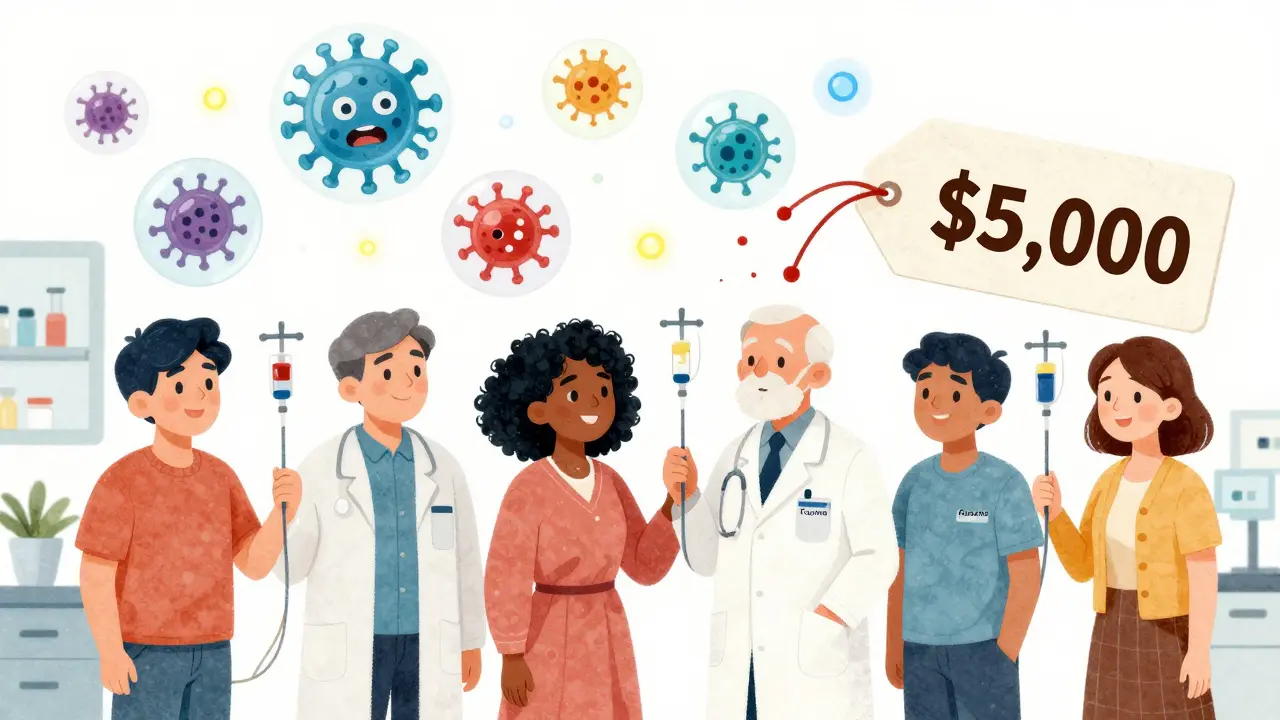
Why Are Biosimilars So Important?
The original monoclonal antibody drugs are expensive. Avastin costs $8,000-$10,000 per infusion. Herceptin runs $5,000-$7,000. Rituxan? Around $6,000. That’s not sustainable for patients, insurers, or hospitals. Biosimilars bring prices down. On average, they launch at 15-35% lower than the reference drug. In markets with multiple biosimilars-like in Europe-prices can drop over 70%. A 2023 report from Evaluate Pharma predicts biosimilar monoclonal antibodies will save the U.S. healthcare system $250 billion between 2023 and 2028. Bevacizumab, trastuzumab, and rituximab biosimilars will make up 78% of those savings. That’s not just money. It’s access. More patients get treated. More clinics can afford to offer cutting-edge care. More people survive cancer because they didn’t have to choose between rent and chemotherapy.Challenges and Misconceptions
Despite the data, adoption isn’t automatic. Three big barriers remain:- Patent lawsuits: Originator companies file an average of 14.7 patent challenges per biosimilar, delaying market entry for years. A 2023 study from UC Hastings found this is the biggest roadblock in the U.S.
- Provider hesitation: A 2022 ASCO survey showed only 58% of oncologists felt “very confident” prescribing biosimilars. Many still think they’re less effective-even though dozens of studies prove otherwise.
- Formulary restrictions: Pharmacy benefit managers (PBMs) sometimes lock out biosimilars unless the brand drug is exhausted first. That’s called “step therapy.” It adds delays and confusion.
What’s Next?
The pipeline is packed. As of September 2023, 37 monoclonal antibody biosimilars were under FDA review. The biggest focus? Adalimumab (Humira) biosimilars-14 candidates are in late-stage trials. The first, Hyrimoz, got approved in September 2023. Humira was the world’s top-selling drug for years. Its biosimilars could save billions more. Pembrolizumab (Keytruda) biosimilars are also in the works. Keytruda is the backbone of modern immunotherapy for melanoma, lung cancer, and more. When biosimilars arrive, they’ll open access to checkpoint inhibitors for millions more patients. The EMA plans to release new guidelines in 2024 for even more complex products: bispecific antibodies and antibody-drug conjugates. These are the next frontier. They’re not just antibodies-they’re targeted drug delivery systems. Making biosimilars of these will be harder. But it’s coming.Final Thoughts
Monoclonal antibody biosimilars aren’t just cheaper versions. They’re a triumph of science, regulation, and patient advocacy. They prove that you can make complex biological drugs more affordable without cutting corners. They’re backed by thousands of tests, millions of patient data points, and decades of research. If you’re a patient, ask your doctor: Is there a biosimilar option for me? If you’re a provider, educate yourself-there’s no reason to hesitate anymore. And if you’re paying for care, know this: biosimilars aren’t just saving money. They’re saving lives.Are monoclonal antibody biosimilars the same as generics?
No. Generics are chemically identical copies of small-molecule drugs, like aspirin or metformin. Biosimilars are highly similar but not identical copies of complex biological drugs-monoclonal antibodies made from living cells. Because of their size and structure, biosimilars can’t be exact copies, but they must have no clinically meaningful differences in safety or effectiveness.
How do I know if a biosimilar is safe for me?
All FDA- and EMA-approved biosimilars undergo rigorous testing to prove they’re as safe and effective as the original drug. Studies show no increase in side effects, infusion reactions, or loss of effectiveness. If your doctor recommends a biosimilar, it’s because the data supports its use. Ask for the clinical trial results if you’re unsure.
Can I switch from the brand-name drug to a biosimilar?
Yes. Many patients switch without any issues. In fact, studies show no difference in outcomes after switching. Some biosimilars are designated as “interchangeable,” meaning pharmacists can substitute them automatically-just like generics. Always talk to your doctor before switching, but rest assured, it’s a well-supported practice.
Why are biosimilars cheaper if they’re so complex to make?
They’re cheaper because manufacturers don’t need to repeat the full clinical trials done by the original drugmaker. They only need to prove similarity. That cuts development costs significantly. Plus, competition among multiple biosimilar makers drives prices down further. Savings are passed on to patients and insurers.
Do biosimilars work as well as the original drugs for cancer treatment?
Yes. Multiple studies in oncology show equivalent tumor response rates, progression-free survival, and overall survival for biosimilars of trastuzumab, bevacizumab, and rituximab. In real-world use, they’ve become standard care in major cancer centers across the U.S. and Europe.
Comments
bro this is wild 😭 i had no idea biosimilars were this complex. i thought they were just cheap generics like tylenol but nooo 😅 150k daltons??? that's like a protein skyscraper 🏗️
The scientific rigor underpinning biosimilar approval is truly commendable. Regulatory agencies demand exhaustive analytical, non-clinical, and clinical validation-ensuring that no clinically meaningful differences exist. This is not merely cost-reduction; it is patient safety elevated to an art form.
Okay but let’s be real-Big Pharma is FREAKING OUT over these things. They spent billions patenting every single sugar molecule on these proteins just to delay biosimilars. It’s not science, it’s a money heist. And now? We’re getting cancer drugs for 30% of the price? 😤💸
This gives me hope. In India, many families still choose between medicine and food. If biosimilars become widely available here, it won’t just be cheaper-it’ll be life-changing. Thank you for explaining this so clearly.
I work in oncology nursing and we’ve switched over 200 patients to trastuzumab biosimilars. Zero infusion reactions, same tumor shrinkage, and the nurses are actually happier because the billing is simpler. The data is solid. If your doc says ‘biosimilar’, trust them.
Ah yes, the great biosimilar delusion. You think science is magic? No. You think corporations care about you? No. They just found a loophole to sell the same thing for less while still making billions. The real villain? The system that lets one drug cost $8k. Not the biosimilar. The system.
I was nervous switching from Herceptin to Ogivri… but my oncologist showed me the trial data. I’m 2 years in, no side effects, and I’m back to hiking with my grandkids. You’re not losing anything by trying. You’re gaining time, money, and peace.
I read this whole thing and honestly? I’m impressed. I used to think biosimilars were sketchy, but the EMA’s 1.2 million patient-year safety report? That’s wild. Also, why do people still say ‘it’s just a copy’? It’s like saying a Picasso replica is the same as the original. Nope. It’s a masterpiece in its own right.
I mean… if you’re not crying reading this, you’re not human. 💔 This is literally about people choosing between rent and chemo. And now? We’re getting the same life-saving drug for 70% less? This is the kind of thing that makes me believe in humanity again. 🥹❤️
It’s fascinating how biology defies simplicity. We want things to be binary-copy or not copy. But life? It’s messy. These biosimilars are like jazz covers of a symphony. Different notes, same soul. And that’s beautiful.
My cousin’s on Remsima now for Crohn’s. She switched from Remicade and saved $4k a year. Her insurance didn’t even flinch. Why are we still talking about this like it’s controversial? It’s science. It’s affordable. It’s working. Let’s move on.
The fact that you need 1000 tests to prove something is similar to another thing that took 15 years and 10 billion to make… that’s not innovation that’s just bureaucracy with a fancy name
biosimilars. yeah right. next theyll say air is free
I just read this while waiting for my infusion. Didn’t know half of this. Feels good to know the system isn’t completely broken. Thanks for writing this.