
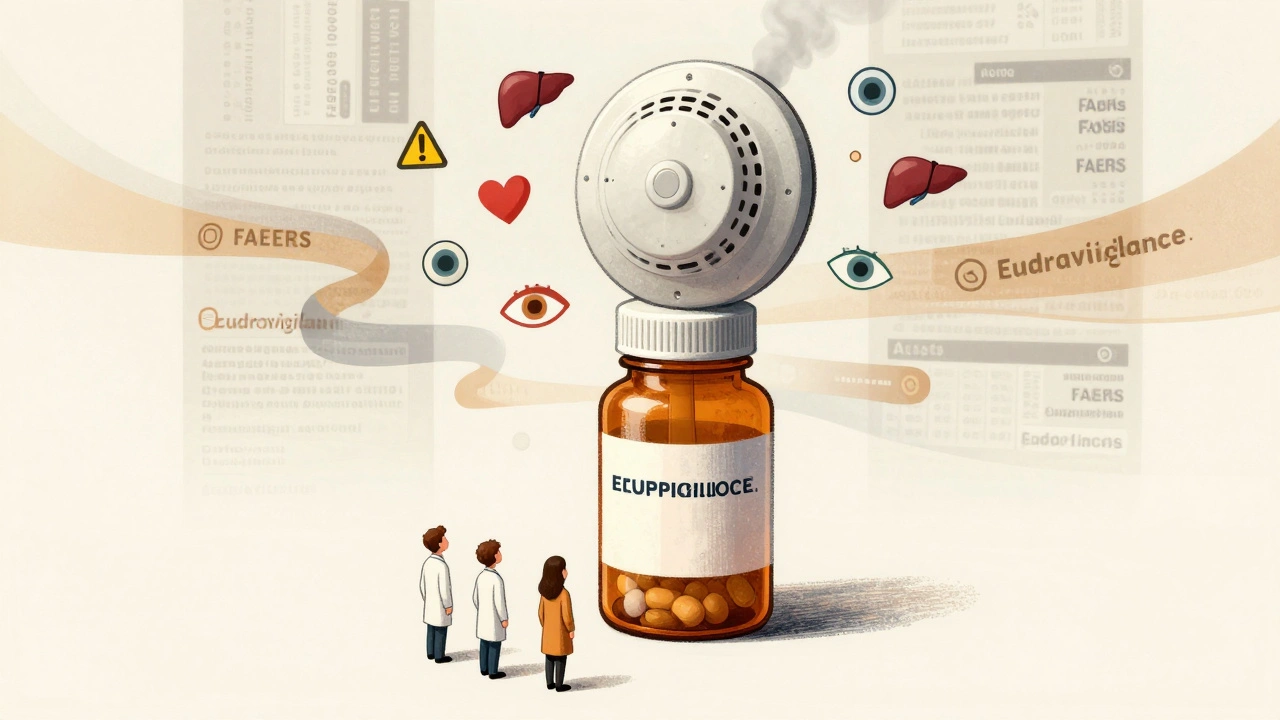
Most people assume that if a drug gets approved, it’s been thoroughly tested for safety. That’s partly true-but the real story of how risks emerge happens after the drug hits the market. Clinical trials involve thousands of patients, but they can’t catch everything. Some side effects only show up in tens of thousands, or even millions, of people. Others appear only when the drug is taken with other medications, or in older adults with multiple health conditions. That’s where drug safety signals come in.
What Exactly Is a Drug Safety Signal?
A drug safety signal isn’t a confirmed danger. It’s a red flag-an unusual pattern in the data that says, "This might be worth looking into." The Council for International Organizations of Medical Sciences (CIOMS) defines it as information suggesting a new or unexpected link between a medicine and an adverse event. It doesn’t prove causation. But it’s enough to trigger an investigation. Think of it like a smoke alarm. It doesn’t mean there’s a fire. But if it goes off, you check. That’s what regulators and drug companies do when a signal pops up. The signal could come from a single patient report, or from analyzing millions of reports across global databases like the FDA’s FAERS or the EMA’s EudraVigilance. These systems collect spontaneous reports from doctors, pharmacists, and even patients themselves. Over 30 million reports are in the FDA’s system alone, dating back to 1968.Why Clinical Trials Miss the Signs
Clinical trials are tightly controlled. Participants are carefully selected. They’re usually healthy enough to meet strict inclusion criteria. They’re monitored closely. And they’re typically followed for months, not years. That’s great for proving a drug works. But it’s terrible at catching rare or delayed side effects. For example, a drug might be tested on 4,500 people over 18 months. If a side effect happens in 1 in 10,000 patients, it’s extremely unlikely to show up in that group. But once the drug is used by 500,000 people over five years, you might see 50 cases. That’s not a fluke-it’s a signal. Even worse, trials often exclude older patients, pregnant women, or those on multiple medications. Yet these are the people who end up taking the drug in real life. A 2004 signal linking rosiglitazone to heart attacks didn’t emerge from a trial. It came from post-marketing reports and later confirmed by large observational studies. The same happened with bisphosphonates and jaw bone death-first reported in 2003, but it took seven years before regulators updated labels.How Signals Are Found: Numbers, Patterns, and Noise
Signal detection isn’t guesswork. It’s math. Regulators use statistical tools to find patterns that stand out from the background noise. One common method is disproportionality analysis. It compares how often a certain side effect is reported with a specific drug versus how often it’s reported with all other drugs. If the number is significantly higher, it’s flagged. A reporting odds ratio above 2.0 and at least three reported cases is usually the starting point. But that’s just the beginning. Other methods include Bayesian Confidence Propagation Neural Networks (BCPNN) and Proportional Reporting Ratios (PRR). These tools help separate real signals from random spikes. But here’s the catch: most signals are false alarms. Studies estimate that 60% to 80% of statistical signals turn out to be noise. One notorious example: in 2019, FAERS data suggested canagliflozin-a diabetes drug-was linked to leg amputations. The odds ratio was 3.5. Alarm bells rang. But when the CREDENCE trial analyzed real-world outcomes, the actual risk increase was only 0.5%. The signal was real in the database, but not in reality. That’s why experts insist on triangulation. A signal is only taken seriously if it shows up in multiple data sources: spontaneous reports, clinical trial data, electronic health records, and published studies. If three independent systems point to the same problem, it’s much more likely to be real.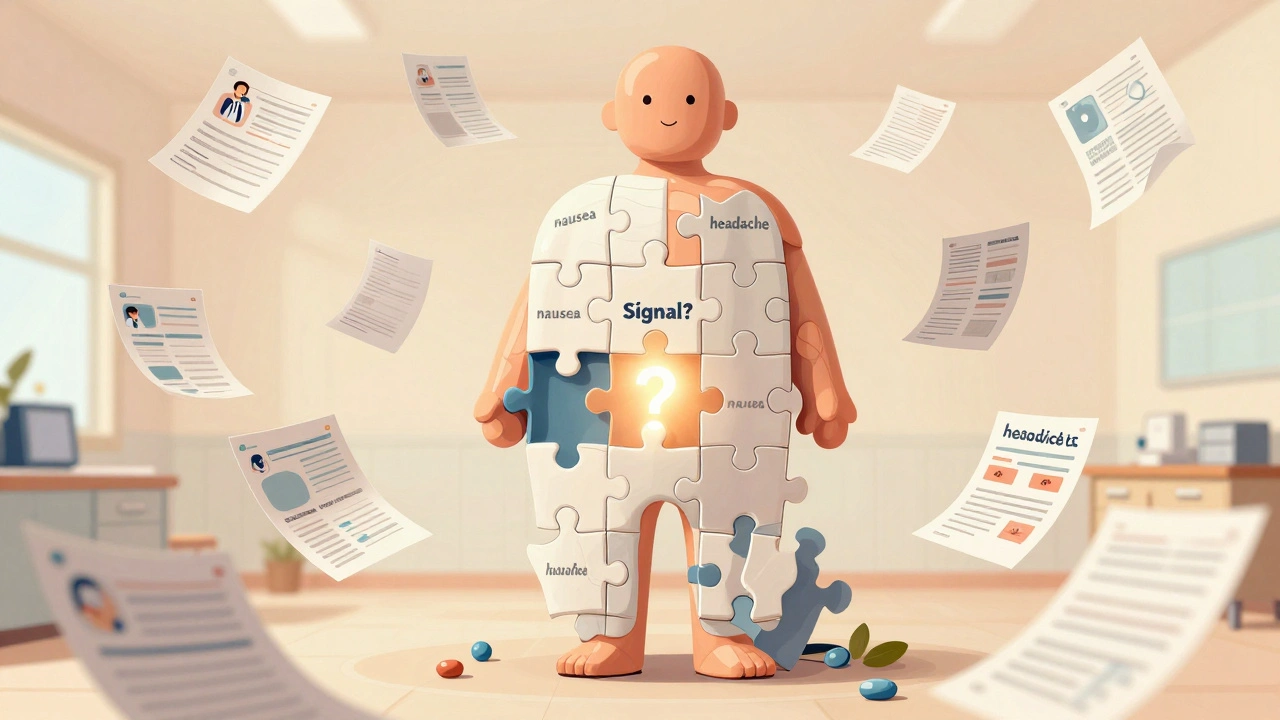
What Makes a Signal Actionable?
Not every signal leads to a warning label or a drug recall. Four things make a signal more likely to trigger regulatory action:- Replication across sources: If the same pattern shows up in FAERS, EudraVigilance, and a peer-reviewed study, the chance of it being real jumps dramatically. Studies show this increases the likelihood of a label change by over four times.
- Medical plausibility: Does the side effect make sense based on how the drug works? For example, if a drug affects blood clotting, and you see more strokes reported, that’s plausible. If it’s something totally unrelated, like hair loss, it’s harder to take seriously without strong evidence.
- Severity of the event: Serious events-hospitalizations, deaths, permanent disability-are far more likely to trigger action. One study found 87% of serious events led to label updates, compared to just 32% of non-serious ones.
- How new is the drug? Drugs under five years old are 2.3 times more likely to get updated labels than older ones. Why? Because they’re still being watched closely, and more data is coming in.
Real Cases: When Signals Changed Medicine
In 2018, European pharmacovigilance teams noticed a pattern: patients taking dupilumab, a biologic for eczema and asthma, were reporting eye irritation, dryness, and inflammation. At first, it was just a few reports. But as the number grew-especially from ophthalmologists-the signal was validated. By 2019, the label was updated to include ocular surface disease as a known side effect. Doctors started screening patients before prescribing. Eye exams became routine. That’s signal detection working as intended. Another case: the 2010 signal linking thalidomide to blood clots in multiple myeloma patients. It wasn’t obvious in trials. But once used in older patients with heart disease and other risk factors, the risk became clear. The label changed. Dosing guidelines were adjusted. Lives were saved.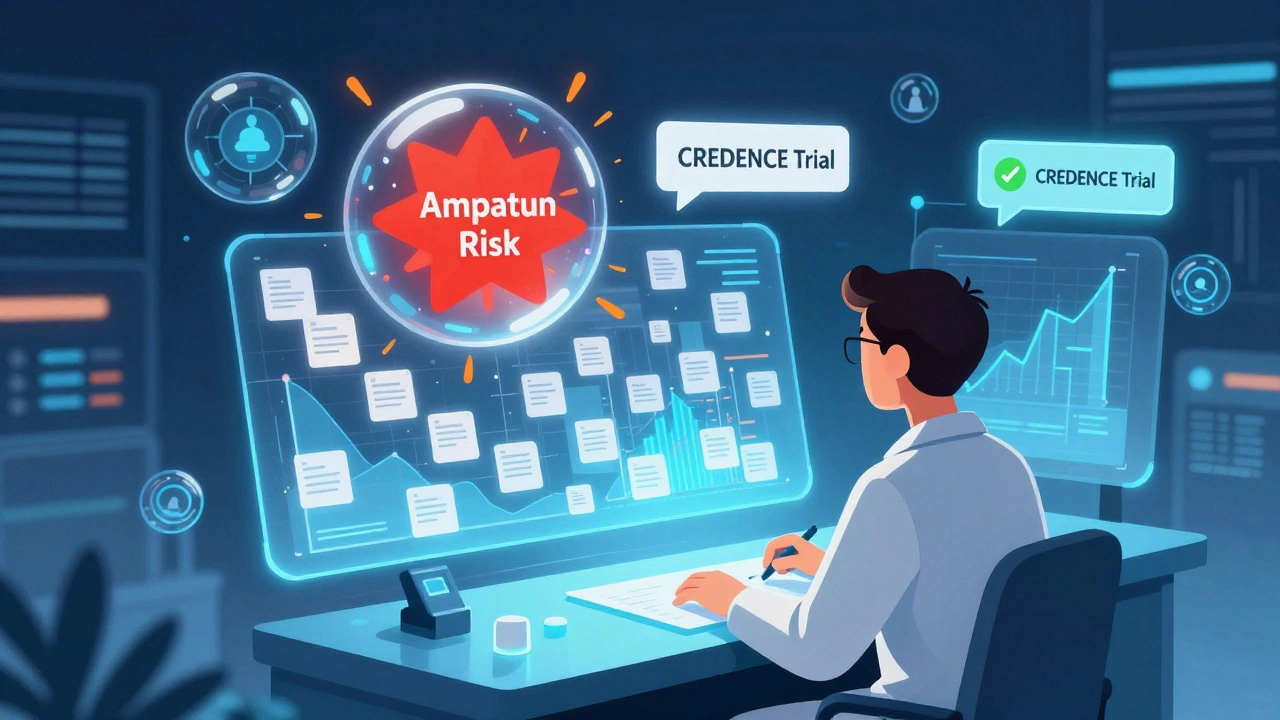
The Hidden Problems in the System
Despite advances, the system is far from perfect. The biggest challenge? Data quality. A 2022 survey of 142 safety professionals found 68% said incomplete or inaccurate reports were their biggest headache. Many reports lack follow-up info-no details on dosage, timing, or whether the patient stopped the drug. Without that, it’s hard to tell if the drug caused the reaction or if it was coincidence. Another issue: the sheer volume. The EMA processes over 2.5 million reports a year. That’s a lot of noise. One safety officer told me, “We get 15 new signals a week. Only two are worth our time.” There’s also a delay. Even with AI tools now cutting signal detection time from two weeks to under two days, full assessment still takes 3 to 6 months. By then, thousands of patients may have been exposed. And for delayed effects-like cancer from long-term exposure-current systems are almost blind.What’s Changing Now
The field is evolving fast. In 2023, the FDA launched Sentinel Initiative 2.0, using electronic health records from 300 million patients. That’s not just reports-it’s real-time data on prescriptions, lab results, hospital visits. It’s like having a live dashboard on drug safety across the entire U.S. healthcare system. The EMA now uses AI to scan EudraVigilance daily. It flags anomalies in hours, not weeks. And the ICH is rolling out new standards to unify how lab data-like liver enzyme levels-are reported. That’s critical for spotting drug-induced liver injury, one of the hardest side effects to catch. New drugs are also changing the game. Biologics, gene therapies, and digital therapeutics don’t behave like traditional pills. Their side effects are different. The system is catching up, but slowly.What You Should Know
If you’re taking a prescription drug, especially a newer one, know this: safety isn’t static. What’s listed on the label today might not be complete. Side effects can emerge months or years later. That’s why reporting any unusual symptom to your doctor-and having them report it to the FDA or EMA-is so important. Pharmacovigilance isn’t about fear. It’s about vigilance. It’s about recognizing that medicine is a living science. What we learn today changes what we do tomorrow. The goal isn’t to stop drugs. It’s to make them safer.How are drug safety signals different from side effects?
Side effects are known reactions listed on a drug’s label-things like nausea or dizziness. A safety signal is an unexpected pattern that suggests a possible new side effect, one not yet confirmed or documented. Signals are the starting point for investigation; side effects are the confirmed outcome.
Can a drug be pulled from the market because of a signal?
Rarely. Most signals lead to label updates, restricted use, or new warnings-not removal. A drug is only withdrawn if the risk clearly outweighs the benefit, and multiple lines of evidence confirm it. Examples include cerivastatin (withdrawn in 2001 for fatal muscle damage) and rofecoxib (Vioxx, 2004, for heart attacks). Signals are the early warning, not the final decision.
Do all adverse events get reported?
No. Studies show only about 1% to 10% of adverse events are reported. Serious events are reported more often-up to 3.2 times more than minor ones. Many doctors don’t report because they’re busy, unsure if it’s related, or think it’s already known. Patient reports help fill the gap.
Why do some signals turn out to be false?
Because correlation isn’t causation. If a drug is widely used and a common condition like headache occurs in a patient, it might get reported as linked-even if it’s unrelated. Also, media attention or coincidental timing can inflate reports. That’s why signals must be validated across multiple data sources before action is taken.
How long does it take for a signal to become a label change?
It varies. Fast-track signals for life-threatening events can be reviewed in weeks. Most take 3 to 6 months. Complex cases, especially those needing new studies or international coordination, can take over a year. The goal is speed without sacrificing accuracy.

Comments
It's wild how much we rely on post-market surveillance. I used to think FDA approval meant 'safe for everyone,' but now I see it's more like 'safe enough to start selling.' The real work happens after the fact - and honestly, it's a miracle we don't lose more people.
Another reason to stop trusting Big Pharma. They push drugs like candy, then blame patients when things go south. If they really cared, they’d test on real people - not just healthy college kids.
So we spend billions on trials that miss everything, then rely on doctors who don’t report, and patients who don’t know how? Brilliant. Just brilliant. The system is designed to fail - and everyone gets a participation trophy.
Disproportionality analysis with BCPNN and PRR thresholds is standard, but the noise-to-signal ratio remains the Achilles’ heel. Without granular pharmacokinetic metadata in spontaneous reports, we’re essentially optimizing for false positives while underpowering detection of delayed, low-incidence events.
Yeah, I’ve seen this play out. My aunt was on a new diabetes med and got dizzy. She didn’t report it because she thought it was just aging. Then she had a fall. If someone had just asked her to report it… maybe things would’ve been different.
Signal detection is the unsung hero of pharmacovigilance. We need more clinicians trained in adverse event pattern recognition - not just as a box to check, but as a core clinical skill. Real-time EHR integration is the future, and we’re lagging.
They’re lying to us. The FDA, the WHO, Big Pharma - they all know the truth. The drugs are poison. They just want you to keep taking them. That ‘canagliflozin amputation’ signal? Totally real. They buried it. They always bury it. Watch for the next one - it’s already coming.
It is, indeed, a matter of considerable concern that the current pharmacovigilance infrastructure remains predicated upon voluntary, unstandardised, and often incomplete reporting mechanisms. The absence of mandatory reporting protocols in many jurisdictions renders the entire system fundamentally fragile.
lol at people thinking this is complex. just say the drugs are dangerous and move on. i took something last year and my hair fell out. no one cared. they just want your money. and your silence.
Wait so if a drug gets approved and then later they find out it causes kidney failure in 1 in 50k people… they just update the label? That’s it? No recall? No compensation? I feel like we’re treating people like lab rats.
Also, I’m pretty sure I took that one drug and got weird rashes. Should’ve reported it. 🤦♂️
I appreciate the nuance here - but we can’t ignore the human cost. Every signal is someone’s hospitalization. Every false alarm is someone’s fear. Every delay is someone’s life. We need better systems, not just better math.
It’s fascinating how the system evolves - from passive reporting to real-time EHR mining. But the biggest barrier isn’t technology. It’s culture. Doctors don’t report because they’re not incentivized. Patients don’t report because they don’t know how. Until we fix that, we’re just rearranging deck chairs on the Titanic.
Of course the system is broken. We let corporations self-report adverse events. They have every incentive to downplay them. And we wonder why we’re getting poisoned? Wake up. This isn’t science - it’s capitalism with a lab coat.
Anyone who still believes in the infallibility of pharmaceutical regulatory bodies is either willfully ignorant or profoundly naive. The fact that dupilumab’s ocular side effects took over a year to be acknowledged - despite hundreds of ophthalmologist reports - proves this system is not designed for safety. It’s designed for liability mitigation. The rest is theater.