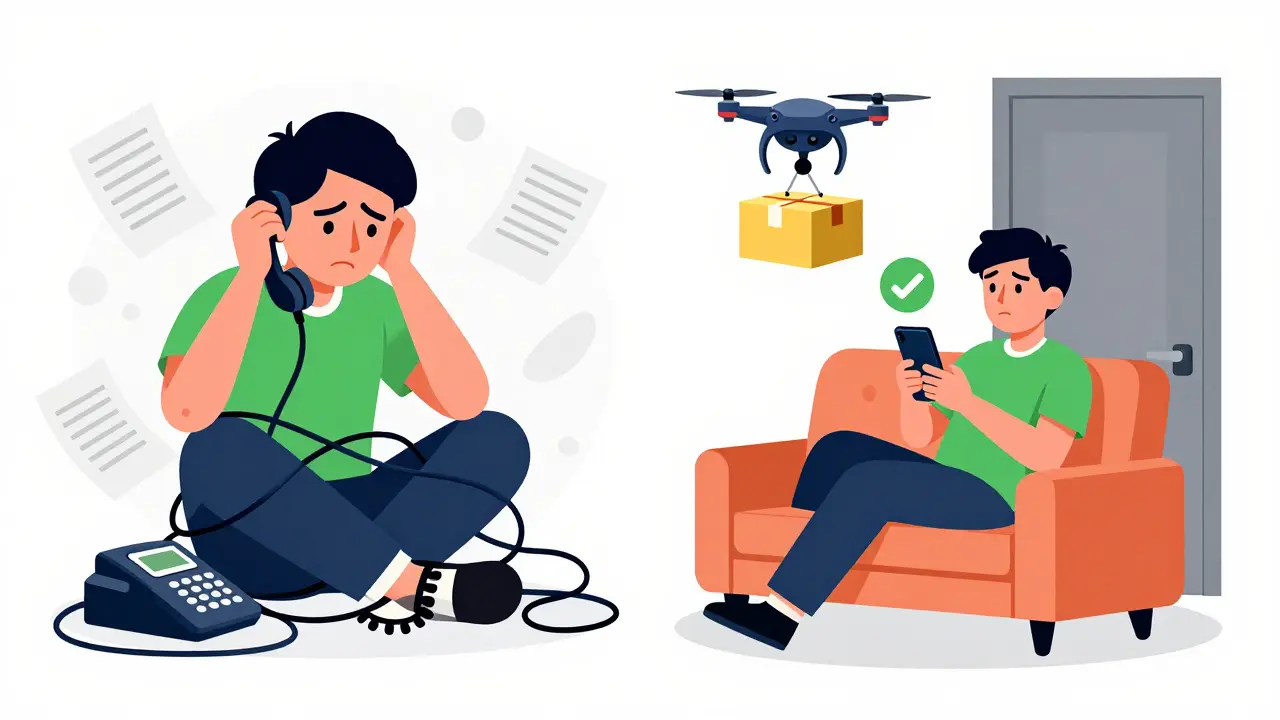
Imagine this: you’re moving across the country, switching insurance plans, or just tired of driving to your local brick-and-mortar pharmacy. You want to move your medications to an online pharmacy is a digital service that dispenses and ships prescription medications directly to patients' homes, often offering lower prices and greater convenience than traditional retail locations. for better prices or easier refills. The old way? Calling your doctor, begging them to reissue the script, then faxing it over while hoping the signal doesn’t drop. That era is largely behind us. Today, digital prescription transfer is the electronic process of moving prescription medication orders from one pharmacy to another without requiring new prescriptions from healthcare providers. has changed the game completely.
You can now move most of your scripts with a few clicks on your phone. But there are rules, especially if you take controlled substances like ADHD meds or anxiety prescriptions. Let’s break down exactly how this works, what you need to know about the recent law changes, and how to avoid the common pitfalls that leave people waiting weeks for their meds.
How Digital Prescription Transfers Work
At its core, a digital transfer is just data moving securely from one computer system to another. It relies on standards set by the National Council for Prescription Drug Programs (NCPDP) is a non-profit organization that develops standards for electronic exchange of healthcare information in the United States, particularly for pharmacy transactions.. Their SCRIPT Standard ensures that when your current pharmacy sends your info to Amazon Pharmacy or CVS Caremark, the details-your name, birth date, drug dosage, and prescriber info-arrive intact and private.
Here is the basic workflow:
- You initiate the request. You log into the new online pharmacy’s app or website. You enter your current pharmacy’s name and your prescription number (found on your bottle).
- The systems talk. The new pharmacy sends an electronic request to your old pharmacy via networks like Surescripts. Over 2.1 billion e-prescriptions moved through this network in 2022 alone.
- Verification. The receiving pharmacist checks the records. If everything matches, they accept the transfer. If there’s a mismatch-maybe your middle name is spelled differently-the transfer pauses until a human fixes it.
- Filling and Shipping. Once accepted, the online pharmacy fills the order and ships it to you. For non-controlled drugs, this usually takes 24 to 48 hours.
The beauty here is speed and accuracy. A 2022 study in the *Journal of the American Pharmacists Association* found that digital transfers reduce errors by 47% compared to phone or fax methods. Manual transfers had clarification requests in 25% of cases; digital ones only hit 8%. Fewer mistakes mean fewer delays and safer care for you.
The Big Change: Controlled Substances Are Now Easier to Transfer
If you take Schedule II-V controlled substances (like Adderall, Xanax, or oxycodone), listen up. For years, federal law said you couldn’t transfer these electronically between pharmacies at all. You had to go back to your doctor, get a new paper script, and start over. That was a huge barrier for people trying to switch to cheaper or more convenient online options.
That changed on August 28, 2023. The Drug Enforcement Administration (DEA) is a federal law enforcement agency under the U.S. Department of Justice responsible for combating drug trafficking and abuse. updated its regulations (21 CFR 1306.25) to allow electronic transfers of controlled substance prescriptions between registered pharmacies. This was a massive win for patient access.
However, there is a catch. The rule allows for one-time transfers only. You can move a controlled substance prescription from Pharmacy A to Pharmacy B once. After that, if you want to move it again, you must contact your prescriber for a new prescription. Dr. Ryan Crowley of the American Pharmacists Association called this "transformative," but also noted it creates complexity if you need to switch pharmacies multiple times.
Also, keep in mind that partial fills can be tricky. If you’ve already taken some pills from your original pharmacy, 63% of online pharmacies struggle to accept the remaining refills due to strict interpretations of state laws. Always check with the new pharmacy before transferring a partially filled controlled script.
Step-by-Step: Moving Your Scripts Online
Ready to make the switch? Here is how to do it safely and efficiently with major players like Amazon Pharmacy, CVS, or Walgreens.
- Gather your info. Find your current prescription bottles. Note the NDC number (National Drug Code) or the prescription number printed on the label. Have your current pharmacy’s address handy.
- Create an account. Sign up with your chosen online pharmacy. Link your insurance card. Most apps let you scan the card with your phone camera.
- Initiate the transfer. Look for the “Transfer Prescriptions” button. Enter the required details. Amazon Pharmacy, for example, often only needs the medication name and your current pharmacy location to pull the rest automatically.
- Wait for confirmation. You’ll get an email or push notification when the transfer is accepted. For non-controlled meds, expect this within 24-48 hours. For controlled substances, it might take up to 72 hours due to extra verification steps.
- Verify coverage. Check your copay. Sometimes, switching pharmacies triggers a benefit reset or changes your tier. If the price looks wrong, call customer support immediately.
Pro tip: Don’t cancel your auto-refill at the old pharmacy until the new one confirms they have successfully filled and shipped your first order. There is no point in having two pharmacies fighting over who owns your prescription record.
Comparing Major Online Pharmacy Platforms
Not all online pharmacies are created equal. Here is how the big three stack up when it comes to transfers:
| Feature | Amazon Pharmacy | CVS Caremark | Walgreens |
|---|---|---|---|
| Transfer Speed (Non-Controlled) | 2-24 hours | 24-48 hours | 24-48 hours |
| Controlled Substance Support | Yes (Limited states) | Yes (Wide availability) | Yes (Wide availability) |
| Integration | Prime Memberships | MinuteClinic & Physical Stores | Health app ecosystem |
| Customer Support Wait Time | ~4 minutes | ~10 minutes | ~12 minutes |
| Best For | Convenience & Speed | Hybrid Online/In-Person Needs | Existing Walgreens Users |
Amazon Pharmacy shines for Prime members. With 200 million subscribers, their integration is seamless. If you use Alexa, you can even voice-command transfers in pilot programs. CVS offers the strongest hybrid model because they own 10,000+ physical stores. If the online transfer fails, you can walk into a CVS and pick it up. Walgreens is solid but often slower in processing initial transfers.
Pitfalls to Avoid: Why Transfers Fail
Even with great tech, things go wrong. Here are the top reasons your transfer might stall:
- Mismatched Identifiers. Express Scripts data shows 19% of transfers fail because names or dates of birth don’t match exactly. Did you change your last name after marriage? Update your profile everywhere.
- Insurance Eligibility Issues. About 23% of transfers hit snags here. Your new pharmacy might not be in-network for your specific plan, or your benefits might have rolled over. Always verify coverage before expecting the med to ship.
- Compounded Medications. If you take custom-mixed drugs, forget the easy button. 68% of compounded med transfers require manual intervention. You will likely need to send a fax of your original script to the new compounding pharmacy.
- State Law Conflicts. Federal law allows electronic transfers of controlled substances, but some states disagree. California’s SB 1056, effective January 2024, adds extra verification layers that can delay transfers. If you live in a strict state, expect longer wait times.
If your transfer fails, don’t panic. Contact the new pharmacy’s support team. They can often see why the request was rejected and guide you to fix it. Most offer 24/7 chat or phone support.
The Future of Prescription Transfers
We are just getting started. The 21st Century Cures Act is pushing for better interoperability between hospitals, doctors, and pharmacies. By 2027, Gartner predicts that 75% of new pharmacy relationships will begin with online transfers rather than in-person visits. Why? Because we value our time.
Surescripts is rolling out “Transfer 2.0,” which will let you track your prescription’s status in real-time, like tracking a UPS package. Imagine seeing “Prescription Accepted by New Pharmacy” or “Filling Now” on your dashboard. It reduces anxiety and gives you control.
There are still challenges. The DEA is reviewing whether to lift the “one-time transfer” limit for controlled substances. Acting Administrator Anne Milgram hinted at potential changes based on early data. If that happens, switching pharmacies for pain management or ADHD meds will become as easy as switching streaming services.
For now, digital prescription transfers are a powerful tool. They save time, reduce errors, and give you more choices. Just remember to double-check your info, understand the rules for controlled substances, and choose a platform that fits your lifestyle. Your health deserves convenience, and technology is finally delivering it.
Can I transfer any prescription to an online pharmacy?
Most prescriptions can be transferred digitally. Non-controlled substances have no limits on transfers. Controlled substances (Schedule II-V) can be transferred electronically once between pharmacies under current DEA rules. Compounded medications often require manual faxing and may not support fully digital transfers.
How long does a digital prescription transfer take?
For non-controlled substances, transfers typically complete within 24 to 48 hours. Controlled substances may take up to 72 hours due to additional verification requirements. Some platforms like Amazon Pharmacy report success in as little as 2 hours for simple transfers.
Do I need my doctor's permission to transfer a prescription?
No, you generally do not need your doctor's permission for standard transfers. The transfer occurs between licensed pharmacists. However, if the transfer fails or involves a controlled substance that has already been transferred once, you may need to contact your prescriber for a new prescription.
What happens if my insurance doesn't cover the new pharmacy?
If the new online pharmacy is out-of-network, your copay may increase significantly, or the claim may be denied. Always verify your insurance eligibility during the sign-up process. If issues arise, contact both your insurance provider and the pharmacy's customer support to resolve coverage gaps before paying out of pocket.
Is digital prescription transfer secure?
Yes, digital transfers are highly secure. They comply with HIPAA regulations and use encrypted networks like Surescripts' SCRIPT Standard. Electronic transfers actually reduce errors by 47% compared to manual phone or fax methods, making them safer for patient data and medication accuracy.