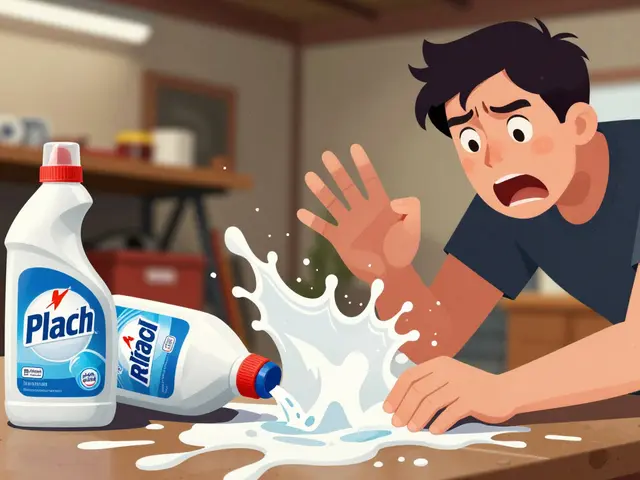
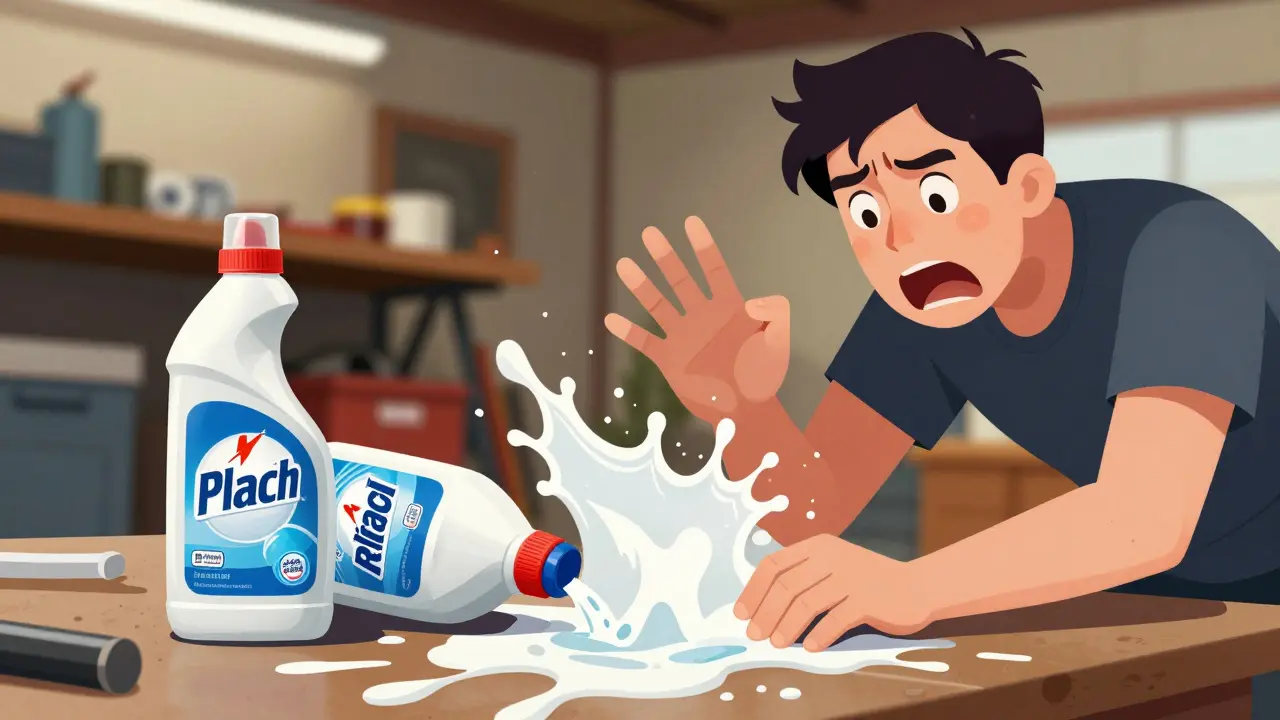
Imagine you are cleaning the garage or working in a lab, and suddenly a bottle of bleach or drain cleaner tips over. It hits your face. Panic sets in instantly. You might feel an immediate sting, or perhaps nothing at all if the chemical is particularly insidious. In that split second, your reaction determines whether you keep your sight or lose it forever. Chemical splashes are not just painful; they are medical emergencies that can destroy the cornea within seconds.
You do not need to wait for an ambulance to start saving your vision. In fact, waiting is the worst thing you can do. The single most critical factor in surviving a chemical eye injury is how fast and how long you flush the eye with water. Every second counts. This guide breaks down exactly what to do, where to find help, and why common mistakes like rubbing your eyes or using too little water can lead to permanent blindness.
The Critical Window: Why Seconds Matter
When a corrosive substance touches your eye, it does not just sit on the surface. It begins eating away at the delicate tissues immediately. According to data from the American Academy of Ophthalmology, chemical injuries make up about 11.5% to 22.5% of all eye trauma cases seen in emergency rooms. But here is the scary part: a 2017 meta-analysis published in the British Journal of Ophthalmology found that starting irrigation within 10 seconds of exposure reduces the risk of permanent vision loss by 76%. Ten seconds. That is less time than it takes to tie your shoes.
Dr. Paul T. Finger, a leading ophthalmologist at New York University, states clearly that the speed and duration of initial irrigation are the only things that truly matter for visual outcomes. If you hesitate to call someone for help, or if you spend time looking for saline solution instead of grabbing tap water, you are actively increasing the damage. The goal is simple: dilute and wash away the chemical agent before it penetrates deeper into the eye structures.
Alkali vs. Acid: Knowing the Enemy
Not all chemicals act the same way, though the first aid response is largely identical. Understanding the difference helps you gauge the severity. Alkali burns are generally more dangerous than acid burns. Common household alkalis include ammonia, bleach, lime, and oven cleaners. These substances have a high pH (above 11.5) and cause liquefactive necrosis. This means they turn tissue into liquid, allowing them to penetrate deep into the eye very quickly. A study in the Journal of Ophthalmic Inflammation and Infection noted that alkali burns are more common than acid burns in occupational settings.
Acid burns, caused by substances like sulfuric acid, vinegar (in high concentrations), or battery acid, cause coagulative necrosis. The acid turns proteins into a solid scab-like barrier. While this sounds protective, it still causes severe damage and pain. However, because the tissue coagulates, acids often do not penetrate as deeply or as quickly as alkalis. Despite this difference, you should treat both with the same urgency. Do not try to diagnose the chemical type in the moment. Just flush.
Step-by-Step Immediate First Aid Protocol
If you or someone else gets a chemical in their eye, follow these steps immediately. Do not deviate. Do not stop until instructed by a medical professional.
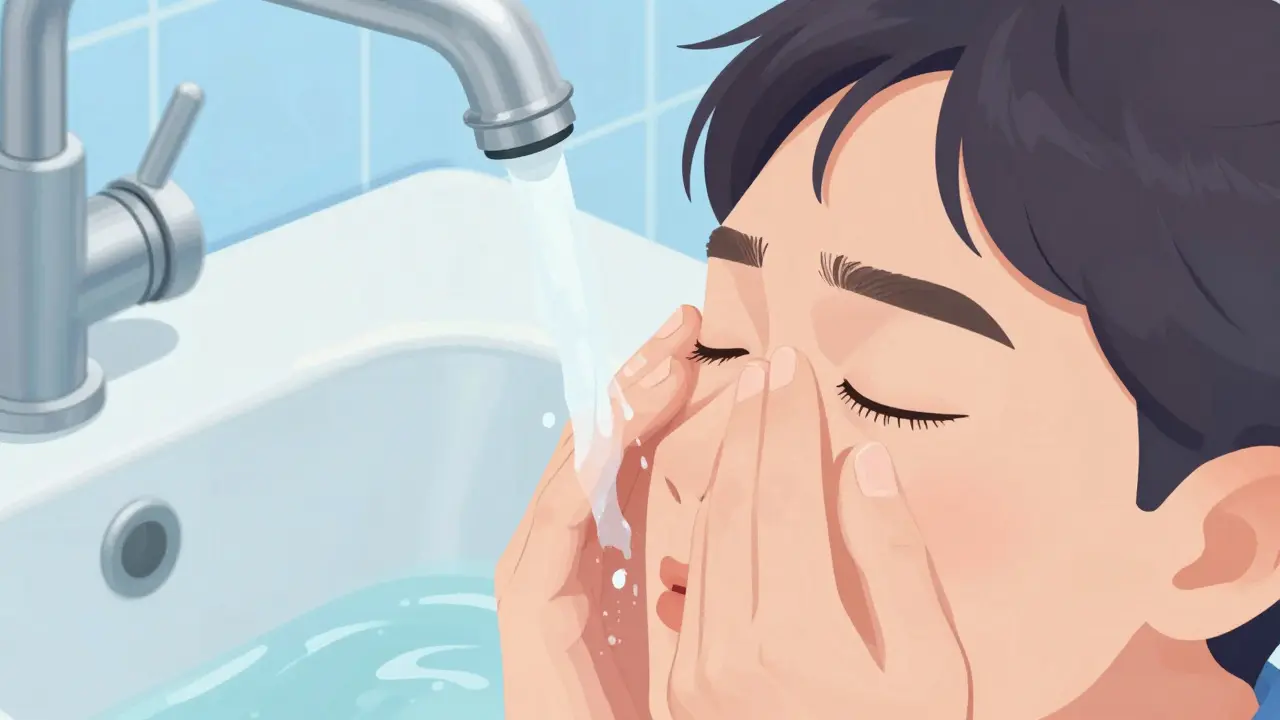
- Flush Immediately: Go to the nearest source of running water. This could be a sink, a shower, a garden hose, or an emergency eyewash station. Do not worry about cleanliness. Tap water is better than no water.
- Position Correctly: Tilt the head so the injured eye is lower than the unaffected eye. For example, if the right eye is hurt, tilt your head to the right. This prevents the chemical from washing across the bridge of your nose into the good eye. Healthdirect Australia emphasizes this positioning to prevent secondary injury to the healthy eye.
- Hold Eyelids Open: This is the hardest part. The pain will make you want to squeeze your eyes shut. You must use your fingers to pull the upper and lower eyelids apart. Keep the eye wide open. If the lids are closed, the water flows over them without reaching the trapped chemical under the lid.
- Rotate the Eye: While flushing, ask the victim to move their eye up, down, left, and right. This ensures water reaches the corners of the eye and under the eyelids where chemicals often hide.
- Continue for 20 Minutes: Flush continuously for at least 20 minutes. Many people stop after a minute or two because the pain subsides slightly, but the chemical may still be present. The Better Health Channel in Victoria recommends 15-20 minutes, while some guidelines suggest continuing until emergency services arrive. When in doubt, flush longer.
Dr. James Chelnis, an oculoplastic surgeon, warns that many people make the mistake of using small amounts of water or stopping too soon. The eye must be flooded. Use a gentle stream of water, not a high-pressure jet that could damage the already injured tissue.
Common Mistakes That Worsen the Injury
In the heat of the moment, fear leads to bad decisions. A 2022 study in the Journal of Occupational and Environmental Medicine analyzed over 1,200 workplace chemical exposures and found alarming rates of improper first aid. Here are the errors you must avoid:
- Rubbing the Eye: Reported in 68.2% of cases, rubbing grinds the chemical particles deeper into the cornea and can cause physical abrasions. Never rub.
- Applying Pressure: About 31.5% of victims apply pressure to the eye, thinking it will "push" the chemical out. This increases intraocular pressure and forces toxins deeper into the eye. Keep hands off except to hold lids open.
- Using Insufficient Water: Over 80% of cases involved using too little water. A few drops from an eye drop bottle are useless against a chemical splash. You need volume. A liter of water poured slowly is better than a milliliter of saline.
- Stopping Too Soon: More than half of victims stopped irrigation prematurely. Pain relief does not mean neutralization. Stick to the 20-minute rule.
Contact Lenses and Eyeglasses
If you wear contact lenses, the instinct might be to leave them in to avoid further irritation. However, contacts can trap chemicals against the cornea. Healthdirect Australia advises attempting to remove contact lenses during irrigation if possible. If the lens is stuck or the eye surface is severely damaged, do not force it. Let the water flow over it. The priority is flushing. Eyeglasses should be removed immediately to allow full access to the eye for irrigation.
Workplace Safety and Eyewash Stations
If you work with chemicals, your employer is legally required to provide safety equipment. In the United States, OSHA regulations (29 CFR 1910.151(c)) mandate suitable facilities for quick drenching or flushing of the eyes. The gold standard for this equipment is defined by ANSI Z358.1-2021. This standard requires that eyewash stations deliver tepid water (between 60°F and 100°F, or 16°C-38°C) at a flow rate of 0.4 gallons per minute for at least 15 minutes. Crucially, the station must be reachable within 10 seconds of the hazard area.
Despite these rules, a 2023 OSHA audit revealed that nearly 23% of facilities with chemical hazards lacked compliant eyewash stations within the required distance. If you work in a lab, factory, or even a school science room, locate the eyewash station today. Test it. Make sure it works. Cold water can cause shock and make patients stop irrigating early, which is why temperature control matters.
| Factor | Alkali Burns | Acid Burns |
|---|---|---|
| Common Sources | Bleach, Ammonia, Lime, Oven Cleaner | Sulfuric Acid, Battery Acid, Vinegar (high conc.) |
| Tissue Damage Type | Liquefactive Necrosis (deep penetration) | Coagulative Necrosis (surface scabbing) |
| Penetration Speed | Very Fast | Moderate/Slow |
| First Aid Priority | Immediate, prolonged irrigation (>20 mins) | Immediate, prolonged irrigation (>20 mins) |
| pH Level | > 11.5 | < 2.5 |
Medical Treatment After First Aid
After 20 minutes of flushing, you must seek professional medical attention. Even if the pain has gone away, damage may be ongoing. At the hospital, doctors will check the pH of your eye using litmus paper. They will continue irrigation until the pH reaches a neutral level of 7.0 to 7.4. For severe alkali burns, this may take much longer than 20 minutes.
Recent advancements offer hope. In 2022, the FDA approved Diphoterine, a specialized decontamination solution that binds to chemical particles rather than just diluting them. Studies show it can reduce required irrigation time by 40%. However, this is a hospital-grade treatment. For home or workplace first aid, water remains the best tool. Dr. Reay Brown from Bascom Palmer Eye Institute notes that saline offers no advantage over tap water for initial irrigation, so do not delay to find saline.
Long-term consequences can be severe. The American Academy of Ophthalmology reports that nearly 19% of chemical eye injury patients require corneal transplants within five years. Early and aggressive first aid is the only way to prevent this outcome.
Prevention and Preparedness
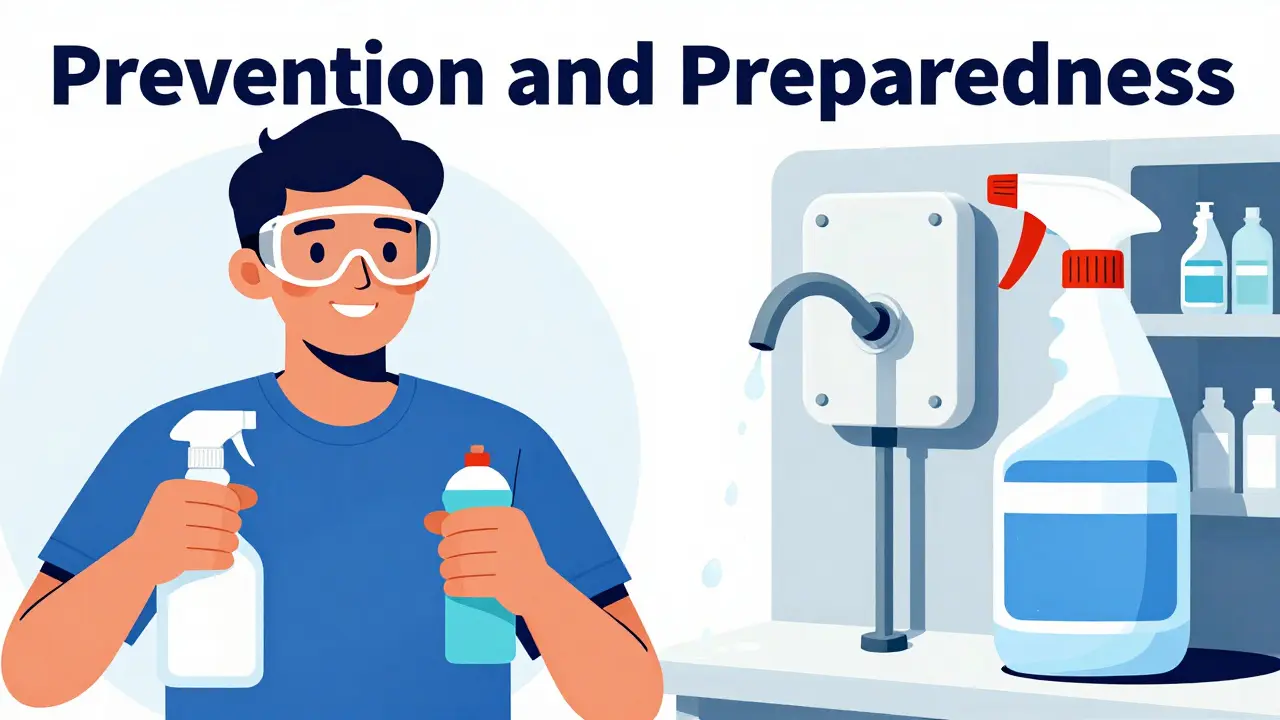
Prevention is always better than cure. Wear safety goggles whenever you handle chemicals, even household cleaners. Goggles provide a seal around the eyes, preventing splashes from entering. Regular glasses do not offer sufficient protection as chemicals can seep in from the sides.
Keep a bottle of sterile saline or plain water near areas where chemicals are used. While tap water is fine for emergencies, having a dedicated spray bottle allows for faster initial response. Educate your family or coworkers on the 20-minute rule. Most people do not know how long to flush. Practice makes perfect. If you live in Manchester or anywhere else, check local fire station or community center resources for free first aid training. Hands-on training increases the likelihood of proper response by over 300%, according to American Red Cross data.
How long should I flush my eye after a chemical splash?
You should flush your eye with cool, running water for at least 20 minutes. For severe alkali burns, medical professionals may require irrigation to continue until the eye's pH returns to neutral (7.0-7.4), which can take longer. Do not stop early just because the pain decreases.
Is saline solution better than tap water for chemical eye injuries?
No. According to expert ophthalmologists, tap water is just as effective as saline for initial irrigation. Do not waste time searching for saline if tap water is immediately available. Speed is the most critical factor in saving vision.
Should I remove contact lenses during a chemical splash?
Yes, if you can do so easily without causing further damage. Contact lenses can trap chemicals against the cornea. However, if the lens is stuck or the eye is severely swollen, do not force it. Focus on continuous flushing with water.
What is the difference between alkali and acid burns to the eye?
Alkali burns (from bleach, ammonia) cause liquefactive necrosis, meaning they penetrate deep into the eye tissue rapidly. Acid burns (from sulfuric acid) cause coagulative necrosis, creating a surface barrier that slows penetration but still causes significant damage. Both require immediate, prolonged irrigation.
Do I need an eyewash station at home?
While ANSI standards apply to workplaces, having a dedicated eyewash station or a large bottle of water near chemical storage areas at home is highly recommended. It ensures you have immediate access to a large volume of water without needing to run to a sink, saving critical seconds.
Can chemical eye injuries cause blindness?
Yes. Severe chemical burns can lead to corneal perforation, scarring, and permanent vision loss. Approximately 18.7% of chemical eye injury patients require corneal transplants within five years. Immediate first aid significantly reduces this risk.