
When a pharmacist swaps one blood pressure pill for another, or switches an antidepressant to a different brand in the same family, it’s not random. It’s therapeutic interchange - a deliberate, evidence-based move made by healthcare teams to save money without sacrificing care. But here’s the catch: therapeutic interchange doesn’t mean swapping drugs from different classes. That’s a common misunderstanding. It’s always within the same therapeutic group - like replacing lisinopril with losartan, both angiotensin receptor blockers, not switching from a beta-blocker to a diuretic.
How Therapeutic Interchange Actually Works
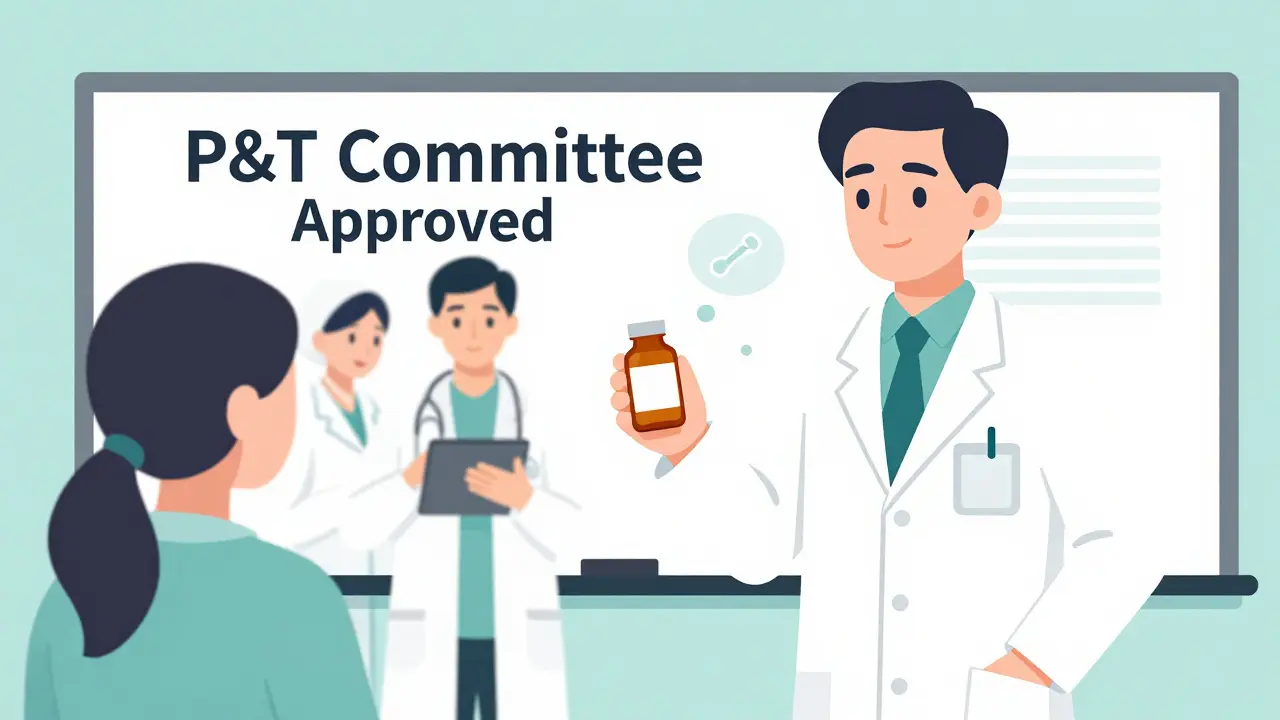
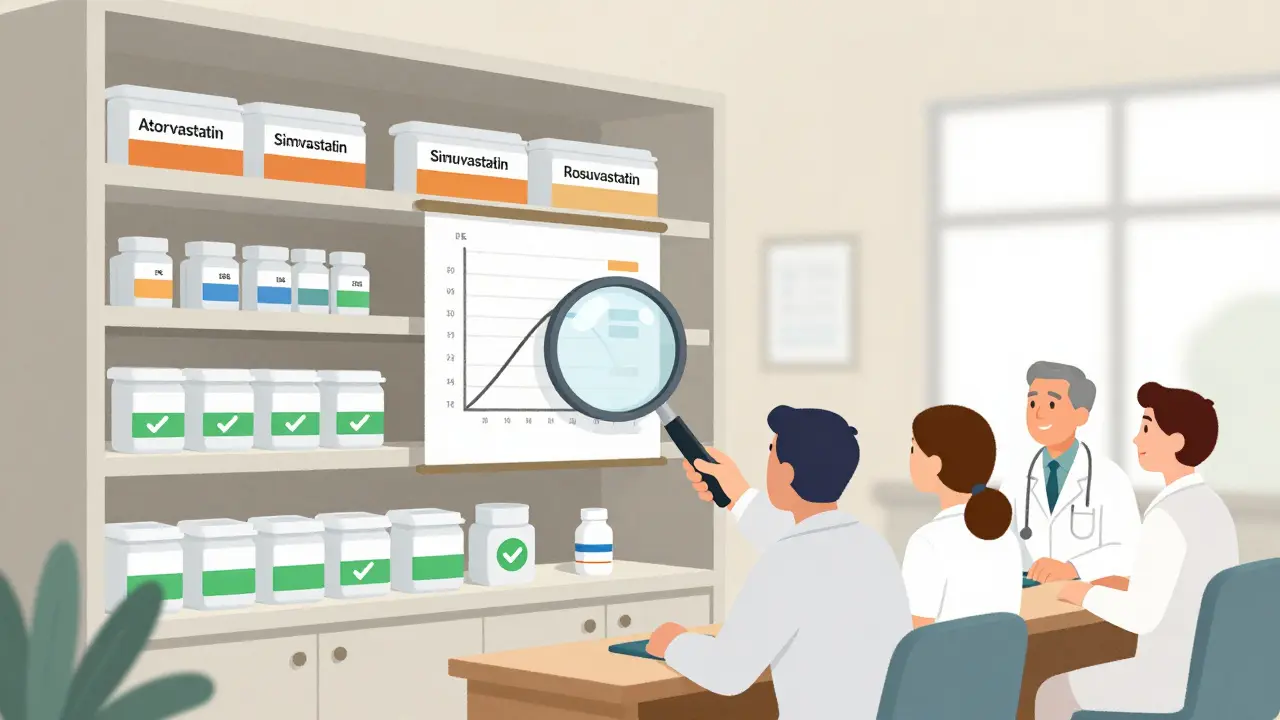
Therapeutic interchange isn’t a pharmacist guessing what might work. It’s a structured process guided by a Pharmacy and Therapeutics (P&T) Committee. This group - made up of doctors, pharmacists, nurses, and sometimes patients - reviews clinical data to decide which drugs in a class are most effective, safest, and cheapest. Once they approve a list, pharmacists can swap prescribed meds with alternatives on that list, as long as the patient’s condition matches the criteria.For example, if a doctor prescribes atorvastatin for high cholesterol, and the hospital’s formulary lists simvastatin as a preferred alternative with similar outcomes and lower cost, the pharmacist can fill it with simvastatin - no new prescription needed. But only if the P&T Committee has already approved this swap based on studies showing both drugs work the same way in most patients.
This isn’t generic substitution, where you swap a brand-name drug for its identical chemical copy. Therapeutic interchange swaps different chemical compounds - like switching from one SSRI to another - but only when multiple studies show they deliver nearly the same results. The American College of Clinical Pharmacy says it’s about ‘therapeutically equivalent’ drugs, not identical ones.
Why Hospitals Do It - And Why It Matters
Drug prices keep climbing. In 2018, U.S. drug costs rose 8% - a trend that hasn’t reversed. For hospitals and nursing homes, pharmacy bills can eat up 20% or more of their operating budget. Therapeutic interchange cuts those costs without lowering care quality.Skilled nursing facilities report savings of tens of thousands of dollars each month just by switching to preferred drugs on their formulary. One facility cut its monthly statin costs by 40% after switching from branded atorvastatin to generic simvastatin, then further reduced costs by switching to an even cheaper alternative approved by their P&T team. That’s money that can go toward staffing, therapy programs, or better meals for residents.
It’s not just about saving money. Some alternatives have fewer side effects. A patient on a certain ACE inhibitor might get a dry cough. Switching them to an ARB - same class, different chemical - often eliminates that problem. That’s therapeutic interchange working the way it should: better outcomes, lower cost, fewer complaints.
Where It Works - And Where It Doesn’t
Therapeutic interchange thrives in institutional settings: hospitals, long-term care facilities, VA hospitals. These places have formularies, P&T committees, and systems to track who got what. But in community pharmacies? It’s rare.Why? Because state laws vary wildly. In some states, pharmacists can make the swap only if the prescriber signed a blanket authorization - a ‘TI letter’ - allowing substitutions for specific drugs. In others, the pharmacist must call the doctor every single time. Many doctors don’t want to be bothered with those calls. So, the pharmacist fills the original prescription, even if it’s more expensive.
There’s also the issue of trust. Some prescribers worry pharmacists don’t know their patient’s full history. A patient on a specific beta-blocker might be on it because they have asthma and can’t take another. If the pharmacist swaps it without knowing that, it could be dangerous. That’s why every reputable program requires detailed documentation and communication.
The Rules: What Experts Say
There are two non-negotiable rules for therapeutic interchange:- It must involve drugs from the same therapeutic class - no crossing into different categories.
- There must be solid clinical evidence showing the alternatives produce substantially equivalent results.
The ACCP guidelines, updated in 2004 and still referenced today, make this crystal clear. So does the American Heart Association. They both say: if there’s no evidence, don’t swap. If the drugs are in different classes - like switching from a statin to a bile acid sequestrant for cholesterol - that’s not therapeutic interchange. That’s a new prescription. Period.
And it’s not just about the drugs. It’s about the process. The P&T Committee must include input from nurses, pharmacists, and sometimes patients. A 2011 AHA policy statement says decisions should reflect ‘patient and family-centered goals.’ That means if a patient has had a bad reaction to a certain drug before, even if it’s on the preferred list, the swap shouldn’t happen.
Real Challenges Providers Face
Even with good intentions, therapeutic interchange runs into roadblocks.One big one: paperwork. A single nursing home might have 20 different doctors writing prescriptions. Getting each one to sign a TI letter for every drug they prescribe is a logistical nightmare. Some facilities use electronic systems that auto-flag when a non-preferred drug is ordered, then prompt the prescriber to approve the swap. Others still use paper forms that get lost in mailrooms.
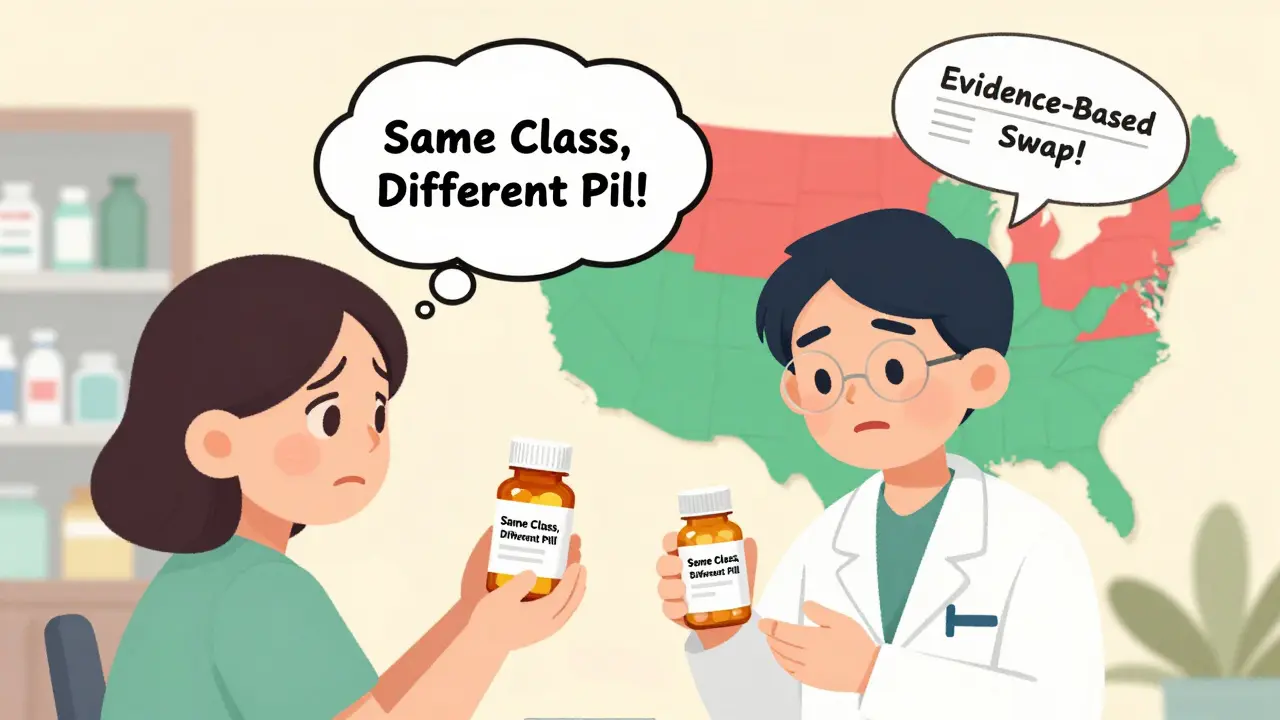
Another problem: patient confusion. If someone’s been taking a specific brand of metoprolol for years, and suddenly gets a different one, they might think something’s wrong. Pharmacists need to explain clearly: ‘This is a different pill, but it does the same thing. Your doctor approved the switch to save money.’ Without that conversation, trust erodes.
And then there’s state law. In California, pharmacists can make the swap with a signed TI letter. In Texas, they need a new prescription for every change. In Florida, it’s allowed only for certain drug classes. Providers have to know the rules in every state where they operate - and that’s not easy.
What’s Next for Therapeutic Interchange
The future isn’t about expanding into different drug classes. It’s about making within-class swaps smarter.More institutions are using real-time data to track outcomes. If patients on the new drug have more hospital visits or worse lab results, the swap gets pulled from the formulary. If they do better, it gets promoted. Some systems now flag patients who’ve had adverse reactions to specific drugs - automatically blocking swaps for them.
There’s also growing interest in patient education. Instead of just handing out a new pill, some pharmacies now offer short videos or printed guides explaining why the change was made. That reduces anxiety and improves adherence.
But the core won’t change: therapeutic interchange stays within the same class. It’s not a loophole to mix drugs. It’s a tool - carefully designed, tightly regulated, and grounded in evidence - to give patients the care they need at a price they can afford.
What Providers Should Remember
If you’re a doctor, nurse, or pharmacist:- Don’t assume a swap is okay just because the drugs seem ‘similar.’ Check the formulary.
- Always ask: Is there evidence this swap works as well? Is it safe for this patient?
- Communicate. Even a quick note to the patient - ‘We switched this to save you money and it’s just as effective’ - makes a difference.
- Know your state’s laws. One state’s standard is another’s violation.
- Therapeutic interchange isn’t about cutting corners. It’s about cutting waste - smartly.
At its best, therapeutic interchange is a quiet win: a patient gets the same treatment, the hospital saves money, and no one even notices the change. That’s the goal. Not confusion. Not cost-cutting at the expense of care. Just better, smarter medicine.

Comments
Therapeutic interchange? More like therapeutic chaos. P&T committees don't know squat about real patients. I saw a guy get switched from lisinopril to losartan and ended up in the ER with angioedema. No one told him. No one documented it. Just cost-cutting nonsense.
Also, 'formulary' is not a magic word. Stop using jargon like you're in a Pharma sales pitch.
It is regrettable that the article fails to explicitly delineate the epistemological foundations underpinning therapeutic interchange. The American College of Clinical Pharmacy’s 2004 guidelines, while historically significant, are not infallible; they predate the advent of real-world evidence platforms and pharmacogenomic stratification. To conflate ‘therapeutic equivalence’ with ‘clinical interchangeability’ is a categorical error, particularly when considering interindividual variability in CYP450 metabolism. One must ask: who adjudicates ‘substantially equivalent’? A committee of administrators, or the patient’s pharmacokinetic profile?
Y’all know Big Pharma is behind this, right? 😤 They push these ‘preferred’ drugs so they can charge more later when the patent runs out. They swap your meds, then jack up the price on the ‘new’ generic. It’s all a scheme. 🇺🇸💊
My grandma got switched to some ‘equivalent’ pill and now she’s dizzy all day. That’s not care - that’s corporate greed.
Man, I work in a VA clinic and this is our bread and butter. We swap out brand-name statins for generics all the time - and patients don’t even notice. The key? Communication. We sit down, show them the studies, say ‘this does the same thing, costs less, and we’ve got your back.’
Some folks freak out, but most are like, ‘Cool, save me some cash.’ It’s not magic. It’s just good practice.
STOP. Just STOP. This isn’t ‘smart medicine’-it’s a dangerous, unregulated loophole that’s being weaponized by insurance companies and hospital admins who don’t give a damn about outcomes! They don’t track adverse events! They don’t follow up! And now they’re calling it ‘evidence-based’? That’s not evidence-that’s convenience dressed up in a lab coat!
And don’t get me started on state laws-why is Texas the only one that gets it right? Because they’re not afraid to say ‘NO’ to corporate pressure!
Good post. This is exactly how it should work-when done right. The P&T committee model is one of the few things in healthcare that actually prioritizes both cost and safety. The problem isn’t the concept. It’s the lack of standardization and poor communication.
Train pharmacists to explain the switch. Give prescribers a simple electronic flag system. And for heaven’s sake, document everything. It’s not hard. It’s just neglected.
Let’s be honest: therapeutic interchange is just the pharmaceutical-industrial complex’s way of offloading low-margin drugs onto unsuspecting patients under the guise of ‘efficiency.’
They call it ‘evidence-based’ because the studies were funded by the same companies that profit from the swap. The ‘equivalence’ is statistical noise. Real patients aren’t averages.
And yet, you still defend it? Pathetic.
Oh wow. So we’re just going to ignore the existential horror of pharmaceutical governance? The P&T committee? A council of bureaucrats deciding who lives and who gets a slightly cheaper pill?
It’s not about cost-it’s about control. Who gets to decide what ‘equivalent’ means? A doctor? A pharmacist? An algorithm trained on Medicare claims data?
And then we wonder why people don’t trust medicine anymore.
Therapeutic interchange isn’t innovation-it’s institutionalized disempowerment. And you’re all just nodding along like it’s a public service.
Let me tell you something about power. The P&T committee isn’t neutral. It’s a gatekeeper. And gatekeepers don’t care about your cough, your fatigue, your fear. They care about formulary compliance. They care about the spreadsheet.
Real medicine isn’t about swapping pills on a list. It’s about listening. About knowing that the woman who’s been on metoprolol for 15 years doesn’t need a ‘cheaper alternative’-she needs to be asked if she’s okay with it.
Therapeutic interchange isn’t medicine. It’s bureaucracy with a stethoscope.
Look, I get the fear. I’ve been there. But this isn’t the enemy. The enemy is the system that makes $500 pills necessary in the first place. Therapeutic interchange? It’s a band-aid. A smart one.
Yes, it’s flawed. Yes, communication sucks. But in a broken system, doing something that saves money AND keeps people alive? That’s not betrayal. That’s resistance.
Fix the process. Don’t trash the idea. We need more of this-better, not less.