Opioid Safety Checker for Renal Failure
Select a patient's estimated GFR and an opioid to view safety recommendations and potential risks.
Quick Reference Table
| Opioid | GFR > 50 | GFR 10–50 | GFR < 10 / ESRD |
|---|---|---|---|
| Morphine | Standard Dose | Reduce dose by 50% | Avoid / High Risk |
| Codeine | Standard Dose | Reduce dose by 50% | Avoid / Contraindicated |
| Meperidine | Avoid | Avoid | Avoid / Contraindicated |
| Hydromorphone | Standard Dose | Monitor closely | Use with caution / Reduce dose |
| Oxycodone | Standard Dose | Reduce dose by 25-50% | Use with caution / Monitor |
| Fentanyl | Preferred | Preferred | Preferred (No active metabolites) |
| Buprenorphine | Preferred | Preferred | Preferred (Minimal renal clearance) |
| Methadone | Standard Dose | Monitor QT interval | Use with caution / Monitor QT |
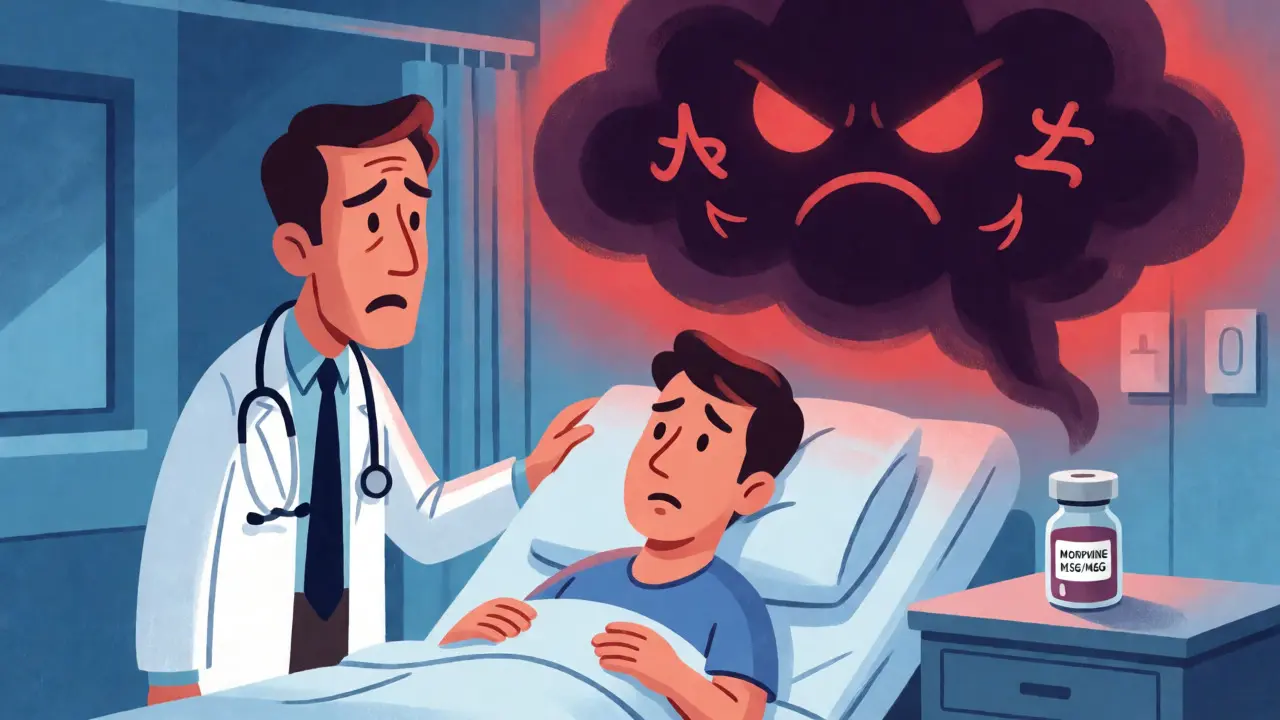
Imagine you’re managing pain for a patient whose kidneys are barely filtering blood. You reach for the usual go-to, Morphine, and suddenly the patient is confused, twitching, or struggling to breathe. This isn’t rare; it’s a predictable pharmacological trap. In patients with chronic kidney disease (CKD) or end-stage renal disease (ESRD), standard opioid protocols can turn into poison because the body can’t clear the drug’s breakdown products. The stakes are high: pain is prevalent in up to 85% of dialysis patients, yet it remains dangerously under-treated because clinicians fear these toxic side effects.
The core issue is simple biology. Opioids don’t just vanish after they work; they break down into metabolites that often need healthy kidneys to exit the body. When glomerular filtration rate (GFR) drops, these metabolites pile up. Some cause sedation and respiratory depression, while others trigger neurotoxicity-think seizures, myoclonus (jerking muscles), and delirium. Choosing the wrong opioid in renal failure isn’t just ineffective; it’s hazardous. But choosing the right one, with precise dosing adjustments, can restore quality of life without tipping the patient into an ICU bed.
Why Standard Opioids Fail in Kidney Disease
To make safe choices, you have to understand what happens to drugs when kidneys fail. Most opioids undergo hepatic metabolism (liver processing), but their metabolites are frequently excreted by the kidneys. If the kidneys are impaired, these metabolites accumulate.
Morphine is the classic example. It breaks down into morphine-3-glucuronide (M3G) and morphine-6-glucuronide (M6G). M6G is actually more potent than morphine itself, causing excessive sedation and respiratory depression. M3G doesn’t relieve pain but causes neuroexcitation, leading to agitation and myoclonus. In patients with a GFR below 30 mL/min, these levels skyrocket. Similarly, Codeine converts to morphine, inheriting all its risks. Using codeine in severe renal impairment is like driving blindfolded on a highway.
Then there’s Meperidine (also known as pethidine). This drug produces normeperidine, a metabolite with a long half-life that accumulates rapidly in renal failure. Normeperidine is strictly neurotoxic, causing tremors, anxiety, and seizures at serum concentrations above 0.6 mg/L. For this reason, KDIGO guidelines explicitly state: DO NOT USE meperidine in any stage of significant renal impairment.
The Safe List: Fentanyl and Buprenorphine
If morphine and codeine are risky, what should you use? Current evidence strongly favors lipophilic opioids that rely less on renal excretion. Two names stand out: Fentanyl and Buprenorphine.
Fentanyl is metabolized primarily by the liver via CYP3A4 enzymes. Only about 7% of unchanged fentanyl is excreted by the kidneys, and its metabolites are inactive. This means no toxic buildup. Transdermal fentanyl patches are particularly useful for chronic pain because they provide stable plasma levels, avoiding the peaks and troughs that trigger side effects. However, caution is needed during hemodialysis sessions, where clearance can be unpredictable due to adsorption onto the dialysis membrane.
Buprenorphine is another top contender. It has extensive hepatic metabolism, and while some metabolites are renally cleared, they are generally considered non-toxic or minimally active. Studies suggest buprenorphine can be used in advanced CKD and even dialysis patients without significant dose reduction, making it a favorite among nephrologists. One caveat: monitor for QT prolongation, especially if combined with other cardiac-risk medications.

Dosing Adjustments: A Practical Guide
You can’t just swap drugs; you must adjust doses based on kidney function. Here is a simplified framework derived from KDIGO and American Family Physician guidelines.
| Opioid | GFR >50 mL/min | GFR 10-50 mL/min | GFR <10 mL/min | Risk Profile |
|---|---|---|---|---|
| Morphine | 100% of usual dose | 50-75% of usual dose | 25% of usual dose | High risk of neurotoxicity |
| Codeine | Avoid | Avoid | Avoid | Accumulation of active metabolites |
| Fentanyl | 100% of usual dose | 75-100% of usual dose | 50% of usual dose | Safe; minimal renal excretion |
| Buprenorphine | 100% of usual dose | 100% of usual dose | 100% of usual dose | Safe; hepatic metabolism dominant |
| Hydromorphone | Use with caution | Reduce dose/frequency | Avoid or extreme caution | Active metabolite accumulation |
| Oxycodone | Standard dose | Max 20mg/day if CrCl <30 | Avoid or very low dose | Partial renal clearance of metabolites |
Note that Hydromorphone sits in a gray area. While the parent drug is hepatically metabolized, its metabolite hydromorphone-3-glucuronide accumulates in non-dialyzed stage 5 CKD patients, increasing neurotoxicity risk by nearly 40%. If you must use it, start low and go slow.
Managing Side Effects: Constipation and Beyond
Pain relief often comes with constipation, which affects 40-80% of CKD patients on opioids. In renal failure, this is compounded by fluid restrictions and dietary limits. Traditional laxatives might not cut it. Enter PAMORAs (Peripherally Acting Mu-Opioid Receptor Antagonists).
Naldemedine is currently preferred in renal populations. Unlike methylnaltrexone, naldemedine does not require dose adjustment in CKD or hemodialysis patients. The standard 0.2 mg daily dose works across the board. This simplifies prescribing significantly, removing the guesswork from bowel management.
Don’t forget adjuvant therapies. Gabapentinoids are common for neuropathic pain but are almost entirely renally cleared. In patients with GFR <30 mL/min, gabapentin doses must drop drastically-often to 200-700 mg once daily, or timed post-dialysis. Overdosing gabapentin in renal failure leads to profound sedation and falls, mimicking opioid overdose.

Clinical Pitfalls and Monitoring
Even with the right drug, errors happen. A major pitfall is assuming "renal-safe" means "no monitoring." Fentanyl patches, for instance, take 12-24 hours to reach steady state. Titration too quickly can lead to delayed respiratory depression. Always start transdermal fentanyl only in opioid-tolerant patients; never in opioid-naïve individuals.
Another trap is polypharmacy. Patients with CKD often take multiple meds affecting CYP3A4 enzymes. Drugs like clarithromycin or ketoconazole can inhibit fentanyl metabolism, spiking its levels. Conversely, rifampin can induce metabolism, rendering fentanyl ineffective. Regular medication reviews are essential.
Finally, remember that pain assessment in cognitively impaired renal patients is tricky. Use validated tools like the Pain Assessment in Advanced Dementia (PAINAD) scale if self-reporting isn’t possible. Under-assessment leads to under-treatment; over-assessment leads to toxicity.
The Future: Personalized Analgesia
We are moving toward precision medicine. Research indicates that genetic factors play a role. For example, CYP2D6 poor metabolizers face a 3.2-fold higher risk of morphine toxicity in CKD. As pharmacogenomic testing becomes cheaper, we may soon tailor opioid choice based on both kidney function and genetic profile. Until then, stick to the evidence-based hierarchy: avoid morphine/codeine/meperidine, prefer fentanyl/buprenorphine, and titrate carefully.
Can I use morphine in mild kidney disease?
Yes, but with caution. If the GFR is greater than 50 mL/min, standard doses are usually tolerated. However, as GFR drops below 50 mL/min, you should reduce the dose by 25-50% and extend dosing intervals to prevent metabolite accumulation.
Is fentanyl safe during dialysis?
Fentanyl is generally safe, but its clearance can vary during hemodialysis sessions due to adsorption onto the dialysis filter. It is best administered outside of active dialysis hours or monitored closely. Transdermal patches provide stable levels but should not be applied immediately before or during dialysis if rapid changes are expected.
Why is codeine contraindicated in renal failure?
Codeine is a prodrug converted to morphine. Both codeine and its metabolites rely heavily on renal excretion. In renal failure, active metabolites accumulate, leading to unpredictable levels of morphine and increased risk of neurotoxicity and respiratory depression. Therefore, it is avoided in moderate-to-severe CKD.
What is the safest opioid for ESRD patients?
Current guidelines favor fentanyl and buprenorphine. Fentanyl has minimal renal excretion and inactive metabolites. Buprenorphine is also safe due to extensive hepatic metabolism. Methadone is an option but requires careful ECG monitoring for QT prolongation and specialist oversight due to complex pharmacokinetics.
How do I manage opioid-induced constipation in CKD?
Use peripherally acting mu-opioid receptor antagonists (PAMORAs) like naldemedine. Naldemedine is preferred because it does not require dose adjustment in renal impairment or dialysis. Standard laxatives may be insufficient, and magnesium-based laxatives should be avoided due to the risk of hypermagnesemia in renal failure.