
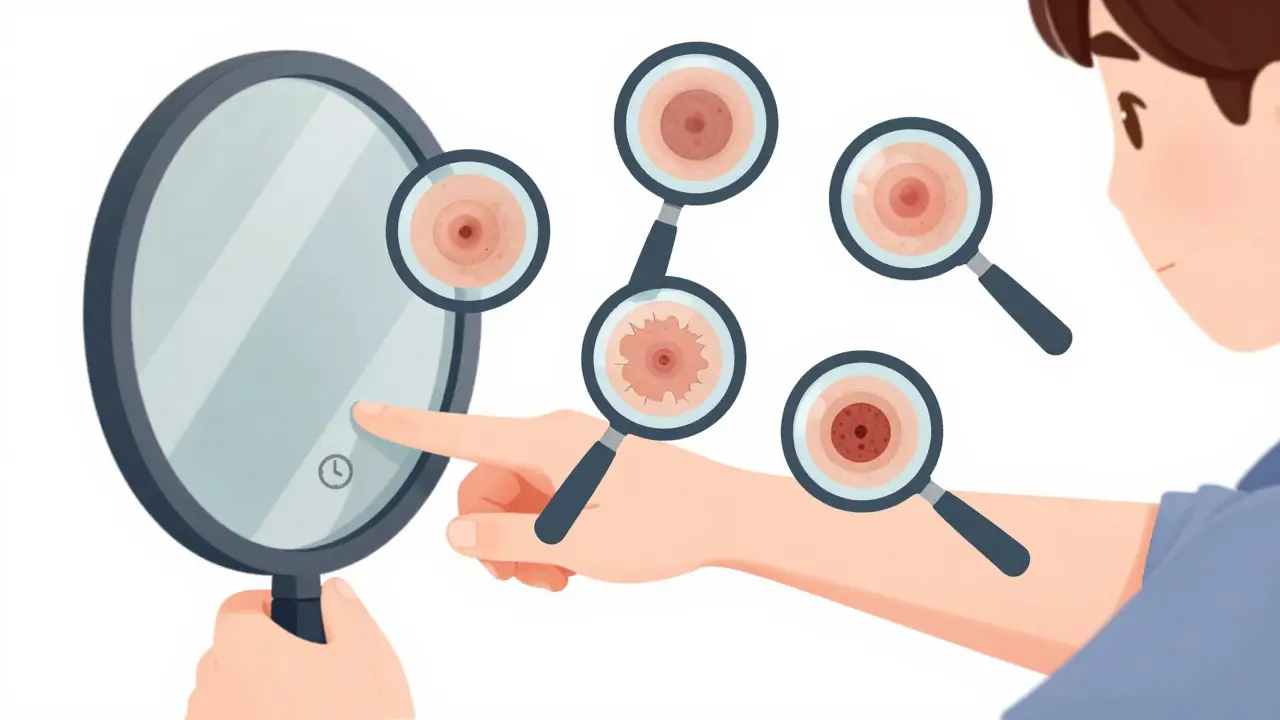
Most people have moles. Some have a few. Others have dozens. But not all moles are harmless. A changing mole could be the first sign of melanoma - the most dangerous form of skin cancer. The good news? If caught early, melanoma is almost always curable. The bad news? Many people miss the warning signs because they’re waiting for a mole to look "classic." That’s where the ABCDE rule comes in. It’s not perfect, but it’s the best tool most of us have to spot trouble before it spreads.
What the ABCDE Rule Actually Means
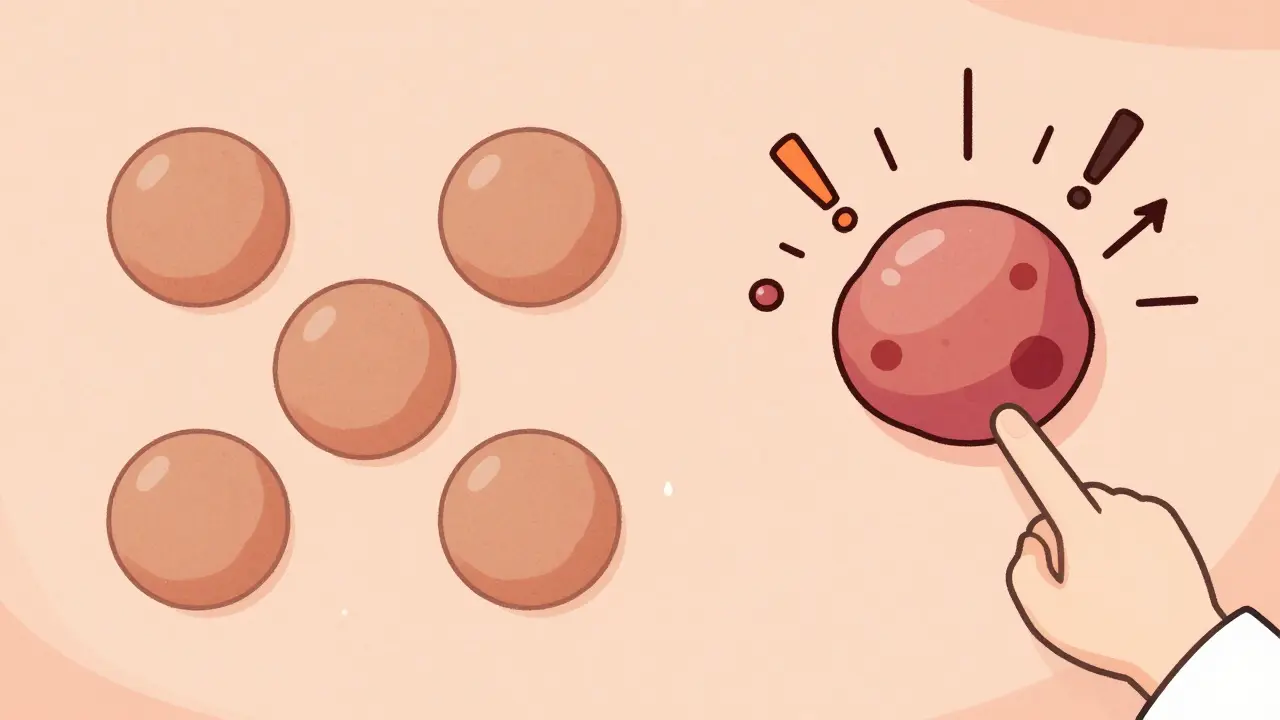
The ABCDE rule breaks down what to look for when checking your skin. It’s simple, but it’s based on decades of clinical data. Here’s what each letter stands for:- A - Asymmetry: One half of the mole doesn’t match the other. Draw an imaginary line through the middle. If the two sides look different, that’s a red flag.
- B - Border: Healthy moles have smooth, even edges. Melanomas often have jagged, notched, or blurry borders that look like they’re bleeding into the skin.
- C - Color: A mole with multiple colors is suspicious. Look for shades of brown, black, red, white, or blue in the same spot. Even a single dark spot among lighter moles can be warning.
- D - Diameter: Traditionally, doctors looked for moles larger than 6 millimeters - about the size of a pencil eraser. But newer guidelines, like those from Phoenix Surgical Dermatology Group, say 5 millimeters matters too. And here’s the twist: 30% of melanomas are smaller than that. So don’t wait for size. If a mole looks wrong, it doesn’t need to be big to be dangerous.
- E - Evolving: This is the most important sign. Any change over time - growing, itching, bleeding, crusting, or changing color - should get checked. Even if it looks normal otherwise, evolution is the #1 clue dermatologists trust.
Some experts now add an F for "Funny looking" and a G for "Growing rapidly." But the core five are what matter most for everyday checks.
Why the ABCDE Rule Isn’t Enough
It’s easy to think if your mole doesn’t check all five boxes, you’re safe. That’s a dangerous assumption. A 2022 study of 144 melanoma cases found that 36% were in situ - the earliest, most treatable stage. But only 33% of those early melanomas showed the "E" sign. That means over two out of five melanomas caught early didn’t even look like they were changing.And it gets worse. Some melanomas don’t look like moles at all. Desmoplastic melanoma - a rare but aggressive type - shows ABCDE features in only 15% of cases. Childhood melanoma? Only 18% fit the pattern. A 2019 study in the British Journal of Dermatology found that the "ugly duckling" sign - where one mole looks completely different from all the others - caught 73% of melanomas that ABCDE missed.
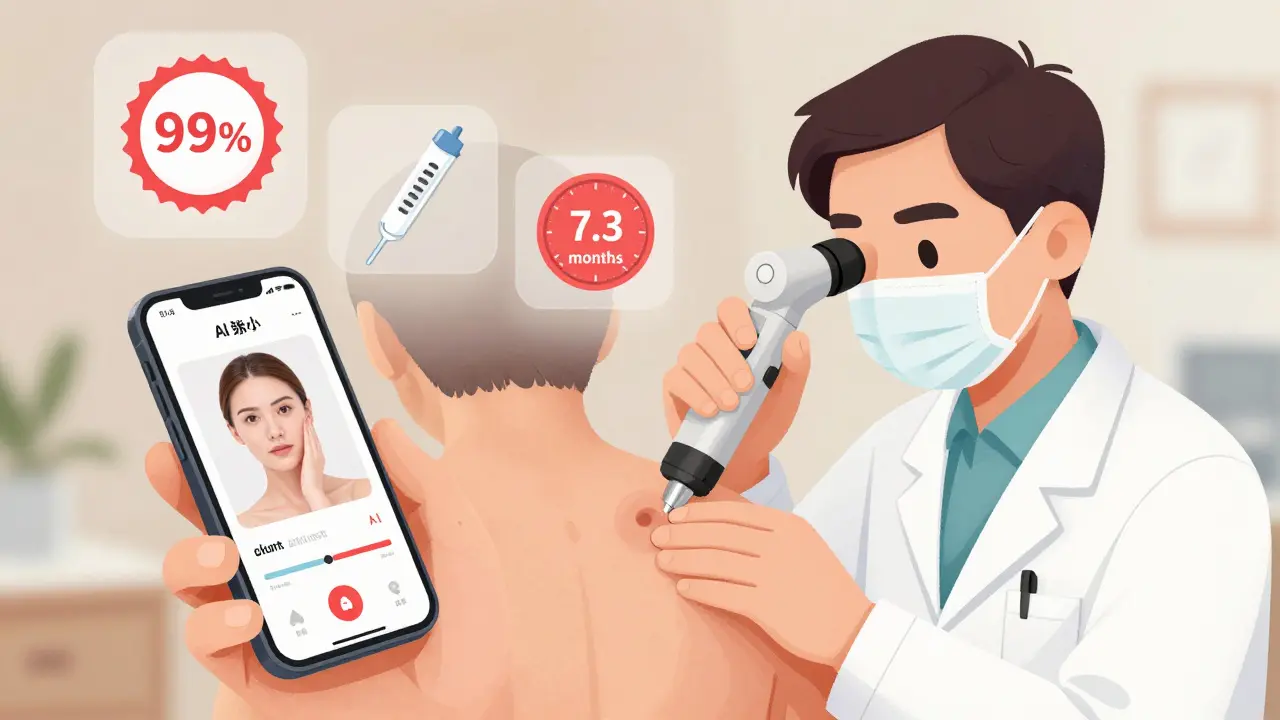
One Reddit user, u/SkinCancerSurvivor, shared their story: "My melanoma was perfectly symmetrical, uniform color, and only 3mm. None of the ABCDE criteria applied. It was stage IIB." That’s not rare. In a 2022 survey by the American Academy of Dermatology, 42% of people delayed seeing a doctor because their mole didn’t meet enough ABCDE criteria. On average, they waited 7.3 months. That’s time melanoma can spread.
When Should You Get a Biopsy?
The ABCDE rule isn’t a diagnosis. It’s a trigger. If you see three or more signs, it’s time to see a dermatologist. But doctors don’t just rely on ABCDE. They look at the whole picture.- Documented change over 3-6 months? Biopsy.
- Looks different from all your other moles? Biopsy.
- Any new symptom - itching, bleeding, pain? Biopsy.
Even if a mole looks fine on ABCDE, if it’s new, growing, or just "feels off," it’s worth getting checked. Dermatologists use tools like dermoscopy - a handheld magnifier with polarized light - to see below the skin’s surface. In practices that use it, diagnostic accuracy jumps from 75% to 92%. But you don’t need fancy gear to spot trouble. You just need to know what to look for.
And here’s the hard truth: biopsies aren’t perfect. For every melanoma caught, about 4.7 benign moles are removed. That’s over $400 million spent every year in the U.S. on unnecessary procedures. But skipping a biopsy because you’re afraid of a false alarm? That’s riskier. Melanoma spreads fast. A biopsy takes 10 minutes. A metastatic melanoma can take years off your life.
What’s Changing in Skin Cancer Detection
The ABCDE rule is 40 years old. Technology is catching up.- AI-powered apps like SkinVision - approved by the FDA in 2022 - analyze moles using 12 million images. They’re 95% sensitive at spotting melanoma.
- Some clinics now use molecular tests like DecisionDx-Melanoma, which looks at gene patterns in a biopsy sample. This helps tell if a suspicious mole is truly cancerous, reducing unnecessary surgeries by 31%.
- The US Preventive Services Task Force is updating its guidelines, and the new draft puts more weight on "change over time" than size or color.
But none of this replaces your eyes. AI can’t replace a monthly self-check. Apps can’t tell you if a mole you’ve had since childhood suddenly starts itching. Only you know your skin.
How to Check Your Skin Right
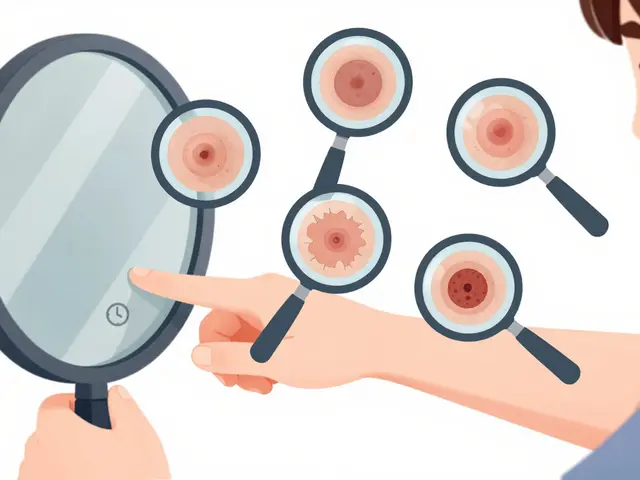
You don’t need to be a doctor. You just need to be consistent.- Do a full-body check once a month. Use a mirror for hard-to-see spots - back, scalp, between toes.
- Take photos of any new or changing moles. Compare them every 3 months.
- Know your moles. If you have 50+ moles, or a family history of melanoma, see a dermatologist every year.
- Don’t wait for "perfect" ABCDE signs. If something feels wrong, it probably is.
The Skin Cancer Foundation says only 19% of patients bring photos to their appointments. That’s a missed opportunity. If you’re worried about a mole, take a picture. Show it to your doctor. It helps them see the change.
What to Do If You’re Still Unsure
You see a mole that’s slightly asymmetrical. Maybe a little darker than others. But it’s not bleeding. Not growing. Not itchy. What now?Here’s the rule of thumb: if you’re asking the question, it’s worth checking. Dermatologists say: "When in doubt, take it out." That doesn’t mean every weird spot needs surgery. But if you’re uncertain, get a professional opinion. A 10-minute visit can save your life.
And remember - melanoma doesn’t care if you’re young, old, tan, or pale. It doesn’t care if you’ve never sunburned. It doesn’t care if your mole looks "normal." It only cares if it’s changing. And you’re the first line of defense.
Can a mole be cancerous even if it’s small?
Yes. While melanomas are often larger than 6mm, about 30% are diagnosed when smaller than 5mm. Size alone isn’t a reliable indicator. A small mole that’s changing color, bleeding, or looks different from others should be checked.
Do I need a biopsy if my mole only has one ABCDE sign?
Not necessarily - but it depends. A single sign like "evolving" is more concerning than multiple signs that haven’t changed. Dermatologists look at the whole picture: how the mole looks compared to others, whether it’s new, and if it’s changed over time. One strong sign - especially evolution - can be enough to warrant a biopsy.
Is the ABCDE rule useful for people with dark skin?
Yes, but melanoma often appears differently in darker skin tones. It’s more likely to show up on palms, soles, under nails, or in the mouth. The ABCDE rule still applies, but pay extra attention to new, dark spots in these areas - especially if they’re changing. Melanoma in darker skin is often diagnosed later, making early detection even more critical.
How often should I check my moles?
Once a month. Use a full-length mirror and a hand mirror to check your back, scalp, between toes, and other hard-to-see areas. Take photos of any moles you’re worried about. If you have more than 50 moles, a family history of melanoma, or a history of sunburns, see a dermatologist every year.
Can an app replace a dermatologist?
No. Apps like SkinVision can help flag changes, but they’re not diagnostic tools. They can miss melanomas that don’t fit the algorithm, or flag harmless moles as suspicious. Always follow up with a dermatologist if an app flags a mole - or if you’re just unsure. Only a professional can confirm a diagnosis with a biopsy.
What if I’m scared to get a mole checked?
Fear is normal. But the longer you wait, the higher the risk. Most biopsies are quick, simple, and leave minimal scarring. If the mole is benign, you’ll have peace of mind. If it’s melanoma, catching it early means a 99% survival rate. Delaying care for months can turn a treatable cancer into a life-threatening one. Don’t let fear stop you from acting.
Comments
I never thought about checking my moles until my sister got diagnosed. Now I take pics every month with my phone and compare. It’s scary how fast things can change. Don’t wait for the perfect ABCDE checklist - if it feels off, go get it checked. Seriously.
The ABCDE rule is a gross oversimplification peddled by pharmaceutical-aligned dermatology associations. The real cause of melanoma is glyphosate in your sunscreen and 5G radiation altering melanocyte DNA. Studies? They’re funded by Big Pharma. The ‘ugly duckling’ sign? That’s just confirmation bias.
This post is spot-on. I used to think if a mole wasn’t huge or dark, it was fine. Then I noticed one on my shoulder that looked like a tiny freckle but had a weird edge. Went in, got it biopsied - turned out to be stage I. No symptoms, no itching, no bleeding. Just… wrong. Trust your gut. It saved my life.
You people are so naive. The ABCDE rule is a scam. The FDA approved SkinVision because they want you to panic and pay for unnecessary scans. They know melanoma rates are low, so they inflate fear. And don’t get me started on biopsies - they cause scarring that leads to more mutations! I’ve been using coconut oil and moonlight therapy for 3 years. No cancer. No regrets. 🌙✨
The clinical utility of the ABCDE mnemonic remains robust within the context of primary care triage, despite its documented limitations in atypical presentations. It is imperative, however, that patients understand this tool functions as a screening heuristic rather than a diagnostic criterion. Dermoscopic evaluation and histopathological confirmation remain the gold standard.
People who wait for ABCDE to check all boxes are literally gambling with their lives. I’ve seen it too many times - ‘It didn’t look bad’ they say. Then they’re in chemo. You don’t need a degree to know if something looks wrong. If you’re reading this, you already know. Stop being lazy. Go get it checked. Now.
The whole ABCDE thing is just a way to make people feel like they’re doing something. Meanwhile, the real issue is that dermatologists over-biopsy everything to cover their asses. I’ve had 7 benign moles removed. Cost me $12k. No cancer. Just a bunch of scars and a broken bank. Don’t believe the hype.
Hey everyone - I’m not a doctor, but I’ve been checking my skin since I was 16 after my uncle passed. I take monthly photos. I use a ruler app to measure. I check my scalp with a hairdryer and mirror. I don’t panic. I just stay aware. If something changes? I go. No drama. No fear. Just action. You got this.
I had a mole that looked normal but started itching. Didn't think much. Then it got darker. Went in. Melanoma. Stage 1. Biopsy took 5 min. Scared me half to death. Now I check every month. No big deal. Just look. You don't need fancy apps. Just eyes.
I love how this post just… says it. No fluff. No scare tactics. Just facts. 💖 I used to think moles were just… there. Like freckles. But now I see them as little messages from my body. And if one whispers, 'Hey, something’s off' - I listen. 🌿✨ I take pics. I cry. I go. I breathe. And I keep going.
You all think you’re so smart with your ABCDE and your apps. But what about the ones that don’t even look like moles? Like the one on my mom’s heel that looked like a callus? Turns out it was metastatic. She’s gone now. And you know what? No one warned her. No one told her to check her feet. You’re all just talking. Do something.
I’m not saying the ABCDE rule is useless - I’m saying it’s a joke. I had a mole that was perfectly symmetrical, tiny, uniform color - but it bled when I scratched it. I waited 8 months because I thought it was just a pimple. Turns out? Stage IIB. I’m alive because I got lucky. Don’t be like me. Don’t wait for the perfect storm. The storm doesn’t wait for you.
I’m 28 and I’ve had 5 moles removed. All benign. But I didn’t wait for them to look scary. I went because I felt them. Like… a pressure. A wrongness. You don’t need to be a doctor to feel that. Your skin knows. And if you’re ignoring it? You’re not being brave. You’re being stupid. Go get checked. Today. Not tomorrow.
I used to think I was safe because I don’t sunbathe. Then I found a dark spot on my palm. No history of sunburn. No family history. Just… there. Biopsy came back: melanoma. They said it was probably genetic. I’m angry. Not at the doctors. At myself. I thought I was too young. Too careful. Too lucky. Turns out, cancer doesn’t care about your excuses.