
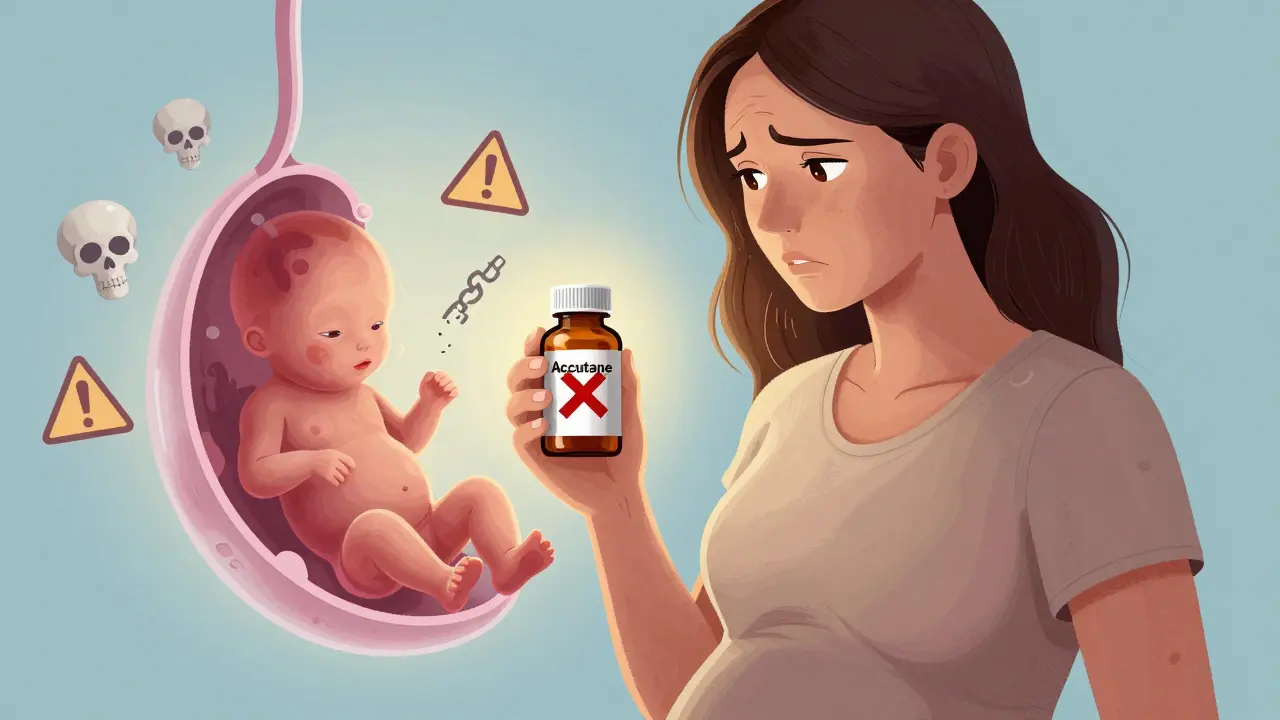
When you’re pregnant, every pill, drop, or supplement feels like a decision with huge consequences. You want to feel better - whether it’s for a headache, infection, or chronic condition - but you also don’t want to risk your baby’s health. The truth is, some medications you’ve taken for years could be dangerous during pregnancy. Others are perfectly safe. Knowing the difference isn’t just helpful - it’s critical.
What Makes a Medication Teratogenic?
A teratogen is anything that can interfere with fetal development and cause birth defects. The word comes from the Greek teras, meaning monster, and it became widely known after the thalidomide disaster in the late 1950s and early 1960s. Thousands of babies were born with missing or shortened limbs because their mothers took this drug for morning sickness. Since then, science has learned a lot about how and when drugs affect a growing baby. The most dangerous time is between weeks 3 and 8 of pregnancy - when the baby’s organs are forming. That’s the embryonic stage. After week 9, the risk shifts from major physical defects to problems with growth, brain development, or organ function. But here’s the catch: many people don’t even know they’re pregnant until week 6 or later. By then, exposure to harmful drugs may have already happened.Medications You Must Avoid During Pregnancy
Some drugs are so clearly dangerous that doctors won’t prescribe them unless there’s absolutely no other option. These are the ones you need to know about:- Isotretinoin (Accutane): Used for severe acne, this drug causes serious brain, heart, and facial defects. Even a single dose can be harmful. Women on isotretinoin must be enrolled in the iPLEDGE program, which requires two negative pregnancy tests before each prescription and two forms of birth control. Still, in 2022, 67 pregnancies occurred among women in the program - proof that mistakes still happen.
- Warfarin: This blood thinner can cause bleeding in the fetus and lead to bone and facial abnormalities. It’s especially risky between weeks 6 and 9. If you need anticoagulation during pregnancy, low-molecular-weight heparin is the safer alternative.
- Thalidomide: Still used today for rare conditions like leprosy and multiple myeloma, it’s one of the most powerful teratogens known. Its use in pregnancy is strictly forbidden.
- Tetracyclines (like doxycycline): These antibiotics can permanently stain a baby’s teeth and affect bone growth. Avoid them entirely during pregnancy.
- Fluoroquinolones (like ciprofloxacin): Linked to joint and tendon problems in animal studies and possible risks to fetal cartilage. Not worth the gamble.
- Sulfamethoxazole/trimethoprim: Can cause neural tube defects in early pregnancy and kernicterus (a dangerous form of jaundice) after 32 weeks. Skip it unless no other option exists.
- NSAIDs (ibuprofen, naproxen): Avoid after 20 weeks. They can cause premature closure of a vital blood vessel in the baby’s heart and reduce amniotic fluid. Even aspirin, unless prescribed for specific conditions like preeclampsia, should be avoided.
Safe Alternatives for Common Pregnancy Symptoms
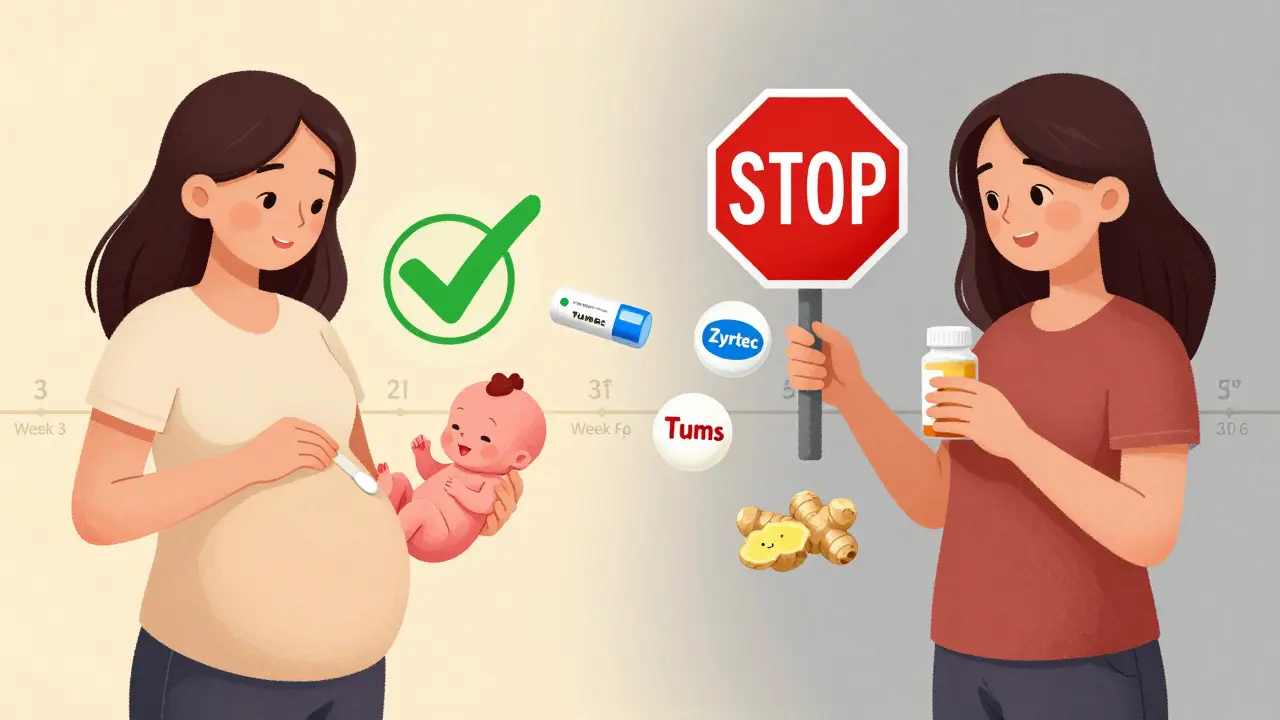
You don’t have to suffer. There are safe, effective options for most common complaints:- Pain and fever: Acetaminophen (Tylenol) is the go-to choice. It’s been studied in hundreds of thousands of pregnancies and is consistently recommended by the American Academy of Family Physicians, Mayo Clinic, and CDC. Stick to the lowest effective dose.
- Allergies and runny nose: Second-generation antihistamines like loratadine (Claritin) and cetirizine (Zyrtec) are safe. Avoid first-gen ones like diphenhydramine (Benadryl) - they can make you drowsy and may affect fetal movement.
- Heartburn: Antacids with calcium carbonate or magnesium hydroxide (like Tums or Maalox) are fine. Avoid bismuth subsalicylate (Pepto-Bismol) - it contains salicylates, which act like aspirin.
- Diarrhea: Kaolin and pectin (Kaopectate) are safe. Avoid loperamide (Imodium) unless approved by your provider.
- Yeast infections: Topical clotrimazole (Lotrimin) is safe and effective. Avoid oral ketoconazole or griseofulvin - they’ve shown harm in animal studies.
- High blood pressure: Methyldopa, labetalol, and nifedipine are well-studied and safe. Avoid ACE inhibitors and ARBs - they can cause kidney damage and low amniotic fluid.
- Depression or anxiety: Some SSRIs like sertraline and citalopram are considered low-risk. Never stop psychiatric meds cold turkey - untreated depression carries its own risks for mother and baby.
Why the Old Pregnancy Categories (A, B, C, D, X) Are Gone
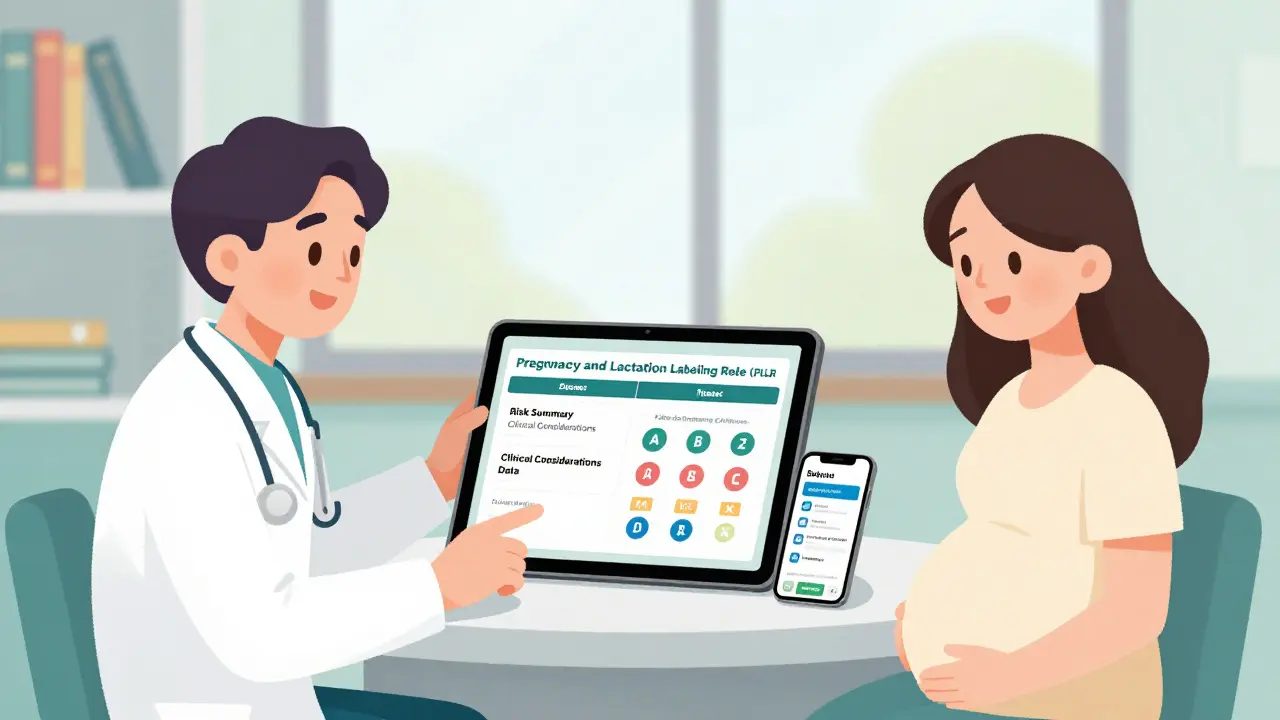
You might remember seeing those letters on drug labels - Category A, B, C, D, X. That system was scrapped in 2015 because it was misleading. Saying a drug was “Category C” didn’t tell you if it was risky in the first trimester, or if the risk was based on animal studies or real human data. It gave false reassurance or unnecessary fear. Today, drug labels use the Pregnancy and Lactation Labeling Rule (PLLR). Instead of a letter, you get detailed sections:- Risk Summary: What we know from human and animal studies.
- Clinical Considerations: Dosing, monitoring, risks of stopping the drug.
- Data: Where the information came from - registries, published studies, case reports.
What to Do If You’re Already Taking Medication
If you’re on a chronic medication - for epilepsy, diabetes, asthma, or mental health - don’t stop it on your own. Stopping suddenly can be more dangerous than continuing it.- For epilepsy: Seizures during pregnancy can cause oxygen loss to the baby. The risk of a seizure is 10-15%, while the teratogenic risk from most antiseizure meds is 2-5%. Your neurologist will help you switch to the safest option.
- For thyroid disease: Untreated hypothyroidism increases miscarriage risk. Propylthiouracil (PTU) is preferred in the first trimester; methimazole is safer later.
- For autoimmune conditions: New research from the New England Journal of Medicine (2024) found that taking modified-release prednisone at bedtime reduces birth defect rates by 73% compared to standard dosing.
Plan Ahead - Before You Get Pregnant
The best way to avoid teratogenic exposure is to plan. A 2023 study found that 72% of harmful drug exposures happened before women even knew they were pregnant. That’s why experts recommend a preconception visit with your doctor 3-6 months before trying to conceive. Bring a list of everything you take:- Prescription drugs
- Over-the-counter meds
- Vitamins and supplements
- Herbs and teas
- Recreational substances
What About Over-the-Counter and Herbal Remedies?
Just because something is sold without a prescription doesn’t mean it’s safe in pregnancy. Many herbal supplements aren’t tested for fetal safety. Black cohosh, goldenseal, and pennyroyal can cause uterine contractions or liver damage. Even high doses of vitamin A (over 10,000 IU/day) can be teratogenic. Stick to what’s proven:- Iron and folic acid supplements - essential
- Prenatal vitamins - safe
- Peppermint tea - fine in moderation
- Ginger for nausea - supported by research
Comments
Acetaminophen is still the gold standard for pain relief in pregnancy - no debate. Just stick to 325-650mg every 4-6 hours max.
Let’s be real - the PLLR replaced the old A-B-C-D-X system because it was infantilizing. We’re not children; we need nuanced data. The risk summary section alone tells you whether a study had 12 subjects or 12,000. That’s transparency. Also, the fact that isotretinoin still causes 67 unintended pregnancies in 2022? That’s a systemic failure of counseling, not just patient error. iPLEDGE needs real-time EHR integration - not paper forms.
And don’t get me started on how OB-GYNs still hand out ‘Category C’ labels like they’re candy. It’s 2024. If you’re still using that, you’re practicing medicine in 1998.
Also - why is everyone ignoring the 2024 NEJM paper on modified-release prednisone? Bedtime dosing reduces teratogenicity by 73% because it mimics circadian cortisol rhythms. That’s not just ‘safe’ - it’s precision medicine. This should be standard of care by now.
And yes, I know someone who took sertraline through all three trimesters and had a perfectly healthy baby. The fear-mongering around SSRIs is outdated. Untreated depression? That’s the real teratogen.
Also - peppermint tea is fine. But chamomile? Avoid. It’s a uterine stimulant. People think ‘natural’ = ‘safe’. Nope. Natural doesn’t mean non-teratogenic. It means unregulated.
Bottom line: Don’t stop meds. Switch them. With your provider. After reviewing the PLLR section. Not Reddit. Not your aunt. Not TikTok.
I took Zyrtec through my whole pregnancy and my kid is now a straight A student with zero issues so likeooo who cares what the docs say I’m living proof
You got this. Seriously. So many of us are scared to take anything - but you’re not alone. Acetaminophen, loratadine, metformin, sertraline - these are all lifelines. Don’t let fear silence your needs.
Did you know the FDA and Big Pharma are hiding the truth about isotretinoin? The real reason they banned it was because it causes autism - but they replaced it with ‘safer’ drugs that actually contain nanoparticles that cross the placenta and rewrite fetal DNA. That’s why so many kids are ‘different’ now. The iPLEDGE program? A distraction. They want you to think it’s about limbs when it’s really about control. The CDC won’t admit it, but the BabyMed app? It’s coded to suppress the truth. I checked the source code - it’s all encrypted. Don’t trust the system.
It is both regrettable and intellectually indefensible that the public continues to conflate anecdotal experience with evidence-based medicine. The assertion that ‘I took X and my child is fine’ is not only statistically insignificant but epistemologically flawed. One must consider the entire population-level risk distribution, not the outlier. Furthermore, the normalization of self-diagnosis via social media platforms has precipitated a dangerous erosion of clinical authority. The fact that a user would cite Zyrtec as ‘proof’ of safety without acknowledging the thousands of other variables - maternal age, genetic predisposition, nutritional status, gestational timing - reveals a fundamental misunderstanding of epidemiological reasoning. This is not merely misinformation; it is a public health liability.
Acetaminophen is fine. Don’t overthink it. But if you’re on anything for mental health or chronic illness - talk to your doctor before you even stop trying. Don’t wait until you’re 8 weeks in. Plan ahead. It’s not scary - it’s smart.
Thank you for writing this with such clarity. I’m a midwife in Vancouver and I hand this out to every patient. The PLLR section alone has changed how I counsel. No more ‘Category C’ nonsense. Real data. Real context. It’s about dignity, not fear.
While your article presents a superficially comprehensive overview, it fails to address the underlying structural biases in pharmaceutical research. The vast majority of pregnancy safety data is derived from observational studies with significant confounding variables, and the exclusion of pregnant women from clinical trials remains a systemic ethical failure. Furthermore, the promotion of ‘safe’ alternatives like sertraline ignores the pharmacokinetic changes in pregnancy that alter drug metabolism - a variable rarely accounted for in labeling. The BabyMed app, while convenient, is a digital placebo that reinforces dependency on algorithmic decision-making rather than clinician-patient collaboration. Until we fund longitudinal, prospective trials in pregnant populations, all recommendations remain provisional at best.
As a physician trained in global maternal health, I commend the emphasis on preconception planning. In Nigeria, where access to prenatal care is inconsistent, the most critical intervention is not medication substitution - it is education. Women must understand that ibuprofen after 20 weeks is not ‘just a painkiller’ - it is a potential cause of oligohydramnios and fetal renal dysplasia. This article bridges the gap between Western guidelines and the realities of low-resource settings. Thank you for not assuming universal access to specialists.