Managing blood sugar while pregnant is a balancing act that affects two lives at once. If you have preexisting diabetes or develop gestational diabetes, the medication choices you make can influence everything from your baby’s growth to your own energy levels. The good news is that effective treatments exist. The challenge lies in navigating a landscape where some common diabetes drugs are off-limits, while others require careful dosing adjustments as your body changes.
This guide breaks down the current medical consensus on diabetes medications during pregnancy, focusing on why insulin remains the gold standard, when oral options like metformin might be considered, and which drugs you should avoid entirely. We’ll look at the latest guidelines from major health organizations to help you understand what to expect and what questions to ask your care team.
The Gold Standard: Why Insulin Remains the Top Choice
When it comes to treating diabetes during pregnancy, Insulin is a hormone used to control blood glucose levels and is considered the safest pharmacological option for both mother and fetus still reigns supreme. Unlike many oral medications, insulin does not cross the placenta in significant amounts. This means it works in your body to manage your blood sugar without directly exposing the developing baby to the drug.
Major health organizations, including the American College of Obstetricians and Gynecologists (ACOG) and the Endocrine Society, consistently recommend insulin as the first-line therapy for women who cannot achieve target blood sugar levels through diet and exercise alone. This applies to both Type 1 diabetes and gestational diabetes mellitus (GDM).
However, not all insulins are created equal. Your doctor will likely steer you toward specific types based on safety data:
- Rapid-acting analogs: Insulin lispro and insulin aspart are preferred over regular human insulin for mealtime coverage. Studies show they provide better post-meal glucose control with a lower risk of hypoglycemia (low blood sugar).
- Long-acting analogs: Insulin detemir has robust safety data showing non-inferior outcomes compared to NPH insulin. Insulin glargine also shows comparable safety in observational studies.
- Avoid these: Insulin glulisine and degludec currently lack adequate safety data for use during pregnancy and are generally not recommended until more research is available.
If you use an insulin pump (Continuous Subcutaneous Insulin Infusion or CSII), you can usually continue using it during pregnancy. Research indicates that pumps may help lower HbA1c levels and reduce total insulin requirements at delivery compared to multiple daily injections, though overall maternal and neonatal outcomes remain similar between the two methods.
Oral Options: The Case for Metformin
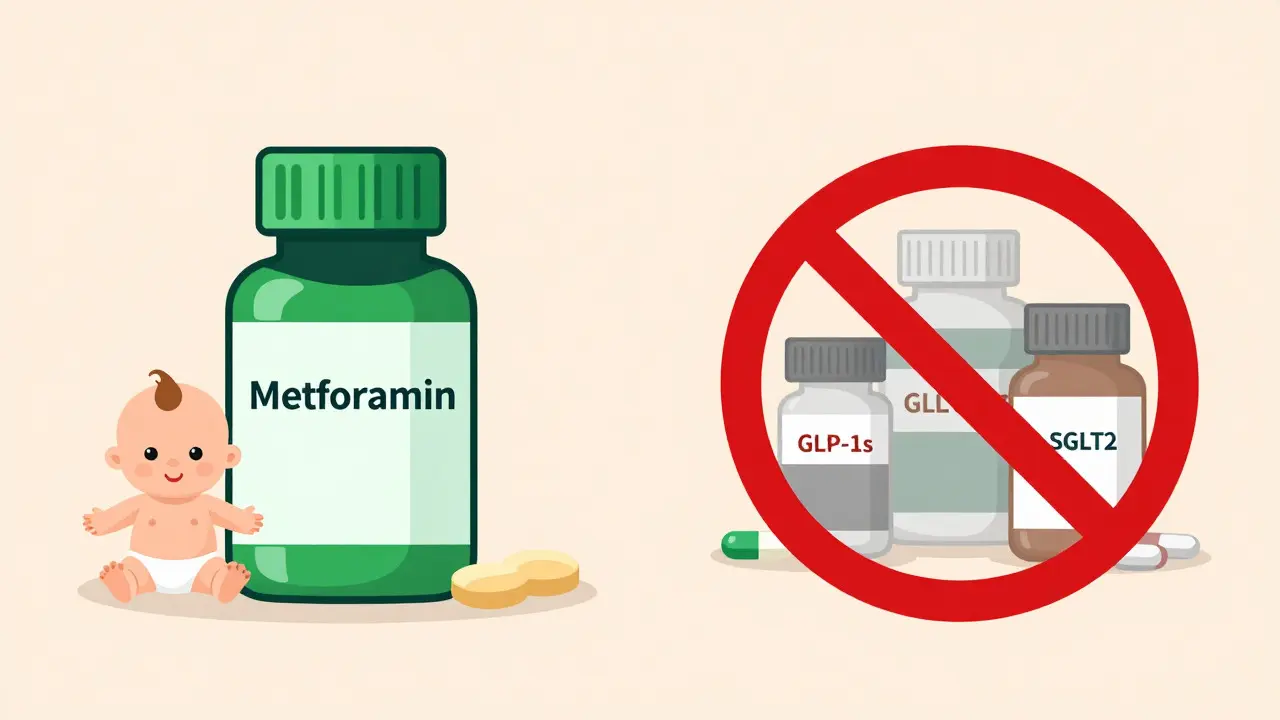
You might wonder if there’s a pill that can do the job instead of injections. Metformin is an oral biguanide medication commonly used for type 2 diabetes and PCOS, which crosses the placenta but shows favorable short-term safety profiles is the only oral medication with substantial evidence supporting its use in pregnancy, particularly for gestational diabetes.
Some studies suggest metformin may actually offer advantages over insulin in certain scenarios. A network meta-analysis published by the NIH found that metformin was associated with a lower risk of large-for-gestational-age (LGA) infants, macrosomia, and neonatal hypoglycemia compared to insulin. It also showed reduced rates of preeclampsia and NICU admissions.
Despite these benefits, metformin is not a perfect substitute for insulin. Here’s why:
- Placental transfer: Unlike insulin, metformin crosses the placenta freely. While short-term outcomes look good, experts are still studying the long-term effects of this exposure on the child’s metabolic health and growth patterns later in life.
- Efficacy limits: About 50% of women starting metformin for gestational diabetes eventually need to add insulin because the pill alone isn’t strong enough to keep blood sugar in range as pregnancy progresses.
- Guideline conflicts: The Joslin Diabetes Center recommends against using metformin beyond the first trimester or as a replacement for insulin due to safety uncertainties. Conversely, other guidelines allow its continued use if glycemic targets are met.
The Endocrine Society specifically advises against routinely adding metformin to insulin for women with preexisting Type 2 diabetes, noting that the potential risks-such as small-for-gestational-age infants-may outweigh the benefits in this specific group.
Medications to Avoid During Pregnancy
Not every diabetes drug that helps you day-to-day is safe for your baby. Several classes of medications commonly prescribed for Type 2 diabetes are contraindicated during pregnancy due to limited safety data or known risks.
| Medication Class | Examples | Pregnancy Recommendation | Reason |
|---|---|---|---|
| GLP-1 Receptor Agonists | Semaglutide, Liraglutide | Discontinue before conception | Limited safety data; potential fetal risks unknown |
| SGLT2 Inhibitors | Empagliflozin, Dapagliflozin | Avoid | Lack sufficient safety data; risk of ketoacidosis |
| DPP-4 Inhibitors | Sitagliptin, Saxagliptin | Avoid | Inadequate safety information for fetal development |
| Alpha-glucosidase Inhibitors | Acarbose | Avoid | Limited data; gastrointestinal side effects may worsen nausea |
Pay special attention to GLP-1 receptor agonists (like Ozempic or Wegovy). The Endocrine Society strongly recommends stopping these medications before you try to conceive, rather than waiting until you find out you’re pregnant. This allows time for the drug to clear your system before organogenesis begins.
Glycemic Targets: What Numbers Should You Hit?
Choosing the right medication is only half the battle. You also need to know what success looks like. Tight glucose control is critical to preventing complications like congenital anomalies, preeclampsia, and birth injuries related to a large baby.
According to the 2023 Endocrine Society guidelines and ACOG, your target blood glucose levels should be:
- Fasting: Less than 95 mg/dL (5.3 mmol/L)
- 1-hour postprandial (after eating): Less than 140 mg/dL (7.8 mmol/L)
- 2-hour postprandial: Less than 120 mg/dL (6.7 mmol/L)
These targets are stricter than those for non-pregnant adults. Achieving them often requires frequent monitoring. While Continuous Glucose Monitors (CGMs) are becoming more popular, guidelines note that while CGMs improve metrics in Type 1 diabetes pregnancies, direct evidence for their superiority over finger-stick testing in Type 2 or gestational diabetes is still evolving. However, many providers now encourage CGM use for the convenience and trend data it provides.

Preconception Planning: The Most Critical Step
If you have preexisting diabetes, the most important time to manage your health is before you get pregnant. High blood sugar during the first few weeks of pregnancy-often before you even know you’re pregnant-can increase the risk of birth defects.
The Oregon Health & Science University (OHSU) Diabetes and Pregnancy Program emphasizes these preconception steps:
- Optimize HbA1c: Aim for an HbA1c level below 6.5% before conceiving. This reduces the risk of congenital anomalies significantly.
- Contraception counseling: If your HbA1c is above 10%, doctors may strongly recommend delaying pregnancy and using long-acting reversible contraception (LARC) until levels improve.
- Medication transition: Switch from unsafe oral agents (like GLP-1s or SGLT2 inhibitors) to insulin or metformin under medical supervision months before trying to conceive.
- Aspirin prophylaxis: Start taking low-dose aspirin (81-100 mg daily) at 12 weeks gestation to prevent preeclampsia, a complication more common in women with diabetes.
What Happens After Delivery?
Once your baby arrives, your medication needs change rapidly. For women with gestational diabetes, insulin and metformin are typically discontinued immediately after delivery because the hormonal shifts of pregnancy that caused insulin resistance resolve quickly. Your blood sugar will likely return to normal, but you should have a follow-up glucose test within 6-12 weeks postpartum to check for persistent diabetes.
If you have preexisting Type 1 or Type 2 diabetes, you’ll need to restart your usual regimen. Insulin doses usually drop dramatically right after birth since the placenta (which produced hormones that raised blood sugar) is gone. Work closely with your endocrinologist to adjust your pump settings or injection schedule to avoid dangerous hypoglycemia in the first few days postpartum.
Is insulin safe for the baby during pregnancy?
Yes, insulin is considered the safest medication for diabetes during pregnancy. It does not cross the placenta in significant amounts, meaning it manages your blood sugar without directly exposing the fetus to the drug. Major health organizations like ACOG and the Endocrine Society recommend it as the first-line treatment for both gestational and preexisting diabetes requiring medication.
Can I stay on metformin throughout my entire pregnancy?
It depends on your provider’s preference and your response to treatment. While some guidelines allow metformin throughout pregnancy for gestational diabetes, others (like Joslin Diabetes Center) recommend switching to insulin after the first trimester due to concerns about long-term fetal effects. Approximately half of women on metformin eventually need to add insulin because the pill alone becomes insufficient.
Do I need to stop GLP-1 medications like Ozempic before getting pregnant?
Yes. The Endocrine Society recommends discontinuing GLP-1 receptor agonists before conception rather than during early pregnancy. There is limited safety data regarding their effect on fetal development, so stopping them early ensures the drug clears your system before organ formation begins.
What are the target blood sugar levels for pregnancy?
The standard targets are fasting blood glucose less than 95 mg/dL, one-hour post-meal less than 140 mg/dL, and two-hour post-meal less than 120 mg/dL. These stricter goals help prevent complications such as large-for-gestational-age babies and neonatal hypoglycemia.
Will I need to take insulin forever if I start it for gestational diabetes?
No. For most women with gestational diabetes, insulin is temporary. It is usually stopped immediately after delivery because the insulin resistance caused by pregnancy hormones resolves quickly. However, you will need follow-up testing to ensure your blood sugar returns to normal and to screen for future Type 2 diabetes risk.