Imagine picking up a bottle of blood pressure medication at your local pharmacy. You trust it works because the label looks right and the pharmacist handed it to you. But what if that pill was made in an unregulated lab, filled with chalk or worse? Counterfeit drugs are not just a problem in distant countries; they infiltrate global supply chains, costing the industry $200 billion annually according to World Health Organization data from 2017. For years, we relied on holograms and color-shifting inks to spot fakes. Those methods failed. Holograms can be copied. Inks can be mimicked. Now, a new standard is emerging that changes everything: blockchain drug verification.
This isn't sci-fi. It’s happening now. Major pharmaceutical companies, regulators like the FDA, and even online pharmacies are moving toward immutable digital ledgers to track every single pill from the factory floor to your hands. If you’re a patient, a pharmacist, or someone who buys meds online, understanding this shift is crucial for your safety. Let’s break down how blockchain is becoming the gold standard for ensuring generic medication authenticity.
How Blockchain Creates an Unbreakable Chain of Custody
To understand why blockchain works where other systems fail, you have to look at how traditional tracking breaks down. In a typical supply chain, a manufacturer sends drugs to a wholesaler, who sends them to a distributor, who finally ships them to a pharmacy. Each step involves paperwork or centralized databases. These databases can be hacked, altered, or simply lost. If a record says "Batch A is authentic," but someone edits that record later to include fake pills, no one knows until patients get sick.
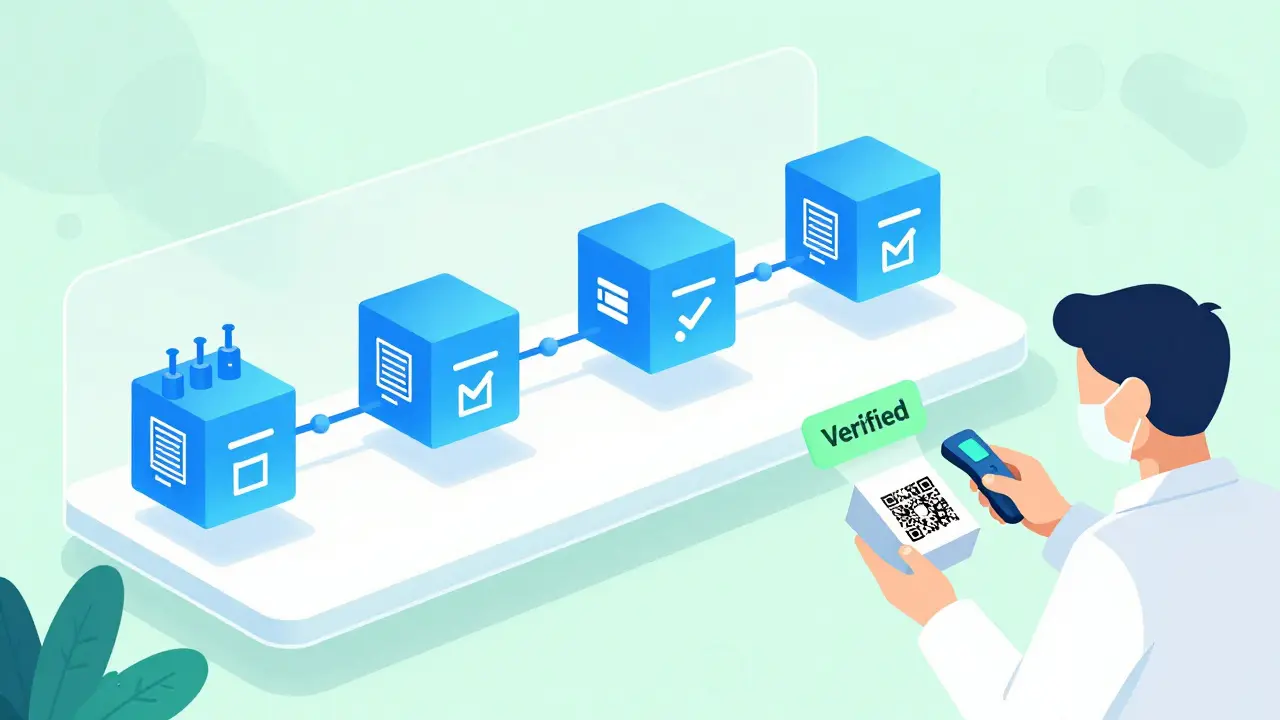
Blockchain technology solves this by creating a distributed ledger. Think of it as a shared Google Doc that everyone can read, but no one can delete or edit past entries. Every time a package moves, a new block of data is added. This data includes a unique serial number, often embedded in a 2D barcode or QR code compliant with GS1 standards.
Here is the process in simple steps:
- Serialization: At the manufacturing plant, every saleable unit gets a unique ID. This happens via serialization equipment, which costs about $150,000 per production line as of mid-2024.
- Recording: When the box leaves the factory, that event is recorded on the blockchain. The timestamp, location, and recipient are cryptographically sealed.
- Verification: As the product moves to wholesalers and then pharmacies, each party scans the code. The system checks the previous entry. If the history matches, the next move is recorded.
- Final Check: At the pharmacy counter, the pharmacist scans the code again. The app verifies the entire journey in under 2.3 seconds against the distributed ledger.
If a counterfeiter tries to introduce fake pills into the chain, their codes won’t match the historical data on the ledger. The system flags it instantly. This creates what experts call a "digital pedigree" for each drug package.
The Regulatory Push: Why DSCSA Matters
Technology doesn’t spread just because it’s cool. It spreads when rules force it. In the United States, the primary driver is the Drug Supply Chain Security Act (DSCSA). This law mandated electronic, interoperable tracing systems for all prescription drugs by November 27, 2023. Before this deadline, many companies used proprietary systems that couldn’t talk to each other. Pfizer’s database couldn’t easily verify AmerisourceBergen’s records. That gap allowed counterfeits to slip through.
The DSCSA closed that gap by requiring interoperability. Blockchain is naturally interoperable because all participants share the same ledger structure. The FDA recognized this potential and launched a DSCSA Blockchain Interoperability Pilot Project in 2022. This pilot involved giants like Genentech, Pfizer, and AmerisourceBergen. The results were striking: the system achieved 99.8% verification accuracy. More importantly, it proved that different companies could share sensitive supply chain data without exposing trade secrets, thanks to permissioned blockchain architecture.
In Europe, the Falsified Medicines Directive (FMD) plays a similar role. While the EU uses a centralized repository system rather than pure blockchain, the principles of unique identification and end-to-end traceability are identical. By January 2026, new FDA guidelines will establish mandatory verification protocols, making blockchain-like transparency the legal standard, not just a best practice.
Real-World Platforms: Who Is Leading the Charge?
You might wonder who is actually building these systems. It’s not just tech startups; it’s major players in pharma and finance. Here are the key entities shaping the landscape:
| Platform | Owner/Operator | Market Share (Est.) | Key Feature |
|---|---|---|---|
| MediLedger Project | EY OpsChain (formerly Chronicled) | 38% | Industry consortium model; high interoperability |
| SAP Digital Supply Chain | SAP SE | 22% | Deep integration with existing ERP systems |
| Ali Health Blockchain | Alibaba Group | 15% (Asia-Pacific) | Consumer-facing verification apps |
| Cypheme | Cypheme Inc. | <5% | Focus on smaller manufacturers and generics |
The MediLedger Project, launched in 2017, is the most prominent example. It operates as a permissioned network using Hyperledger Fabric. This means only invited, verified partners can join the network, ensuring privacy while maintaining transparency among members. As of 2024, MediLedger processes over 1,200 transactions per second with 99.99% uptime across 47 participating pharmaceutical companies.
For generic drug manufacturers, cost is a huge barrier. A mid-sized company needs to invest approximately $2.1 million in blockchain infrastructure, compared to $1.7 million for traditional serialization. That 23% premium is significant. However, platforms like Cypheme are trying to lower this barrier by offering lighter-weight solutions for smaller producers. Without affordable options, generics-which make up the bulk of prescriptions-remain vulnerable.
Benefits Beyond Safety: Efficiency and Cost Savings
We often think of blockchain as a security tool, but its biggest selling point for businesses is efficiency. Counterfeit drugs don’t just hurt patients; they clog supply chains. When a batch is suspected of being fake, companies must halt distribution, conduct manual investigations, and sometimes recall millions of units. This stops money flow and wastes labor.
A 2022 report by HIMSS highlighted two massive financial benefits for US dispensers:
- Labor Savings: Automated verification saves an estimated $183 million annually in manual checking hours.
- Inventory Release: Companies hold "safety stock"-extra inventory kept just in case supplies are interrupted or questioned. Blockchain confidence allows firms to reduce this buffer, freeing up roughly $20 billion in trapped capital.
For pharmacists, the daily workflow improves too. Maria Chen, a pharmacist featured in a 2024 PharmacyTechForum discussion, noted that her team reduced batch verification time from 15 minutes to 45 seconds after switching to MediLedger. Instead of calling distributors to confirm lot numbers, she just scans. That speed matters during busy flu seasons or emergency rushes.
Limitations and Risks: What Blockchain Can’t Do
It’s easy to get excited about technology, but we need to be realistic. Blockchain is not a magic bullet. Dr. Sarah Wynn-Williams of the London School of Economics warned in a 2023 Lancet commentary that blockchain creates a "false sense of security." Why? Because blockchain tracks documentation, not physical reality.
If a bad actor steals a legitimate box of real pills, removes them, and replaces them with fakes, the blockchain still shows the original, valid history. The digital record says the box is authentic because the serial number hasn’t changed. To catch this, you need supplementary technologies. Some advanced implementations are starting to integrate IoT sensors for temperature monitoring or spectroscopy scanners that analyze the chemical composition of the pill itself. Until those become standard, blockchain only guarantees that the *paperwork* is clean.
Other practical challenges include:
- Connectivity Issues: Rural pharmacies often suffer from spotty internet. If the blockchain node can’t sync, verification delays occur. In April 2024, Reddit users in r/Pharmacy reported that 63% of respondents faced connectivity delays in remote areas.
- Legacy System Integration: Connecting old ERP systems to new blockchain nodes takes 6-9 months and requires 140-180 hours of customization. Many small pharmacies lack the IT staff for this.
- Energy Concerns: While public blockchains like Bitcoin consume vast energy, permissioned ledgers like Hyperledger use 97% less. Still, sustainability remains a topic of debate for large-scale adoption.
The Future of Generic Authenticity
Where do we go from here? The trajectory is clear. McKinsey predicts that by 2027, blockchain will be the primary verification method for 75% of prescription drugs in developed markets. The FDA’s upcoming 2026 guidelines will accelerate this. We are also seeing the rise of AI-powered anomaly detection. MediLedger’s Version 4.2, released in March 2024, uses deep learning models to flag suspicious patterns, reducing false positives by 37%.
For patients buying from online pharmacies, this means greater peace of mind. Reputable online retailers will soon display live blockchain verification badges. You’ll be able to scan a code and see exactly where your medication came from, down to the specific factory line. However, caution is still needed. Not all online sellers participate in these networks. Always buy from licensed pharmacies that explicitly state their compliance with DSCSA or equivalent regulations.
The fight against counterfeit drugs is shifting from reactive policing to proactive prevention. Blockchain provides the infrastructure for total transparency. It turns the opaque, complex web of global pharmaceutical logistics into a clear, auditable line. For generic medications, which are often targeted by counterfeiters due to lower profit margins per unit requiring higher volume sales, this technology is nothing short of essential.
Is blockchain verification available for all generic drugs?
Not yet. While 89% of top 50 pharmaceutical companies have blockchain initiatives, only 31% of generic drug manufacturers have fully implemented solutions due to high costs. Adoption is growing rapidly, but smaller generic producers are lagging behind branded drug makers.
Can I verify my medication at home using blockchain?
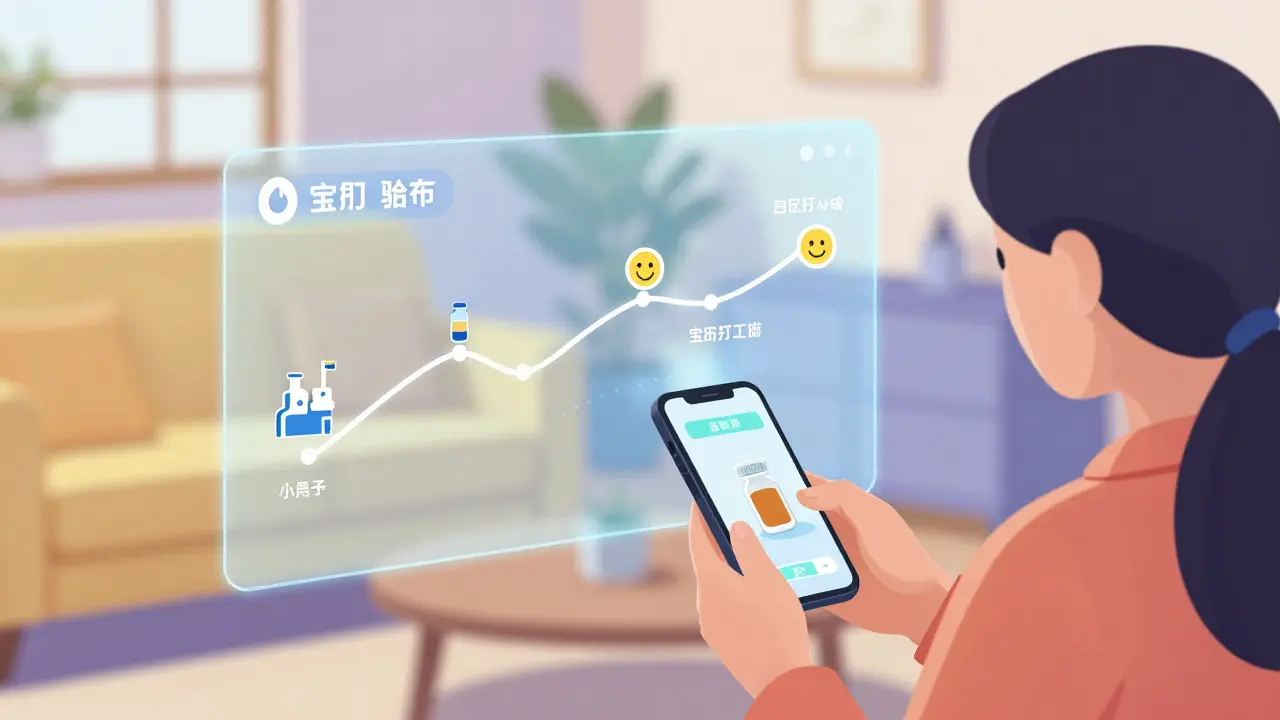
Yes, if your pharmacy participates in a consumer-facing program. Platforms like Alibaba’s Ali Health allow consumers to scan QR codes on packaging to view the drug's journey. In the US, most current systems are B2B (business-to-business), but patient-accessible apps are expected to expand as regulations tighten by 2026.
Does blockchain prevent tampered packages?
No. Blockchain verifies the digital history of the serial number. If a package is physically opened and refilled with fake pills, the blockchain will still show a valid history unless combined with physical tamper-evident seals or chemical analysis tools.
What is the DSCSA and why is it important?
The Drug Supply Chain Security Act (DSCSA) is US federal law that mandates electronic tracing of prescription drugs. Its 2023 interoperability requirement forced companies to adopt systems like blockchain to ensure seamless data sharing between manufacturers, wholesalers, and pharmacies.
How much does it cost for a pharmacy to implement blockchain verification?
For large enterprises, initial investments range from $1.7 million to $2.1 million. For individual pharmacies, costs are lower but involve software subscriptions, scanner hardware, and training. HIMSS certification programs cost around $1,200 per participant. The ROI comes from reduced labor and inventory savings.