Imagine taking your daily heart medication or a new prescription for anxiety, only to find out it contains chalk, printer ink, or worse-fentanyl. This isn’t a scene from a thriller; it is the harsh reality of the global crisis surrounding counterfeit medications, which are fake pharmaceutical products deliberately mislabeled regarding their identity or source, posing severe risks to patients worldwide.. The World Health Organization (WHO) estimates that one million deaths annually are linked to falsified medicines. With criminal networks increasingly using social media and encrypted apps to sell these dangerous pills, knowing how to spot them is no longer just smart-it’s essential for survival.
What Exactly Are Counterfeit Medications?
To protect yourself, you first need to understand what you are up against. The U.S. Food and Drug Administration (FDA) defines counterfeit drugs as products that are fake, pirated, or illegally copied. They are often manufactured in clandestine laboratories with zero quality control. It is crucial to distinguish between two types of bad drugs: substandard and falsified.
- Substandard medicines: These fail quality tests due to manufacturing errors or poor storage conditions. They might not be intentionally fake, but they don't work as intended.
- Falsified medicines: These are deliberately and fraudulently mislabeled. They might contain the wrong active ingredient, the wrong dose, or no active ingredient at all.
The danger lies in the deception. Criminal drug networks are flooding markets with deadly fake pills that look identical to authentic prescriptions like OxyContin, Percocet, Xanax, and Adderall. Recently, the WHO issued alerts about falsified injectable incretin products, including Mounjaro® and Zepbound®, circulating across North America, South America, and Europe. These fakes can lead to poisoning, treatment failure, or death.
Red Flags: Physical Warning Signs on Pills and Packaging
You might think you know what your medication looks like, but counterfeits are getting smarter. However, there are still telltale signs if you look closely. Amy Callanan, Global Security Intelligence Lead at Pfizer, notes that legitimate pills always have a factory-made appearance. If your pill looks off, trust your gut.
Here is what to inspect physically:
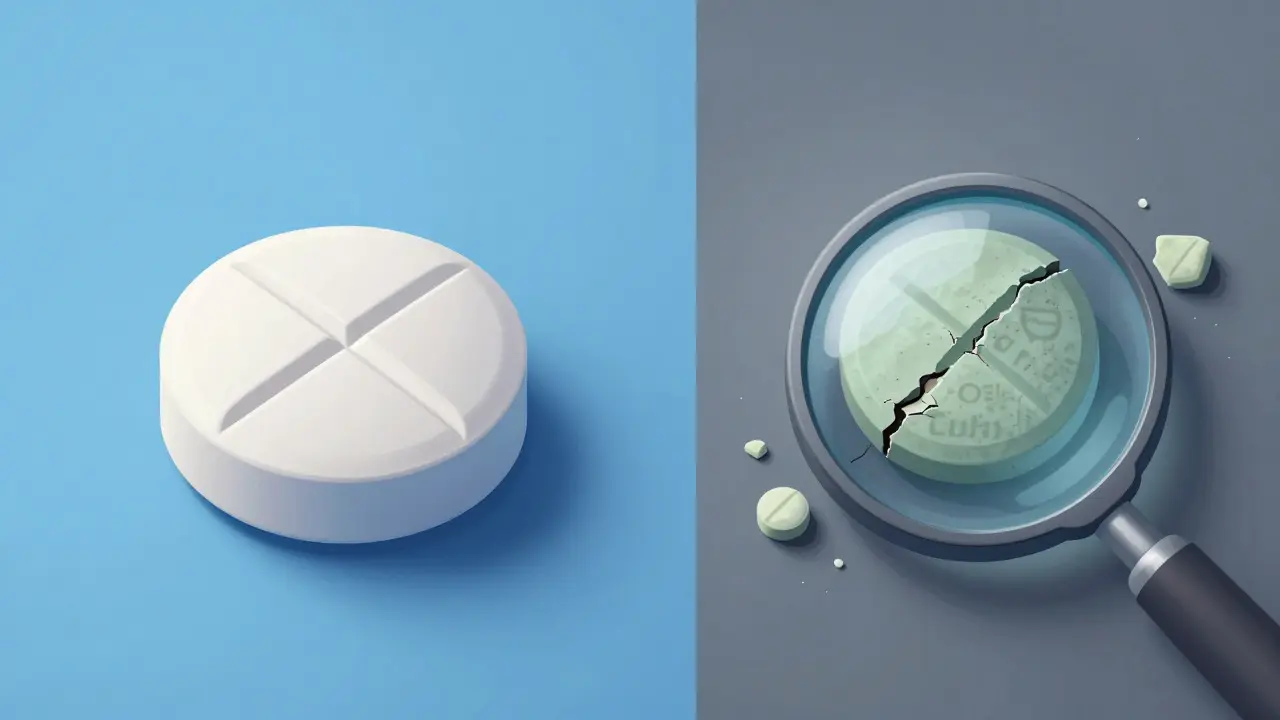
- Texture and Integrity: Real tablets are smooth and uniform. Fake ones may be cracked, crumbly, or have a bubbled-up coating. Check for excess powder or crystals in the jar, which can indicate mold or improper manufacturing.
- Color and Shape: Compare the size, shape, and color to previous refills. Even slight variations in shade or thickness can signal a different manufacturer-or a fake.
- Taste and Smell: Does the pill taste bitter when it shouldn't? Does it smell chemical or odd? Your senses are powerful detection tools.
- Markings: Legitimate pills have precise imprints (letters, numbers, symbols). Fakes often have blurred, missing, or incorrect markings.
Don't ignore the packaging either. Counterfeiters often use low-quality materials to cut costs. Look for spelling mistakes, faded labels, mismatched fonts, or improper seals. In the UK, healthcare professionals advise checking for altered expiry dates-a common trick where criminals buy short-dated genuine products and relabel them.
| Feature | Genuine Medication | Counterfeit Medication |
|---|---|---|
| Pill Appearance | Smooth, uniform, factory-made finish | Cracked, crumbly, bubbled coating, uneven color |
| Packaging Quality | Crisp print, correct fonts, intact seals | Faded labels, spelling errors, broken seals, cheap paper |
| Imprints/Markings | Clear, sharp letters/numbers matching database | Blurred, missing, or incorrect imprints |
| Lot Number/Expiry | Verifiable lot number, logical expiry date | Fake lot number, altered/expired dates |
| Price | Standard market price | Unusually low, "too good to be true" discounts |
The Online Pharmacy Trap: Where Most Fakes Originate
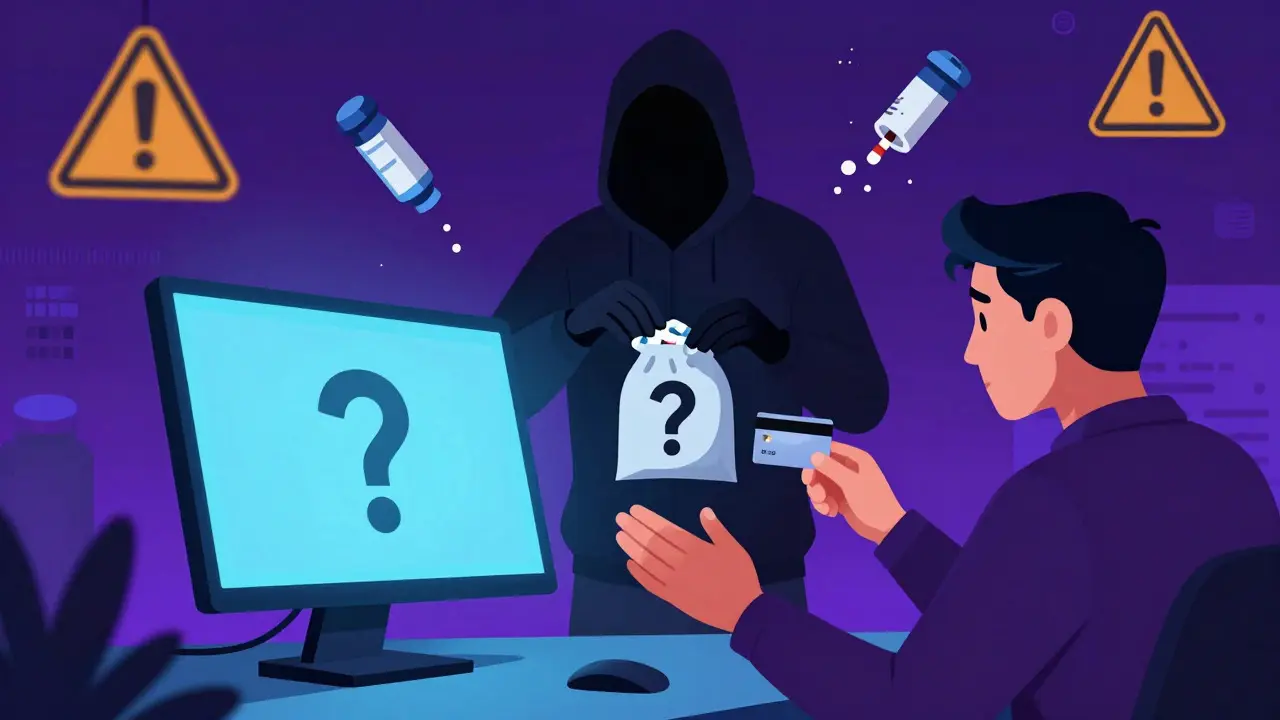
The biggest risk factor for encountering counterfeit drugs is buying from unverified online sources. The National Association of Boards of Pharmacy (NABP) reported a 35% increase in illegal online pharmacy websites from 2022 to 2023. These sites often promote significant discounts to attract buyers desperate for savings, especially for high-demand drugs like GLP-1 agonists (weight loss and diabetes medications).
How do you know if an online pharmacy is legit? Ask yourself these questions:
- Do they require a valid prescription? Legitimate pharmacies will always ask for a prescription from a licensed medical professional. If you can buy prescription-strength drugs without one, run.
- Are they licensed? In the U.S., check if the pharmacy is verified through the NABP's VIPPS (Verified Internet Pharmacy Practice Sites) program. In other regions, look for local regulatory body approvals.
- Is the contact information real? A legitimate pharmacy provides a physical address and a working phone number. Beware of sites that only offer email or chat support.
- Is the price suspiciously low? TrueMed Inc. identifies unusually low prices as one of the most obvious warning signs. If the discount seems too good to be true, it probably is.
Social media has become a new frontier for this trade. Criminal networks use encrypted messaging apps and social platforms to sell fake pills directly to consumers, bypassing traditional retail checks entirely.
Steps to Verify and Report Suspicious Drugs
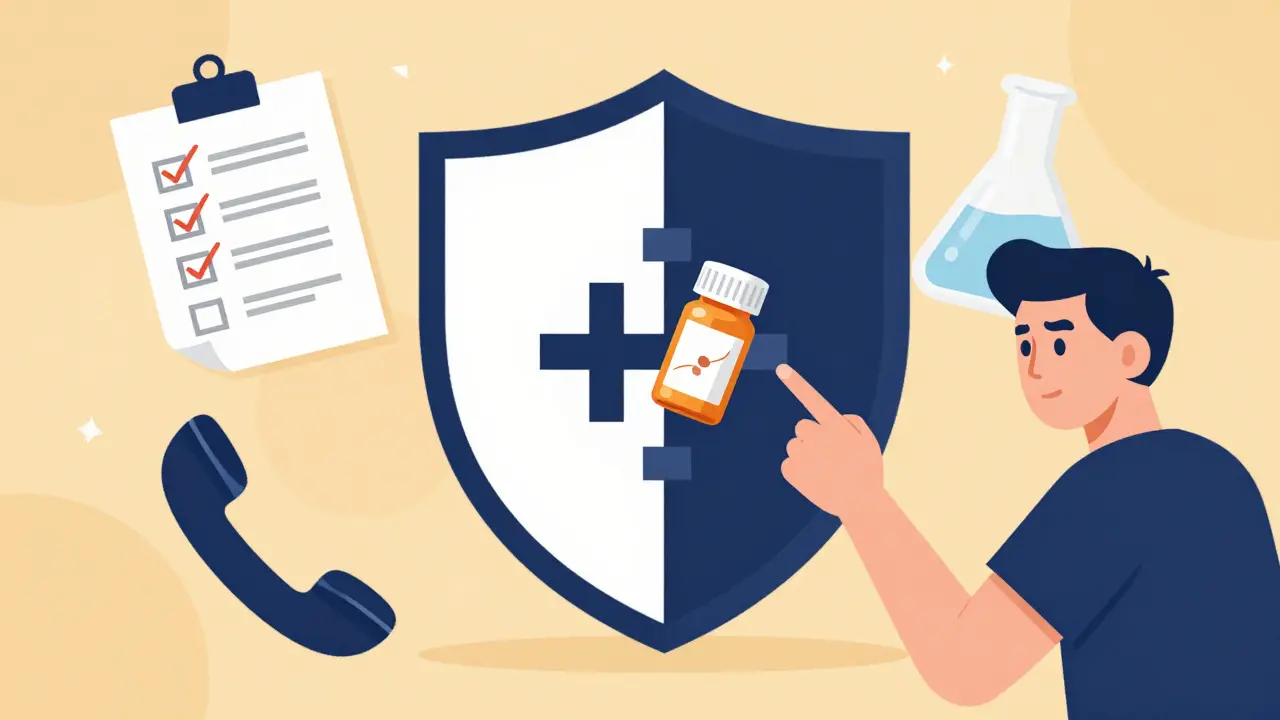
If you suspect your medication is fake, do not panic, but act quickly. Here is a step-by-step guide to verification and reporting:
- Stop Taking the Medication: If you notice unusual side effects or physical anomalies, pause your dosage until you can verify the product. Consult your doctor immediately for alternative treatments if necessary.
- Check the Lot Number: Pharmaceutical companies track complaints by lot number. Call your pharmacy or the manufacturer directly. Sometimes, the counterfeit product will have a lot number that doesn't exist in the company's records. For example, Eli Lilly encourages patients to call them directly if they suspect counterfeit Ozempic® or Mounjaro®.
- Inspect the Seal: Look for breaks or tears in the sealing tape and seals compared to previously purchased products. Tampering is a major red flag.
- Report It: Reporting helps authorities shut down supply chains. In the US, report to the FDA MedWatch program. In the UK, use the Yellow Card Scheme. Locally, contact your health department. Provide details like patient contact info, reason for suspicion, product name, dosage, batch number, and expiry date.
Remember, visual inspection alone isn't enough for 100% confirmation. As Pfizer experts note, laboratory testing is required to definitively prove a drug is counterfeit. However, your vigilance triggers the investigation that saves lives.
Protecting Yourself Long-Term
The best defense is a strong offense built on habits. Stick to state-licensed or federally regulated pharmacies. Build a relationship with a local pharmacist-they are your frontline allies in spotting changes in your medication's appearance. Never share prescriptions with friends or buy from street sources, even if they claim it's "just for one time."
Industry responses are improving, with systems like the Drug Supply Chain Security Act (DSCSA) requiring full electronic tracing of prescription drugs. Serialization and digital tracking tools are helping monitor product movement. But until these systems are universally adopted and foolproof, your awareness is the final safeguard.
Stay skeptical of deals that seem too good. Keep your eyes open for packaging flaws. And never hesitate to ask questions. Your health is worth the extra minute of scrutiny.
How can I tell if my online pharmacy is legitimate?
A legitimate online pharmacy requires a valid prescription from a licensed doctor, displays a physical address and phone number, and is verified by regulatory bodies like the NABP's VIPPS program in the US. Avoid sites that sell prescription drugs without a prescription or offer prices significantly lower than standard market rates.
What are the most common signs of a counterfeit pill?
Common signs include pills that are cracked, crumbly, or have a bubbled coating. Look for differences in color, shape, size, or taste compared to previous refills. Packaging may have spelling errors, faded labels, mismatched fonts, or broken seals. Blurred or missing imprints on the pill itself are also major red flags.
Why are weight loss drugs like Ozempic and Mounjaro targeted by counterfeiters?
These GLP-1 agonists are in extremely high demand globally, leading to shortages and high prices. This creates a lucrative black market where criminals sell fake versions at lower prices via unregulated online sites. The WHO has issued specific alerts about falsified batches of these injectables circulating in multiple continents.
What should I do if I suspect my medication is fake?
Stop taking the medication immediately and consult your doctor. Do not discard the evidence. Contact your pharmacy or the manufacturer to verify the lot number. Report the incident to relevant authorities like the FDA (US) or the Yellow Card Scheme (UK), providing details such as the batch number, expiry date, and your reasons for suspicion.
Can I visually confirm if a drug is 100% authentic?
No, visual inspection alone cannot guarantee authenticity. While physical anomalies like cracks or color changes are strong indicators, sophisticated counterfeits can look nearly identical. Laboratory testing is required for definitive confirmation. However, visual checks are the first line of defense for identifying obvious fakes.